
DirtyComanche
-
Posts
7945 -
Joined
-
Last visited
-
Days Won
11
Content Type
Profiles
Forums
Gallery
Everything posted by DirtyComanche
-
Jeep Wrangler tires on a Comanche
DirtyComanche replied to Inventorben's topic in MJ Tech: Modification and Repairs
From? -
HO spark plugs in a Renix
DirtyComanche replied to DirtyComanche's topic in MJ Tech: Modification and Repairs
As I understand it, it's the other way around, a hotter plug runs hotter, but as a result of being a hotter plug rather than the design of the engine it is in. It's not the plugs overall tolerance to heat exposure, they're all fairly well limited to the same maximum temperature, but rather it's the expression of how fast it can shed heat (or cool itself, I guess would make more sense). So if the plug is exposed to more heat than typical, you would normally want a colder plug, as that would result in the plug operating at the correct temperature. Plugs foul if they are not kept hot, so if there is issues with fouling typically a hotter plug is tried (assuming there isn't other reasons for the fouling), as it will stay at a higher temperature than a colder plug, given all other factors are the same. Likewise if a plug is too hot it may experience premature failure or cause detonation, in which case a colder plug is needed for reliable operation. I had always believed that keeping the plugs hotter, as in as hot as was safe for all usage, was considered better from a standpoint of plug life and ideal ignition (for both fuel economy and power), however some reading I've done recently indicates I might be wrong on that. Modern high intensity ignition systems are pretty dummy proof as far as being able to make an effective spark, so I doubt if there would be much real world advantage, maybe there would only be real world disadvantage, and any advantage is assuming that you also don't cause the engine to detonate by doing this. In fact, from some of the reading I'm doing, it sounds like a few of ZJ guys (which ran the same HO plug I'm talking about) swapped to the Renix style plugs to avoid detonation. I'm also not sure how different the Renix vs HO (and when I say HO, I mean 91-92, I don't compare newer stuff normally) combustion chamber is. I thought they were the same, and it was really just the ports that were changed. But I'm ears if anyone actually has a good comparison. This is just my curiosity talking on all of this too. -
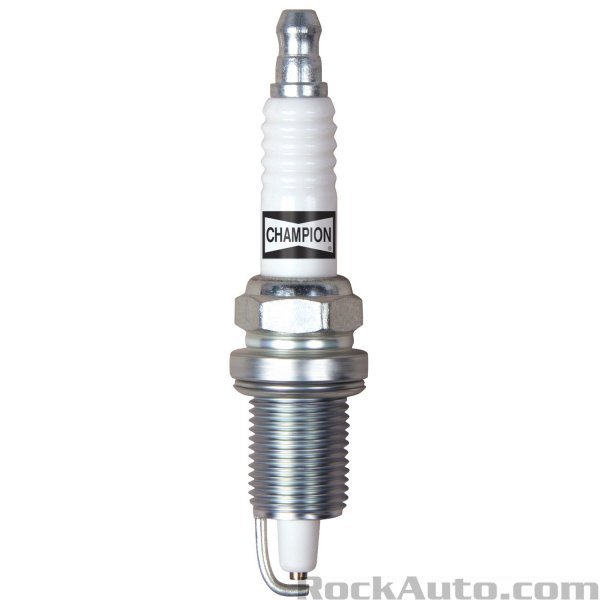
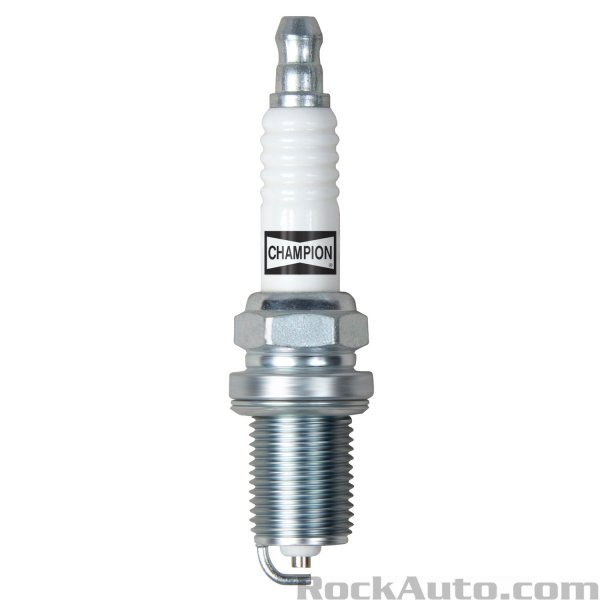
I'm doing my stock parts reorder for the fall, and noticed that the HO uses a different spark plug than the Renix. The electrode protrudes farther on the HO (projected type) and it's a heat range hotter (9 for the Renix, 12 for a HO, using Champion P/Ns, but that represents about one step for most manufacturers). Any comments on why they went to a hotter plug, or the projected tip (the projected tip may be why it is hotter)? I wouldn't say I've ever had fouling issues with the Renix. Has anyone thrown the HO plugs in there Renix and found any change (positive or negative)? Champion plugs pictured for comparison. HO: Renix:
-
Is that the type of thing you're supposed to have an excuse for? Because I might have been doing it wrong...
-
Was the lock ring just a little thick to get it started? Sometimes you have to gently massage the lips of the tank to get them to engage easily. Also putting a little vaseline or oil on the oring helps to make it compress easier and get the ring to go in smoothly.
-
Am I a bad person for hoping they get shot? I don't mean all of them. Just enough to make a point.
-
Jeep Wrangler tires on a Comanche
DirtyComanche replied to Inventorben's topic in MJ Tech: Modification and Repairs
If you want to, I guess. It's probably not the cheap solution unless you're intent on lifting it anyways. I use them (Moab wheels) and I bought a set of adapters from Poison Spider or G2 something. Most of the adapters are fairly comparable because they're all 1.25-1.75" thick and made from 6061-T6. Without knowing the tire size (stock JK tire size varies) I can't say how much lift you will need, but you will need it. To do it over again I'd buy JK axles, and probably will do that at some point, but that's an entirely different discussion. -
1989 Comanche Rear Lift
DirtyComanche replied to 1989commanche's topic in MJ Tech: Modification and Repairs
My 2wd springs were so sagged out that I went SOA with them and it matched the RE 3.5" front lift springs perfectly. (Yes, I planned that) -
You're spending a lot of money to do it that way, when you could spend just as much for better results.
-
Good luck.
-
By the time you actually get the engine in there, get accessories on it, and look at it, you're going to realize the best option for getting the largest radiator in there possible is going to involve cutting everything out in the front. The entire 2.5L core support setup just hangs out too far back. The most successful swaps as far as being able to take punishment have the radiator mounted up where the 4.0L one is, except it is not the same size/shape, instead they cut out the front crossmember and stuff a narrower but much taller one in. To maximize this even more the end tank has to be a goofy shape to clear the steering box. Luckily the front crossmember can be reworked without any loss of strength/rigidity, and enough so that an air gap can be created so cool air is still pulled in nicely. Unless you want to cut your firewall out to move the engine back. Which is fine, but it snowballs if you want a working HVAC system and other things.
-
Yeah, it absolutely is. There is no advantage to starting with the 2.5L support.
-
Good luck.
-
Clutch problems
DirtyComanche replied to Wallace Krempa's topic in MJ Tech: Modification and Repairs
The brake reservoir is sealed, so if you overfill it you'll just have it puke out as you put the lid on. Once the lid is on it won't leak out unless something is broken. Even then it won't leak from the master through the firewall, it can wind up in the brake booster, but it won't make it any farther than that. -
Clutch problems
DirtyComanche replied to Wallace Krempa's topic in MJ Tech: Modification and Repairs
It's probably not oil, it's probably brake (clutch) fluid. It's leaking from the clutch master cylinder out of the pushrod (which runs through the firewall) and dripping on the inside of the firewall. You need a new master cylinder, assuming this is where your leak is from, and you need to do it ASAP. You also might want to do the clutch slave and line at the same time, depending if it's an internal or external slave type. -
At this point I will say I regret not going with a TDI versus the OM617. I had reasons for leaning towards the OM617, but unfortunately I have realized that some of my original research was wrong, and some of the assumptions I made turned out to be far worse in actuality. Spoiler for anyone... I'm probably going to put the OM617 in my J10 based on where I am at with it in the MJ chassis, versus where I would like it to be.
-
That's the problem with Novak, they build some good stuff that they got right, and they build some absolute trash that doesn't work at all. Their entire LS swap package falls into the trash category. Motor mounts that fail in short order, radiators that are expensive and leak, headers that are ridiculously overpriced and are basic bare steel, ECM tuning that probably won't ever even run decently...
-
Careful with Novak. They build some crap parts and some of their tech is straight up wrong.
-
I'd hold out for a long bed on the basis that the frame on them was meant to be longer. No real comment on which truck to buy otherwise, other than in general I have never regretted buying something that was nicer and have always regretted buying something that was a piece of junk.
-
I'd say that's the logical answer. The reality is that the engine compartment is fairly cramped on the MJ, so most swaps are going to lead to some significant compromise. Even the factory install of the 4.0L was a compromise on the cooling system.
-
I actually kind of like the 360, even though it's a bit of a turd. I think it's just the nostalgia factor. Buddy of mine put a 304 in his YJ. He admits it was mostly a waste of time/money. I could have hooked him up with a 4.oh and cut down harness so he would make the same power and better fuel economy. I've got a 360 out in one of my trash (parts only) J trucks. I was told "it just needs a coil to run", so sometimes I get tempted to tear it out and see if it's even rebuildable. It has some aftermarket bling on it too because the truck was used for mud racing (intake, carb, not sure what else). Probably could make it scream pretty good on propane. I doubt an AX-15 would be reliable behind it though, meaning there's not necessarily a ton of good/economical options at that point.
-
Adding power steering
DirtyComanche replied to Comanche1's topic in MJ Tech: Modification and Repairs
The spacer won't be a problem then. I've honestly never seen one fall apart, and they use salt here... I've seen them break from abuse, but that's different. As yxmj said, the YJ/TJ is the easy place to find a remote reservoir. -
Engagement looks normal. Turn over by hand and confirm there isn't any odd binding. If the engine was sitting for a real long time you should have probably pulled the plugs and squirted some oil in the cylinders, turned it over by hand to check nothing bad was happening, then reinstalled the plugs. Check battery cables and connectors if nothing is binding, they certainly can give you a poor crank like that. Also the battery may be suspect.
-
Fuel pump and sending unit
DirtyComanche replied to CarterD's topic in MJ Tech: Modification and Repairs
I'm sure they can. Honestly I should have just called them and told them about the error, but I'm not sure if they would believe me (as some random internet weirdo). An actual customer reporting that it works backwards, and that the XJ and MJ share the same cluster, might get more response. I thought the SWB and LWB senders are the same. The tank is the same height, and really more or less the same other than the extra length to the rear of it. -
Fuel pump and sending unit
DirtyComanche replied to CarterD's topic in MJ Tech: Modification and Repairs
That's interesting the MTS is making them, they've long been a great source for similar parts for older vehicles/jeeps. BUT. That's the wrong resistance range for you. 86-90 should be 0 ohms empty and 88 full (90-100 is close enough for a full value), 91/92 is 0 ohms full and 90-100~ empty. Edit. If you look at the options for XJ sending units, they are aware of the change between Renix and Chrysler era stuff, but obviously didn't know it applies to the MJ.