ftpiercecracker1
-
Posts
2140 -
Joined
-
Last visited
-
Days Won
1
4 Followers




Recent Profile Visitors
4081 profile views






ftpiercecracker1's Achievements
Comanche Fanatic (7/11)
-
Taillight housings
ftpiercecracker1 replied to ftpiercecracker1's topic in MJ Tech: Modification and Repairs
Man those things look good enough to eat. -
What's the latest on reproduction taillight housings? Are they being made or are JY finds and the rare NOS still the only option? Just wondering if I should hold onto the extra pair I have.
-
D44 disc conversion
ftpiercecracker1 replied to ftpiercecracker1's topic in MJ Tech: Modification and Repairs
So me and my brother (the machinist) final looked at the axle the other day, took some measurements, did some hemin and hawin. Rather than make completely custom spacers, I'm just gonna use the teraflex spacers and tack them onto the retainer plate and let it ride. An interesting bit of information. The overall thickness of the bearing, seal and spacer will result in .020 of crush once the retainer plate is fully torqued down. From what we can tell the face of the axle seal never sits completely flush with the face of the axle flange. Hoping to get the axle put together this coming week. I'll reply here with the result. -
D44 disc conversion
ftpiercecracker1 replied to ftpiercecracker1's topic in MJ Tech: Modification and Repairs
Yes, I have the same spacers. You bought backing plates directly from TeraFlex? I could not get in contact with teraflex as there "contact us" page has been corrupted. I searched for a number and never could find one. Even tried contacting one of their dealers. I am using junkyard Ford explorer backing plates as. I'm basically following agambles writeup. If it comes down to it I can have my brother custom make them. I was just hoping i wouldn't have to bother him. -
D44 disc conversion
ftpiercecracker1 replied to ftpiercecracker1's topic in MJ Tech: Modification and Repairs
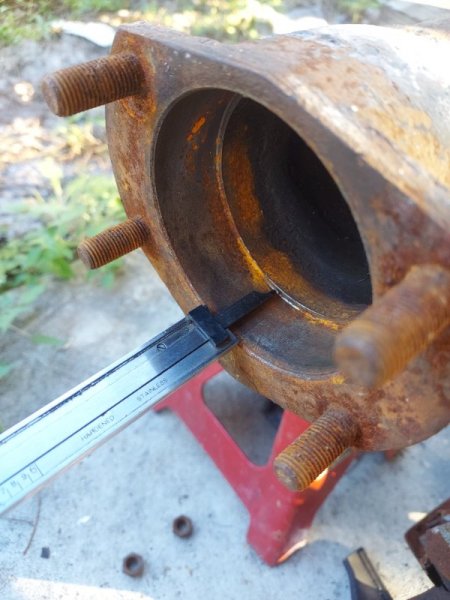
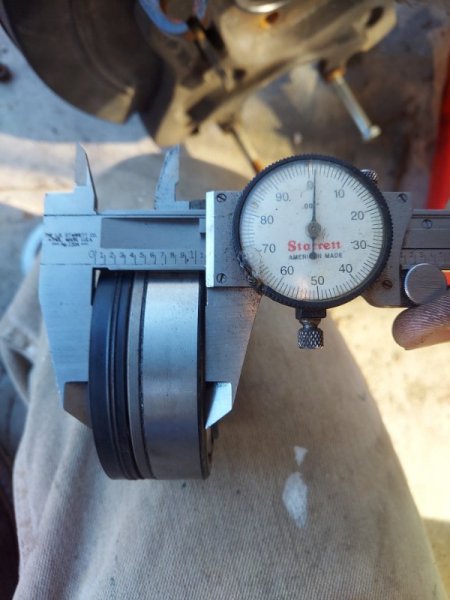
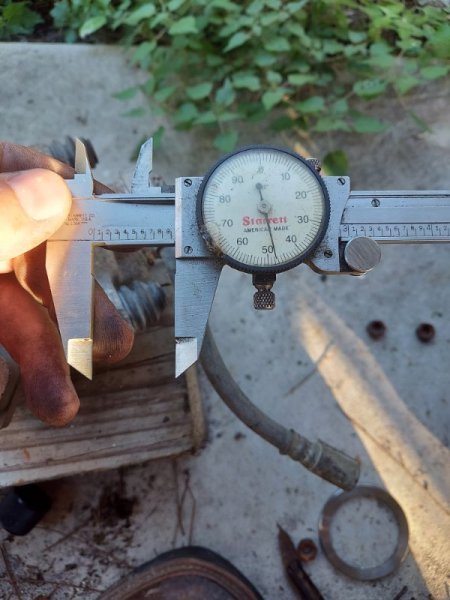
Resurrecting this thread. Trying to pin down a backing plate and spacer issue. Ordered a set of ring/spacers from someplace I can't remember. Ring OD fit the backing plate ID well enough. The "length", if you imagine this ring as a extremely short pipe, is fine. Another way to look at it is the height of this as a short cylinder. The issue is the wall thickness or the ID of the ring. It just barely catches the outside edge of the lip seal. Several month later I broke down and ordered a set directly from TeraFlex as is suggested in agamble's write up. PN 86261 The issue with the TeraFlex rings is their OD is far smaller than the ID of the backing plate. It was my understanding that when the seal and bearing are fully seated the seal should be essentially flush with the axle tube flange. This means the smaller teraflex ring would be floating in midair. Help tightly up against the seal by only the pressure of the retainer plate. The depth from the face of axle tube flange to the shoulder where the bearing will rest is .9 inches. The thickness of the bearing and seal is 1.1 inches. Meaning, even when fully seated the seal will sit slightly proud of the flange face. It seems to me I need a ring/spacer that has the OD of the backing plates ID and the ID of the seal. Also, am I correct about the seal sitting flush with the flange face when fully seated? TeraFlex ring does not fit the ID of the plate. Mystery ring fits backing plate, but the rings ID just barely has contact with the lip seal OD. Axle tube depth to shoulder. .95 inches Lip seal and bearing thickness. 1.1 inches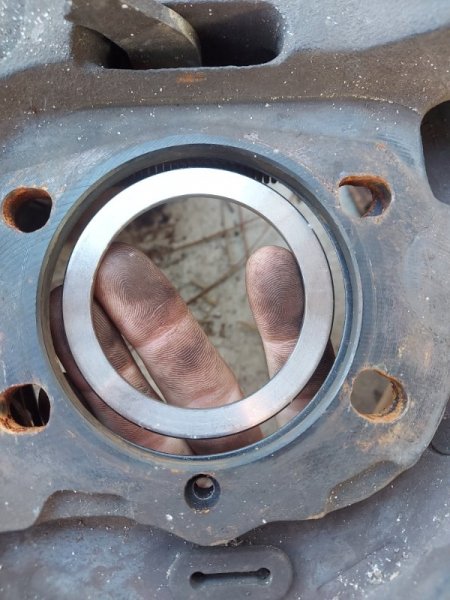

-
Any idea how to drive the high pressure fuel? Electric? Off the cam using the distributor hole? Belt drive?
-
Fantastic stuff Morgo, thanks for the info. A lot of stuff I had not considered. I figured the high pressure pump could be driven by the belt system, but timing would have to be electronic. A purely mechanical system would be superior for what I have in mind, but I'll take anything at this point. What is different about diesel injectors that require them to be covered? Aren't they only lubricated internally and that is done by the diesel fuel it self no? They aren't connected to the vehicles motor oil system right? I'm extremely surprised they are clamped in place and not threaded or some other more secure way. Clamping seems to be the least sturdy way. Do they use some kind of integrated collar that bolts them into place? That's a great point about cooling and sleeving the block. Spill the beans. What do the forced induction guys do to get around the clamping/head studs issue?
-
Ok some more ideas. . . Using a stock and unbored block, press in sleeves. Couple this with a 258 crank for increased stroke The sleeves will strengthen the block while reducing the bore diameter. The goal of this is for the engine to become "under" rather than "over" square per Derf's recommendations. I'm not sure why this is important and even though it will probably impact the power output it doesn't matter. At this point we are just trying to work out the major kink just as a proof of concept. Can we get it to run and run reliably. Power will come later. Next, to increase clamping force is there enough real-estate to drill out the studs for the next size up? Is the issue with HG being literally ripped apart or with studs stretching? Stud stretching should be alleviated with either higher grade studs, larger studs or more numerous studs. HG failure should be alleviated by solid copper or similar extreme duty materials. Next the head. Deck it as close to the valves as possible and have a custom cam ground to accommodate new clearances. I have a feeling there could definitely be some useful parts on a olds 5.7 diesel. From what I understand the injectors are almost the same size as a spark plug. Can a high pressure pump be ran off the distributor shaft? What about the serpentine system instead?
-
Let's suspend our disbelief for a moment and assume money is no obstacle for this project. I have often wondered if it's at all possible to convert a 4.0 into a diesel engine. 1. Could we screw in direct injectors into the spark plug holes? I know ideally the injectors are directly above the piston, but this is just proof of concept. NOTE: Redrilling/taping the spark plug holes is allowed, but a completely custom, 1 of a kind, cylinder head is not. 2. Could we use the distributor shaft to turn and potentially time a high pressure pump? 2.a If not, what about using the serpentine system? 2.b If mechanical timing is out, let us use a stand alone engine management system. 3. Can an unbored 4.0 block handle the pressures a diesel engine makes? NOTE: High strength replacement internals are allowed (pistons, rods, crank) 4. Can the head handle the pressure or is there not enough clamping force? Can this be overcome? Solid copper headgasket? ARP head studs? Is there room to add more head studs? I seem to recall boosted 4.0s blowing out head gaskets at as little as 8-10psi. 5. How can we increase the compression ratio high enough to ignite the diesel? What other hurdles am I missing?
-
-
-
-
D44 oddities
ftpiercecracker1 replied to ftpiercecracker1's topic in MJ Tech: Modification and Repairs
Eagle, it sounds to me like the trac-lok is best for slippery conditions (mud) and not necessarily for when one wheel is entirely free spinning (rocks). It was my understanding that when torque is applied the spider gears compress the clutches by virtue of them trying to cam away from the center of the carrier. Is this how it works? Also your comment about expected milage is making me regret buying a rebuild kit. I think the one is this axle only has about 50-80k. Although I don't know what sort of life it had. To my inexperienced eye the clutches looked OK. New clutches were only $80 so I guess it's not to bad. -
D44 oddities
ftpiercecracker1 replied to ftpiercecracker1's topic in MJ Tech: Modification and Repairs
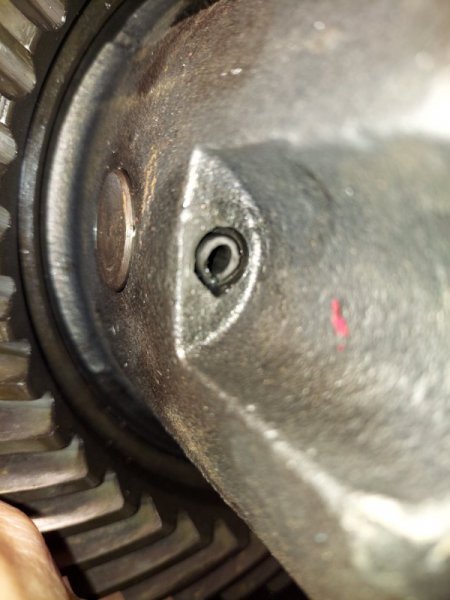
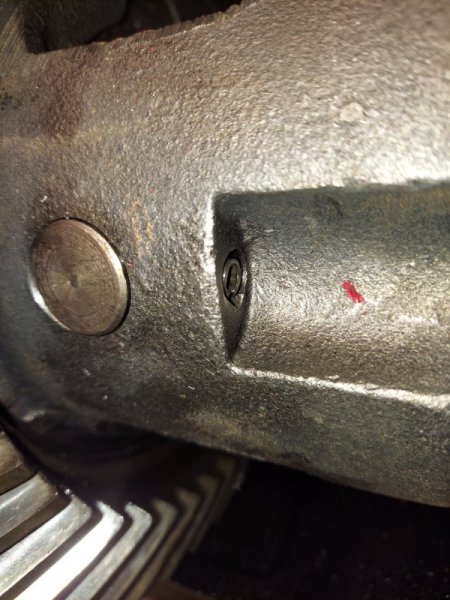
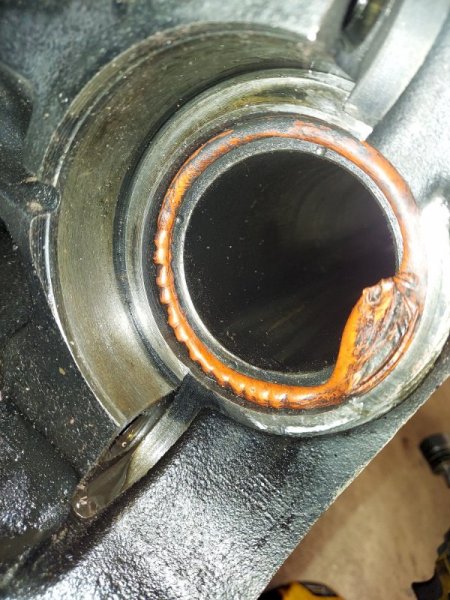
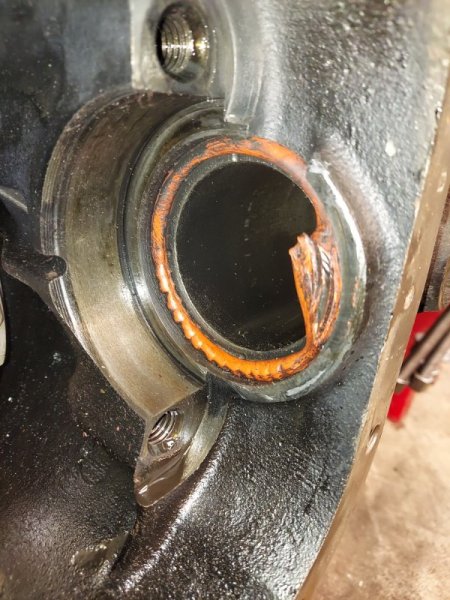
Thanks guys. I figured out the roll pin pretty quickly when I saw there was a corresponding hole on the other side. Was really worried some dunce had broken the bolt off. If there is no inner seal the what is the orange stuff? Factory rtv to seal the tubes to the housing? Also what about the LSD spring? I really would like an answer for that. How do the clutch packs get pushed together if there is no spring? I assume under load the spider gears probably put side load on the carrier, but would adding a spring (if possible) help or would it inconsequential? -
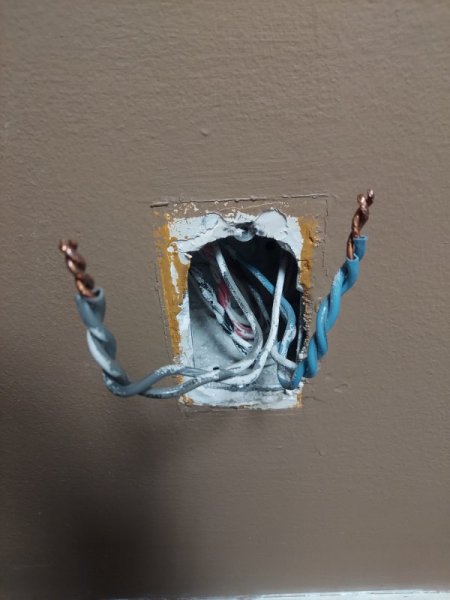
#1 What is this, is this how its supposed to be and how do I remove it? #2 Again, what is this? RTV? No lip seal? #3 do trac-lok lsd use a spring in the middle? Mine is missing if so. Could I add one?