


Minuit
-
Posts
5139 -
Joined
-
Last visited
-
Days Won
13
Content Type
Profiles
Forums
Gallery
Everything posted by Minuit
-
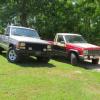 There's quite a lot of us here who wish they could go back in time and come back with a brand new MJ. I feel that way, anyway. This is an opportunity to do just that. If I had the means to buy something like that truck, I'd give it some serious consideration. This is a totally original truck, not a repainted bondo buggy like some of the big money MJs for sale are. I don't know if that's the motivation for Nodrama43 to pursue this truck but if it is I totally understand where he's coming from.
 -
What you've done so far looks amazing and I'm really interested in what you have in store for the future :)
-
Oh man it would be so nice if a CCer grabbed it.
-
Codename Bumblebee: Now With Oil Pressure!
Minuit replied to Minuit's topic in Member Projects: Your Comanches
I thought I replied to this after you posted it, but I guess I didn't. :( For posterity, here are the die options on this crimper (SG Tool Aid 18980): 18921 - Insulated terminals 22-10AWG 18922 - Open barrel terminals 22-10AWG including Weatherpack terminals 18923 - Insulated quick disconnect terminals 22-10AWG with short barrels 18924 - Non-insulated terminals 22-8AWG 18925 - Miniature insulated terminals 26-16AWG 18928 - RG-6 and RG-59 coaxial cable 18929 - 8 and 8.5mm spark plug wire terminals 18937 - Open barrel terminals 30-18AWG including Weatherpack terminals 18938 - Insulated flag terminals 22-14AWG I've used this tool quite a bit for wiring repairs now and I've been very happy with its performance. I do have it adjusted to release at higher pressure than it came with to make more reliable crimps on open barrel contacts. To do this, I crimped open barrel AMP quick connect terminals onto 18AWG wire and adjusted the crimp tension until the terminal supported a ~20lb backpack being jerked up and down at least 5 times while being held only by the terminal. This exceeds UL specifications for crimp strength and at least approaches military specifications also. The nice thing about standards is that there's so many to choose from! Anyway, as all 3 of you reading this can probably tell I'm getting a little bit too excited about smashing wires together. Wiggle The Fuse, Then Pray - November 2016 Right away after buying the truck, I started collecting parts for it. One of the main ones was the fairly rare blue gauge cluster, which has been a part I've been wanting ever since I first saw one years and years ago. This one fell into my lap: The oil pressure and temp gauges did not read accurately (they both read about 20 degrees of gauge travel too low), but I'll get to that later. I also got two sets of NOS key blanks, which really motivated me to start working on this truck, like the little details often do. I saved a set of blanks in case I ever want to rekey the truck: I had a week away from university, so I decided it was time to make this poor unloved truck suck less. The biggest boundary to this truck sucking less was the fusebox, so I tackled that first. When I got this truck, the electrical system was in bad shape. How bad? I'll let you decide: The few connectors that actually had a contact surface left were so corroded that it didn't matter. A few of the connectors would simply pull out of the fusebox with only a little bit of force, not to mention the casing was visibly cracked and deformed in several places. I had trouble with fuses just falling out, and the few circuits that worked at all only worked with quick connect terminals jammed into the fuse slots. This is normally only seen in manual transmission trucks, because the clutch master cylinder is directly above the fusebox. If it leaks, the highly corrosive brake fluid eats the fusebox to pieces. If not caught quickly, the fusebox will suffer severe damage. Enter its replacement, from a 1990, automatic XJ: There are two options for replacing the fusebox if you have to do it - you can either re-pin your new fusebox with new GM Pack-Con terminals (a much cleaner solution) or simply splice it in whole (an easier solution) The Pack-Con terminals can be kind of hard to find. Waytek Wire sells some but not all of the ones you'll need here. Mouser and a few other vendors also sell them, so you'll have to piece together what you need from a number of different vendors. Or you can take the easy way out and do what I did, splicing the complete fusebox into the truck wire-by-wire. The electrons won't care. Upon pulling the fusebox down, it's pretty clear that something bad happened down here. Of note, the brake fluid exposure hardened and stiffened the wires, and some also had corrosion on the conductors themselves - on some wires I had to cut back a couple of inches to get clean wire. I don't see any signs of new clutch fluid leaking from the master cylinder (and the reservoir is still just as full as it was when I purchased the truck), but I'll likely replace the master cylinder in the future as it looks quite old and this leak was likely gradual to begin with. I won't bore anyone with the details, but after about 6 hours of (wire) stripping, staring at wiring diagrams, swearing, and contorting the fusebox was replaced: Some very tense poking around with a test light showed that all circuits were powered when they were supposed to be and all accessories now work. One thing I am very thankful for is that the '89 and '90 fuseboxes are identical down to individual wire colors, although there are some wires that aren't used on the MJ. And then it was Black Friday, which means it was time for my annual Black Friday Junkyard Run! Unlike last year, where I came home pretty much empty handed, LKQ delivered majorly: Clockwise from the left, I got a pair of 4x6 B-pillar speaker brackets, a partial set of Pioneer body mouldings, a headlight harness with fog lights (for the '91), a spare tire hoist, a set of gauges and gauge surround from a 1988 3/4 cluster, some S10 Blazer rear dome lights, and another grey B-pillar piece. Not pictured are a dash clock and new shift knob for the '89. I also met another victim with two Comanches, so it was a pretty good day in all. If you're on here Caleb, it was really nice meeting you! The vast majority of the parts I got came from this '88 Comanche, which to be brutally honest was in better shape than the subject of this build thread: Anyway, I got pretty lucky in that it had a "3/4" cluster with all gauges except the tach, since as I mentioned previously my full cluster's gauges were wonky - the gauges are the same as the ones in the far more common 3/4 cluster. It also had the sweet black gauge surround, so I took that too. In true Minuit fashion, it was time to cobble together some parts: To cut a longish story short, you can swap gauges very easily in these gauge clusters. Each gauge is held in with 3 screws (2 for the voltmeter), so if you have a blue gauge cluster like me, as long as the tach and fuel gauges work, the rest can be rebuilt from more common 3/4 cluster parts. The end product was totally indistinguishable from the genuine article: A quick fire-up showed that the new gauges were working correctly. The volt gauge is working about as well as unfixed Renix volt gauges work, anyway. The 45-50psi cold start oil pressure only lasts for a few minutes before dropping to worrying levels, sadly. With the fusebox fixed, the radio circuit now worked, and I'm the kind of person who absolutely requires tunes to drive, so the radio wiring got fixed up and this AM/FM deck got put in very quickly: Nothing like '80s easy listening music for an '80s truck. I also replaced the shift knob. No idea what it came from, but it fits and the numbers are in the right place so I'll take it. It feels really, really nice in the hand too. All said, I think the dash turned out really well. After all of the fixes I took it for a rip down some country roads and found the driving experience much improved now that it has most of an interior, electricals that work, and something to listen to. The exhaust is really loud in the cab though, even though it isn't very loud outside. Probably something to do with the huge hole in the floors, yeah? So, now that we're on time with where I'm at with the truck, time to talk about some plans for the future: Paint This truck is repulsively ugly enough that I'm willing to think about painting it long before I normally would. I intend to paint this truck myself in a paint booth with professional or at least close to professional equipment. My original plan was to spraybomb it some form of red to match the bed and front clip, and I even rattlecanned the passenger door red, and I wasn't really a fan of how it looked. The more I think about it, the more meticulous I want to be. Regardless, it's going to likely be a color that Jeep offered at some point or a close match of it. Here's a few I'm thinking of. Patriot Blue, one of the best colors Jeep ever painted a vehicle: Midnight Blue, which is similar but a little darker. It would have the added bonus of being roughly period correct. The truck's original color, Black Cherry Metallic And would it be sacrilege to paint an '89 Hunter Green Metallic? As you can tell, I'm a fan of deep, dark metallic colors, especially blue, and even though it might undo some of relyt120's work, I'm really not a red kind of guy. Regardless, this truck's name won't be sticking. I suppose it's time to mention that I do have painting experience here, so I am not a complete amateur - and auto painting has always been a skill I've wanted to pick up. Interior I've settled on a cordovan interior, and I already have the coveted blue gauge cluster. The few interior plastics that I don't have good examples of (mainly the B-pillars that have cut speaker openings) can be painted. The only real variable that leaves is the seats. The obvious choice would be Luggage Fabric wingback buckets: ...but the '91 already has those seats, and that would violate Rule 1 of this build. Another choice would be the rarer Hunter's Plaid which I can't find a pic of but here's the pattern: I don't have to stick to XJ seats either, although that would mean I would need to source more parts. I recently sat in a set of these ZJ leather seats, which were fantastically comfortable: I suppose leather is easy enough to dye, but I don't know much about that. Either way, the seats would need to be some form of maroon. Another benefit to that is that ZJ seats are very plentiful in my area right now. I also like these early ZJ seats. Suspension & Round Things It gets death wobble, the track bar has a half to 3/4s of an inch of play at the frame bracket, and the steering is insanely loose. Those things need to go away. After that, I might consider a small lift of no more than 3 inches or so. The wheels and tires on it now are the Coopers and 5-spokes from the '91, since I've been too lazy to put the Coopers on the '91's Ravines. The tires that were on it were 225/70/15s, which suited the horrible 3.07 gears but were pretty sketchy - so I'll need to buy a set of tires for it at some point. I'm thinking 31s to accompany the small lift? I have a set of nice Eliminator wheels that I may clean up and use, if I decide they fit the truck's aesthetic later on. Obviously the boring parts like bushings and all need to be replaced, as they are in about the shape you'd expect from original suspension parts from 1989. Drivetrain & Cooling The engine makes awful oil pressure, leaks like holy hell (seriously, I parked it in my garage for 2 and a half days and there was a dinner plate sized oil spot on the floor), makes scary CLACK CLACK CLACK CLACK noises, and seems pretty down on power according to the butt dyno. Needless to say it's not staying. The most likely plan will be to find a low-ish mileage HO era engine and swap it into the Renix system, assuming I decide to keep it - although I will say I have not had a Renix related reliability issue, so my opinion of the Renix system is currently higher than many of the others who have HO era trucks. I HATE HATE HATE HATE the closed cooling system and how much of a pain it is to get it to cooperate, so it's going away in the near future. Not to mention that it gets hot currently if you even think about driving it hard. Like upper radiator hose measuring 230* hot. No es bueno. It is definitely staying manual, though - in fact the AX-15 was literally the single reason I bought this truck. A 4wd conversion is likely in the cards, as unlike the '91 I might end up doing light wheeling in this. So that's where the Bumblebee is now. I still have tons and tons of work to do but I'm sure you'll all agree that the truck is headed in a good direction. I welcome any feedback you may have regarding my plans and what I've done so far. -
Now that's what I was looking for. I would have figured this out by myself rather than have y'all spoonfeed it to me but my FSMs are 130 miles away right now. Thanks much guys. :thumbsup:
-
Yes. I wonder if there's a way to move the sensing point like Don said rather than running entirely new wiring. If not I'll follow the procedure in the link. Sent from my LG-D850 using Tapatalk
-
I think that's a silly and pedantic point to make, and I never described the volt meter specifically as Renix. To me a "Renix-ism" as an odd characteristic of a Renix era truck. I'll have to poke through the FSM to see how the 89 wiring does it and do something similar when I decide to fix it. I'd much rather do that than run a new power wire to the gauges from the battery. If I come up with something I'll report back.
-
Thanks guys. I'm really not worried about the volt gauge. I'm sure at some point it'll bother me enough to fix it properly but there's 27 years of deferred maintenance to catch up on before I worry about the silly gauge. I just wanted to see what the Renix peeps had to say, because all of these Renix-isms are totally foreign to me.
-
The non-tilt position isn't horrible, but yeah it's definitely a bit bus driver-ish for me. Mine is normally a notch down from where it would be on a non-tilt column.
-
I added the ground, and it doesn't seem to have changed the reading any. Here's key on, engine off: Key on, engine running: And then a little bit later. It fluctuates between where it is in the pics and almost to the 14 volt mark. With it running I saw about 14 volts at the battery as I should. Check your 12V inputs at the clock connector as follows: Pin B Orange wire "Panel intensity input" (+) - 12V variable controlled by headlight knob rotation Pin F Purple wire "Ignition on input" (+) - 12V ignition switched Pin G Blue wire "Dim display input" (+) - 12V applied when headlamps are turned on Pin C Pink wire "Battery input" (+) - 12V constant memory Pin A Black wire "Ground" (-) I'm leaving Columbia today and I won't get a chance to mess with the truck until next Thursday, but when I get back I'll definitely check the plug. Here's what it does with the key off. I can barely see "4:27" on the clock. Do you think it'll run the battery down if left like that? No idea how much current the LCD in the clock draws.
-
Do you happen to know which color is closest to the lighter parts of the interior? There are several greyish colors in their catalog.
-
I love my tilt column and I believe it was worth the work swapping it in. The column I bought also had intermittent wipers, which was something else I wanted. Subjective, like everything else.
-
So I've recently replaced the badly melted fusebox in the '89, and all of the things that are supposed to work now work, but I have two more questions. 1. Is the dash clock supposed to be active all the time? The clock I have has a separate bulb. If I turn the headlights on the bulb will light up and it will show the time even with the key off. Is this normal? 2. The volt gauge is a lying sack of $#!&. The battery and alternator are in perfect working order, but the volt meter never comes even close to the 14 volt mark. With the key on engine off the volt gauge stays on the 9 volt mark. Would adding another instrument cluster ground solve this as some googling has led me to believe? I'm going to add a ground per Cruiser's tips anyway, but I'm just wondering if I should expect my volt gauge to read properly after doing that. Danke.
-
That's what I was going to say. An angry gorilla using the screwdriver "trick" would cause that kind of damage easily. Mine's like that in a few different places. Wasn't me that did it :dunno:
-
Nice, thanks for the reminder. The LKQ in Nashville has some Renix stuff, so I'll be sure to swing by.
-
Don't think so, so hopefully everyone else will be busy trampling over eachother to buy junk they don't need so I can pull my parts in peace :)
-
Driveway Ornament To Daily Driver: 7 Years!
Minuit replied to Minuit's topic in Member Projects: Your Comanches
Much appreciated as always Buck. The other truck has a big, way more interesting update coming soon :) For the immediate future, progress on this truck is winding down since it's in a pretty good state right now. I have one more small update to make and we'll be up to date with where it sits currently. Future fixes will concentrate more on the finer things, like interior sound levels, ride comfort, etc unless I find one of a number of things on my "buy immediately" list. And then there's that paint job I'm supposed to be saving for... -
I'm going to the junkyard tomorrow. Might even buy some stuff while I'm there.
-
Driveway Ornament To Daily Driver: 7 Years!
Minuit replied to Minuit's topic in Member Projects: Your Comanches
DOTDD: Special Hard Drive Crash Edition: June-November 2016 Here I go again, not updating for months and months at a time. I suppose it's kind of like cleaning, where you can do a little bit every once in a while or put it off and spend forever getting caught up. Anyway, I've made a few changes to our esteemed Silver Truck recently, but sadly I can't show you any of it because the hard drive I had the pictures (about 300 of them) died violently. As long as I'm not forgetting anything, here's what I did in text form. You might even learn something. Or not, that's not up to me. That means I get to indulge in my next favorite thing after fixing trucks, writing at length about stuff nobody but me cares about, so buckle up and get ready for a wall of text! - Add an aux input to the factory radio. The standard Chrysler tape decks have I think 3 different variations, and all of them can have an auxiliary input added with absolutely no electrical changes to the radio itself. There are two pins on the radio's circuit board, TP371 and TP471 on my model, that will accept an audio signal and play it over the radio/cassette player. There's a number of ways to do this, the simplest of which is to cut up a pair of earbuds and twist the leads around these pins. But since I am Minuit, I decided to come up with a more elegant, and more complicated solution that allows me to mess with electronics and buy more tools. Don't take this as a tutorial, since this requires a few specialized tools and skills and there's easier ways to do this. I created a plug-n-play aux input adapter using a headphone cable with a 3.5mm jack at one end and individual wires at the other, D-sub connector contacts, and a plug at the radio so that the radio could be easily removed. I then ran the cable under the center console with the 3.5mm jack coming out where the handbrake would on an XJ. The cable is fully shielded and tinned at the wire ends to prevent corrosion. A full list of materials can be found HERE. To do it this way, the materials cost is approximately $11 after sales tax and shipping. The cable exits with plenty of spare length at the handbrake opening. A phone or MP3 player can be plugged in and left in the tray of the console. 3.5mm phone jacks are pretty clever. Each part of the jack carries a different signal - the tip of the plug corresponds to the left audio channel, the middle (known as the "ring") carries the right audio, and the base (known as the "sleeve") serves as the grounding point. On my cable, white and red are swapped, so if you decide to do this check the datasheet for the materials you're using. On this radio, pin TP471 corresponds to the right channel, and TP371 corresponds to the left channel. The green lead is a ground, which should be attached to a grounded surface in the radio. Each lead has an open barrel D-Sub contact crimped on its end, covered with heat shrink tubing for additional strength. The D-Sub contacts tightly slip over pins TP371 and 471 to allow for a firm, but removable connection. For a ground, I flattened another D-Sub contact with a pair of pliers to make an ersatz fork terminal. These 28AWG open barrel terminals require a proper crimper. THIS is the one I use. It has a good selection of interchangeable dies for a variety of projects. Here's what a crimped open barrel terminal looks like. It takes some practice, but a proper ratchet crimper provides much more consistency than a pair of crimping pliers. Open barrel connections grab both the conductors and insulation of a wire for an exceptionally strong joint. The tiny 28AWG joint in the picture can support a 5lb weight hanging completely by the contact with absolutely no worries. For reference Molex, the manufacturers of the terminals used in this writeup, specifies a minimum 2lb of pullout force for 28AWG wire. This was the 5th crimp I made with this tool, so the placement wasn't perfect, but still far, far better than a pair of pliers. The cable can be snaked around the radio to exit at either side. When the top cover of the radio is installed, the cable is held in place. I added a Molex connector outside of the radio for easy removal. While I can't provide a sound sample, the sound is extremely clear when tuned to an empty frequency. The only downside is very slight static during quiet parts of songs, but it is in my opinion a small concession to retain the stock radio. The reactions from my passengers when I showed them the aux cord were worth it alone. - Convert from a column-mounted shifter to a floor-mounted shifter. Almost all of the pictures of this process were lost, but here's the rundown of what I did and what you'll need if you want to do this yourself. Things you'll need: - Pre-1995 floor shift assembly (duh) - Pre-1995 park lock cable. Only necessary if you want the added safety of not being able to remove the key unless the transmission is in park. - Pre-1995 floor shift cable - To do it properly, a steering column from a floor shift automatic vehicle. I also chose to keep my original lock cylinder, which made the process more difficult. If you don't care about keeping your original key you'll have an easier time than me. I also kept my original steering wheel. Before you start the swap, you'll need to make sure there is a hole located approximately halfway down the firewall on the left side of the transmission tunnel. This is the hole for the shift cable. If it isn't there, you'll have to make it. That's the only really difficult part of this swap. Here's roughly the steps you'll need to follow. - Remove the shift cable at the transmission end, then at the base of the steering column. Push the column shift cable through the firewall. - Remove seats and carpet to expose the shifter hole cover plate. Remove both cover plates (if 4WD, the shifter assembly will be in the place of the 4WD shifter cover plate). - Pull the new shifter cable through the hole in the base of the transmission tunnel and attach it to the transmission. - Install the floor shifter assembly in the place of the shifter cover plate and attach the shifter cable at the shifter end. - At this point, I transferred my ignition cylinder to the new tilt steering column. - Replace the steering column if desired. Expect to have a difficult time removing the intermediate shaft. It may be easier to loosen the intermediate shaft at the steering box end and keep it attached to the column. Good a time as ever to replace the intermediate shaft if it needs replacing (it probably does). It would be much easier to have a helper, but if you're like me and do your truck fixing at 2 AM, it's possible to do it alone. - Run the park lock cable from the shifter to the steering column if desired. - Cut a new hole in the carpet, add your choice of center console, put everything back together and enjoy your floor shifter! It's really not as big an undertaking as it might seem, and it gives you the perfect chance to do a few upgrades along the way if you want to. I personally like the floor shift a lot better than the column shift. - Ravine Wheels! Ravines are absolutely my favorite Jeep wheels, and I knew I wanted a set on this truck pretty much from the very beginning. I lucked out and found a seller on Craigslist selling the wheels, usable Michelin tires, and a full set of new lug nuts for a price I was willing to pay the day before school started. The only trouble spot with these wheels is the front center caps - they don't play nice with the 2WD wheel bearing's huge dust caps. The proper fix is to convert to 4WD A good enough workaround as pioneered by an anonymous CHROME FREAK is to use THESE chrome wheel bearing dust caps. Trouble is, they're ever so slightly smaller than the original dust caps. However, you can cut up an aluminum beverage can and shove it in between the hub and the dust cap to make up the difference: Much better than the ugly stock caps. Make sure you use a thick enough spacer to make the wheel caps fit tightly. I had to buy 2 sets of these things because one flew off since it wasn't tight enough! You should have to pound the cap in. ~to be continued. I need to sleep~ -
How do OME shocks sit on the soft-stiff scale? All I really want is a little softer ride in town, but mostly what I'm getting from this thread is more confirmation that "my truck rides good" means very different things to different people... :D Side note: it seems to me like the 89 has much softer springs on it than the 91 - either that or the 89's are just really worn out. Leaning on the hood of the 91 only makes it dip slightly, more so on the 89. Same story for the rear. Both are 2WD with standard suspension. The 89's ride is what I prefer for a street driven truck - it softens the impact of bumps quite a bit more and doesn't settle as fast as the 91, which has absolutely no bounce or rebound whatsoever.
-
I got lucky and found a set out of a 1996 XJ in the yard that were still nice and pliable. Not sure if the 97+ are the same, but if they are that would make it easier to find a good set. Apparently several people have reported good or at least decent results with the aftermarket ones too.
-
My '91 has a pretty rough ride around town. The highway ride is better, but still on the rough side with absolutely no bounce or cushioning whatsoever - it basically feels like there isn't springs on it at all. I thought the '91 rode well until I drove the '89, which for all its problems has a very comfortable ride. Considering that their suspensions are pretty much identical I assume it has something to do with the shocks. The '91 has Monroe Sensa-Tracs with about 15,000 miles or so on them, which from my looking around are acknowledged as somewhat rough riding shocks. No idea what shocks the '89 has, but for what it's worth they are blue in color. Considering that I use the '91 basically as a car, what shocks would you guys recommend for the best possible ride at stock height?
-
Well dang, that's something I've never even heard of. Interesting that it makes your engine start faster now.
-
Well, we had a good run before the buzzwords started flying. I'm out.
-
I'm sure CA is a nice place but I enjoy firearms way too much to ever consider living there.