

AZJeff
-
Posts
1312 -
Joined
-
Last visited
-
Days Won
1
Content Type
Profiles
Forums
Gallery
Everything posted by AZJeff
-
You are in Glendale. There is a place over there that specializes in Jeep used parts. It's called AMC 4x4 Salvage on W. Belmont Ave. I got a front sway bar and a set of ZJ disc brake parts from them in the past. I am pretty sure they will have a steering column nut. Alternatively, you can go to Glendale Auto Parts on W. Orangewood Ave. and scrounge a nut from a GM vehicle using that same older style column.
-
So what you are saying is that the oil pressure is 85psi or more all the time, and you have confirmed that with both the factory dashboard guage and a separate mechanical gauge? If that is the case, I think the pressure relief valve in the pump must be defective.
-
Fuse panel issues in the earlier MJ/XJ vehicles are quite common. It would be wise to inspect/repair/replace ALL of the fuse connectors if you find one or more that are already flakey. You want to avoid a rolling campfire situation.
-
How about going to a junkyard and pulling a couple of nuts off older GM vehicles? I am pretty sure they all have the same thread.
-
When purchasing old cars, it seems like the general rule of thumb is this: The older the car, the more hacked up the electrical system will be. Previous owners, who in almost all cases do not have a good understanding of low voltage electricity and automotive wiring practices, tend to go crazy with repairs and "improvements" that completely screw up the factory wiring (even as bad as it is on the early XJ's and MJ's). My favorite finds in old cars are the use of twisted and taped connections, follow closely by "wire nuts" intended for residential house wiring to make connections. And if you live in an area that has lots of moisture, "Scotchlock" connectors and unsealed crimp-type butt splices are always fun to find, since they corrode and become intermittent or have high resistance.
-
That wiring is a COMPLETE disaster, and needs to be fixed before you deal with the refrigerant plumbing.
-
White spray paint for 1991
AZJeff replied to Cali Cruse's topic in MJ Tech: Modification and Repairs
Go to a real auto paint supply place. AutoZone and the like are not going to have touch up paint for a 30 year old car, no matter what brand of vehicle. -
You can fix that tilt wheel aggravation with a little time. Check out this site: http://www.chevyasylum.com/column/tiltcol.html Since you have a GM steering column, the procedure applies to your Jeep as well as it does to Chevy's
-
is there any updated resistor pack fo the blower motor?
AZJeff replied to Pete M's topic in MJ Tech: Modification and Repairs
If the resistor coils get corroded, that is no big deal. If the CONNECTIONS to the coils get rasty, then you have issues. The connections on the "outside" of the heater box, in the passenger compartment, should be relatively immune to moisture that causes corrosion, assuming you are not submerging your MJ/XJ to the point of water getting into the heater box. One KEY issue to consider is the fact that old resistor packs, when they get hot, cause the temper (springing-ness) of the female half of the "spade connectors", which are part of the wiring harness, to become loose. Any resistor pack that has seen excessive heat should be considered a candidate for replacing the female spade terminals on the wiring harness on general principles. -
is there any updated resistor pack fo the blower motor?
AZJeff replied to Pete M's topic in MJ Tech: Modification and Repairs
Some more modern cars use a semiconductor regulator to control fan speed, instead of just a plain voltage dropping resistor. Then again, those are a LOT more expensive than the simple resistor network the MJ/XJ. Heater uses. -
They are all the same for MJ and XJ vehicle front doors. It’s a Dorman 924-148 for the check. It’s on Amazon. several makers offer the bracket and pin on Amazon as well
-
That looks great. A side benefit of late model XJ windshield trim is there is no chance for rust around all the stupid clips that hold the bright garnish molding on.
-
Loss of power and backfiring
AZJeff replied to AeroNautical's topic in MJ Tech: Modification and Repairs
Backfiring is usually a sign of a lean mixture. -
The door checks themselves will wear out on XJ/MJ vehicles and start making poppin noises. The fix is a new door check, and probably a new bracket where the check arm attaches to the “A” pillar. New door checks can be had from several sources.
-
89 comanche pioneer 2wdrive Death wobble
AZJeff replied to Jrwhite3230's topic in MJ Tech: Modification and Repairs
Pete M is giving you the most methodical approach to finding the source of the DW. It's less expensive than just hanging parts at random until you find the culprit. When you follow his suggestion and have your friend saw the steering wheel, it sometimes helps to place your hand around each steering joint. That way you can feel actual motion between the two parts of the joint. You can also do this at each end of the track bar. It's kind of hard to inspect the bushings on the OEM control arms, so they might need to be removed (one at a time) and visually inspected and replaced as needed, but I would do that as a LAST step. -
I am going to retract my previous statement about not replacing lifters. I found a website where a Jeeper replaced lifters sucessfully without any adverse effects. If you cannot clean the lifters (or it's too much of a PITA), then new lifters is probably not a bad idea after all. And now I understand why you called them "studs" They are actually double ended bolts. The head portion is a permanent part of the threaded shank, which makes them a bolt instead of a stud and nut.
-
LOTS of good points here. If the oil supply is good (clean pan and good pump) I would look for piston slap to be the noise source. My 4.0 will slap on a hot restart for 30 seconds or so, in spite of clean lifters (with a new head) and more than adequate oil pressure. The slap goes away (mostly) once the temperature stabilizes again, and does NOT get louder once the engine comes off idle. i forgot about theBD motor mounts I put in one of my XJs—-if you tighten the center bolt to spec, the engine will shake the chassis like all get out. And DO NOT buy the ones with a urethane isolator—stay with the rubber ones.
-
You can remove and clean the lifters (and put them back in the same holes they came out of). If you have lifter tap, how sludgy is the engine to begin with? Are the oil passages all gunky? 195 is what is intended to achieve the leanest burn for emissions. It also extends spark plug life and reduces carbon buildup. Don’t trust the temp. Gauge to be accurate. It may actually be running at a temp higher or lower than indicated. i will defer to others about any 4.0 with studs/nuts in lieu of bolts, as that is new to me. Yes, the through bolt is the pivot bolt.
-
Yes, a voltage drop WILL generate heat, assuming a constant current condition (which is usually the case).
-
I would NOT recommend changing the valve lifters unless you are changing the camshaft as well. Each existing lifter and it's matching cam lobe have worn into each other quite nicely, and changing one half of that now "mated" pair can invite trouble for the already used half (the camshaft). DO NOT use a 185 thermostat. The engine (and all associated emissions systems) were designed to run at 195*. By the way, you say "head studs" in your post. I was unaware of any of the years of the 4.0 in OEM trim that used anything but those special torque-to-yield head BOLTS. The brackets that attach the motor mount to the block are torqued to 45 ft-lbs. The ones that attach the mount to the bracket are as follows: 30 ft-lbs for all fasteners EXCEPT the mount through-bolt, which is torqued to 48 ft-lbs.
-
Not true. High current plus high impedance WILL translate to high heat at the interface of the two surfaces.
-
Not only may it not charge the battery, but it might create a high resistance connection that will lead to overheating of the connection and a possible fire. Fix the loose terminal to avoid a “carbacue”
-
Foglights without the harness
AZJeff replied to Dammerung's topic in MJ Tech: Modification and Repairs
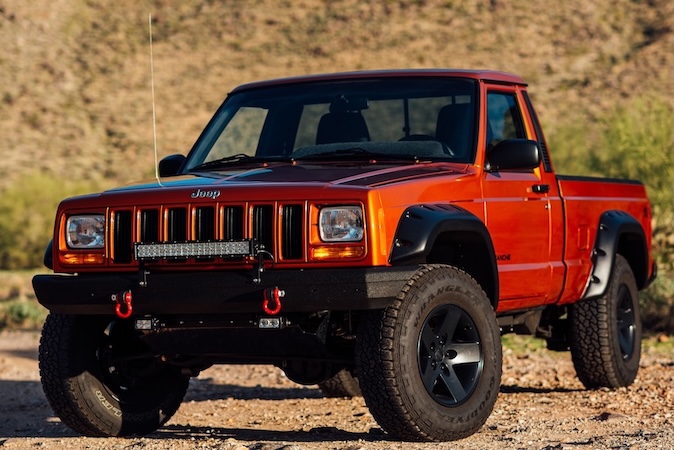
Yeah, I know that is the case in most states. However, here in AZ, there are PLENTY of areas out in the boonies where you want all the light you can get. So my aux. lights are set up so that I can switch on the high beams, the light bar above the front bumper, and some driving lights mounted on the bumper. It probably violates state law about maximum candlepower, but I also use them intelligently--out of the open road with no oncoming traffic. But we all know of nimrods that run around with all sorts of auxiliary lights that blind other drivers, as well, so there is THAT consideration. -
Foglights without the harness
AZJeff replied to Dammerung's topic in MJ Tech: Modification and Repairs
When I run auxiliary lights, I prefer to tap into one of the front parking lights for control line power for the relay. That way I can run the aux. lights any time the parking lights OR the headlights are on. Just another way of looking at things..... -
Rpm dependent hum from front
AZJeff replied to drcomanche's topic in MJ Tech: Modification and Repairs
More questions/suggestions to help narrow it down: 1. you say "take it out of gear." Does this mean just push the clutch in, or actually shift to neutral and release clutch? Do this both ways and report results. 2. additionally, when you push clutch in (and leave it in gear), rev the engine to the "magic" 2K to 2.5K range, and see what happens. They do the same with the trans in neutral, and the clutch engaged.