
gogmorgo
-
Posts
5984 -
Joined
-
Last visited
-
Days Won
4
Content Type
Profiles
Forums
Gallery
Everything posted by gogmorgo
-
Well the cardboard on its own is unlikely to spontaneously combust... you’d have much bigger problems if your engine bay got hot enough for that to happen. I’d be more concerned about it soaking up oily ooze and turning into a big candle if something else were to catch fire under there. It would probably dampen some sound, if that was a concern of yours. I’ve seen similar things done for sound deadening in dorm rooms or rental apartments where you’re not allowed to do much to them – but that doesn’t make me want it in my engine bay.
-
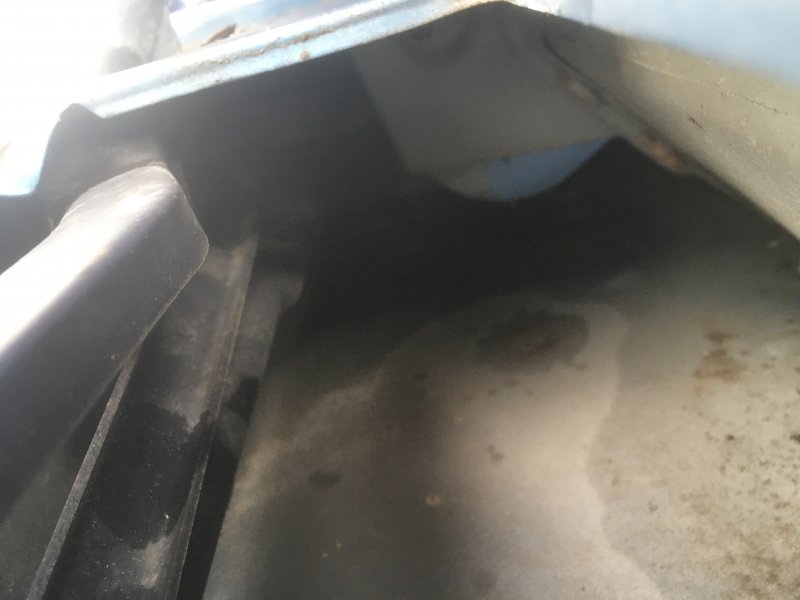
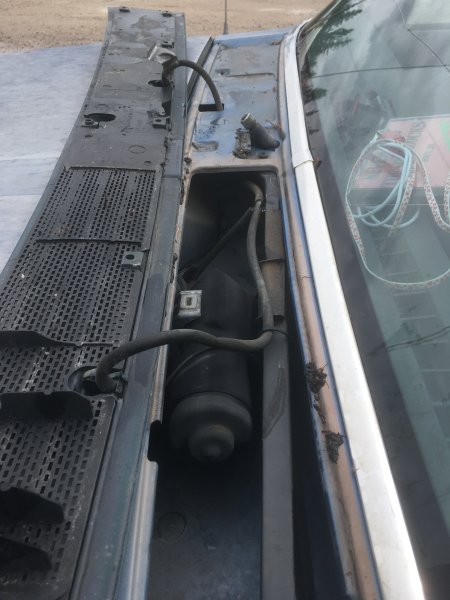
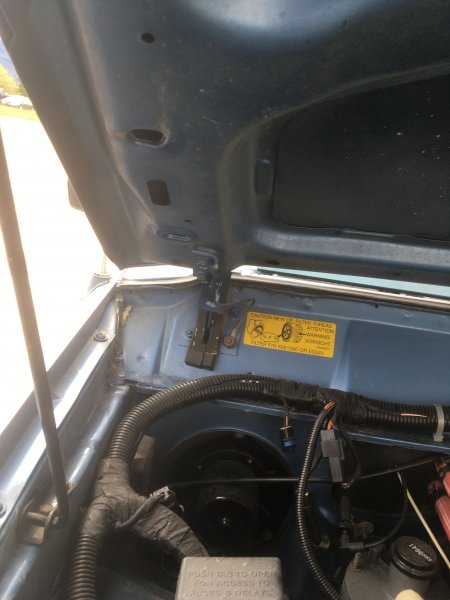
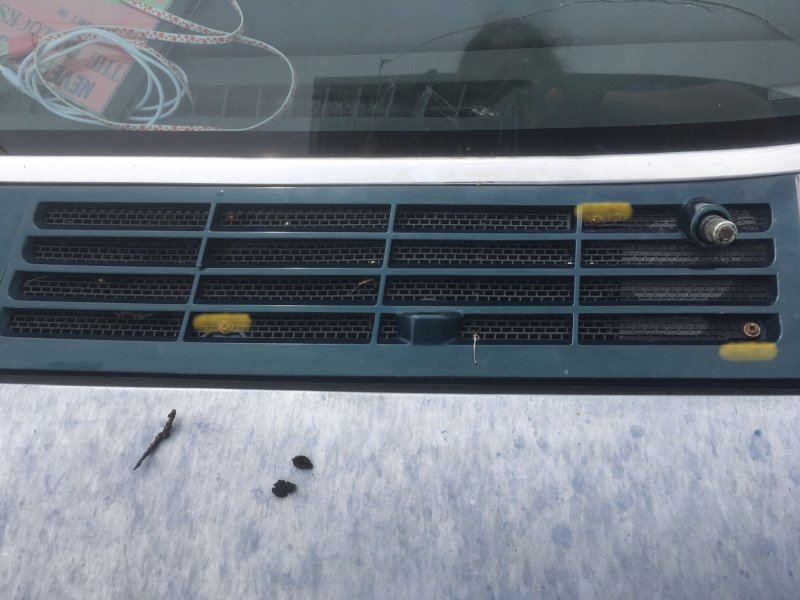
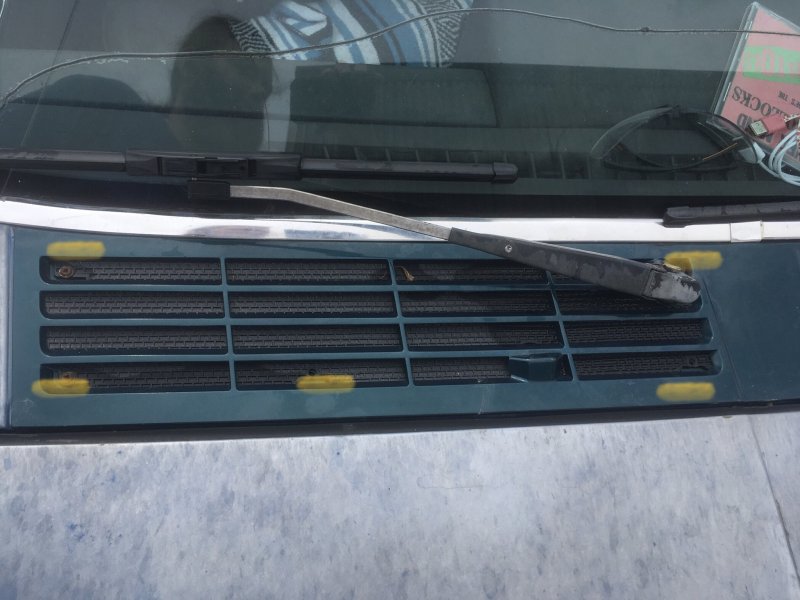
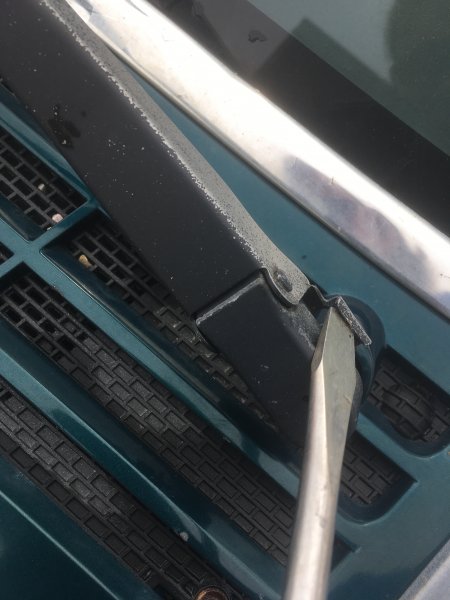
Okay here we go. Yes, there’s decent access under the driver’s side. The picture’s not the best, but the round bit is the driver’s side hinge. Unfortunately the passenger side, as I expected, is trickier to get at from under the cowl. It still will be better than if you can’t get the hood up by more than an inch or two, but it’s still not ideal. And for reference, this is where the hinges are under the hood: And yes, you can unfortunately only get at the hinge fasteners from under the hood. But you can see how tough it would be to get penetrant sprayed through that little slot. To get the wiper arms off, lift up the arm and then pry the tab away from the arm: Then wiggle the arm back and forth and it should slide off, although how easy it is depends on how long they’ve been on there. Then to pull the cowl trim piece, there’s three screws on the driver’s side: and five on the passenger side: Then it should just lift off. I’ve been meaning to pull the wiper arms off and move them because they’ve been coming off the edges of the windshield, so it was no big deal to snap the photos in the process. Your post was just a little extra motivation. And to anyone else reading this, if your hood makes noise as it opens and closes, it’s probably a good idea to get some lubrication onto the hinge pivots before they seize up completely. Learn from our mistakes here.
-
https://www.naxja.org/forum/showthread.php?t=1062437&highlight=cowl+intake I haven’t pulled anything off yet but based on the photos from that thread you might get access to the driver’s side hinge through the cowl, but there’s not much access on the passenger side unless you cut a hole, which I wouldn’t necessarily want to do. But I’m off work in about 20 minutes and it shouldn’t take long to get that panel off for a better look.
-
There are no springs at the hinges. The only springs in the system are the ones that push the hood up when you pull the release. I’ve had one side seize up on one of mine. I just got the hood up as far as I could before risking permanent damage and soaked the hinges down with penetrating oil. Unfortunately it didn’t seem like there was any obvious way to get at the hinges better than just shoving my hand into the opening and spraying in what I hoped was the right direction. I let it sit for a little while then started working the hood up and down until it eventually came free, then I sprayed the heck out of it with an aerosol penetrating grease... don’t remember the brand but I think I’ve still got the can at home but I’m at work right now. The truck sat pretty well all winter and the hood is still without issues. I don’t know if pulling the trim piece off the cowl would help get better access for spraying penetrant into the hinges. It didn’t occur to me at the time to check. You’ve got to pull the wiper arms to get it off... I’m at work but can give it a shot at the end of the day.
-
Is there some sort of fan speed resistor pack? Just wondering how the fan motor distinguishes between high and low speed.
-
Meh. I’m over trying to correct people on this. With only a handful of exceptions, engines mostly come in the inline-4, v6, and v8 flavours. The average person doesn’t care enough to know more about their engine than the number of cylinders.
-
I’ve recently become fascinated with the concept of musical saws. But probably not what you’re thinking...
-

-
That might have been what I was thinking of... I remember a yellow bed more than anything else though.
-
How much fuel? Popping through the throttle body can also indicate a lean condition. I’ve had interesting things happen after changing a fuel pump, including the rubber hose from the pump failing or coming off, as well as the pump coming out of the sock at the bottom, meaning it starts pulling fuel from the middle of the tank and I would “run out” of gas with still a half-tank left.
-

another another another another another JEEP TRIP
gogmorgo replied to krustyballer16's topic in The Pub
Even if you’re not into bikes, the motorcycle museum out at Barber Motorsports Park is pretty cool to check out while you’re in Birmingham. -
I don’t recall seeing very many MJs in such a vibrant yellow. There was one I remember seeing both here I think and on the facepage that was that yellow with the black hockey sticks, but it was in pretty poor shape, and had been rattle canned black in many places I think. I want to say the owner was referring to it as Bumblebee for pretty obvious reasons.
-
I’m still of the opinion that when it comes to oil, some is always better than none. According to the marketeering wank, the Edge is very very strong and slippery, but the Magnatec is really smart and sticks onto metal bits instead of draining back down into the pan. ¯\_(ツ)_/¯ some is still better than none. I’m sure all seven would do an alright job.
-
It would of course let any heat out as soon as you opened it. But it would be excellent for us here where at the end of august it might still be getting up to 90° during the day, but it’ll freeze overnight. Mountain weather I tell you.
-
Yeah, I like it. I might have to try something like it. I’ve got a six-foot fence around the yard, but so far it hasn’t quite worked to keep elk out, and last summer we lost the garden to them. It would also be a great frame to hang some plastic or something for an impromptu greenhouse to extend the growing season a bit.
-
Some pumps are definitely louder than others. I put a Delphi in one of mine and after it came loose from the crude side-of-the-road hose-clamp hold in, and started pulling fuel from the middle of the tank (nothing screws with you quite so much as running out of gas at 1/2 tank...) it got changed out for a Bosch unit. The Bosch is much quieter.
-
Used to think Channellocks were the cat’s @$$ until I discovered them. There’s still a handful of cases where the Channellocks are ahead, but for turning bolt heads you’ll have a tough time finding a set of pliers better than the Knipex.
-
I had a bit of an uncomfortable moment last summer with my 2wd on a gravel launch. I’d only backed down it so I didn’t have to carry my canoe and gear further than needed (17’ canoe, solo). But with no parking brake, stick shift, and an open diff, I ended up sliding back towards the lake with the one wheel spinning forwards on my first go. Had to think about that one a bit. I need to get out on a lake again soon.
-
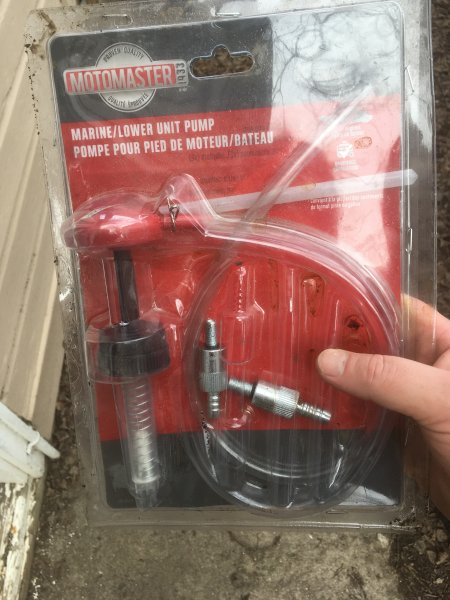
Something I figured I should share with the group. I’ve struggled with finding good non-messy ways of filling things like diffs and manual transmissions inside the vehicle, where a gear oil bottle doesn’t quite have clearance to get inverted and squirted into the diff. This “lower unit pump” is a boat thing. Something to do with outboards I think, but I’m not a boat guy. But basically it turns an oil bottle into a pump dispenser. You choose the combination of straws to fit the oil bottle, screw the pump onto it, push the hose to wherever you need it, and pump until it’s up to the correct level. There’s a couple adapters in the pack for getting the hose onto something on the boat motor but they’re not needed for filling diffs. There’s other tools to do the same job, but this is ~$10, you don’t need to worry about transferring oil between containers, and when I’m done it sits in an old oil jug with a hole in it for the hose, so it drains down without making a mess.
-
Knipex pliers.
-
Crankcase Vent Air Filters
gogmorgo replied to SoCalManche's topic in MJ Tech: Modification and Repairs
Cruiser54.com There’s a tip about valve cover baffles. -
Crankcase Vent Air Filters
gogmorgo replied to SoCalManche's topic in MJ Tech: Modification and Repairs
The way the crankcase vent system works is the one vent is attached plumbed to the intake manifold, behind the throttle, and the other end is plumbed to the intake ducting, pre-throttle but post-filter. The higher vacuum of the intake manifold draws out crankcase gasses, which then get replaced by clean air from the air filter. If you’ve got an issue with the vent system, combustion gasses and oil vapour can get pushed back into the air box, gumming up the filter, throttle body, etc., and the condition is aggravated by excessive blow-by. Putting a filter directly on the valve cover separates it from the intake, but doesn’t address the problem with the vent system (or the blow-by). On the other hand, if the vent system is working but you’ve installed an aftermarket air cleaner that doesn’t have a convenient location to attach the vent hose, you’ll want to find an alternative way to get a supply of clean, filtered air into the crankcase. Hence the filter on the valve cover. Pressure needs to be vented from the crankcase. It can be left essentially open, any attachment to the intake blocked off, although the oil vapour will make a mess in the engine bay. A catch can addresses that issue, but will need periodically emptied. Depending on your local emissions regulations, it may also be difficult to pass if you choose that route. Burning combustion waste gasses and oil vapours in the engine is better than releasing them straight to atmosphere. But you do need some form of crankcase vent. There will always be some amount of blowby even on the newest engine, not to mention pressure changes in the crankcase due to changing temperatures, and if you don’t allow it a path to vent, it will find its own. It’s also not good to introduce unfiltered air to the crankcase, and it will always get pulled in from outside as the engine cools. -
Gas overflow after filling up.
gogmorgo replied to eaglescout526's topic in MJ Tech: Modification and Repairs
Interesting. I worked at that gas station in the mid 2000’s after they fixed the slab, and pumping diesel was frequently an ordeal. We had a big pump mostly meant for filling heavy trucks, so the nozzle didn’t physically fit into older fillers like the gas nozzle would. It wasn’t an issue for the locals because they’d all punched out the fill necks on older trucks to allow for the big nozzle, but occasionally you’d get a truck in from the city with an undamaged filler and we’d really struggle. VW TDI’s were obnoxious because there’s a little valve you have to push with the nozzle to open an additional tank vent and they’d still only take fuel at about 1/3 squeeze. Then with a newer generation (2006ish?) VW did away with the valve and they just wouldn’t really take the diesel very quickly. There was one guy with a smart ForTwo as well that was a bugger, because it wouldn’t fit the nozzle into it more than about 1/8”. And trickling in the diesel was a PITA because if you went too slow the pump assumed it was leaking and shut down. Now I’m kinda curious about parking things on blocks. Trucks with service bodies on them are almost always a pain, because the fill necks were never routed very well, damn near horizontal in most cases, and the result was diesel constantly trying to flow back out instead of down. Turning the nozzle upside-down in the filler somehow helped with that, but you still couldn’t put it in too quickly without tripping the nozzle shutoff. I should try it out with the service truck at work next time I’m filling it. -
Gas overflow after filling up.
gogmorgo replied to eaglescout526's topic in MJ Tech: Modification and Repairs
The quickest and easiest way to test it would probably be to park the truck on a couple blocks on one side or the other when filling. That reminds me of something else that probably has nothing to do with it. My parents had a late ‘90’s GM minivan in the early 2000’s, and the gas station in town was a bit run down and the concrete pad was cracked and tilted a bit on the one side. There was a thing that would happen if we filled up that particular van on the cracked side, but not on the other, more level side of the pump. But I’m not 100% on what the thing was. It didn’t spit gas, though... I think it might have been more that it wouldn’t fill past 3/4 tank. My memory’s real fuzzy there... we got rid of the van more than 15 years ago. -
Gas overflow after filling up.
gogmorgo replied to eaglescout526's topic in MJ Tech: Modification and Repairs
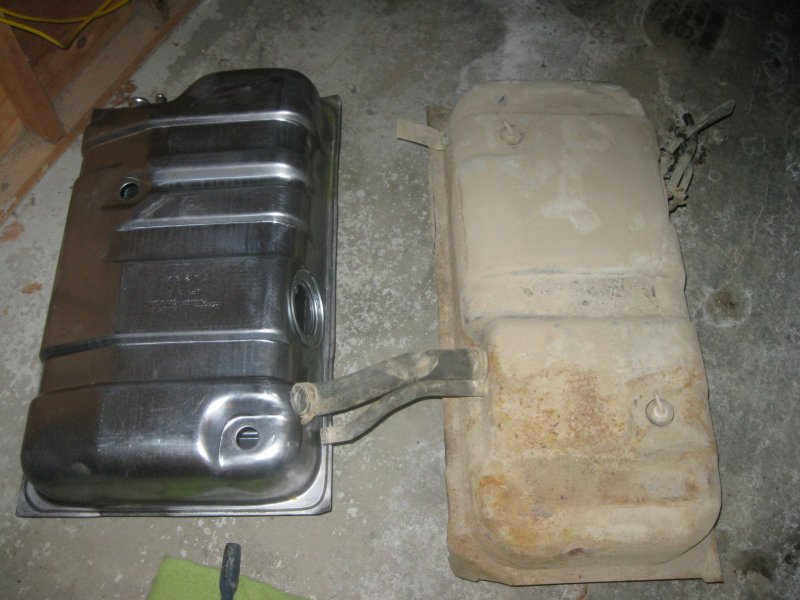
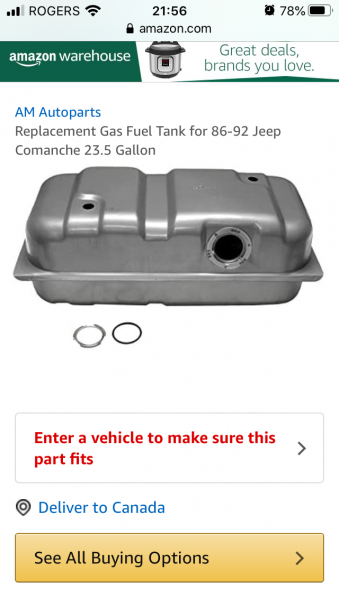
My long bed used to spew gas at me when it clicked off. It would take fuel as fast as you shoved it, and you could hear air rushing out that vent tube, the “secondary fill tube” if you will. Then once it got full it would kick the pump off, then a gush of fuel would come up out of the vent tube. Almost as if there was an air pocket that somehow compressed and then once the pump shut off it released, and there was less pressure head in the vent tube than the filler neck so that’s what blew out. For me filling it on a slower notch seemed to reduce the effect enough to stop the outward gush of fuel, but there was still some that burped up the vent tube after the pump shut off, just not enough it splashed back out. I never really thought much about it until I saw this thread, which inspired me to check out a photo or two of an MJ fuel tank to try to see if there even was somewhere to trap air. And I think there is a reasonable explanation. That’s my MJ tank next to... the wrong tank for an MJ. I thought it was an XJ tank at the time but now I’m thinking maybe it’s a ZJ tank. Either way it was a real long saga that’s not relevant. You can kinda tell in the photo that the tank vents are recessed. A new tank photo makes it obvious. So if that’s the case, when the tank gets full, the vents will have gas push up and trigger the rollover vents with air still trapped at the top of the tank. If the rush of fuel into the tank right next to the filler vent tube is enough to keep fuel from pushing back up the vent once the fuel level rises high enough to stop allowing air back out, then the air probably would pressurize, and act like a spring once the pressure was released. That or the vent tube is a restriction for fuel pushing back out compared to it pumping in, so that’s what compresses the air pocket and then it keeps pushing out the vent anyhow? I’m not sure. I’m pretty sure the rollover vents are clogged because it’s a right pain in the cunning linguals to put gas into it with the stupid sealy-thing filler nozzles in California. That or they were only ever intended to account for fuel vapours, not fill venting. There’s also a pretty good chance I’m somehow overfilling the tank, because I know for a fact it’ll take 25 gallons from still not quite empty. My shortbed still burps a bit, but as far as I’ve noticed doesn’t splash like the long bed did. Other than the smaller tank size, the one other difference I can think of is the long bed has the typical driver’s side sag to a much greater degree than the shortbed does. This would put the fill neck slightly lower, making for a bigger air pocket in the tank? Maybe? I don’t really have a good answer unfortunately, just trying to make sense of something that doesn’t. I could be way off base.