

gogmorgo
-
Posts
5984 -
Joined
-
Last visited
-
Days Won
4
Content Type
Profiles
Forums
Gallery
Everything posted by gogmorgo
-
I’d press out the studs and put in shorter ones before cutting them down if that was needed. I don’t have a good answer about the control arms, though. I think most either go with spacers or wheels with less offset.
-
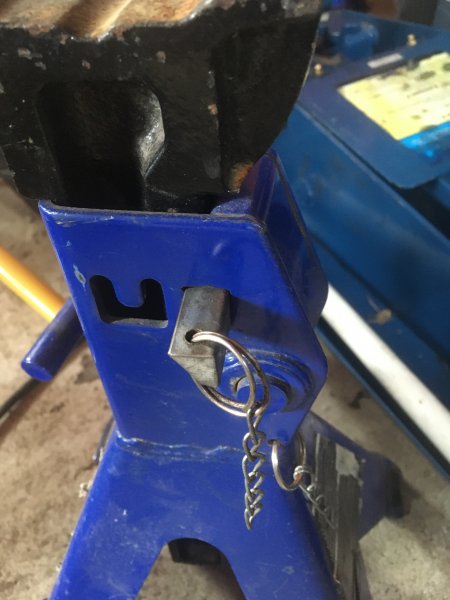
I learned to take that lesson seriously that the hard way a few years back. I always gave anything I put on jack stands a decent bounce before getting underneath, so I probably got a bit complacent when nothing ever went wrong. So this one time, and I don’t entirely remember what I was doing with it, I had my Lada up on jack stands in its usual dirt parking spot. I knew jack stands on dirt wasn’t the best idea, but it was dry as a bone and the Lada doesn’t weigh a huge amount (still enough to seriously injure someone) and the bounce test went okay so I figured all was well. So I spent most of the afternoon underneath but it started raining so I went inside for the night. I didn’t really think much about it, and it was nice and sunny again the next morning and I went right back at it. Pretty sure I was only under it for a minute or so before the ground gave out under all four stands and they all tipped over. Fortunately I was only under the front axle and the thing fell backwards, but when it hit the ground the front bumper came within a few inches of my face. I barely had enough time to close my eyes. I got real lucky there. Big wake up call too. Was it last summer or the summer before, there was a moderate earthquake in California. It didn’t really affect me as far away as I am, but the thing I remember was an article about the first casualty they found, a few days after the quake. An older man had a Willys Jeep up on a high-lift jack, and it tipped over. The photos in the article had a couple crushed cinder blocks right next to the Jeep, looked like it landed on them and they broke apart. The guy probably had been getting away with it his whole life, 30, 40, 50 years even, right up until he didn’t. Whether the Jeep landing on him killed him right away or just pinned him for too long before someone went looking, it doesn’t make much difference. Logs roll, wood crushes and splits; bricks, cinder blocks, and concrete blow apart; asphalt flexes, things bounce and slide when they land on steel... everything that can go wrong will go wrong, usually at the worst time. The jack stands I use have a safety pin. They’re Michelin branded, and I picked them up cheap at a chain store so I’m pretty sure they’re just offshore stuff with a fancy name, but the reason I got them was because of that safety pin. It’s a nice tight fit in the ratchet teeth, and while I don’t think it takes much or any of the weight off the pawl, it stops the upright part from moving far enough to disengage it. And yes, these were the stands that tipped on me. It’s like they say, any time you make something idiot-proof, the world comes up with a better idiot. Whatever you use as a safety catch device, you’ve got to make sure it’ll catch the vehicle no matter which way it tips, and have some plan in place to stop the vehicle from moving if it does land on it. You also need a part of the vehicle to land on it that won’t collapse. Rust can be dangerous here. I’m a big fan now of no more wheels off the ground than necessary. If I’ve got a pair of jackstands under it, the jack will still be under as well with some pressure on it still. Throwing a wheel under somewhere as well, but I prefer the backups to be holding some of the weight. I’ve used tree rounds, and chocked them, but a square chunk of wood is far better. Crosswise to the grain, and make sure it takes the weight before you trust it... softwoods are called “soft” for a reason. Don't take it for granted either that someone else made sure a vehicle was safe before getting underneath. I was under one at a junkyard that passed the bounce test when I discovered halfway into pulling the hitch that the one corner stand was sitting on the sidewall of the spare tire. There’s no telling how much air is in the spare, and if you got wiggling it and it blows out the sidewall or knocks the bead off, there’s no guarantee it’ll stay put on the rest of the stands as it shifts. Also, the stand is only ever as good as the ground underneath it.
-
91' MJ - Temp gauge bouncing around
gogmorgo replied to CaptainPatchy's topic in MJ Tech: Modification and Repairs
I’ll second the coolant level being a pretty major player here. In my experience the system only holds about three gallons so being down by half that is a lot. I’d also caution adding straight distilled water to an empty overflow tank. Repeatedly blowing and changing rad hoses on the side of a Saskatchewan highway at -20°F before factoring in the howling wind isn’t something I’d wish on anyone else. That’s also a lesson in proper container labelling, but we’re getting off topic. You should be fine for now, especially this time of year, while you try to sort out any other cooling system issues but seeing as you’re in the Midwest you’ll definitely want to make sure you’ve got a good antifreeze mix in there come September. Having a proper mix is also beneficial for corrosion resistance, and general cooling system longevity. It also makes it easier to find and identify leaks, as the coolant leaves residue where water just evaporates. But yes, I’ve always just filled everything as best as I can, fired up the engine with the rad cap off, and slowly added coolant as necessary. I tell myself having the front wheels higher than the rear by 6” or so is helpful if safe and convenient but I typically fill them however the Jeep was parked without issues. Assuming the system doesn’t leak and the rad cap is in good shape, any air left over will collect at the cap and then get pushed out the overflow and vent to atmo as the system warms up and pressurizes. -
-
Anyone with a NP242 and manual trans?
gogmorgo replied to OldSch88L's topic in MJ Tech: Modification and Repairs
I don’t know if the MJ or XJ ever got CV shafts from the factory. Mine are just the cheap parts store ones that were sold as fitting my ‘91 MJ (and they do) but I’m pretty sure they’re intended as a ZJ shaft. -

-
91' MJ - Temp gauge bouncing around
gogmorgo replied to CaptainPatchy's topic in MJ Tech: Modification and Repairs
The sensor in the thermostat housing is for the ECU. It’s completely separate from what you see on the gauge. The sender in the back of the head might be broken, or the wire could simply be loose. That’s what I’d check first. Maybe get a helper to wiggle the wire or watch the gauge. As to the slow warmup, the thermostat could be stuck open, or missing completely. You’ll want to make sure it’s a 195° tstat at any rate. -
If you’re paying shop rates that’s probably not far off the mark. Just pulling and putting the engine back is $1000 in labour. Tearing down and reassembling the engine is going to cost about the same, just in labour. A rebuild kit is likely going to add the same, double or triple even if you’re replacing absolutely all the guts and the head. Then you sub out the machining, add another $1000. Then factor in all the accessories, all new sensors, and everything else included in “replacing the whole engine bay” I don’t see the cost of having it done at a shop being much less than what was quoted. The quote is also going to include every eventuality, probably stuff that may not need done, and possibly also a small “I don’t want to do it” factor, but then you’re the guy who spoke to the shop, not me. If you’re going for a pebble-beach quality all-original numbers-matching restoration, maybe that’s the way to go. For most of us though, largely a bunch of cheapskates who wouldn’t pay a shop to do something we can do on our own, just to get an old workhorse or trail rig going again, there’s lots of other 4.0 donor Jeeps out there for dirt cheap, then it’s a weekend in the driveway, and maybe you can part out the rest of the donor to recoup costs before scrapping it. If you wanted new with a warranty, and don’t have the means to swap an engine yourself, then just getting a reman engine dropped in would only cost you less than half what you were quoted. Of course you still wouldn’t have a numbers-matching vehicle any more, but at 200,000 miles, is it ever going to be a showstopper worth that sort of investment?
-
Anyone with a NP242 and manual trans?
gogmorgo replied to OldSch88L's topic in MJ Tech: Modification and Repairs
A u-joint front axle might seem a little “lurchy” in tight corners. A ujoint doesn’t transfer rotation perfectly around a corner the way a CV joint does. The outer shaft ends up with an elliptical motion, so the wheels end up accelerating and decelerating within a rotation, even though the front differential is still driving them at a constant speed. The higher the operating angle of the joint (i.e. the tighter you turn) the more exaggerated the effect becomes. A driveshaft doesn’t really experience the same effect because the ujoints at either end cancel each other out. The “slop” in a 242 people talk about is mostly down to having more driven parts, and the tiny amounts of lash between them add up. It’s not really any more a concern than the small amount of play every differential has. I’ve also seen people talk about the 242 having a slight torque bias, which means it resists differences in axle shaft speeds, but I never found any real confirmation of that being true. What I will tell you is my MJ with a 242 and CV shafts is buttery smooth in full-time, and still a lot smoother in part-time than my 231 and u-jointed ZJ. Admittedly the MJ is an automatic and the ZJ is not, however I’ve got another vehicle with a full-time tcase and manual trans with CV axles, and it’s also buttery smooth in full-time, and again not anywhere near as noticeable that it’s in part-time as vehicles I’ve driven with u-joint axles. -
Which topper is it? I’m a solid 12 hours’ drive north of you (with good traffic and no hassle at the border) but I’ve managed to end up cruising through Missoula at least once a summer the last couple years. I wouldn’t necessarily suggest hanging onto it for me as I have no idea if I’ll be able to make the trip this year, but I doubt I’m the only one who wants to know more about it.
-
I also find XJJeeps.com to be a very useful resource for some of the manuals.
-
Stripped rear drum brakes
gogmorgo replied to conrad_the_mj's topic in MJ Tech: Modification and Repairs
It’s hard to say whether the new style would be interchangeable or not without having both styles in my hand. My initial guess from looking at the pictures is the newer ones would bolt directly on and work fine with the brake assembly, but I’m not convinced the brake line would come in at the same angle between the two, and there may not be enough give in the line to allow for that. There is however a difference in the bore diameters of the cylinder. The older style is 7/8”, and the newer is 3/4”. This would mean given the same amount of pressure in the line, the newer style wheel cylinders would only give you roughly 73% as much brake force. -
Stripped rear drum brakes
gogmorgo replied to conrad_the_mj's topic in MJ Tech: Modification and Repairs
Looks like there’s a change for 1990, at least going by the part numbers on RockAuto. Before ‘90 they’ve got just one version for both d35 and d44, left and right sided, but ‘90 has the same left and rights for the d44 and a new number for the d35 that doesn’t specify sides. -
Stripped rear drum brakes
gogmorgo replied to conrad_the_mj's topic in MJ Tech: Modification and Repairs
It comes down to simulating a front brake failure by loosening one of the front bleeders while bleeding the rear, then close the front bleeder and bleed the rear again and then front. The goal is to get the rear bypass line bled. -
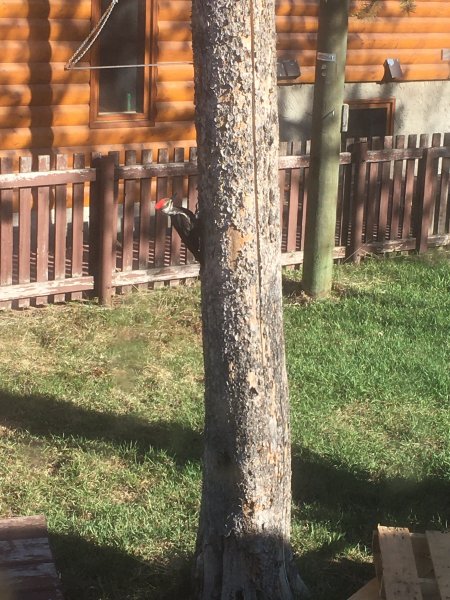
Also had a neighbour stop by the other day. It was a nice change from the magpies, for sure.
-
4x4 springs should sit an inch higher than 2wd, but the metric ton shouldn’t make much difference in ride height. The higher spring rate just means they compress less under load.
-
We’ll be starting to get that one at work as well. We were just starting to pull the light fleet out of winter storage for the busier summer season when everyone was sent home, and now we’ve got the whole fleet just parked up and waiting for a summer that we weren’t sure would happen. I’d actually suggested going out and disconnecting all the batteries way back in early April, but the powers that be were convinced it was a waste of time and we’d be back to normal. At least we’re beyond the season of certain death for discharged batteries left outside. Its kinda nice having older vehicles that actually turn off when you shut them off, that you can leave unattended for a couple months without draining the battery. Modern cars just have too many systems that stay on and draw the battery down.
-
Stripped rear drum brakes
gogmorgo replied to conrad_the_mj's topic in MJ Tech: Modification and Repairs
You can grab disc brakes off a ZJ. There should be threads in the DIY index. Quickest, easiest, and cheapest would be changing the brake cylinder. They don’t cost enough to make it worth getting a used one. And like Jeff said, be careful with the flare nut on the brake line. Get some penetrating oil on it as soon as you can, reapply a few times. Once you get a tool onto the flare nut pay close attention to the line itself. If you’re twisting it at all, stop. Get a little heat onto the nut and try again – no need for red hot, even a small butane torch will help. Once you’ve got the new one bled, there’s no need to mash the bleeder in. You just need it to not leak. -
1988 Jeep Comanche Rear Suspension Prts
gogmorgo replied to Bdub's topic in MJ Tech: Modification and Repairs
It’s not generally recommended to reuse u-bolts, but that’s an argument not worth repeating again. Most suspension shops or even some parts stores can make new u-bolts for you. -
When installing suspension components, snug up but don’t torque the pivot points until you’ve got it sitting back with weight on the wheels, and taken it for a spin around the block or at least bounced it a few times to let all the bushings find their happy places. If you torque the bushings with the suspension drooped, you’ll turn them into little torsion springs trying to push the axle back down. Another point worth considering, what measurement are you comparing against your current height? There’s a thread in the DIY index about correctly measuring ride height with factory numbers. Like any truck rated for a payload of roughly half its own weight, the MJ has a pretty significant rake from the factory, with the rear sitting about 2” higher than what most would consider level. You can see this in the promotional media from when the MJ was new, and it’s a fair bit more rake than you see with some of the other period small trucks, what with the MJ weighing less and being rated for more payload. If you’re comparing a height measurement on sagged springs to one after replacing the springs with new, you will notice a height difference. But like Eagle pointed out, a few members over the years have reported General’s springs riding higher than expected. I think the military-wrap group buy springs were supposed to, if that’s what you ordered, but their other options do also seem to ride a little higher than factory.
-
I’ve also been at work mostly the whole time, keeping the trucks running that keep the highway open. Mid-April the winter road maintenance requirements get relaxed, so after that we got shifts moved around to minimize people in the shop, and that resulted in everyone missing a shift every other week. It doesn’t apply to me but we’ve also had some people missing hours due to lost child care. We’ve been required to disinfect cab interiors and external touch surfaces before we get into a truck, and we’re getting more haz-mat friendly PPE and equipment washing systems put in place as we’re transitioning from moving snow to dealing with equipment that handles garbage and sewage. The province is starting to “cautiously” reopen in steps starting this weekend, but I’m in a federal jurisdiction so we’re still mostly shut down until the end of the month. Both of my roommates have been working from home. They’ve both been given the option of returning to the office starting next month, although the one who does work somewhat with the public will still have her office mostly closed to the public until the fall.
-
What to do if your hood release cable breaks
gogmorgo replied to Pete M's topic in MJ Tech: DIY Projects and Write-Ups
All well and good until the hood flies open because you’ve got no secondary catch... -
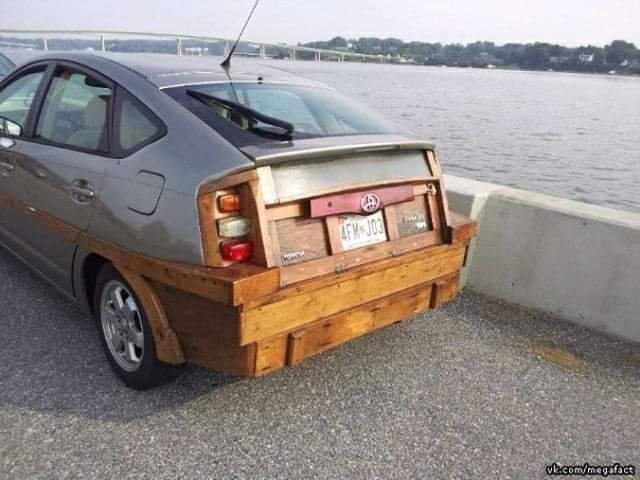
Found another one scrolling through FB just now. Gotta admit, someone with skill went to pretty great effort to do something that probably cost more and took more time to complete than a junkyard bumper skin would’ve been to install.
-
For some more accurate numbers than my memory, I just rolled out to the local transfer station and weighed the truck. 1360kg total 770kg on the front axle. That’s with 1/4-tank of gas, no driver, and a few odds and ends in the truck but not really anything heavy, maybe an extra 20lbs at most. Keep in mind this is pretty well the lightest spec truck, 2.5, ax5, 2wd, shortbed, rear bumper delete, bench seat (buckets are likely lighter?). For those who can’t function in metric that translates to 3000lbs total, 1700lbs on the front axle, 56/44% F/R. Those numbers may look convenient but they’re rounded more precisely than the +/-10kg display on the scale. I don’t have accurate numbers, but pretty well every other option other than a d44 or a rear bumper (or filling the fuel tank) is going to add more weight to the front than the rear. A long bed pushes that weight even further forward.
-
The grinder gives wood a nice finish, too.