


gogmorgo
-
Posts
5984 -
Joined
-
Last visited
-
Days Won
4
Content Type
Profiles
Forums
Gallery
Everything posted by gogmorgo
-
 They do look cool. Small red flag for me is they only seem to be available from oddball discount places. Firestone themselves don’t even list them on their website. This doesn’t mean they’ll be junk, just probably they won’t perform as well as one that’s actively promoted by the manufacturer. And those four small patches of rubber are the only things keeping you on the road or trail. I’d also not be super keen due to the lack of the 3pms rating, but that’s more of a concern in my particular area than in most people’s. But they do look cool, and absolutely would look good on an MJ. And I won’t lie that 50% of the reason I choose the tires I do is because of the way they look.
 -
In a pinch, most liquids are better lubricants than air. It’s probably fine if you’re just using it with seafoam or something as a quick flush and won’t be beating on the engine while it’s in there. But of note, that penzoil is a diesel oil. More specifically it’s a mixed-fleet (one-size-fits-all) oil, but 15w40 is consistent with diesel engines. CH-4 is the diesel standard introduced in ‘98, SJ for the gas engine standard was largely replaced by 2002 if you want a narrower window on its age, although the API still considers both specs to be “current”. (I think that means it’s still acceptable for production, you might see it for sale at the dollar store but wouldn’t necessarily want to stick it in a modern turbocharged engine sorta deal) So if you don’t want to run a diesel oil…
-
¯\_(ツ)_/¯ We run a diesel oil in our entire work fleet whether they’re diesels or not. It’s got the API ratings for both. In 200 vehicles that get run up past 200,000 miles we’ve seen two engine failures. One was a 200,000 mile ‘93 chev 350 back in 2018 that we were already planning on selling off, fired up before lunch to melt the windows off and when we came out it had a puddle of oil under the rear main and was seized. The other one was a 2014 chev 4.3 with around 150,000 miles on it that was left idling pretty well 24/7 all winter and typically was also over double the recommended mileage when it was eventually brought in for oil changes. While I can’t say the oil didn’t contribute to either of these things, it’s also not likely the choice of oil was the thing at fault for either failure. Yeah, obviously you should pick oils rated for the application, but that’s not to say there aren’t one-size-fits-all solutions out there.
-
Headlight harness relay upgrade... with DRLs?
gogmorgo replied to gogmorgo's topic in MJ Tech: Modification and Repairs
LMAO no I haven’t actually gotten further with this. ADHD things I guess. Hyperfocus on some idea for weeks and then encounter some tiny hiccup and stuff everything in closet to get buried until suddenly I need to accomplish something ¯\_(ツ)_/¯ I haven’t gone back through the thread to see if I said this already, but I had been leaning towards a small resistor to knock a few volts off. But the issue I encountered there was that going through spec sheets on automotive relays, there was some pretty wild variation. Most didn’t list a “hold-in” voltage, but some were so low that it was clear something was needed. But some of the relays listed trigger voltages that were high enough to mean I couldn’t knock too many volts off the top or I couldn’t guarantee I’d get enough voltage to trigger every relay out there. And that’s where I got stuck. Doctoring the relay accomplishes basically the same as adding in a resistor, but it also doesn’t accomplish the goal of wanting off-the-shelf parts that will be guaranteed to work first time every time. The other solution that would work is a variable resistor, allowing the user to dial it down if it won’t trigger, dial it up if it holds in, for whatever their system is, but that’s messy. And given some relays would hold at basically no voltage means there would be trouble triggering the relays at all. I’m still convinced there’s got to be a simple solution from off-the-shelf components, but I’m just not knowledgeable enough about electronics to properly know where to even start figuring that out. -
If where you're going is only going to get down to +5°F on occasion, I wouldn't even bother installing anything. On the other hand, if you are going to experience colder than that, you should know that a 50/50 blend of normal ethylene glycol antifreeze and reasonably pure water will remain liquid until below -30°F. Wait, you're the guy moving to Glacier, right? 50/50 should be fine, although you might want to go a touch richer. I typically try for a 2:1 ratio for easy measuring with what I top up with, but generally I just fill the system alternating between a jug of concentrated antifreeze and deionized water until it's full, making sure it's got more of the antifreeze than water. System capacity is something like 12 quarts, but since there's always a little remaining in the system after you drain it you'll put in the first gallon of antifreeze and first gallon of water just fine, then you'll run out of space as you're adding the second gallon of antifreeze. That said, no one I know has ever damaged anything from running a 50/50 ratio, and the premix is definitely easier to deal with. Definitely also make sure you're running a 5Wxx oil, there is a very noticeable difference in cranking speeds between 5w40 and 15w40. As far as block heaters go, generally put it in the easiest to access freeze plug in the block. Getting warmth into the coolant is the best strategy. I'll be honest that I generally don't bother plugging mine in if it's not getting below -15F or so because street parking makes it problematic, but it's definitely worth doing. If you're paying for the power you use get a timer set for ~4hr before you normally would drive the vehicle. Some block heaters will draw upwards of 1000W, which can be a lot if you leave it plugged in all the time when it's not being driven. Also make sure the block heater cord is in good condition and any extension cords you use are properly rated for it... the number of vehicles I've known that burnt down and were attributed to the block heater cord is higher than you might think. Battery and charging system health is also a big deal. Don't let your battery get discharged out in the cold. It will freeze, the electrolyte will expand and distort plates or split the case open. If you do freeze your battery, check it over for cracks and then thaw it out before charging. If the vehicle was sitting overnight and the battery was low enough you needed to boost it to start, it's pretty likely it's been compromised. If your battery was sitting at -40 and the engine cranks over but doesn't want to fire, don't keep cranking until it won't any more. And if you've got things that don't shut off and constantly draw power like a security system, remote starter, or keyless entry (not necessarily talking MJ here) absolutely do not let the thing sit for more than a week without running it or you'll come back to a fancy brick. Battery blankets can help, but they'll also hide a weak battery which can leave you stranded if you end up parking somewhere you can't plug in.
-
Mm. Yeah. My housemate was saying the house used to have mice issues, then a pine marten started showing up around the place and we haven’t had issues with mice the whole time I’ve lived here. Cute little evil viscous killer beast.
-
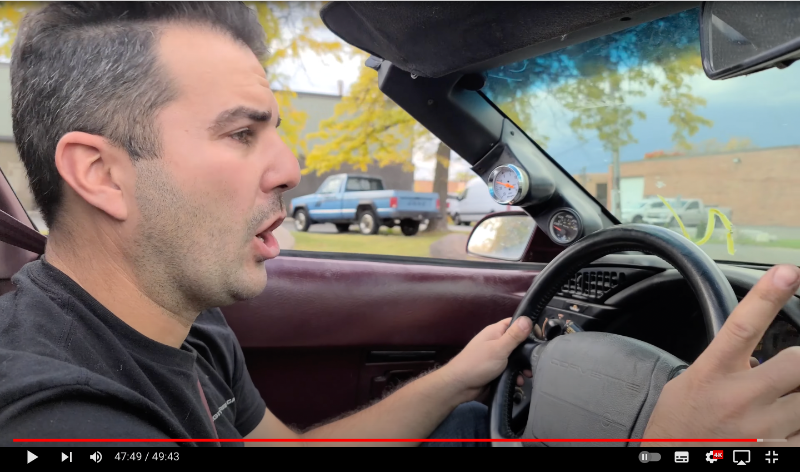
Does this count as spotting one? Happened to glance up at exactly the right moment, had this playing in the background while folding laundry, 47.49 mark if it doesn't jump to the time for you. https://youtu.be/sfw_UTWOX_c?t=2869
-
Front axle help in my 88 MJ
gogmorgo replied to vanquishings's topic in MJ Tech: Modification and Repairs
I’m curious what they come back with after they get it, if they update you that is. Did you take any measurements? I’ve occasionally had ujoint yokes bend on me, although never enough I couldn’t get the ujoint into it. There’s a possibility it got squeezed a bit in shipping I guess. -
Fortunately my last idea was stupid enough that’s it’s still fresh in my mind and I don’t need a repeat.
-
Buying an MJ with no title?
gogmorgo replied to VorTekX's topic in MJ Tech: Modification and Repairs
Nah, you wouldn’t want to make it more difficult for states to discriminate against poor people. Like, I get back in the day it was probably useful for preventing people from selling or registering stolen vehicles, but since computer databases started being a thing it’s one heck of a lot less work to make a quick database search and see if a vehicle has been reported stolen. I know I’ve mentioned it before, but here in Alberta, all you need to register a vehicle is a bill of sale. When you register it they run the VIN. If it’s not in the provincial database due to either not having been registered in Alberta, or the last registration predates the computerization of said database, there’s a couple federal databases they check, they make you do a basic safety inspection, and that’s it, and it goes into the database. There’s also a basic process anyone can run (for a fee of course) that allows you to check any vehicle’s status in the database so you can be sure you’ll be in the clear and not just have to trust a seller. I did it with the last two vehicles I bought. One was located in Saskatchewan and had sask plates in the photos but the seller claimed it was last registered in Alberta so I wanted to make sure, and the one before it I got with minimal paperwork from the last registered owner from a guy who hauls away scrap cars, and it had clearly been sitting unused a LONG time so the vehicle’s status was a question mark. Both registered no issues. And that’s the way things should be. If the vehicles haven’t been reported stolen, don’t treat the person in possession like a criminal. I’m not going to say Alberta’s vehicle regulations are the perfect model to be imitated on everything, but there are definitely some things it gets right. -
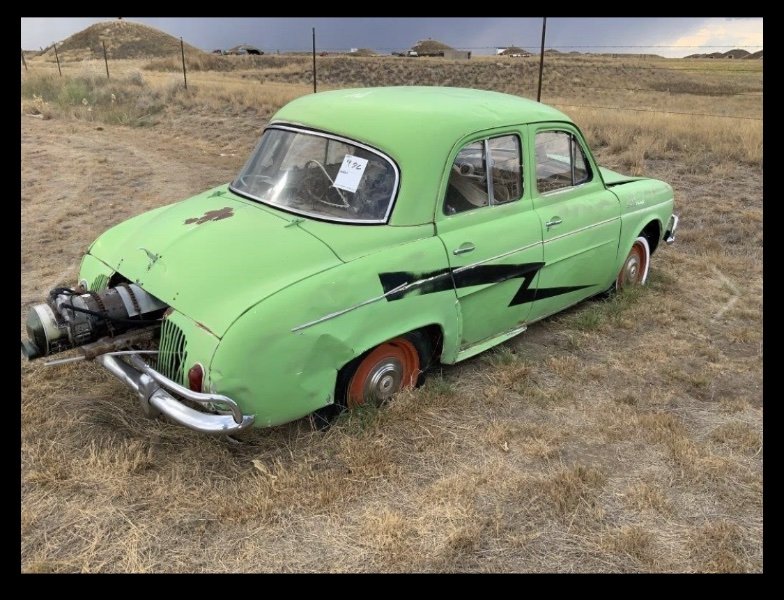
I know better than to click on that link. Not doing it. Nuh-uh-no-way. The Jeeps are items number 128, 205, 206, 250, 264, 277, 286, 462, 498, 882, 899, and 914. There’s also a TON of super interesting stuff to see though, including things like #986, “1950 Daluphine homemade elec car”, #648 “WW11 Command Car”, and a whole bunch of other interesting that caught my eye scanning the listings. https://bidnebraska.hibid.com/lot/134512155/1950-daluphine--homemade-electric-car--?cpage=4 Good thing I don’t live anywhere near Nebraska. Although grand scheme of things 2200km isn’t all that far…
-
Turn key, have lights but no start?
gogmorgo replied to Classy Comanche's topic in MJ Tech: Modification and Repairs
I was going to ask if you’d gotten around to changing that starter out yet. As for the battery, nine years is a good long life. Pushing double what I would expect out of one. If it load tests fine, that’s one thing, but a weak battery that can’t deliver proper voltage at full load will be hard on both your starter and alternator. Your starter failure is more likely due to mechanical wear than the battery, but a weak battery will cause it to pull more current which can slowly cook it. It also makes the alternator work harder to keep it topped up. The battery is super easy to replace on your own. So is the starter. Even more convenient is you won’t need to disconnect the battery a second time if you do the starter while the battery is out. To change a starter: disco the battery negative Remove the big cable from the battery to the starter (at the starter end) Remove the small wire (trigger) from the starter. Remove the two bolts holding the starter onto the engine. Keep track of which bolt goes in which hole. Don’t let the starter land on your face if it wants to fall out. If the starter didn’t just fall out when you pulled the bolts, wiggle it, smack it a hammer a few times, it should mostly come straight out but sometimes they need wiggled around to the exact angle. Installing the new starter is as they say, reverse of removal. Wiggle it back into place until it’s sitting perfectly in the hole, and hold it there while you get the bolts started. Put them back in the same holes they came from. Put the trigger wire and battery cable back onto it. Hook the battery back up, looking for big sparks or any smoke to let you know something might have gone wrong. Go turn the key, marvel at how quickly the new starter turns over the engine, and spend a week or so being surprised by it actually doing what it’s supposed to before you get used to the new normal. -
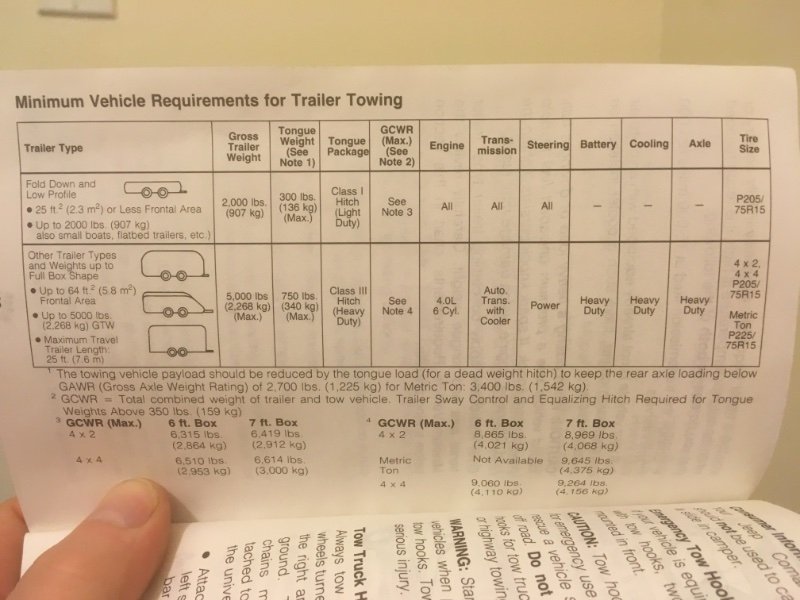
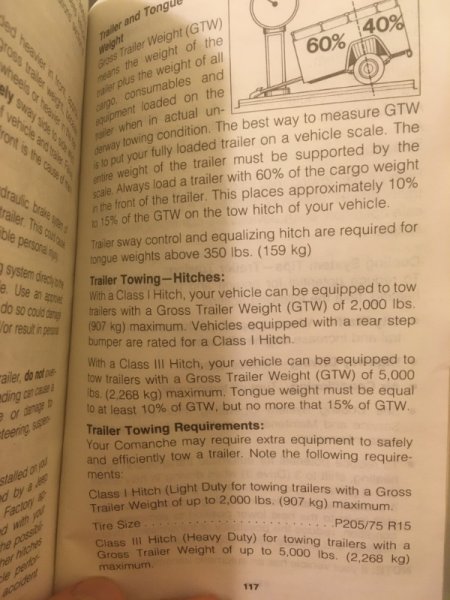
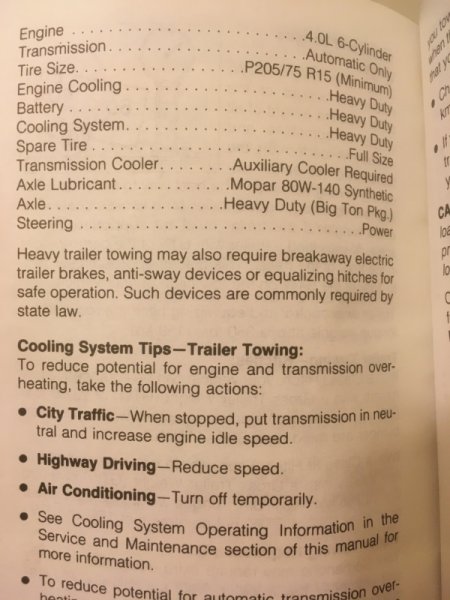
What the owner’s manual has to say about towing limits: If it’s a normal sized quad on a utility trailer it shouldn’t be an issue. I wouldn’t recommend towing with the factory bumper. They like to trap rust and break in half in the middle. But they do count as a class I hitch. The top row of the table is your class I hitch. The second row is the fully specced HD everything pack. Most MJs with a frame-mounted hitch are going to be somewhere between those two. But there’s no info about how a smaller engine or a manual trans affects things with regards to tow ratings… but I will say that my ax15 ZJ was only rated to tow 2,000lbs. Also of note, your jurisdiction may require brakes at a lower weight than the manufacturer specifies. In my case it’s half tow vehicle weight, so my shortbed would need trailer brakes on anything over 1500lbs, even though Jeep said 2k is fine.
-
I’ve got an MSR auto flow gravity filter. I prefer filtering over boiling or tabs/drops just to get the particulate out of the water. The gravity flow system is convenient because you just fill the bladder, point the hose into your clean water container, and let it go. And you can do something else while it’s filtering. It also packs pretty compact and light. The one downside is you do need to get the bladder up in the air, so if there aren’t convenient trees or anything around you’ve got to stand there holding it, or squeeze the bladder or something. The filter also plugs up, but it’s easy enough to reverse the flow through it to clear it. I don’t know if I would necessarily buy the MSR again, given there’s other very similar systems available at slightly better prices. The Nalgene bottle adapter it comes with is annoying to use because you need to leave it unscrewed or else the bottle airlocks and stops filling, making it easier just to use the hose, so don’t get too excited about that. You can also just get replacement filter elements separately, so I’m pretty sure you could just pop one into the middle of a line for whatever water bladder you already owned, and call it good. I haven’t tried it yet, but I do have an older bladder kicking around that I don’t use much anymore and eventually the temptation will get the better of me.
-
Even if there wasn’t a clear-flood mode at WOT, simply opening the throttle to allow more air in will help blow the excess fuel through and lean out the mixture. It’s part of what helps clear out a flooded carb. I’ve had a few injected vehicles where I’ve had to give them 1/4 throttle or so to start in extreme cold. They’ll sit there and crank and not start, but crack the throttle and they fire right up. Probably some issue with temp sensors or the IAC that only presents at -30, I never bothered digging into it. Once they start they’ll be fine until they cold soak overnight.
-
Nice. There’s some pretty decent pack chairs out there now, seriously lightweight and very comfortable, but the ones I’ve tried all feel pretty flimsy when someone 200+ lbs sits in one.
-
Most of my gear is MEC, similar to REI but Canadian. Fairly similar setup I think. The sleeping pad used to be self-inflating but after rolling it up a few times well below freezing it doesn't do that any more, and insulation from the ground is starting to get not so good so it's probably time for another one soon. I've also got an inflatable pillow, beats the crap out of stuffing the rest of your clothes into a shirt. I went for an Osprey pack due to the airflow for my back, sweat is a BIG deal for me. On a longer trip I'll definitely end up going to the dehydrated meals by the end, but I'll usually haul in a decent steak and potato sort of meal for the first night, bacon and eggs for the first breakfast. I've tried using frozen full meals for second or third days but they need a pretty specific weather window to work properly, otherwise they thaw way too quickly or they're still solid by the time you get to camp. I also target 40ish pounds. Hiking boots over shoes if I'm carrying a pack, but I'll go for a lighter shoe if I'm travelling light. I've got an isobutane pocket stove that sits on the ground instead of on top of the gas bottle. Seems to help in terms of shelter from wind and stability, although I prefer cooking over a fire if that's an option. Anodized aluminum cookware, bamboo utensil set.
-
I’m always curious about peoples’ setups. I’ve always had a mind where I don’t mind carrying a little extra weight for at least a semblance of luxury. Like I carry coffee beans and a grinder instead of going instant or grinding the beans ahead of time, and I’ll try to bring some “real” food as a treat instead of just everything dehydrated. But in my local area, the trend is towards super minimalism to avoid bringing any weight that isn’t strictly necessary.
-
I wasn’t thinking bumper initially, but then I was wondering where to stash any electronics.
-
When I was looking at doing this I was thinking I'd use the mounting holes to screw it to a piece of plywood that had hangers mounted, so it would be an enclosed system, just one piece to mount and dismount from the wall. It also would give it a place to mount a factory bumper for a more complete look.
-
AMC20 Rebuild on MotorTrend
gogmorgo replied to WahooSteeler's topic in MJ Tech: Modification and Repairs
I guess if you're parts bin shopping for a low-volume car, who better to go copy from than the kings of parts bin shopping? -
Vibrations at highway speeds
gogmorgo replied to VorTekX's topic in MJ Tech: Modification and Repairs
Depending on tire size, balance issues typically show up somewhere between 50 and 70 mph. Sometimes they go away as you go faster, sometimes they don't. Sounds like you picked up some loose tires and had them installed, presumably they were balanced at the time? It's unlikely to be the issue then, but you never know. You can also try swapping the tires front to rear to see if things change, or swapping over a set from another vehicle that doesn't shake instead of putting down money to get them rebalanced. The old tires were just about bald, were they bald evenly across the tire or worn out in certain spots and not others? This can help gauge whether the alignment was off or not, or if there's a worn out suspension component. Don't overlook rear suspension if you can't find anything up front. It's also a good idea to check your front driveshaft. If you can move the double-cardan joint up and down, the centring ball is worn out, which can cause some crazy shakes. Also check all the ujoints and the joints in the front axle shafts as well. The shifter moving around suggests you should look at trans and motor mounts as well. -
-
Misfires, jumps and feels like maybe sensors?
gogmorgo replied to MobilJoe1's topic in MJ Tech: Modification and Repairs
When you changed distributor cap and rotor, did you check to see if there’s play in the distributor shaft? I’ve been dealing with a similar stumble on my ZJ. Nothing under heavier throttle but gentle acceleration or parking lot speeds and it would cut out, super obnoxious with the five-speed. No codes, and looking at sensor data with my snap-on brick hasn’t revealed anything. The things I’ve done to it that have made a big difference though have been tightening the intake/exhaust manifold bolts which got me two months, then changing the intake/exhaust manifold gasket, which “solved” it for about six months and then about a year ago I changed out the distributor because the shaft had enough play it was leaking oil into the housing, and it’s been behaving ever since. Changing any of the sensors out with known good ones never changed anything. The only measurable symptom I ever got was little up or down ticks in fuel pressure just before and after it would stumble. The sync sensor, sometimes called camshaft position sensor, lives in the distributor and is what determines injector timing. I suspect the wobble in the distributor shaft was screwing with the sensor readings but that’s just a guess. If you do go for a new distributor I’d recommend getting the ‘95 style. It’s got the sync sensor just under the rotor so you don’t need to pull and disassemble the whole thing if you ever need to change it. But I would try to swap in a known good one if you have access, no sense throwing out money on new parts you don’t know will fix the issue. -
Misfires, jumps and feels like maybe sensors?
gogmorgo replied to MobilJoe1's topic in MJ Tech: Modification and Repairs
Have you checked for trouble codes? The CEL only comes on when the fault is present, but codes are stored for at least a little while and can be accessed by cycling the key a few times. I would put money on it not being the crank sensor. Crank sensor is an all or nothing deal, not just a little stumble.