


Minuit
-
Posts
5139 -
Joined
-
Last visited
-
Days Won
13
Content Type
Profiles
Forums
Gallery
Everything posted by Minuit
-
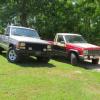
Home stretch now. Two and a half weeks to go. I've been working on getting things back to normal - working on cars, exercise, etc. I'm starting to feel increasingly like I did before this all happened. I even "returned to work" for a little while - if you can call a silly training class that. I'm even going to the junkyard this week. To commemorate the good news thus far (and hopefully in the future) - I did let something follow me home that I know at least a few of you might appreciate, and I know at least one of you is extensively familiar with.
-
 Waiting List Update: June 2021 Attention JRE Customers and Friends: The waiting list will once again close for new orders on June 11. There are currently over 100 names on the list, and the list is growing more quickly than I can fill orders. In addition, my health has improved and I anticipate returning to my old job in July. While I consider it good news on the whole, it will slow down Radio Emporium-related activities again. What does this mean? If you would like to place your name on the list, you have until June 11. No further names will be accepted after that time. If you have already gotten in touch with me in any way, no further action is required. If we have discussed putting your name on the waiting list, no further action is required. DIY Kits, Parts, and Wiring Harness Products are not subject to the waiting list and will not be affected by this change. You will still be able to place a new order for any of these items after June 12.
 -
I do not know if the pressure switch on these trucks had a high pressure cutoff feature but I'm leaning towards no. The FSM makes no mention whatsoever of a high cutoff pressure. Now for the later 94-96 systems, I've seen some literature that suggests the switch has a high cutoff at 475 psi. Like I said, be careful when recharging.
-
99% this was just a failure of the switch, not any kind of safety precaution. If there was a safety in the system, it would be in the form of a binary high/low pressure switch that disables the A/C request signal, not as an explosive decompression. I've seen quite a few oil pressure sending units fail in exactly the way you describe. You should be OK with replacing the switch and recharging, but you will obviously want to watch the high side pressure as you do so. Since the refrigerant escaped so quickly, you will want to add oil as well.
-
Don't worry about 8 ohm speakers. 4 ohm speakers will be fine.
-
Can make that happen a lot faster than a radio. Send me a message when you're ready.
-
Correction: you will be on the waiting list for a while.
-
The factory branded ones are somewhat rare and are worth a few bucks to the right person. Since this is an aftermarket one, it wouldn't be a super valuable item but maybe nice to have for someone looking to protect their bed.
-
Bench seat to XJ Bucket Conversion
Minuit replied to Warren99's topic in MJ Tech: Modification and Repairs
The seat change happened in 1995. -
Doing good and feeling good to be honest. Slowly working in a little more activity to my schedule.
-
91 HO Shut Off While Driving
Minuit replied to kryptronic's topic in MJ Tech: Modification and Repairs
I got nothin', sorry. My intermittent shutdown issues have tended to be ignition coil related too, but this is a rough one. At least mine have had the courtesy to be a little more regular and consistent. Do you know the rough age and brand of the coil? -
The '89 parts are not compatible. You may be able to make them fit, but it's really probably not worth the effort. The compressor and compressor mounting is different, and I'm not sure if you can simply swap out the compressor brackets to fix that. The earlier system has a smaller compressor and theoretically less cooling power as a result. The '96 parts pretty much just bolt on. It's the same compressor as your '91 would have come with, just with a different cylinder head and line connections. Everything except the line from the expansion valve to the receiver-drier is available new, and pretty cheap too. The only permanent modification you need to do this is to replace the connector on the high-low safety switch on the drier. Just snip the plug off of a '95 or '96 XJ. HOWEVER - doing this will make oil filter changes more difficult. The later line configuration places two of them right where the oil filter is on your truck right now. Later engines had the oil filter turned back towards the rear of the truck to clear these lines. BUT My advice - perform the '96 swap at your own risk. One member @schardeinhas had good luck with the swap. I, on the other hand, am not satisfied with my '96 A/C swap and will be going back to the original '91 setup at some point in the future. It works great, but I am having trouble with compressor slugging after shutting the truck off and getting back in after about 10 minutes. That's a really bad problem, and could turn the compressor into a glitter bomb in a hurry. I'm just going to put it back to stock. I think if I were in your position, I'd just stick with the '91 way. The only tough things to find will be the service valves on the compressor, and even those shouldn't be too hard to find. Use the parallel flow condenser from APDI with all-1991 parts, and you should be good to go. My sources aren't clear on what lines you can't get new, so that leaves two and you still might be able to get those. I'd need to do some more careful looking. You can definitely get the suction and discharge lines new. If you can't get a hose new, you can always find an old one and have a hose shop make you a new copy. I wouldn't bother with flushing something 30 years old that wasn't made to work with R-134a in the first place. Just make sure they use barrier hose, and keep in mind that you will not have standard Schrader valves with the 1991 system. The service valves on the 1991 system are manual! If you take your gauges off and don't close the service valves, the inside stuff will get outside! Don't ask how I know. Factory charge weight was 38 oz for the '91 system, so with R-134a you want approximately 30 oz. If you didn't know, you can get parts from 1991, 1992, and 1993 Cherokees as well. The condenser I recommend is the APDI 7014173. The OE-replacement condenser may suffer with R-134a as it was designed for more efficient R-12. That part number fits 87-96 MJ and XJ with 4.0L. The company that makes it only lists it for Comanches. These trucks used Sanden compressors, which in my experience make some amount of noise and vibration inside the cab when the A/C is running. Don't worry about it too much, I've tried almost everything I can think of to get rid of it. I think that's most of it. Hopefully this is actually useful and not just incomprehensible word salad.
-
The dealership still exists, but it's not much of a sight. It's a generic used car lot now, was a Jeep/Eagle store.
-
Jeep Suburban. Don't know what else to say It does absolutely nothing for me.
-
That's a classic CPS symptom. In fact, I'd go so far as to say it is THE classic CPS symptom. But yeah, check for spark and then go from there.
-
Just to give you an idea of the kind of things we'll be using this for - I do really intend for this setup to be capable of factory-quality work if the monkey behind the gun is working correctly. To be more specific, I intend to paint my '91 (restoration, and in original color) in this booth, and I'm a pretty tough customer, especially when it comes to paint jobs. That particular truck will be pampered, covered, and the paint will be ceramic sealed as soon as possible. We'll be doing other stuff with less stringent quality standards to dial in the booth setup (and our painting technique, I suppose - but neither of us are complete novices at painting) before touching anything we really care about. @PCO6 that looks really damn good, especially considering you did it outside! If I tried that, every single bug, piece of pollen, and drop of tree sap in sight would be on my truck by the time I finished my first coat. Also, it would decide to start raining even though none was in the forecast
-
DashMat is the brand I have. It screams "I'm covering up a cracked dash" but it looks nice in its own way. I don't like the piece you get to cover the glovebox so I didn't install it.
-
That would be very helpful.
-
Pack the connector with dielectric grease, and make gaskets out of foam where the connector touches the body. Nothing is commercially available.
-
How much has the system on this truck been messed with? It is one of your trucks, right? Has it been converted? I'm assuming here that it's at least been converted. Put manifold gauges on it before assuming anything is broken. Post those readings as well as the ambient temperature when you took the reading. Check to see if the clutch stays active {rev the engine to simulate driving), and if not, post the gauge reading when it kicks off. You aren't one of those people who need a warning to not shove more refrigerant into it before you get more info, but, yeah, don't do that. That is a very common way to make the problem worse.
-
Close - the radiator one is a switch for the auxiliary fan (Renix only - that became an ECU function on HO models), the rear of the head is for the gauge, and the sensor for the ECU is in the side of the block for Renix and thermostat housing for HO. At some point after I believe either 96 or 97, the gauge reading was supplied from the ECU instead of the sensor in the rear of the head, so then there was only one coolant temperature sensor.
-
I got bitten by the aftermarket senders - more specifically, Wells, once. Never again. Made me chase my tail on an "overheating" issue for slightly longer than I'm willing to admit. Mopar for everything for me from now on. With properly cleaned connections (this is CRITICAL on a resistance-to-ground type sender such as we have on our trucks) and the proper senders, the dash gauges are trustworthy.
-
Compressor wise, I need to check with him because he might have it figured out already. Naturally, the compressor will need to be sized to the guns. Don't know if he has 230V available in the building, if not that's obviously going to be a major blocker. Thanks for the advice so far.
-
This summer, a friend and I are going to be setting up a DIY paint shop, and we want to get it right. I know nothing about setting up a DIY paint shop. I know there are at least a few people on here that do. I do really like to paint stuff, and both the friend and I have several projects in mind already. We are planning on building the booth semi-permanently into the building, probably with a PVC frame and plastic sheeting... like most DIY paint booths end up being. I have been put in charge of the equipment for this project, and I'm looking for quality gear that'll last for longer than one paint job before being trash, since if all goes well (and neither one of us loses interest in the process - my friend has assured me he won't) we're looking at at least six vehicles or so. Paint guns - at least two, one for primer and one for color and clear. I understand that this is a HUGE matter of preference. I don't want a piece of trash, but I don't want to spend a billion dollars on a paint gun either. What's a good middle ground? Air regulators for paint guns - is there a preferred model here? Suits - any special considerations I need to make here? Respirators - ditto Booth airflow - I know a lot of people might say "box fan in, box fan out, with a filter taped to the intake fan" - I want to get it right. How much more thinking do I need to do about the airflow through the painting area to get it right? Positive/negative pressure? Airflow direction? What am I completely forgetting to think about here? Any comments are much appreciated.