

gogmorgo
-
Posts
5984 -
Joined
-
Last visited
-
Days Won
4
Content Type
Profiles
Forums
Gallery
Everything posted by gogmorgo
-
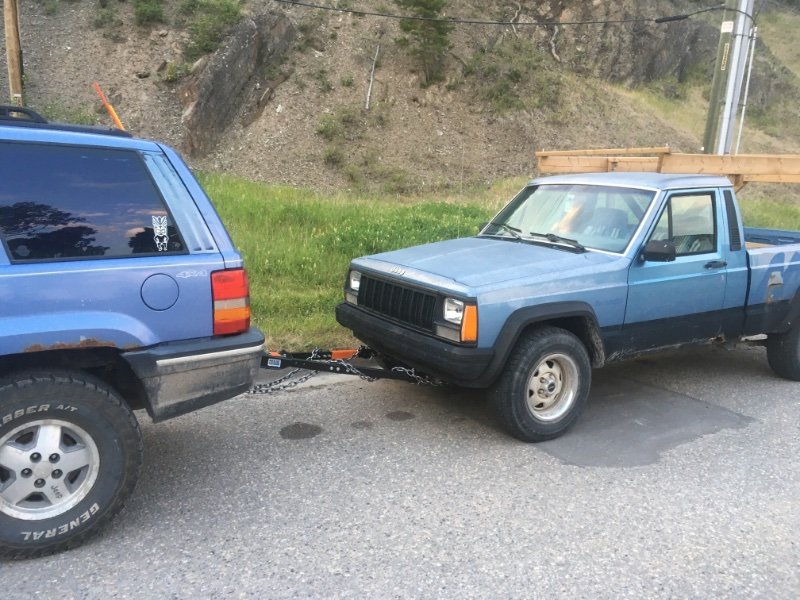
My '91 owner's manual doesn't actually list anything about 2wd in any of the sections on towing. I've done it with my 2wd just by sticking it in neutral, although I've never gone particularly far at a time. That said, I've heard the odd report of a vehicle in neutral somehow getting bounced into gear, leading to engine damage, although I think that's a little implausible... you'd have to smash the spinning trans output into a dead stopped input, essentially bump starting the engine with the synchros, not the clutch. Murphy's law and whatnot I guess it's a possibility, but you'd need a pretty perfect storm for it to happen. My experience working in and around campgrounds tells me it's far more likely someone just left it in gear without realizing based on that happening all the time, the internet is also flush with pics of cars severely damaged by being dragged behind big RVs in park or with the parking brake set. But user beware I guess. If it's an option it's always going to be better to get the wheels off the road, or at least pull the driveshaft.
-
 If you can't find one more local to you, I've got one in a dead '91 2.5 I'm about to toss, but I'm pretty far away from Texas.
 -
-
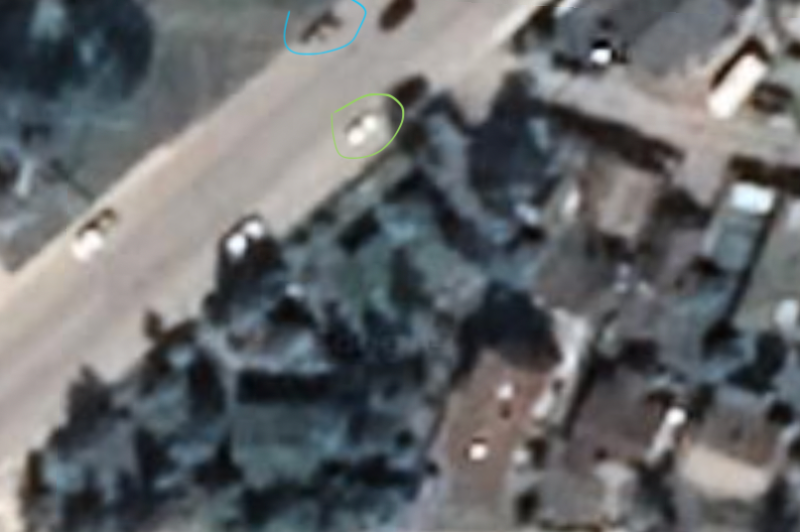
I wasn't going to contribute because the imagery in my area had been taken in the winter and was just an overexposed white blur for the most part, but I guess they updated it last summer . Still not the best resolution there either, and frankly you wouldn't necessarily guess there was a house there if you didn't know it already was. The roof is green tin, so it just looks like green space, but you can see the shadow, and in front of the house is one of my Ladas circled in green with my shortbed MJ across the street in blue... I think. It's kinda hard to tell, if I'm honest. I checked everywhere else I've lived in the last ten years, and all the imagery is more recent than my presence.
-
You might want to double check your local regulations before mounting fog lights on the roll bar, at least if you intend to use them as such. Generally speaking fog lights are required to be below the level of the headlights.
-
904 auto trans Dodge D100 slant 6
gogmorgo replied to dragordie's topic in MJ Tech: Modification and Repairs
Did you need to do anything to make the wheels fit? I was looking at them a while back as a potential source of 17" Jeep wheels, but everything I looked at said the centre bore was too small. -
AX4 was a manual four-speed. The AW4 four-speed auto would still be the factory automatic. My guess is it’s a mistake in the ad, I doubt it’s had a five speed swapped in.
-
Try to park out of the way of the big trucks. Most of the truck stops around here at least seem to have a car parking lot as well, some even seem like people leave their rigs parked at the truck stop and commute back and forth in their cars. I wouldn't pay for a shower unless you’re using it. It’s not a bunch of money, but if they’re busy you might be getting a time slot pulled away from someone else. Just buy something from the store if you feel like you need to contribute.
-
Engine Temp Drops In the Cold
gogmorgo replied to ktmall07's topic in MJ Tech: Modification and Repairs
A seized fan clutch absolutely can cause over-cooling. There should be enough resistance in it on a cold engine that it doesn’t freewheel, but there shouldn’t be a whole pile of resistance either. But for sure start with the thermostat. Cars had working heaters long before they had fan clutches. A seized clutch is mostly just going to cost you a tiny amount of power and fuel economy so long as you have a functioning thermostat. I only brought up the clutch because I’ve had thermostats stick open at much lower temperatures and still had the engine get hotter than 120°F. We had a discussion on Mopar thermostats recently, where we established Motorad is the supplier. They sell their own brand and also supply other brands. I wouldn’t hesitate to run one. -
If it’s -22 here, do I win with more twos, or do mine cancel out because they’re negative?
-
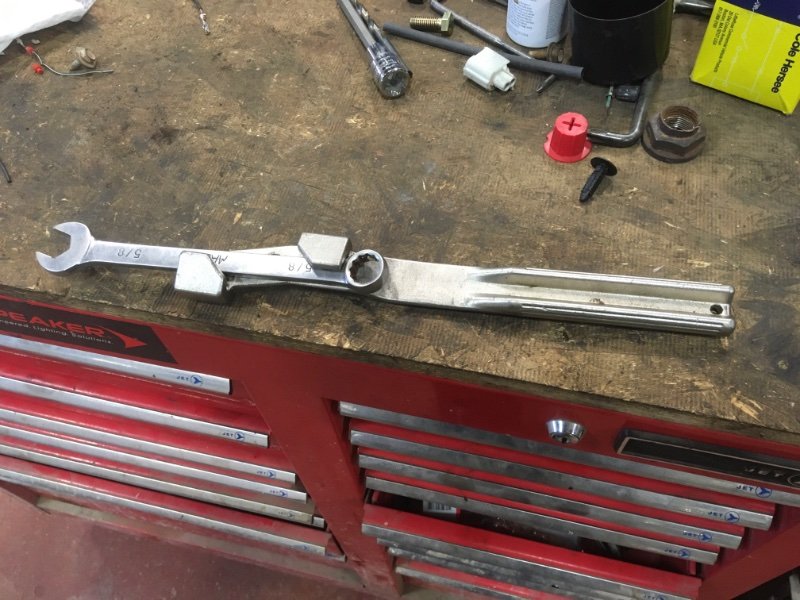
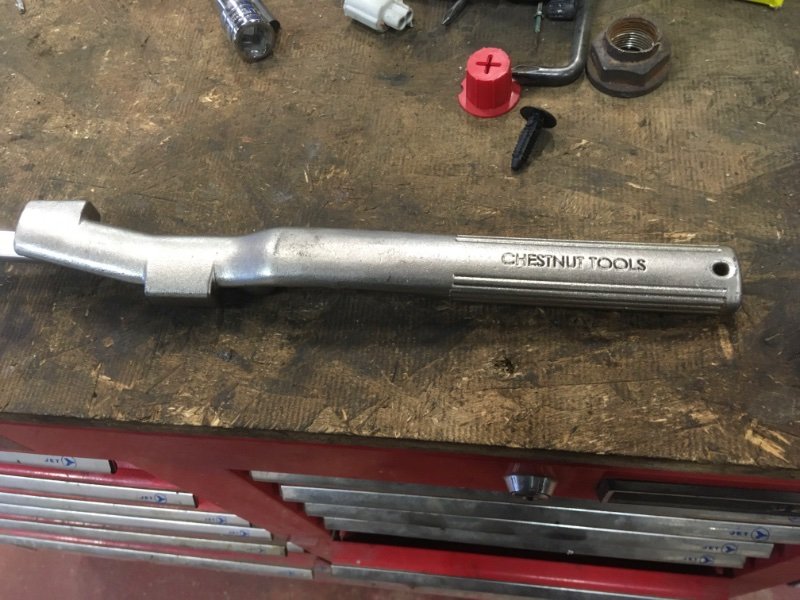
One of those handy things, something I inherited at work. I’ve never really gone looking for another, or found out what it’s properly called, although I refer to it as a wrench extender. The only marking on it is “Chestnut Tools”. I don’t really use it for super high torque stuff, although I suppose you could, but I use it more for when I’m working at awkward angles and it’s tough to get a solid pull on the wrench. There’s a couple magnets between the grips so the wrench stays put, and it’ll handle every size in a typical wrench set, for reference the one in the photo is 5/8”. Beats the crap out of a pipe or some sketchy wrench interlocking.
-
Engine Temp Drops In the Cold
gogmorgo replied to ktmall07's topic in MJ Tech: Modification and Repairs
You have an engine oil temp gauge, or just the factory temperature gauge that measures coolant temp? Thermostat is likely, go with 195°. 25-30° is chilly but not super cold, I wouldn't expect a bad thermostat on its own to have that drastic of an effect on a running and hot engine at that temperature, but you can always experiment by blocking some of the airflow off through the rad with cardboard or something, see if the temp comes back up. Is the fan clutch maybe seized? Low coolant level will also affect heater temp. -
12 hours is a LONG day on the road if you're doing stuff in the middle, and especially if you're not accustomed to it. There's a reason commercial drivers are limited to 10. After having done that sort of trip a bunch though, my biggest piece of advice is that nothing replaces sleep. Trying to stay up on caffeine or otherwise might keep you awake longer, but it doesn't really make you any more alert, your brain needs the rest, and if you're loaded with caffeine, you won't always be able to sleep when you need to. Having the truck is an advantage because you can stretch out in the back. Ideally I'd have a bed situation, even just a mattress and blanket, that I can stop and crawl into without having to worry about setting up. Especially in the middle of the night or at a truck stop or rest stop, no one is going to care much if you're parked a few hours, but having some stealth is better in urban environments. If my bed needs unpacked and repacked every time I use it and I'm in a busier area, I prefer to set up out of the way and then drive a minute or two to where I'll actually sleep. I've also found in a large well-lit parking lot, parking directly underneath a light will get you further away from the other lights and the roof blocks out the one above you. Don't expect to sleep if you parked near a giant flag, and beware of sprinklers... I once left my windows cracked and woke up in the middle of the night after getting hit in the face. Talk about disorienting. If you're only packing for a day it's not as big a deal to depend on gas station food, but if you're doing multiple days you're going to want something healthier. If you're doing restaurant food I do very much appreciate sitting down and eating in, if you're allowed to do so. It just gives a bit more of a break from the road, helps clear the head. In addition to food, I've started packing my own toilet paper from home to bring into public washrooms. Also handy for roadside emergencies. And yes, music's my go-to. Anything spoken is either boring enough it makes my attention wander, or so distracting I stop paying attention to the road with almost no middle ground. Just don't use slow music that will put you to sleep.
-
Brake light on after dual diaphragm install
gogmorgo replied to Geek's topic in MJ Tech: Modification and Repairs
When you say you replaced the proportioning valve, do you mean you eliminated the height sensing valve, or did you just swap out the distribution block? -
Covering my ears doesn’t make the voices stop, they just take advantage of the quiet to get real loud.

-
Advice on if I have the right part or not
gogmorgo replied to Classy Comanche's topic in MJ Tech: Modification and Repairs
Looks like very likely just a loose clamp, or the clamp cut into the hose. Those look an awful lot like the worm clamps you don’t really want to use, but it’s hard to tell. Pressure hose is the one coming out of the tank, going through the filter. The other one is the return. If you’re pulling all the hoses to compare to stuff at the parts store, make sure you’ve got a good system to remind you where they go. Usually I measure out how much hose I’ll need, then go out and buy a few feet more than that because I always measure wrong and it’s better to have extra than not enough, and then replace each length one at a time. Also worth noting, hoses are measured by the i.d., or inner diameter. Changing hoses and that fuel filter are very basic level things, shouldn’t be too difficult even for a beginner. Just don’t stress out the metal lines too much, they’re pretty thin. If the hoses don’t easily come off, you can try poking a pick under the rubber to try loosening them, although if I was replacing the hose anyhow, I’d just cut it off. My personal opinion on the short piece of hose in the tank is it’s better to leave it alone rather than going to the trouble of pulling the sending unit out to change a piece of hose that’s still doing it’s job. It’s not that pulling the sending unit out is particularly difficult, it’s just it can be annoying to line up the seal properly, especially if you don’t have a ton of experience, and if you get it wrong you run the risk of creating a worse leak than the one you already have and you won’t find out about it until the next time you fill your tank past the level of the sending unit. Yeah it’s nice to know it’s replaced and not going to strand you somewhere, but cracking apart a good seal “just because” is something I try to avoid doing. Most of the failures of that hose usually happen not long after the fuel pump was changed, anyhow. But if you do end up changing the hose in the tank, remember to get submersible fuel line for that section. Because of cost, regular fuel line is only fuel-safe on the inside, and the outer layers won’t survive very long in regular contact with gas. If you do go to replace it, you’ll learn that submersible fuel line is significantly more expensive than the regular variety. -
-
Advice on if I have the right part or not
gogmorgo replied to Classy Comanche's topic in MJ Tech: Modification and Repairs
If it’s running down the driveshaft my guess is it’s spraying out of the lines near the sending unit. If you can see it dripping, follow it until you find where it’s coming from. I don’t remember off the top of my head if the return line is the same size as the pressure line, but what you can do for the pressure line is to go get a fuel filter from the parts store and get hose that fits the filter. Make sure you’re getting fuel injection hose, should be good for at least 100psi. This should be a given, but there are gasoline-rated hoses for emissions stuff or carburetors that aren’t up to the task and are easy to grab by mistake. Also if you’re replacing the hose clamps it’s good to get proper fuel injection hose clamps, instead of the cheap standard worm-style clamps. They’re less likely to cut into your fuel line, and make for more even and more reliable clamping. But yeah, no sense fixing things that you don’t know are broke. Figure out where it’s leaking from first. Remember too that leaks run downhill and get pushed backwards by air while you’re driving, so usually you’re looking up and forwards from where you see evidence of the leak. -
904 auto trans Dodge D100 slant 6
gogmorgo replied to dragordie's topic in MJ Tech: Modification and Repairs
The AMC 2.5 is not an Iron Duke, nor is it a Chrysler engine. It was first introduced while AMC was still sourcing the GM 2.8, (and mostly planning to phase out their straight sixes) and so the AMC 2.5 also ended up with the GM metric/ small corporate/ 60°V6 pattern, whatever you want to call it. Jeep’s choice of automatic behind the 2.5 was the AW4, same as the 4.0, matched with 4.56 gears. You might be able to find the bellhousing to do it, but they’re pretty rare. Failing that, I’d be looking at pulling something from an S10, other than the 2.2, or any other RWD application Iron Duke 60°V6 if you don’t mind 2wd. -
Yeah, one of mine, the PO decided it was a good idea to go buy expensive NOS taillights and then hang them in there on only the outside holes… with drywall screws, so they’ve now rattled around and suffered for it. A nice sheet metal screw is definitely preferable.
-
Fixing Connector Problems -- A Suggestion
gogmorgo replied to AZJeff's topic in MJ Tech: Modification and Repairs
Yeah, I inherited some flux when I first started my current job, but it was seemed to make the splices corrode more quickly, and wasn’t as effective as scraping the “vintage” off. Not that anything I work with is particularly vintage, most of our trucks are under ten years old, they just live and work in a very corrosive environment. In hindsight it’s totally possible it’s an acid flux for not-wiring, i don’t know that I ever checked. -

-
Chrysler 8.25 u joint straps
gogmorgo replied to Vandenborg1's topic in MJ Tech: Modification and Repairs
If you can poke a pick in there or a small round wire brush it can help clean them out. Ideally you'd use a thread chase to clean out the bolt holes, you can make one by cutting grooves length-wise down a sacrificial bolt. Should be the same as the front though, 1/4-28, typically called 1/4" fine thread or 1/4NF. -
Should be a T15 torx head if they're the original fasteners. Righty tighty lefty loosey, don't worry about overtorquing on the way out because the screws don't go into plastic. The inside screws go into speed nuts and the outsides are through to sheet metal. Once you've got those four screws out, give the housings a wiggle and they should pretty well fall out. On the way back in, get all the screws started before you tighten them all down, and then just tighten until snug. While you're in the driver's side, there's a sheet metal screw that grounds a bunch of stuff. Clean it up if it's got corrosion on it.
-
Yeah assuming it was fully charged when parked with no excessive drains I'd say that battery is on its way out. 6°F isn't all that cold, all things considered, but still cold enough I would be concerned about leaving a battery outside and discharged.