
cruiser54
-
Posts
9413 -
Joined
-
Last visited
-
Days Won
14
Content Type
Profiles
Forums
Gallery
Everything posted by cruiser54
-
Adjust the TV cable. Also do this: Over near the transmission dipstick tube are 2 rather large connectors. One is black and goes to the NSS and the gray connector goes to the transmission itself . These 2 connectors carry all the info between TPS, TCU, NSS, speed sensor, and transmission solenoids. Unplug each one, visually inspect for corrosion or bent pins, spray them out with electrical contact cleaner and plug them back in. Additionally, if your Jeep is an ’87 to ’90 Renix, it’s always a good idea to reach up under the glovebox area and unplug the connector to the TCU and spray it out along with the receptacle of the TCU. While you’re there, find the fuse right in that area for the TCU. Remove it and spray out it’s receptacle and clean any corrosion from the fuse. And this: The Renix era XJs and MJs were built with an under-engineered grounding system for the engine/transmission electronics. One problem in particular involves the multiple ground connection at the engine dipstick tube stud. A poor ground here can cause a multitude of driveabililty issues, wasted time, failed emission tests, and wasted money replacing components unnecessarily. All the components listed below ground at the dipstick tube stud: Distributor Sync Sensor, TCU main ground, TCU “Shift Point Logic”, Ignition Control Module, Fuel Injectors, ECU main ground (which other engine sensors ground through, including the Oxygen sensor, Knock Sensor, Cruise Control and Transmission Sync signal. All extremely important stuff. The factory was aware of the issues with this ground point and addressed it by suggesting the following: Remove the nut holding the wire terminals to the stud. Verify that the stud is indeed tightened securely into the block. If the whole stud turns, you can use a 7/32″ six point socket or wrench to hold it so the nut can be removed. Worst case, cut the wires and remove the stud and nut. Install new terminal eyelets on the wires when going back together. Scrape any and all paint from the stud’s mounting surface where the wires will attach. Surfaces must be clean, shiny and free of any oil, grease, or paint. Inspect the wire terminals. Check to see that none of the terminals are crimped over wire insulation instead of bare wire. Be sure the crimps are tight. It wouldn’t hurt to re-crimp them just as a matter of course. Sand and polish the wire terminals until clean and shiny on both sides. Apply a liberal coating of OxGard, which is available at Lowe’s and other stores. Reinstall all the wires to the stud and tighten the nut down securely. While you’re in that general area, locate the battery negative cable which is fastened to the engine block just forward of the dipstick stud. Remove the bolt, scrape the block to bare metal, clean and polish the cable terminal, apply OxGard, and reattach securely. Another area where the grounding system on Renix era Jeeps was lacking is the engine to chassis ground. There is a braided cable from the back of the cylinder head that also attaches to the driver’s side of the firewall. This cable is undersized for its intended use and subject to corrosion and poor connections at each end. Remove the cable end from the firewall using a 15mm wrench or socket. Scrape the paint off down to bare metal and clean the wire terminal. Apply OxGard. Reattach securely. Remove the other end of the cable from the rear of the head using a 3’4″ socket. Clean all the oil, paint and crud from the stud. Clean the wire terminal of the cable and reattach securely with a liberal coating of OxGard. 2 STRONG suggestions regarding the ground system: I prefer to add a #4 gauge cable from the firewall to a bolt on the rear of the intake manifold, either to a heat shield bolt or fuel rail bolt. A cable about 18″ long with a 3/8″ lug on each end works great and you can get one at any parts store already made up. NAPA has them as part number 781116. A further improvement to the grounding system can be made using a #4 cable, about 10″ long with 3/8″ terminals at each end. Attach one end of this cable to the negative battery bolt and the other end under the closest 10mm headed bolt on the radiator support just forward of the battery. NAPA part number 781115. For those of us with Comanches, it’s very important to remove the driver’s side tail lamp assembly to access the ground for the fuel pump. Remove the screw holding the black ground wire. Scrape the paint from the body and corrosion from the wire terminal. Add a 10 gauge wire, with an eyelet on each end, from that grounding point to a bolt on the frame. Better yet, on both Cherokees and Comanches, complete Tip 29 for the best fuel pump grounding. Be sure to scrape all mounting points to bare metal and apply OxGard also. If you want to upgrade your ground and battery cables with custom made parts, contact Neal at www.meanlemons.com Revised 02/04/2017
-

Can't find correct temp sensor
cruiser54 replied to Dzimm's topic in MJ Tech: Modification and Repairs
It's a temp SENDER for use with gauge. TS 199. Or 34707 . -
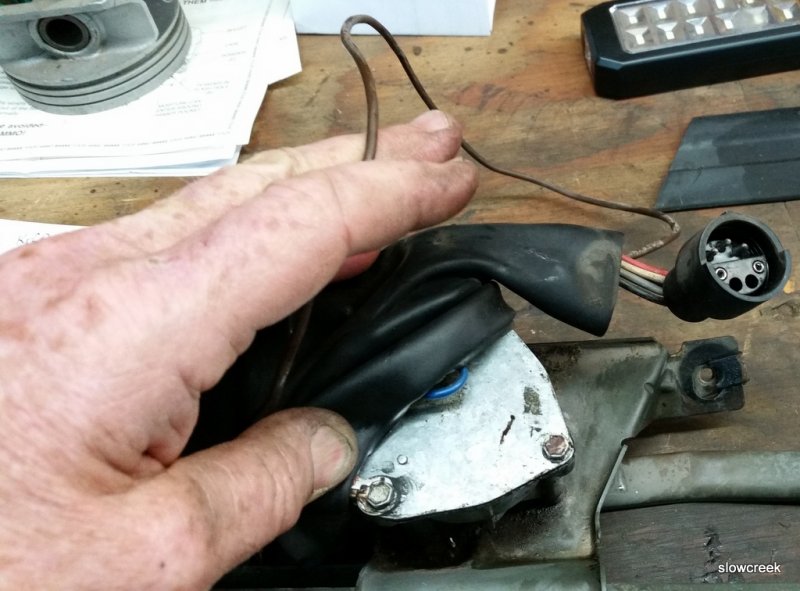
4 Torx bolts. Unplug. Wiggle it outta there. Renix era? Add a ground. also, if you're keeping that motor, open it up. Clean the hardened grease from it and add moly grease.
-
HO: Voltage Guage Reading Off
cruiser54 replied to kryptronic's topic in MJ Tech: Modification and Repairs
Hey Don. do the HOs have the same instrument panel grounds as the Renix era? Here's why I ask: IMPROVING THE INSTRUMENT PANEL GROUND NOVEMBER 17, 2015 SALAD 1 COMMENT The ground point for the complete instrument cluster on your XJ or MJ is located up under the driver’s side dash. If you lay on your back and look up under there with a flashlight, without wearing a hat, you will see a black wire attached to a shiny piece of metal almost directly above the hood release knob. The screw will have either a ¼” or 5/16″ head on it. This ground point is responsible for handling the ground circuit for the following items: Dome lamps, seat belt and key warnings, transmission power/comfort switch, wiper switch, headlamp switch and delay module, fog lamp switch, cargo lamp switch, all instrument panel grounds and illumination, power windows and door locks, cruise control dump valve, and a few more things. The problem is that where the ground point is located does not share good contact with the chassis where the ground should be. The solution is simple: Make up a jumper wire with #10 gauge wire about 10″ long. On one end, crimp on a ¼” round wire terminal. On the other end, crimp on a 3/8″ round wire terminal. Remove the screw from the existing ground wire and attach the small terminal of your jumper so that the original wire and your new jumper share the same attaching point, one over the other. Look above the driver’s side plastic kick panel just forward of the top of the hood release knob. You will see an 8mm stud there. Attach the large terminal end there with a washer and nut over it tightened securely. Use a coating of OxGard at all ground contact surfaces when attaching the screw and nut. **Special note for Comanche owners: Make your jumper wire 12″ long and attach it on the driver’s side kick panel close to the fusebox on the 8mm stud.** -
Clutch pedal differences
cruiser54 replied to MeanLemons's topic in MJ Tech: Modification and Repairs
You mean brake and clutch pedal assemblies? Yes. 91 and later have a provision for a better brake light switch and the 95 to 96 booster swap. -
Grounds and general wiring.
cruiser54 replied to Jeep Driver's topic in MJ Tech: DIY Projects and Write-Ups
Here's the current Tip content at www.cruiser54.com There are also a bunch of links on the home page. INDEX Cruiser’s Mostly Renix Tips Technical DIY instructions covering common issues on the Renix XJ Cherokees and MJ Comanches (1987-1990). Preventative and proactive procedures to save you headaches, time, and money. Many of these tips were provided to me and my buddy Joe by JeepTech when I was Service Manager/Shop Foreman at a Jeep dealer from 1980 through 1992. That’s what “The Book” is all about. Our notes from back in the day. Right from the Field Service engineers. Thanks Lonnie and Big Al!! Most were never published, until now. Tips 1 through 5 are a great place to begin before chasing your tail with parts replacements on your 87 and 88 Jeeps. These are pretty much “haftas” in Renix Jeep ownership. You can skip Tip 2 if you have an 89 or 90. But, do the Tips first……….Avoid firing the “parts cannon” at your Jeep!!!!!!! The next priorities are Tips 11, 13, 31, 25 and 26 A simple multimeter is handy along with a few other basic tools……so dive in and get to know your Renix Jeep. Some Tips also transfer to later years, or the techniques can be adapted. 1 – Ground refreshing 2 – C101 connector refreshing 3 – Connector and relay/receptacle refreshing 4 – Coil/ICM contacts 5 – Checking sensor grounds 6 – Sensor ground upgrade 7 – CPS testing and adjusting 8 – TPS testing and adjusting 9 – ECU connector refreshing 10 – Trans plug connector refreshing 11 – Throttle body and IAC cleaning 12 – Setting your 4.0 to #1 TDC 13 – Renix Distributor indexing 14 – Restoring Throttle Butterfly Adjustment 15 – Rear main seal diagnosis 16 – Vacuum test for exhaust restriction 17 – HO engine into Renix 18 – Improving the instrument panel ground 19 – Headlight harness installation 20 – 4WD shifting tips 21 – Renix EGR valve test 22 – Renix vacuum harnesses 23 – CPS timing advance mod 24 – 4.0 Engine date codes 25 – Valve cover mod ***NOW WITH VIDEO*** 26 – Oil Filler cap Mod 27 – C101 Connector Elimination ***NOW WITH VIDEO*** 28-Improving blower motor performance 29-Improving the fuel pump ground 30-Adding the Sentinel Headlamp feature 31-Throttle body to MAP hose upgrade 32-Renix metric oil filter to SAE filter 33-Converting to an open cooling system 34-Eliminating the Heater Control Valve 35-Reducing cabin wind noise 36-Bypassing the Power/Comfort switch 37-Best injectors for Renix 38-Improving the wiper motor ground 39-4.0 Engine Removal 40-More power for your 87 and 88 4.0 ***VIDEO*** -
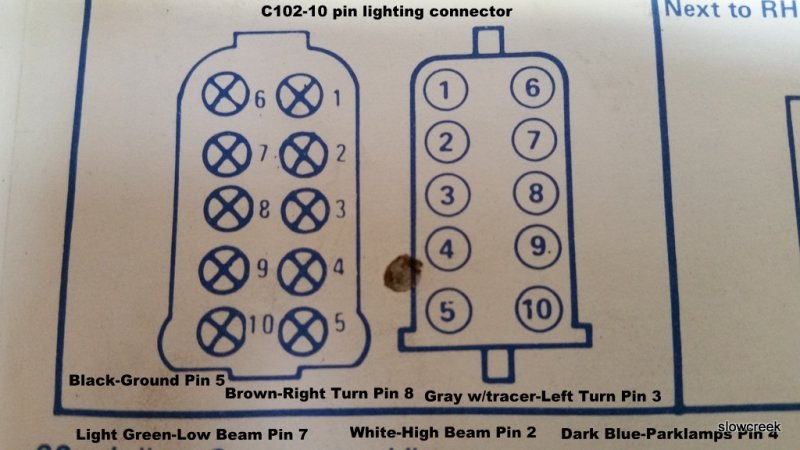
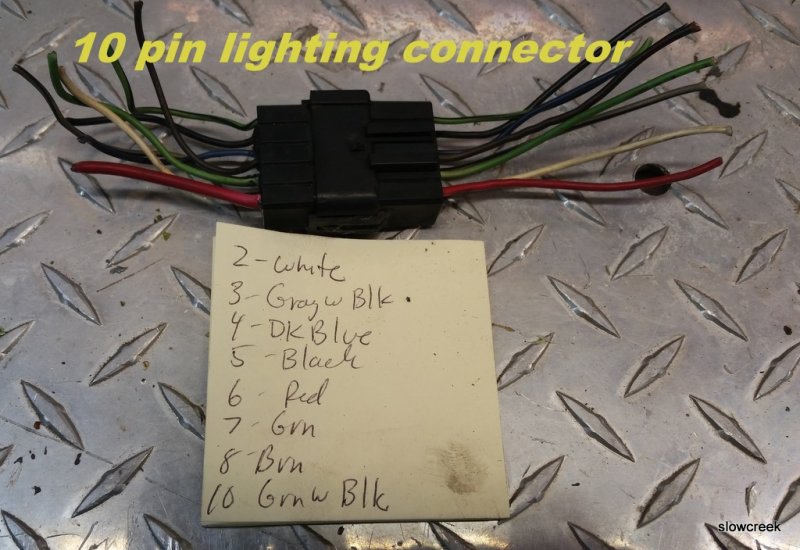
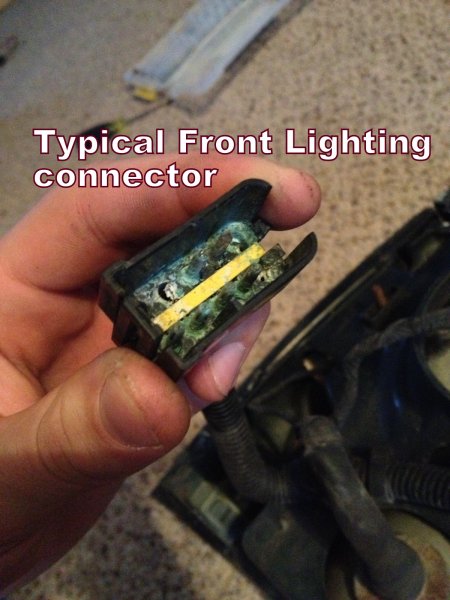
Clean this connector:
-
absolutely. Done it more than once.
-
Shuts Off when warmed up.
cruiser54 replied to BcBrunner's topic in MJ Tech: Modification and Repairs
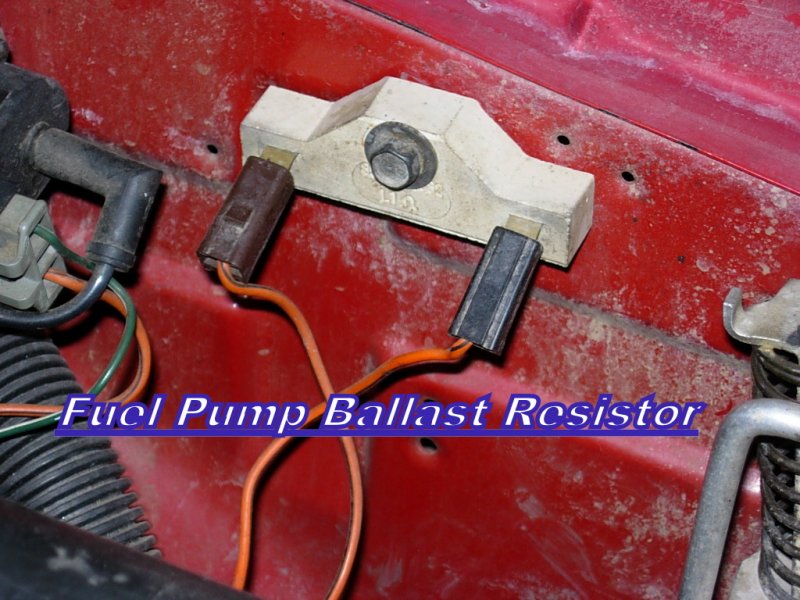
Quick and dirty. Move the relays down one spot for testing purposes. Have you ever done the connector refreshing in the engine bay? Jump the ballast resistor on the left inner fender. Clean your C101 connector. The C101 connector on 1987 and 1988 Renix Jeeps was a source of electrical resistance when the vehicles were new. So much so that the factory eliminated this connector in the 1989 and 1990 models. The factory recommended cleaning this connector to insure the proper voltage and ground signals between the ECU and the fuel injection sensors. We can only imagine how this connector has become a larger source of voltage loss and increased resistance over a period of more than 25 years. The C101 connector needs to be cleaned at least once in the lifetime of your vehicle. Chances are it’s never been done before. Almost every critical signal between the engine sensors, injectors, ECU, and some to the TCU, travel this path through the C101 connector. That said, the cleaning described below is a real MUST DO right off the bat for any new-to-you Jeep. But, I strongly advocate eliminating the C101 at some point by following the procedure with photos and video in Tip 27. Soldering skills are required and it takes about an hour and a half. The C101 connector is located on the driver’s side firewall above and behind the brake booster. It is held together with a single bolt in it’s center. To get the connectors apart, simply remove the ¼” bolt and pull the halves apart. You will find the connector is packed with a black tar-like substance which has hardened over time. Take a pocket screwdriver or the like and scrape out all the tar crap you can. Follow up by spraying out both connector halves with brake cleaner and then swabbing out the remainder of the tar. Repeat this procedure until the tar is totally removed. This may require 3 or more repetitions. Wipe out the connectors after spraying with a soft cloth. If you have a small pick or dental tool, tweak the female connectors on the one side so they grab the pins on the opposite side a bit tighter before bolting both halves back together. If you wish to eliminate this connector entirely (highly recommended), see Tip #27 – C101 Elimination I suggest unplugging EVERY electrical connection in the engine bay you can find, whether engine related or not, and spraying it out with a good electronics cleaner, visually inspecting the terminals making sure they haven’t retracted into the plastic holder, and then plugging it back together. There’s a critical 10-pin connector for the front lighting system located in front of the air cleaner and behind the left headlight assembly. Don’t miss that one. Also be sure that the connectors to the ballast resistor mounted near the air cleaner housing are clean and tight. ALL of the relays should be removed, the terminals wire-brushed until shiny, and the receptacles sprayed out with contact cleaner. Then plug them back in. I do this on every Renix Jeep I purchase or work on for someone else.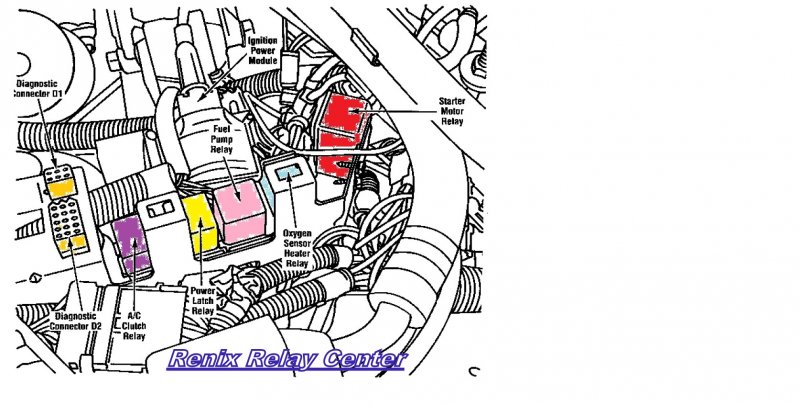
-
At scrap yard now.
cruiser54 replied to ftpiercecracker1's topic in MJ Tech: Modification and Repairs
I've got one like new but with a broken off stud in it. -
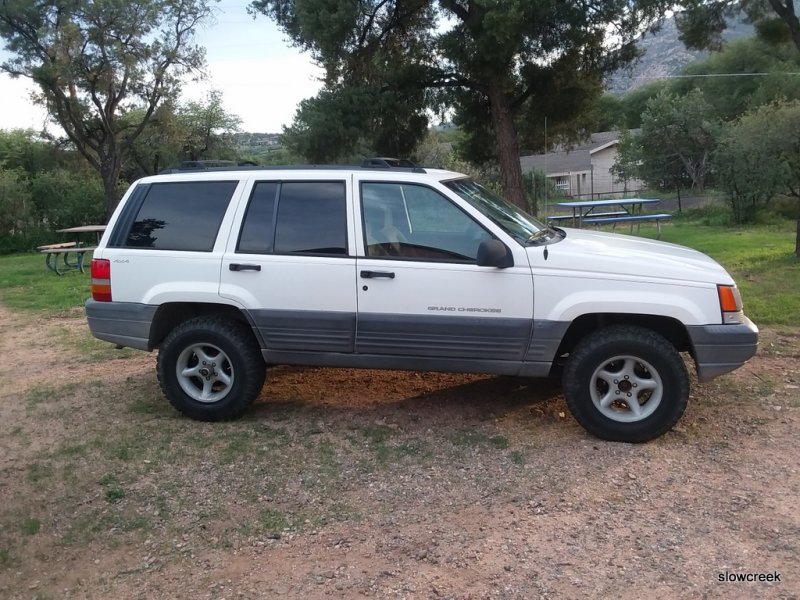
My wife wants it. I was gonna just put the water pump on it and a battery and flip it. The BFGs have 5000 miles on them. I paid $200 for it......Trans has been done. Transfer case works fine. If it fails, I have a spare or I could swap in a 242. And, gogmorgo is right. It's enough of an XJ but lots more comfortable. My wife now drives an 88 XJ with a 3" lift. We're in our mid 60s....... The 88 Laredo will be for sale in the near future.
-
At scrap yard now.
cruiser54 replied to ftpiercecracker1's topic in MJ Tech: Modification and Repairs
The throttle body is worth that? -
98 5.2 with QuadraTrac.
-
No reverse light Voltage
cruiser54 replied to Comnche tj's topic in MJ Tech: Modification and Repairs
TRANS fuse installed in the fusebox? That's the power for the reverse lights. -
Popping sound from speakers.
cruiser54 replied to ratty's topic in MJ Tech: Modification and Repairs
How do you check grounds by just looking at them? You need to remove, scrape, clean til shiny and reattach securely. I'd do this: The ground point for the complete instrument cluster on your XJ or MJ is located up under the driver’s side dash. If you lay on your back and look up under there with a flashlight, without wearing a hat, you will see a black wire attached to a shiny piece of metal almost directly above the hood release knob. The screw will have either a ¼” or 5/16″ head on it. This ground point is responsible for handling the ground circuit for the following items: Dome lamps, seat belt and key warnings, transmission power/comfort switch, wiper switch, headlamp switch and delay module, fog lamp switch, cargo lamp switch, all instrument panel grounds and illumination, power windows and door locks, cruise control dump valve, and a few more things. The problem is that where the ground point is located does not share good contact with the chassis where the ground should be. The solution is simple: Make up a jumper wire with #10 gauge wire about 10″ long. On one end, crimp on a ¼” round wire terminal. On the other end, crimp on a 3/8″ round wire terminal. Remove the screw from the existing ground wire and attach the small terminal of your jumper so that the original wire and your new jumper share the same attaching point, one over the other. Look above the driver’s side plastic kick panel just forward of the top of the hood release knob. You will see an 8mm stud there. Attach the large terminal end there with a washer and nut over it tightened securely. Use a coating of OxGard at all ground contact surfaces when attaching the screw and nut. **Special note for Comanche owners: Make your jumper wire 12″ long and attach it on the driver’s side kick panel close to the fusebox on the 8mm stud.** -
I prefer this in addition to addressing the taillamp ground. The fuel pump and fuel tank sending unit ground at a sheet metal screw up behind the spare tire on an XJ, and behind the driver’s taillamp on an MJ. Not only is a sheet metal screw a lousy way to ground things, this ground path is long and travels through some connectors that are prone to corrosion and moisture. Locate the black wire on the HARNESS side of the fuel pump/sender 3 wire connector. Remove a 6″ length of the split loom covering. Strip back about 1/2″ of insulation from the BLACK wire. Take your new ground wire, preferably at least 14 gauge and 12 to 18 inches long as needed, strip it about 3/4″, and wrap it around the exposed part of the harness plug wire.Solder the connection. Tape it up and reinstall the split loom covering. At the other end of your new ground wire, add a crimp on eyelet. Attach the eyelet under a bolt that goes directly into the chassis. Be sure to clean the attaching point til shiny and apply OxGard to the contact surfaces.
-
Grounds and general wiring.
cruiser54 replied to Jeep Driver's topic in MJ Tech: DIY Projects and Write-Ups
On 87 to 90 MJs and XJs, the blower motor’s factory grounding point is on the driver side inner fender under the sheet metal screw. This ground is shared with windshield wipers, front windshield washers, rear windshield washers, AC clutch relay, fan control relay, fog lamps, fan motor, headlamps, front turn signals, front side markers, and park lamps. So your blower motor has its ground point 10 feet away from where it is located!! What we’re going to do is leave that ground intact and also ground the blower motor on the passenger side inner fender much closer to the blower motor itself. This will also benefit the other components on the factory ground circuit. Take this opportunity to refresh the factory ground as a matter of course. Remove the screw, scrape the surface to bare metal and reinstall the screw securely. Here’s what I do to get the ground much closer to the blower motor and add another ground point to this overloaded ground circuit. Find the blower motor connector on the passenger side. Red and Black two wire connector. Find a location where the black wire can be made to reach the passenger side inner fender, and cut the wire. You may have to do some rerouting of the harness to achieve this. Take both cut pieces of wire and put them together into a yellow eyelet and crimp. Fasten the eyelet to a place on the passenger side inner fender with a sheet metal screw after applying OxGard to the contact surfaces. Be sure to scrape the attaching point on the fender to bare metal first. Your blower motor will now turn faster and last longer, and the other electrical components on the circuit will benefit from a better ground path. -
Grounds and general wiring.
cruiser54 replied to Jeep Driver's topic in MJ Tech: DIY Projects and Write-Ups
This is a good one to do, along with the blower motor and wiper ground upgrade. The ground point for the complete instrument cluster on your XJ or MJ is located up under the driver’s side dash. If you lay on your back and look up under there with a flashlight, without wearing a hat, you will see a black wire attached to a shiny piece of metal almost directly above the hood release knob. The screw will have either a ¼” or 5/16″ head on it. This ground point is responsible for handling the ground circuit for the following items: Dome lamps, seat belt and key warnings, transmission power/comfort switch, wiper switch, headlamp switch and delay module, fog lamp switch, cargo lamp switch, all instrument panel grounds and illumination, power windows and door locks, cruise control dump valve, and a few more things. The problem is that where the ground point is located does not share good contact with the chassis where the ground should be. The solution is simple: Make up a jumper wire with #10 gauge wire about 10″ long. On one end, crimp on a ¼” round wire terminal. On the other end, crimp on a 3/8″ round wire terminal. Remove the screw from the existing ground wire and attach the small terminal of your jumper so that the original wire and your new jumper share the same attaching point, one over the other. Look above the driver’s side plastic kick panel just forward of the top of the hood release knob. You will see an 8mm stud there. Attach the large terminal end there with a washer and nut over it tightened securely. Use a coating of OxGard at all ground contact surfaces when attaching the screw and nut. **Special note for Comanche owners: Make your jumper wire 12″ long and attach it on the driver’s side kick panel close to the fusebox on the 8mm stud.** -
Grounds and general wiring.
cruiser54 replied to Jeep Driver's topic in MJ Tech: DIY Projects and Write-Ups
Let's go a step further..... The fuel pump and fuel tank sending unit ground at a sheet metal screw up behind the spare tire on an XJ, and behind the driver’s taillamp on an MJ. Not only is a sheet metal screw a lousy way to ground things, this ground path is long and travels through some connectors that are prone to corrosion and moisture. Locate the black wire on the HARNESS side of the fuel pump/sender 3 wire connector. Remove a 6″ length of the split loom covering. Strip back about 1/2″ of insulation from the BLACK wire. Take your new ground wire, preferably at least 14 gauge and 12 to 18 inches long as needed, strip it about 3/4″, and wrap it around the exposed part of the harness plug wire.Solder the connection. Tape it up and reinstall the split loom covering. At the other end of your new ground wire, add a crimp on eyelet. Attach the eyelet under a bolt that goes directly into the chassis. Be sure to clean the attaching point til shiny and apply OxGard to the contact surfaces. Revised 1-31-2016 -
Have you ever removed the left taillamp assembly and refreshed that crappy ground connection? This never hurts either. The ground point for the complete instrument cluster on your XJ or MJ is located up under the driver’s side dash. If you lay on your back and look up under there with a flashlight, without wearing a hat, you will see a black wire attached to a shiny piece of metal almost directly above the hood release knob. The screw will have either a ¼” or 5/16″ head on it. This ground point is responsible for handling the ground circuit for the following items: Dome lamps, seat belt and key warnings, transmission power/comfort switch, wiper switch, headlamp switch and delay module, fog lamp switch, cargo lamp switch, all instrument panel grounds and illumination, power windows and door locks, cruise control dump valve, and a few more things. The problem is that where the ground point is located does not share good contact with the chassis where the ground should be. The solution is simple: Make up a jumper wire with #10 gauge wire about 10″ long. On one end, crimp on a ¼” round wire terminal. On the other end, crimp on a 3/8″ round wire terminal. Remove the screw from the existing ground wire and attach the small terminal of your jumper so that the original wire and your new jumper share the same attaching point, one over the other. Look above the driver’s side plastic kick panel just forward of the top of the hood release knob. You will see an 8mm stud there. Attach the large terminal end there with a washer and nut over it tightened securely. Use a coating of OxGard at all ground contact surfaces when attaching the screw and nut. **Special note for Comanche owners: Make your jumper wire 12″ long and attach it on the driver’s side kick panel close to the fusebox on the 8mm stud.**
-
Windshield wiper speeds
cruiser54 replied to Knucklehead97's topic in MJ Tech: Modification and Repairs
I was actually just thinking about that. take some pics. I forgot to.. -
Calipers mounted with the bleeders on top?
-
Windshield wiper speeds
cruiser54 replied to Knucklehead97's topic in MJ Tech: Modification and Repairs
You can also take the cover off the motor and clean out the old grease which is hard as a rock and put a nice moly grease in it. -
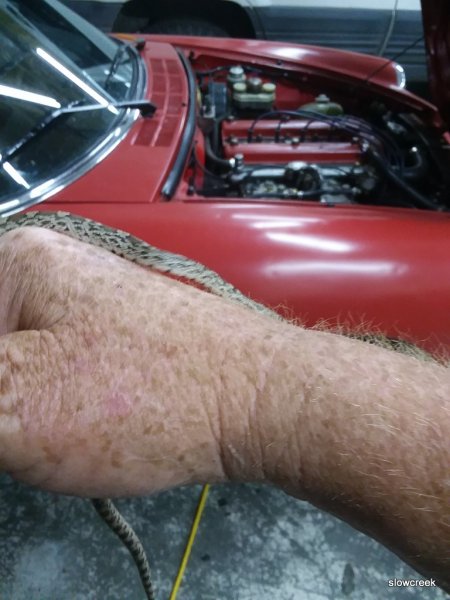
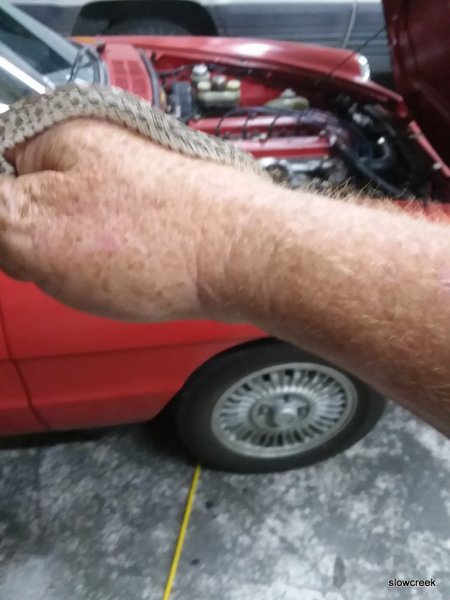
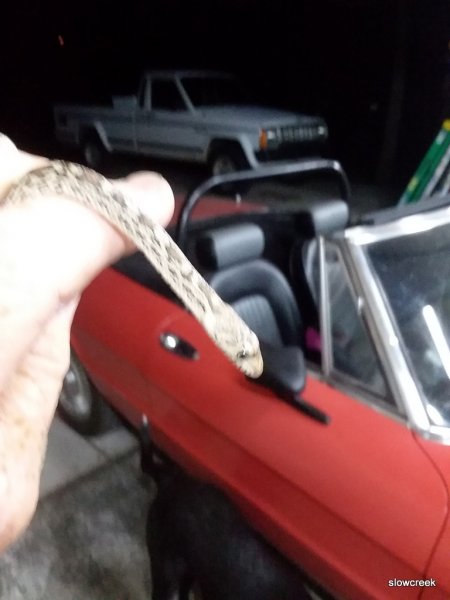
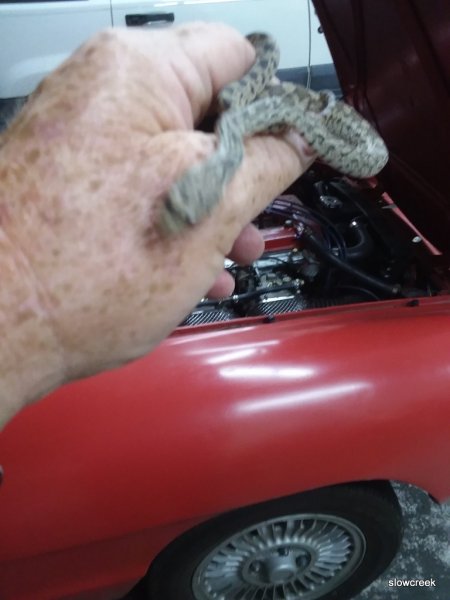
A new visitor last night. Baby bullsnake.
-
Windshield wiper speeds
cruiser54 replied to Knucklehead97's topic in MJ Tech: Modification and Repairs
It helps if you add a ground directly from the wiper motor ground point to a wiper pivot mounting screw. Otherwise, the ground is running from the motor, to the right inner fender, across the front and to the left inner fender.