

gogmorgo
-
Posts
5984 -
Joined
-
Last visited
-
Days Won
4
Content Type
Profiles
Forums
Gallery
Everything posted by gogmorgo
-
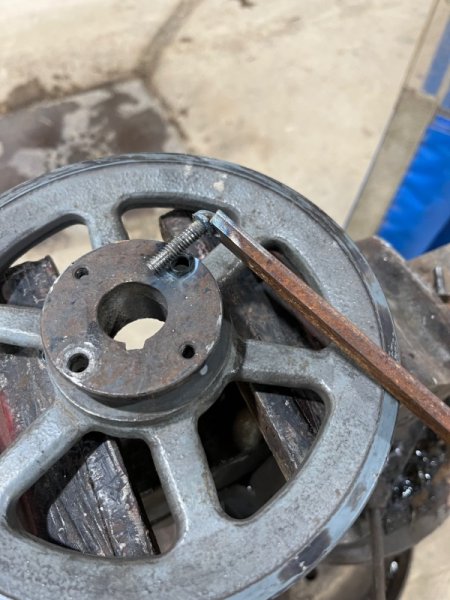
Not exactly a tool in and of itself but I was struggling to get a nut welded onto a broken off bolt the other day. Ended up doing this: Welded a handle onto it instead. When it’s broken off flush it’s tough to get a good weld down into the centre of a nut.
-
XJ electric trailer brakes
gogmorgo replied to eaglescout526's topic in MJ Tech: Modification and Repairs
Usually this would just be to simplify adding in an aftermarket brake controller. Often you’ll have a wire coiled up under the dash that runs to a similarly terminated wire somewhere under the rear panels. The idea is you pull power and ground from somewhere under the dash to power the controller, tap into the brake switch wiring as a trigger for it, and then this wire carries the output from the controller to the appropriate pin on the trailer connector. You’ll see a coiled and taped wire like this even in much newer vehicles with enough towing capacity you might want to add a brake controller, like say a minivan, but where it’s not common enough that it’s worth it for the manufacturer to add a specific connector in every vehicle sold like most trucks from the 90’s on had until they started putting in brake controllers from the factory. I’m pretty sure the ZJ has a similar setup, although I’ve never investigated. Brake controllers and trailer connectors are pretty cheap if you want to add one, although it’s not really something I’d want to install if I didn’t need to. Not a lot of place to put one in a small cab, they’re not usually very nice to look at, and they like to stick out and smash your knees, or they make doing other interior work obnoxious. Seems like they’re always mounted through a panel I need to remove when they could have been mounted a few inches over and never been a problem. If you’re only moving 15 feet you likely aren’t going fast enough the vehicle’s brakes won’t hold up. You can also get brake controllers that go between the vehicle and trailer connectors so you don’t need to mess with vehicle wiring, so long as you have power to the 12V pin on your 7-pin connector. They’re good for towing with a borrowed vehicle or one you won’t be towing with often. You can also just shove 12V directly down the wire if you want to, although that will send full power to the trailer brakes, probably lock them up. The beauty of a brake controller is it varies the output voltage depending on how hard you’re decelerating, which varies the stopping power of the electric brakes and it’s typically adjustable to account for differences in trailer weight. I’m sure you could figure out how to replicate it on your own, but by the time you’ve sorted out a variable output for them you might as well have just bought a brake controller. If you are installing one, inertial is best. It accounts for how hard you step on the brakes. The time-delay controllers just slowly ramp up the output from when you hit the brakes, which isn’t as useful in an emergency braking scenario. Modern controllers have accelerometers in them, and can be mounted in any orientation, but the old analogue ones have a weight on a spring hooked up to a rheostat, and need to be mounted at a specific angle so the weight moves in the correct direction when you hit the brakes. It’s one of those cool analogue systems but I imagine they don’t work so good if the trailer shoves you sideways. -
Usually a pinhole happens because the metal is getting really thin. Not always but often that will be the case. If the metal feels soft when you push on it you’re probably best off cutting out the thin section and replacing. If not, you can put a quick little tack weld on the pin hole. I’ve also “repaired” rough spots and pinholes in aluminum or steel fuel tanks by cleaning the surface really well, smearing with JB weld, and sanding smooth. Holds up just fine and haven’t had one leak yet. You wouldn’t even know it was done after primer and paint.
-
Studs generally don’t require torquing. There are some exceptions of course, and you usually want to run the stud all the way in for maximum thread engagement, but for the most part it’s really just a through-bolt with a nut on both ends. The inside nut in this case just happens to be shaped like an engine block. But as long as the outer nut is torqued correctly it will provide adequate “bolt” tension.
-
Opinion question on white letters out or not...
gogmorgo replied to robfg67's topic in MJ Tech: Modification and Repairs
I bought a set while on the road, because it was snowing pretty heavily and the 11-year-old nearly bald Kuhmo ATs I was driving on were not great. The KO2’s weren’t a huge improvement. But I had no complaints about them outside of winter weather, they were a huge improvement in basically every other condition, although they’re the only tires I’ve had break loose on me just on wet asphalt. Honestly my biggest complaint with them is the sidewall… art? Too flashy. But bringing this back on topic, I had the white lettres out on my KO2’s. Even though the off-centred white lettres looked off, it didn’t bug me enough to flip them around, which I could have done pretty quickly on my own at no cost. -
Opinion question on white letters out or not...
gogmorgo replied to robfg67's topic in MJ Tech: Modification and Repairs
What’s crazy about that though is how many people will tell you they’re the best tire they’ve ever run in the snow. The mind boggles. -
Opinion question on white letters out or not...
gogmorgo replied to robfg67's topic in MJ Tech: Modification and Repairs
KO2s may be soft by your standard, but up here they may as well be hockey pucks 😅 Its funny you mention that effect. We see the same only opposite on plow trucks. Constantly pushing under heavy load. -
New Comanche owner, Lift tips?
gogmorgo replied to Backpacker's topic in MJ Tech: Modification and Repairs
Everything he said up there is worth considering. The typical budget boost is just spacers on the stock springs up front and then lift shackles in the rear. 2” won’t even see you needing to change out shocks or factory control arms, although it’s not the worst idea to get new. The originals are kinda flimsy, I wouldn’t bother putting new bushings in, just replace the control arms outright if they need new bushings. Going to the WJ control arms gives a little more strength and tire clearance. My own lift is definitely not the cheapest way to do it. I’m spending extra money on it for convenience. Also good winter tires make a huge difference in snow over even the best all-terrains. Just saying. -
Nice Taillight bulb upgrade
gogmorgo replied to pizzaman09's topic in MJ Tech: Modification and Repairs
Yeah, like Pete says, just being brighter doesn’t help if the light isn’t going in the correct direction. Taillights are a precision optical instrument the same way headlights are. The lens is designed to shine light in specific directions, and requires the source of the light to be in a specific place and aimed in a specific directions. LEDs can get close, but they cannot perfectly replicate an incandescent filament. Sylvania is a large, well-respected manufacturer, so I’d expect they’d do well, but just because an LED bulb works well in most taillight housings doesn’t mean it will work well in all taillight housings. -
Best internal frame anti rust coating?
gogmorgo replied to 512tr's topic in MJ Tech: Modification and Repairs
Wax or oil based products are best. Things that get reapplied every year. Rubberised or tarry substances (like bed liners) will just trap moisture against the metal when it does get in. It’ll rust out and you won’t notice it’s happening. At least paints have the decency of flaking off when they fail on you. -
New Comanche owner, Lift tips?
gogmorgo replied to Backpacker's topic in MJ Tech: Modification and Repairs
Got a local shop building a set of leaf springs. Specifically they’re getting in a set of original height replacement springs and then adding some arch and probably an extra leaf. They weren’t 100% on what all they’ll need to do until they have the springs in hand, but the guy who runs the show there is a friend’s uncle and has been doing suspension work for going on 50 years now so I trust I’ll end up with a decent product. I will say that it would cost me like 3/4 of what he quoted me was the cost of the new leaf springs he ordered, but even with that it works out to half the cost of getting even the Rusty’s springs brought up here. Shipping long heavy things to Canada is absolutely brutal. If you’re looking at long arm levels of front lift it would definitely be worth looking into going spring-over-axle in the rear. Welding spring perches to the top of the axle. It’ll be a lot more cost effective than finding replacement springs, even if you’re paying someone else to do the welding for you. Also because I brought them up, the Rusty’s springs are hit or miss on quality. There’s more than a few instances of them being too short. Short enough to cause problems with shackle angles. And their response to complaints has not been great. -
New Comanche owner, Lift tips?
gogmorgo replied to Backpacker's topic in MJ Tech: Modification and Repairs
Should have read the whole thread, didn’t see the 4.5” part. I’m currently doing the same thing. I’ll be doing all my own wrenching but I have a local shop building me a 5” leaf pack. It works out cheaper for me than ordering up a full pack from the States, although not a lot. They offered to doctor up my current springs for significantly less but I don’t fully trust them. The passenger side is sagged 2.5” and the driver’s is 4” low, even with a helper-spring shock only on the low side. I found out after my purchase over ten years ago that the guy I think is responsible a few owners before me has a history of… interesting… well repair is probably the wrong word for it. It’s a small town and people talk. The truck’s definitely had some questionable stuff done to it. At that amount of lift usually you’d want to consider flipping the springs over the axle, if you trust them. I chose not to because I’ll be working in the snow in my driveway and I wanted a much more direct interchange than having to mess around with getting perches moved, etc. Up front I got a long-arm upgrade kit for an XJ. Mostly because I felt like if I was doing the lift I might as well go all out if I was replacing all the suspension anyhow. I chose the BDS kit because it’s a proper four-link that I was able to get through a Canadian supplier. So far it’s the only thing I’ve ordered that actually showed up, and it looks like good quality stuff. Can’t say it was cheap however. Short arms are definitely a ton cheaper than long, but 4” is starting to be a lot for original suspension pickup points and ride will start suffering. Some people are happy with it but others aren’t. Mine is mostly a highway cruiser at this point so that aspect is more important to me than other points. It’s incidentally part of why I chose a 4-link long arm over the more common and much cheaper radius arm setups, as it does a better job maintaining suspension alignment specs through suspension travel than a radius arm will. I was going to go with full coils up front but I’m having trouble with retailers being honest with me about lead times and I don’t have them yet. I have an unknown set of lift coils supposedly around the 3” mark kicking around somewhere that may just end up with spacers on top at this rate, assuming I can figure out what I did with them. The advantage of going with stock replacement springs with spacers on top is your local parts store can usually get them without you paying shipping, and spacers are small, lightweight, and cheap to ship. Plus you’ll get reasonably close to an original spring rate, lift springs are all over the place for that. And you can fine tune the setup pretty easily to get a good front/rear stance. But 4” is again a little much for a spacer lift, you start running the risk of things popping out on you with a taller spacer. 3” on top of a ZJ spring would in theory get you there safely, but it doesn’t give you much wiggle room to add another spacer if you need to make up for a heavy bumper, winch, etc. I was going to build my own sway bar links and spacers for my bump stops if I need them. Gotta save a little coin somewhere. This project started because I need winter tires and I decided to lift it to make the Hakkas I got for my ZJ fit, because that’s parked for the winter and I was having trouble tracking down a set of tires I wanted to run in a size that would fit my saggy suspension. There’s, uhh… there’s been a little scope creep, yeah. #JeepMath lol. ¯\_(ツ)_/¯ -
New Comanche owner, Lift tips?
gogmorgo replied to Backpacker's topic in MJ Tech: Modification and Repairs
Shocks aren’t really a “while it’s apart” sort of item. You don’t need to take anything else apart to replace them. If you really want to lift it, I would suggest talking to a local suspension shop if you’ve got one. Likely a lot cheaper to have your factory springs re-arched (because they’ve probably sagged below original ride height) than it would be to ship lift components up to you in Alaska, unless you’ve got a good local supplier. They can probably also add a little extra height for you, put in a full length extra leaf if you want. Up front a set of ZJ replacement coils from the local parts store are going to net you about an inch over factory height reasonably cheaply, plus spacers if you want a little more. With a little grinding of the bushing sleeves you can make WJ lower control arms fit, which will get you a little more tire clearance if you want. But any XJ lift should fit the front. -
It’s good to get in the habit of smacking the chain brake with your wrist whenever you stop cutting things. But even then you gotta watch it. A friend of mine working wildfire ended up with 17 stitches in the back of his knee when he was just carrying one that wasn’t even running, just smacked himself with it while walking through long grass, in full PPE. Apparently saw pants don’t always protect the back of your legs. To that point, if you’re buying them specifically for purpose, at the very least make sure they’re an actual metallic toe cap. Composite toes won’t even slow down a chainsaw. You can even get specific saw boots that have the same saw-jamming Kevlar fibers that chaps and pants have if you want to get real fancy about it.
-

-
This is why I live where the air hurts my face.
-
Opinion question on white letters out or not...
gogmorgo replied to robfg67's topic in MJ Tech: Modification and Repairs
Normally I’d say out, but the KO2’s don’t centre their lettres in the sidewall and it looks wrong to me. -
Gremlins have invaded my Lt. rear turn signal
gogmorgo replied to olddude's topic in MJ Tech: Modification and Repairs
Don’t puncture your wiring insulation on the vehicle exterior if you like having wires inside it. Tape doesn’t stop moisture getting in, it just prevents it from drying back out when it inevitably does get in. -

-
If it is slipping likely the best way to confirm is by getting some load on the drivetrain (driving uphill for example) and giving it some significant throttle. If RPM goes up but speed doesn’t, then it’s slipping. Pulling a transmission is not a small job, so I don’t really want to tell you to go change the flywheel it if it’s not actually going to fix your problem. I don’t know that we’ve confirmed that you have a clutch slipping problem yet. You should at least hear the engine rev up while it’s happening. As to resurfacing vs replacing, up to you I guess. I’ve seen a few people say they’ve resurfaced it without issue. Supposedly (I haven’t confirmed myself but it’s been reported from a few sources) the factory service manual says not to resurface because of the “proprietary contour”. You can sand light grooving (0.001-0.003”) if you want to but anything more than that and you should replace it. I’ve also seen people report using a straight edge and being unable to see the “proprietary contour” on a new flywheel. I’ve never personally checked one. I see more than a few people report finding a contour on their used flywheel, but measuring a wear surface while you’re replacing components that are worn beyond wear limits is not exactly going to give a reliable indication of what the thing originally looked like. I have a hard time imagining the aftermarket would be making flywheels with the “proprietary contour” or clutch discs to fit it, so with that ASSumption you’re probably fine resurfacing. But the easiest way to get peace of mind that your clutch and flywheel match would be to buy them both from the same manufacturer and replace them as a matched pair.
-
If you don’t resurface the flywheel the part that the clutch bolts to ends up raised above the friction surface, meaning the pressure plate has to make up extra distance and may not be able to clamp hard enough. Sometimes you can get away with not doing anything, but if there’s a step worn into the flywheel something will need done.
-
Most trailer lights have direct LED replacements available cheaply. It helps address the blown fuse situation, and also partly makes up for how janky trailer wiring usually is.
-
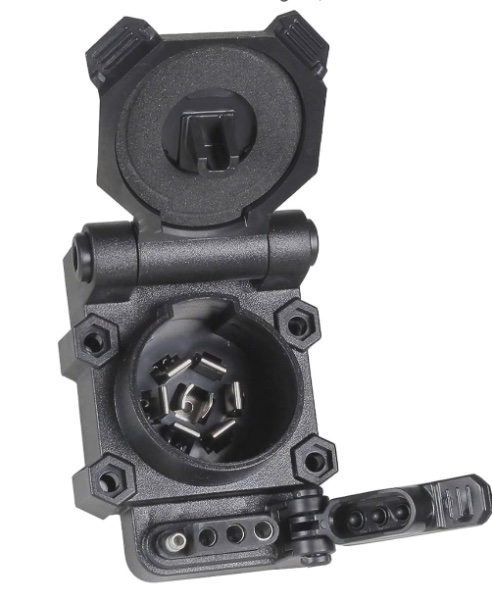
I’m sure there’s an application for a 5-pin trailer connector but I don’t know what it is. I’ve never bothered trying to find out. You won’t encounter it much other than store shelves. Four-pin is common and easy to hook up on a Comanche because brake and turn signals are combined. But the connectors kinda suck, they’re small and easy to break the wires off. Plus the connector pins are very easily damaged and generally prone to corrosion. But it’s all you need to connect to a uhaul, small trailers without brakes, or trailers with surge brakes like most boat trailers. I’d go with a seven-blade myself. Just as common as the four-pin if not more so, and much more reliable, plus it opens up the option to charge trailer batteries and run electric trailer brakes, reverse lights on the trailer should you so desire… although those two features mean more complexity to hook up. But you wouldn’t need to if you didnt specifically want them. You can adapt it down to four-pin if you need to with an off-the-shelf adapter, or better yet get a 7-blade and 4-pin combo like this: The only challenge is finding somewhere to put one. I’ve seen license plate lights replaced with it on the MJ, it’s also common to hang a bracket (the socket often comes with one) down below the bumper or trailer hitch crossbar. But I guess what will work best for you is going to depend on what you’re doing with it.
-
You don’t need to pull the tank to change out the fuel sending unit. It goes into the side, you just need to have it below ~2/3 of a tank to avoid spilling fuel. It’s also not an uncommon leak point. Rotten fuel filler hose can also cause leaks. I guess what I’m saying is that while new everything will most likely solve your problem, it might not be necessary. But the peace of mind of having it all new and functional may well be worth it. I can’t imagine there’s many options out there for tanks. I put the Spectra into my longbed about six years ago and have no complaints. For how small the market is they may well still be pulling from the same batch. I’m sure I’ve seen the XJ tank done, but I’d be nervous about it myself. Especially on a longbed. I think it would be pretty vulnerable there.
-
Gremlins have invaded my Lt. rear turn signal
gogmorgo replied to olddude's topic in MJ Tech: Modification and Repairs
Do you have power at the socket when you should? Ground? No sense diving through your entire wiring harness when you don’t know what side of the circuit has the problem, and poking around in places you don’t know to be a problem is likely to create a new problem to solve. Nothing on either side in the rear working strongly suggests a ground issue. The taillight harness grounds to a sheet metal screw behind the driver’s taillight. That or some fuses got popped. If you don’t have power, the connector between taillight harness and the truck, on the frame behind the driver’s rear wheel, is the next place I would look.