


Minuit
-
Posts
5139 -
Joined
-
Last visited
-
Days Won
13
Content Type
Profiles
Forums
Gallery
Everything posted by Minuit
-
In 1991, they gave you the WHOLE circuit! I have an extraneous connector for a rear washer pump in my harness. Nothing on the interior for a rear wiper/washer switch of course, but the pump connector is there.
-
That would be a bafflingly stupid but not-so-surprising twist for them to have included half (but only half) of this circuit. I know for a fact a '91 is wired for it, but without the bulb in the cluster. Do not expect the cluster to have the bulb. But yes, you should try a bulb in that position and see if anything happens when jumping the pins of the connector. My bad for the assumption. All of this assuming a light that annoys the piss out of you when you use around half of your washer fluid is of any interest to you.
-
Low washer fluid level sensor. Easy option to add if you feel like it.
-
We'll, I drove it 70 miles this morning and no pistons escaped, so I reckon there's gotta be something in there
-
My 91 has a similar chip, but on the other side of the seal. I reluctantly put it back together expecting oil to pour out of the back of the engine. It's totally fine and has been for years. I can park my truck on a concrete floor for a week and not see any oil on the ground. Make sure you use Mopar anaerobic sealant between the seal halves and my guess is it'll be OK. Make sure there aren't any loose pieces of block left where the chip broke off. Also, get a new drain plug for your oil pan. That is an overlooked possible leak. It contains a crush washer with limited life.
-
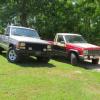
Body Molding Reproduction - PM- TAKING ORDERS
Minuit replied to CoastChief's topic in MJ Tech: Modification and Repairs
I have a full set of the SWB Comanche specific pieces if nobody closer can supply you a set. -
I've gone by this name for so long I don't even remember why I picked it. Google tells me it is French for "midnight" and also the name of a Dutch guy who ran a colony in America in the early 1600s. I don't speak any French but I was a big history nerd as a kid, so it's probably the latter.
-
https://www.ebay.com/itm/264650866832?ul_noapp=true Pretty cheap too.
-
Here's my take. It's not so much WHAT has been done, as HOW it has been done. There's no way you could possibly answer the first question, because every single person you ask is going to have a different answer. Some people are strict purists, some people like big lifts and big tires and will value a truck accordingly. At this point in my automotive life, I don't think I would buy another Jeep that has been messed with by someone else. That's not because I think all mods are bad, but there is much more to doing a modification correctly than just getting it on the truck. Generally speaking - it's much easier to do something that brings the value down. I do not trust the general public to modify a vehicle correctly, especially anything that has to do with steering geometry or electrical work. I've seen way too many hackjobs and way too many things that only look nice on the surface. Here on CC we're insulated from that a little bit, because people who do garbage work generally won't put in the time to show it off on a forum full of people who actually care about the preservation of these trucks, but crap work is out there and way, way more common than it should be. I respect attention to detail. There are certain things you can look at on a modified vehicle to see if there was care taken with the work done. Famous example - if I see a repainted truck that has the Comanche fender badges in the wrong place - why should I think the painter did a good job if they couldn't even be bothered to put the badges in the right place? Anyone who knows how to read a tape measure can find the exact position of that badge on the fender in five minutes. Anyone who doesn't have enough respect for the customer or vehicle to do that little bit of finish work correctly has no business painting a vehicle. Electrical work - I expect to see quality connectors appropriate for the conditions. I do not ever want to see wire nuts, insulated non-heatshrink crimp connectors, or vampire splices. I expect to see relays when appropriate, connected with appropriate relay sockets and NOT just quick-connect terminals that can be mixed up easily. I do NOT want to see un-loomed wires snaking across the engine bay. I do not want to see different circuits using the same wire color. I expect all wires to be appropriately sized. If there are multiple new circuits, I expect to see an auxiliary fuse block as close to the circuit origin as possible with fuses sized appropriately for the wire gauges being used in the circuit. I expect all added on wiring to be removable. I don't want to see a bunch of stuff hanging off of the battery - military style battery terminals are great for making a system with a lot of additions look good and most of these trucks need new ones at this point anyway. I hate all wire splices, but I hate properly soldered ones slightly less. All splices should be done in a part of the harness that does not bend, especially if the connection is soldered. Solder creates a stiff point in the wire that will end up breaking if it is allowed to move with any regularity. Solder splices should be roughly the same size as the wire including insulation. Lumps in the solder should be kept to a minimum, which should not be a problem if the wire is properly heated and flux is used. Additional flux should be used and the excess cleaned up. Crimp connections are totally fine if proper tooling is used, and for parallel-type connections I prefer crimp connectors. Most aftermarket audio system work makes my blood boil. A lot of people don't want to keep the factory components, and that's fine. What is not fine is cutting up factory harnesses, wiring speakers with the wrong polarity, etc. It's a personal thing, but I really don't like aftermarket radio installs that have the radio protruding from the dash. Since you asked for a list, here's a few of mine in no particular order: ADD VALUE: - Headlight harnesses - Non sealed beam headlights (halogen or quality LED) - A high level of options, even if the truck might not have had them from the factory. - Signs that the truck has been maintained properly over its life. - Some electrical stuff, if I can tell that it's been done properly. NEUTRAL VALUE ("meh"): - A well done aftermarket radio install, which is a small percentage of aftermarket radio installs. If I were to buy a truck with one, I'd probably switch it out with one of my factory ones out of preference. - 97+ mirrors. What they gain in visibility they lose in looks. LOWER VALUE: - A repaint in a factory color if I can tell it's a repaint. If I can tell it's a repaint without being told, it's not good enough for me. Badges in the wrong place are the #1 alarm bell. - Aftermarket additions like remote starts and alarm systems. I get why you would want them, but they are too invasive to the factory wiring for me. - 99.5% of aftermarket audio work. - Trashy looking or knock-off LED headlights with terrible optics. Sadly these are the majority. - Most uses of spray on or roll on bedliner. - Most things you can buy at Autozone. - Non-factory wheels. - Oversized wheels. Sometimes 16s look good, but most 17s are too much. Exception: I really like the 2000-2001 Icon wheels and may end up with a set when I need tires next. - 97+ front clip. I just like the old one better.
-
TJ NV3550 starter bolts
Minuit replied to DirtyComanche's topic in MJ Tech: Modification and Repairs
That's what happens when you build a vehicle made up of 25% domestic parts that date back to the 60s, 25% domestic parts from the modern era, 25% French parts, and 25% Japanese parts -
I don't drink alcohol but I have had NA beer a time or two. It's ok I guess.
-
4.0 VCs through the end of the 1995 model year were cast a-loo-minum. 87-90, 91-95, and 96-06 are the year splits. 96-2006 are stamped steel with a full length internal baffle to reduce oil pickup in the CCV system. Good luck cleaning inside of it if the engine is sludged. The Renix and HO valve cover baffle tubes can be trimmed down to help reduce air filter lubrication. From what I can tell, Renix era valve covers were not painted so have taken on a dull chalky look, 91-95 VCs were painted with a terrible matte black paint that doesn't stick worth a damn, and 96+ valve covers were painted with a semi-gloss black that holds up pretty well. You can bolt any valve cover onto any year of engine, but the vacuum fittings will be substantially different from a Renix year to an HO year. The 1996 and up gasket does not line up on the bolt holes like the 87-95 Fel-Pro gasket does. It actually lines up on the head bolts with built in pins that older engines will not have. This makes it rather challenging to line up properly. I gave up and swapped my original back on. The 1996+ CCV fittings install differently onto the valve cover, but are more or less compatible with the 91-95 hose assemblies. The oil caps leak on the pre-96 valve covers. They like to break off in the 96 and newer valve covers. Pick your poison. The valve cover bolts are different between 87-95 and 96+ valve covers. Early model bolts are longer. Bolt threads are 1/4-20. My engine does not have severe blowby, so I decided I did not want to deal with the VC gasket leak and possibility of snapping off an oil cap in the later valve cover and swapped my original back on.
-
WJ Booster/MC Conversion & Distro/LSV Delete?
Minuit replied to jrl3's topic in MJ Tech: Modification and Repairs
Can you lock your brakes at full pedal application? Do you have plans of running very large or very sticky tires? -
You can spend a LOT of money on a fancy pants rebuilt steering box. The advantage here is that it's more or less the same unit that almost every domestic manufacturer used at some point, so there's a lot of institutional knowledge and "boutique" rebuilds out there. I have heard very, very bad things about parts store reman steering boxes. With that having been said, I'd give the rest of the suspension another look before suspecting the steering box as your clunk. If the box is loose, there is a procedure to adjust it that MUST BE DONE OUTSIDE OF THE VEHICLE - follow the FSM for the exact procedure, or when I get a chance I can scan it and put it up on here. If you do determine the steering box needs to be replaced, now is a good time to upgrade to the 12.7:1 quick ratio ZJ box. It will provide a noticeable improvement in steering response for not much money, and since I adjusted mine out of the vehicle it drastically tightened the steering as well - probably not as good as a brand new or boutique reman, but not bad either. I would caution you to avoid parts store remans in this case too, since they don't seem to keep the gear ratios correct for the application, so you could very well spend all that time and money to end up with the same slow 14:1 ratio you started with. I've never rebuilt one, but it doesn't seem too terribly complicated. I think the main concern is cleanliness. It doesn't take much crud in a power steering system to do damage.
-
I don't think I've posted a pic of it in at least a couple of years. I'm cheating as one or two of these don't actually belong to me, but I'm also not counting the dozens of circuit boards and other parts I have under the table. Also not counting the ones installed in the trucks
-
I've converted completely to Gearwrench's 120XP line for my ratchets. I have them in every drive in flex head form. Every time I use a different kind of ratchet (even the Mac-Ons of the world) I remember why. Although these days, if at all possible to use a power tool, I will. I have done some unholy things to my 3/8" drive ratchet that should have broken it. The handle is still perfectly straight and there are no skips in the ratchet mechanism.
-
So when are you taking it home?
-
Top right is an XJ rear.
-
What is considered not stock
Minuit replied to CoastChief's topic in MJ Tech: Modification and Repairs
You should. It's a ton of fun, especially if you go with some other MJ owners. Your truck especially, considering how original it is. -
Meant to buy a parts rig....
Minuit replied to 88towmanche's topic in MJ Tech: Modification and Repairs
Swapping to the dual diaphragm booster certainly won't hurt, but there's more to it than "remove old, install new" especially on Renix trucks. There will be some light fabrication, as the pedal mounting is different on a Renix era truck, and the dual booster's master cylinder has metric bubble flares rather than the typical double flare. The assembly is larger, and the similar WJ booster is in some ways more convenient to install but requires you to molest the firewall seam for clearance. What will happen with the dual diaphragm booster is lower pedal pressure - you will have to push less hard on the pedal to get braking. This is what leads people to think that their brakes are better, but really it's just changed the response curve of the pedal. The single diaphragm system does have high pedal pressure - you have to push hard to get braking out of the system, but the performance is there. Nothing like unboosted brakes, but much higher than modern cars. If that is not to your liking, or you expect someone with weak legs to drive the truck, the dual diaphragm upgrade may very well be worth it to you. Just don't expect to stop in a shorter distance. TL;DR: It makes your brake pedal easier to push. It's up to you to decide if that's worth the effort and cost. -
Meant to buy a parts rig....
Minuit replied to 88towmanche's topic in MJ Tech: Modification and Repairs
This has been bugging me for quite some time. The dismissive tone of this reply did not help. My 91 has its original booster and master cylinder. I also still have the rear proportioning valve. I also did what everyone says not to do and will not work - I added rear disc brakes to a completely stock system, leaving the LSV intact with the original booster. You can find many examples of people saying that this is bad, on this forum and elsewhere. I can lock my front tires well before full pedal application. I had to turn my rear brake pressure down to prevent premature rear lockup. In any situation where you can lock your brakes, the limit of your braking ability is the traction of the tires. Pushing the pedal more will not help, nor will adding a larger booster that magnifies the brake pedal force more. Installing huge calipers and rotors will shorten the stopping distance by zero percent if the system already could lock the wheels. You're just adding more brake force when you already had enough to begin with. Once the wheels are locked up, you've already broken static friction between the tires and the road. More brake pressure does absolutely nothing to help you stop! So what the hell is there to gain by adding more brake pressure with a larger booster? Unless you can not lock the wheels with your original booster, absolutely nothing. Anyone who could lock the wheels with their original booster is shortening their braking distance by zero percent by adding the later booster. If they say otherwise, they're fooling themselves into thinking lower pedal pressure means shorter braking distances or lying based on a false understanding of physics. To everyone who has swapped out brake parts and claims their truck stops in a shorter distance when their original parts were already capable of locking the wheels: if you like the lower pedal pressure of a larger booster, that's fine. But I won't let you lie to people and say it will shorten your stopping distance, because it won't. If you want to stop in a shorter distance, get better tires. Unless you can't lock your wheels with full brake application, your braking distance lies purely in your tires. I'll also take this chance to say that braking distance is one of the few things that has not massively improved in the 30 years since our trucks were made. The best vehicles of the 80s and 90s stop in distances that are competitive with (and sometimes better than) cars of today. A skilled driver threshold braking a non-ABS vehicle will stop in a shorter distance than someone applying full pressure and activating ABS, all else being equal.. Motorweek has a comprehensive archive of footage from the 80s on up. I picked a car that I could find old and recent data from - the BMW M5. The 1993 model stops from 60 in 106 feet. The 2013 model stops from 60 in... 108 feet! -
That's an earlier bench seat, '90 or older. You can tell by the fabric design. Also was from a column shift automatic truck. I do not see any seatbelts either. I have no earthly idea why someone would do that.
-
Eaglescout526's Cruise Control Box Emporium?
-
Mine had those same door panels with no holes for the speakers and no rubber wire boots to the doors. I'll never understand $#!& like this. It's easier to get the right parts and do a good job than it is to do a hackjob like this. I wonder what the wiring looks like under the radio on this "high quality survivor" I like when the value of these trucks go up. It's good for everyone that owns one, but I wish the ones that got put on display didn't have so many blemishes that the average buyer wouldn't even know about much less adjust their buying price for.
-
What is considered not stock
Minuit replied to CoastChief's topic in MJ Tech: Modification and Repairs
Allow me to add my thoughts. All of my "purist" opinions stem from one thing: I just like them better that way. I prefer the way they look and drive without a lift or with a small lift of no more than 2 inches. I expect my trucks to be functional working vehicles when needed, and part of that includes how easy it is for me to load things into the bed - the less I have to lift something to get it in, the better. Could I load sheets of plywood into my MJ if it had a 6" lift? Sure, but it's easier at stock height. If I'm doing grocery shopping in my truck, it's much more convenient for me to just put things into the bed over the walls rather than opening the tailgate. My truck's low ride height and low bed walls make that effortless. And if anyone really thinks I'm a purist, they have no idea how picky people can get. As to "what is stock?" the purist reading would be simple: it's not stock if it did not come from the factory that way. That's a valid way of thinking, but it's not the way I would want my truck to be, so I changed it. For my truck, that would mean an uncomfortable bench seat, no radio, no gauges except the fuel gauge and speedometer, no clock, no center armrest, no cupholder, the absolutely pathetic factory attempt at sound deadening, and 195/75/15 tires. None of those things jive with my preferences and would be an absolute no-go for the style of driving I do with my truck. So I added the things I wanted, and I did it in the way I wanted - everything reversible, everything serviceable, and everything almost completely indistinguishable from my truck having had it in the first place. My truck is about as far as you can go from its original condition while still being considered stock. It just happens that it's my truck and I'm in control of what happens to it. I just happen to like it just fine the way it is.