
-
Posts
5079 -
Joined
-
Last visited
-
Days Won
1
Content Type
Profiles
Forums
Gallery
Everything posted by ghetdjc320
-

I used a plastic body plug from my YJ for that hole. Just make sure to add a drip loop in the antena cable just before it enters that grommet
-
Sye vs transfer case drop.
ghetdjc320 replied to Muncher's topic in MJ Tech: Modification and Repairs
Yeah very true. No need to run an sye unless you run a higher lift. I ran without an sye for quite some time on 6” soa rear. No driveline vibes or issues. I only went sye because I had to rebuild the t case and wanted a more solid setup. -
Isuzu 44 rear axle (Real experience)
ghetdjc320 replied to CMMagnussen's topic in MJ Tech: DIY Projects and Write-Ups
Yep, they’re all thick cut gearsets just like the Isuzu. I’m the one who posted the write up -
Isuzu 44 rear axle (Real experience)
ghetdjc320 replied to CMMagnussen's topic in MJ Tech: DIY Projects and Write-Ups
The 98+ is a super strong axle but is a bit wider (63” wms iirc). Dana 60 size pinion, larger axle bearings and 8.9” ring gear. You can swap one into an mj also just fine but will have to cutoff the coil bracketry to keep the leafs. It’s a very similar axle to the JKR 44. -
Sye vs transfer case drop.
ghetdjc320 replied to Muncher's topic in MJ Tech: Modification and Repairs
Transfer case drops can cause a lot of other issues like linkage binding and bad driveshaft angles. I’d recommend and SYE from JB Conversions. Best I’ve ever used -
Scorch smell from rear area?
ghetdjc320 replied to 87MJJeep's topic in MJ Tech: Modification and Repairs
Almost impossible to find a decent body shop anymore that actually takes pride in their work. Best bet is to have a good friend that works at one and can ensure qc all the way through. -
Done!
-
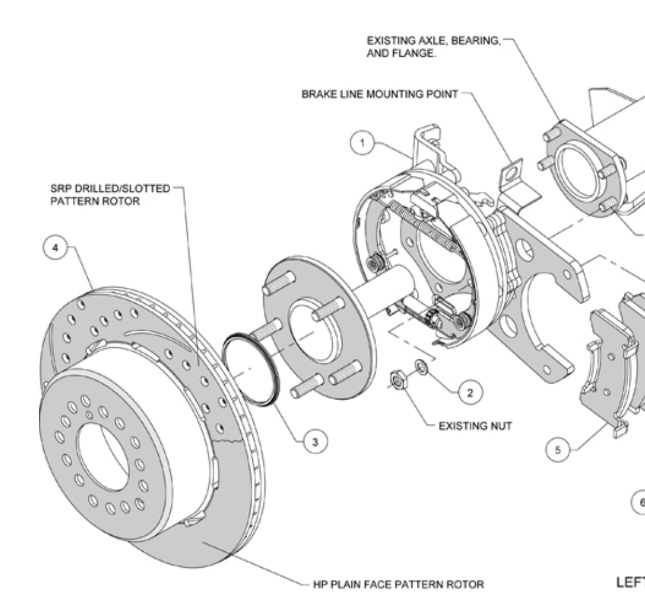
Per @Pete M’s request, I’m posting this info for anyone who is contemplating upgrading their brakes: i often times read of someone who upgraded some part of their braking system (typically the booster/master and/or rear disks among others) with enormously successful results. The phrase “I can lockup x size tires while doing x speed” is heard far to often. It has been my personal experience though that more often than not, they replaced or coincidentally repaired a fault in their brake system while performing said mod. On the other hand, those with a good overall factory brake system try these “upgrades” only to find that they provide very little if any gain and sometimes even perform worse (eg swap to a larger master cylinder bore with stock brakes). So here is some information I’ve compiled over the years while running a wide variety of upgrades as well as thoroughly discussing this subject with others far more knowledgeable than myself. The key to getting the most out of your braking system is a good amount of boost assist to the master cylinder and the correct ratio of master cylinder piston surface area to caliper piston surface area. Vacuum boosters: first off make sure your engine vacuum is good. 18in+ of vacuum at idle is needed for a vacuum booster to give full power. Vacuum leaks, cam changes and many other factors can contribute to low idle vacuum. This needs to be checked before you consider a booster swap (unless your going with a hydroboost system). Also test your current booster by running your engine for a few seconds with your foot off the brake. Shutoff the engine and wait a minute or so, press on the brake pedal. You should have at least one full vacuum assisted pedal push before the pedal hardens up. If it fails that test then you have a leaky booster/check valve. You can also run an electric vacuum pump for your brakes which can significantly improve the vacuum assist in the event that your engine can not produce enough vacuum. Hydroboost is my personal favorite but is a costly swap and takes quite some time to setup right. The stopping power can be phenomenal though. I ran a custom unit from Talon hydraulics with a Wilwood MC Master cylinders: 15/16 is normally the best size for stock front calipers and either drum or disk rears. MC size should only increase when more fluid volume is needed (eg big brake/caliper upgrades). Running a larger MC with stock brakes will result in less fluid pressure and a harder pedal. Bleeding brakes: Always start by bench bleeding the MC and make sure you are absolutely positive it is air-free. Don’t let the MC run dry at all when bleeding the rest of the system or you’ll have to start over. Vacuum and gravity bleeding have been the most effective in my experience. Speed bleeders also really help if bleeding by yourself. Brake pads and rotors: Generally speaking, proper pad break in and selection is crucial. When you first get new pads they normally have a coating that embeds into the rotor upon first use. Softer pads wear quicker and create more dust but also generally stop better. Lifetime warranty pads are generally very poor performing since the compound is extremely hard. I recommend black magic brake pads with Centric posi-quiets being a distant second. Regarding rotors, drilled and slotted rotors have less contact area for the pad and therefore require more pressure to have the same braking force. They do offer many other cooling and cleaning benefits though in certain applications. Coated rotors are great to keep the rotors from rusting onto the wheel unit bearings. Rear disks: Generally they actually offer less braking than drums. Think of tractor trailers, most use drum brakes. Drums also typically have better parking/ebrakes. That being said, disk brakes are so much more convenient and still offer very good braking performance especially when wet or in muddy conditions. They cool much quicker also. Stop and go traffic, windy roads and aggressive driving all greatly benefit from disks. Prop valves: typically in a rear drum/front disk setup you need to lower the braking fluid pressure to the rear brakes since drums will lock up sooner especially with empty truck beds. Disk front and rear are generally 60/40 or even 50/50 pressure split. In other words, up your rear brake fluid pressure if you switch from drums to disks. 84-89 Dana 30’s have knuckles that can easily accept various big brake upgrades/kits. There are diy big brake options that use various off the shelf components or bolt on kits from Wilwood among others. DIY Big Brake Setup: http://jeepm62superchargerkit.blogspot.com/p/blog-page.html?m=1 Wilwood: https://www.wilwood.com/BrakeKits/BrakeKitSearch?year=1997&make=Jeep&model=Wrangler&option=Req.+conversion+to+87-89+YJ+front+spindles 90 and later Dana 30’s have “wings” that hold the pads in place and have significantly fewer options than the earlier style “bolt-on caliper” knuckles. The knuckles can be swapped to the earlier style or one can run black magic pads and good rotors. With a decent MC and booster this combo can easily handle 33’s and perhaps slightly larger tires under regular driving. Stock brake upgrade parts: https://www.shop.blackmagicbrakes.com/Jeep-XJ-4WD-1990-1998_c48.htm 90 and later dana 35’s, Chrysler 8.25’s and TJ Dana 44’s can use the ZJ disks with almost zero mods: https://www.shop.blackmagicbrakes.com/Dana-44-Rear-Disc-Brake-Conversion-Kit-Dana-44-Rear-Disc-Conversion.htm Wilwood also started making a kit for these axles: https://www.wilwood.com/BrakeKits/BrakeKitSearch?year=1997&make=Jeep&model=Wrangler&option=Dana+35+Rear+w%2fo+ABS pre 90 Dana 35s have an early style Dana 44 mounting flange. They can still be upgraded to disks but it’s a bit more work. Stock they have 10” drums and no c clips. I actually like those little axles.
-
New Pads and Rotors Binding?
ghetdjc320 replied to SoCalManche's topic in MJ Tech: Modification and Repairs
If one is going out than replace both. -
New Pads and Rotors Binding?
ghetdjc320 replied to SoCalManche's topic in MJ Tech: Modification and Repairs
The unit bearing is about a $65-85 fix and about 20 minutes with the right sized sockets. -
New Pads and Rotors Binding?
ghetdjc320 replied to SoCalManche's topic in MJ Tech: Modification and Repairs
It’s also possible you have a bad unit bearing. Is it only one side or both that make the noise? -
New Pads and Rotors Binding?
ghetdjc320 replied to SoCalManche's topic in MJ Tech: Modification and Repairs
Does it sound like a metal grinding? If so, check your brake pad clips for interference with the rotor. -
New Pads and Rotors Binding?
ghetdjc320 replied to SoCalManche's topic in MJ Tech: Modification and Repairs
The goal is to embed or seat the friction material onto the rotor without glazing. The break in procedure greatly improves high speed or panic breaking. -
New Pads and Rotors Binding?
ghetdjc320 replied to SoCalManche's topic in MJ Tech: Modification and Repairs
Here is the break in procedure for bmb. It is the same procedure I use in most applications unless there is an application specific procedure from the pad manufacturer: http://www.justaddrocks.com/blackmagicbrakes/Black Magic Pads Iinstructions.doc -
New Pads and Rotors Binding?
ghetdjc320 replied to SoCalManche's topic in MJ Tech: Modification and Repairs
Good find on the brake pads. Don’t buy any of those “lifetime warranty” pads. The compound is far to hard. Also, make sure to break in the pads correctly instead of just mounting them and running them. I always run either Centric posi-quiet or black magic pads. Looks like you have the newer style knuckles with the brake pad wings. Here are the pads that work excellent with those: https://www.shop.blackmagicbrakes.com/Front-Black-Magic-Brake-Pads-477-Upgrade-to-Stock-Brake-Pads-F-BMBP-477.htm -
Comanche Skid plates
ghetdjc320 replied to 1989commanche's topic in MJ Tech: Modification and Repairs
Aside from rocker guards, a nice transfer case skis is good to have. I plan on adding the JCR off-road skid plate for the XJ. I think it should fit well -
Comanche Skid plates
ghetdjc320 replied to 1989commanche's topic in MJ Tech: Modification and Repairs
Beautiful work! I can really appreciate how much time, effort and skill went in to those -
Marty wrote up a bunch of different “big brake” setups for the pre 90 front knuckles. They are good upgrades for sure but before upgrading, go through that list I posted above. People often change or upgrade their system and notice a major improvement because their old parts were defective. This leads them to believe that it was a great upgrade that everyone should do. Others, like myself, have had very little success with some “upgrades” because of some underlying issue that needed to be fixed.
-
Sounds good
-
Can do! There is a lot more that can be added and I am by no means the brake master. Most of my info is just my personal experience and long conversations with Blaine from Black Magic Brakes and the rest of our Jeep community.
-
New Pads and Rotors Binding?
ghetdjc320 replied to SoCalManche's topic in MJ Tech: Modification and Repairs
Hate to say it also but new rotors on old pads is not a good idea. New pads have a sacrificial later that embeds into the pad and help increase braking. If you threw on new pads and then added new rotors latter the sacrificial layer is no longer present on the pads and it will be difficult if not impossible to brake in your pads onto the new rotors -
Here is my take after running almost every brake system on my Jeeps. Rear disk do not help improving braking power. Disks have many other advantages though such as better cooling and they are relatively self cleaning. Easy to service also. The key to good braking is a good amount of boost assist to the master cylinder and the correct ratio of master cylinder piston surface area to caliper piston surface area. Vacuum boosters: first off make sure your engine vacuum is good. 18in+ of vacuum at idle is needed for a vacuum booster to give full power. Vacuum leaks, cam changes and many other factors can contribute to low idle vacuum. This needs to be checked before you consider a booster swap. Also test your current booster by running your engine for a few seconds with your foot off the brake. Shutoff the engine and wait a minute or so, press on the brake pedal. You should have at least one full vacuum assisted pedal push before the pedal hardens up. If it fails that test then you have a leaky booster/check valve. You can also run an electric vacuum pump for your brakes which can significantly improve the vacuum assist. Master cylinders: 15/16 is normally the best size for stock front calipers and either drum or disk rears. MC size should only increase when more fluid volume is needed (eg big brake/caliper upgrades). Running a larger MC with stock brakes will result in less fluid pressure. Bleeding brakes: Always start by bench bleeding the MC and make sure you are absolutely positive it is air-free. Don’t let the MC Tun dry at all when bleeding the rest of the system or you’ll have to start over. Vacuum and gravity bleeding have been the most effective in my experience. Speed bleeders also really help if bleeding by yourself. Brake pads and rotors: Generally speaking, proper pad break in and selection is crucial. When you first get new pads they normally have a coating that embeds into the rotor upon first use. Softer pads wear quicker and create more dust but also generally stop better. Lifetime warranty pads are generally very poor performing since the compound is extremely hard. I recommend with black magic brake pads or centric posi-quiet. Regarding rotors, drilled and slotted rotors have less contact area for the pad and therefore require more pressure to have the same braking force. They do offer many other cooling and cleaning benefits though in certain applications. Coated rotors are great to keep the rotors from rusting onto the wheel unit bearings. Rear disks: Generally they actually offer less braking than drums. Think of tractor trailers, most use drum brakes. Drums also typically have better parking/ebrakes. That being said, disk brakes are so much more convenient and still offer very good braking performance especially when wet or in muddy conditions. They cool much quicker also. Stop and go traffic, windy roads and aggressive driving all greatly benefit from disks. Prop valves: typically in a rear drum/front disk setup you need to lower the braking fluid pressure to the rear brakes since drums will lock up sooner especially with empty truck beds. Disk front and rear are generally 60/40 or even 50/50 pressure split. In other words, up your rear brake fluid pressure if you switch from drums to disks. 84-89 Dana 30’s have knuckles that can easily accept various big brake upgrades/kits. 90 and later dana 35’s can use the ZJ disk with almost zero mods. pre 90 Dana 35s have an early style Dana 44 mounting flange. They can still be upgraded to disks but it’s a bit more work. Stock they have 10” drums and no c clips. I actually like those little axles
-
New Pads and Rotors Binding?
ghetdjc320 replied to SoCalManche's topic in MJ Tech: Modification and Repairs
Also, with the wheel off, try turning the rotor by hand and see if the contact with the pad is consistent. -
New Pads and Rotors Binding?
ghetdjc320 replied to SoCalManche's topic in MJ Tech: Modification and Repairs
When you removed the old rotors did you get all the rust and debris off of the unit bearing so you get a nice clean seat for the new rotor? I’d take the rotor off and compare it with the old one also.