


gogmorgo
-
Posts
5984 -
Joined
-
Last visited
-
Days Won
4
Content Type
Profiles
Forums
Gallery
Everything posted by gogmorgo
-
I question less the quality of the install than I do the point of going to all that trouble just to blow some air the wrong direction at the top of the rad... if those water pipes are even somehow plumbed into the exhaust to spin the things.
-
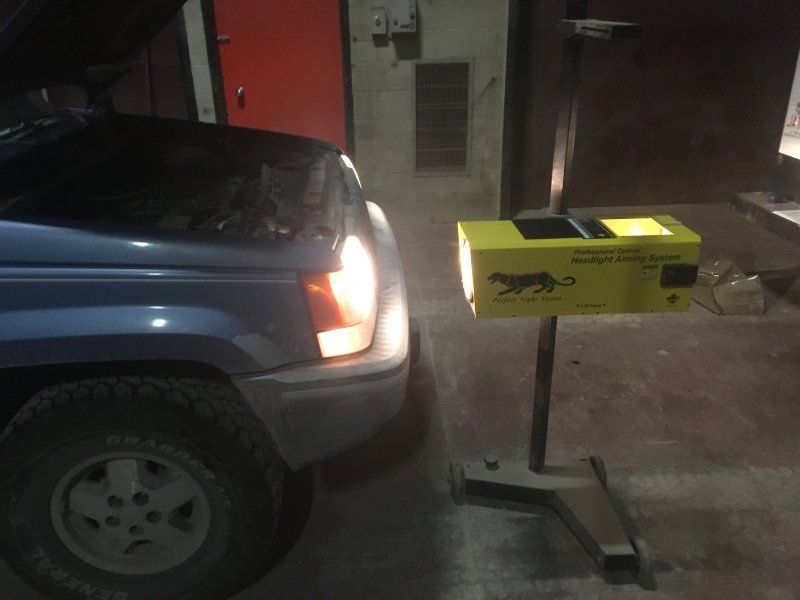
Axle’s in. Test drive went well. I’d gotten so used to the rear diff howling that it was almost eerie driving it with that noise missing. I also freaked myself out with all kinds of crazy pops and clunks from the back end before I remembered that I hadn’t actually torqued any of the suspension yet. I corrected that situation, and now it’s almost whisper silent. Well, except for the tire hum, the wind noise, the trans making a slight whirr... all the creaks and rattles of a 28-year-old Jeep. Suffice it to say those gears were LOUD. Also while I stopped at the shop to borrow the torque wrench, I dragged out the headlight aimer and “professionally” aimed my headlights. I still haven’t been happy with the e-codes, even after messing with the aim a whole bunch trying to get it dialed. This headlight aiming device is required equipment for commercial vehicle inspection shops, however ours sits in the back corner covered in dust because no one touches headlight aim unless the driver complains, and then we usually just eyeball it until the driver is happy. The “machine” however is incredibly easy to use. The trickiest bit is just getting it calibrated to the shop floor, and then making sure it’s parallel with the vehicle’s centre line. I took it for a spin the other day with my MJ’s stock sealed beams that were badly off where they should be pointing, and got those dialled quite nicely. With the ZJ’s E-codes I had already aimed them with the tape-on-the-wall method, and it turns out I already had them pretty close to bang on. Ended up moving the driver’s side a hair outwards, but not really enough to make any sort of difference. The big issue with the E-codes is the cutoff on the low beams. I get why it’s there, glare reduction, yada yada, but the reality is you can’t use the low beams on twisty hilly dark roads, because you need at least a little light up above that cutoff to see the road on the other side of the dip or around the corner, and the E-codes give you absolutely nothing up there. And the high beams are great for seeing what’s on the road way up ahead of you, but they don’t do much for you off in the ditches, and they throw light so far ahead that you need to dim the headlights pretty early for oncoming traffic, and then you’re back to the low-beam cuttoff where you can’t see much except the patch of road directly ahead of you. Guess I’m still a little bitter about going to all the trouble to get and install NOS Mopar E-code housings after they got such great reviews only to discover they’re not all they were cracked up to be. But at least now I can honestly say that I do have them aimed correctly, and they still suck, and it’s not just me, because I actually aimed them with a real headlight aiming device, not just getting them close-ish with some pieces of tape on a wall.
-
Yes. It’s definitely a limited slip, not a locker, but they’re significantly better at limiting slip than a clutch-type differential. Other advantages are significantly longer service life and not needing friction modifier. Unless you’re doing a lot of wheel lifting offroad, rock crawling, etc., I’d have to say that 95% of the time a limited slip is better than a true locker. Less effect on steering, less damage to the trail from skidding tires, etc. It’s also easier on the vehicle due to reduced binding in the drivetrain, less tire wear, etc. And I wouldn’t really trust a full locker in a D35 of all axles... But yes, when you NEED a locker, you need a locker, and a helical-gear limited slip diff is still a limited slip diff, not a locker. As far as what’s the best helical-gear limited slip, the Truetrac is easily the most common. It’s even OEM in a bunch of applications. It’s more affordable than the original Torsen but not the most affordable of its type. There’s a PowerTrax(?) branded thing out there now that is significantly lower priced, to the point when I was researching before settling on the Truetrac for my ZJ a couple years ago, I dismissed the PowerTrax as being too cheap to be real. I also looked very close at the Ranger d35 Torsen unit. IIRC, the specs seemed bang on between Ranger and Jeep carriers, but I couldn’t quite bring myself to throw down the extra coin for it when the voice in the back of my head (well, one of the voices...) kept asking why would they miss out on such a big market as a Jeep D35 that went into every Jeep built for almost a 25-year period, if it would be compatible. And yes it’s a lot of coin extra because I couldn’t find a Canadian retailer to avoid crazy shipping charges on it, unlike the TrueTrac. Oddly enough however, I just stuck a new ring and pinion in my ZJ d35, and when the parts numbers didn’t match to between the new and old gears, I looked them up with Dana, and the gear set that was in it actually lists for the Ranger. They looked identical to me, but the old ones were pretty beat so it’s tough to say. Also as a pro tip, for anyone adding a fancy diff to a D35, make sure your gears are set up correctly for the new one instead of just putting all the shims in the same place you found them and hoping for the best, like this idiot did. I had maybe 3000 miles on it before the gears started letting me know they were very upset. And my very expensive d35 is now a VERY expensive d35.
-
Many people refer to all types of helical-gear limited slips as “Torsen” diffs, not realizing it’s a brand name. I know otherwise, as I’ve personally dealt with the T1. Reassembling that sucker is a PITA but once it’s together it’s a great diff. I know Cruiser has a connection to the company as well from prior posts.
-

Trying to bleeding the clutch
gogmorgo replied to blanzawa's topic in MJ Tech: Modification and Repairs
Most if not all external slave cylinders no longer have bleed screws on them. You bleed the system by pulling the slave cylinder off the trans, still hooked up to the line, and pushing the piston in to push all the fluid and most of the air back up to the reservoir, then pull the piston back out (or let it come out on it’s own) to suck air-free fluid back into it. Do it a few times and you’ve got a fully bled system. It’s much quicker and easier than using a bleeder and pumping the clutch especially if you’re working solo. It also consumes much less fluid, so it’s not as easy to accidentally drain the reservoir and have to start all over. In terms of cracking the stuck bolt loose, sometimes it’s helpful to get a punch onto the head of the bolt and give it a sharp smack with a hammer, just don’t hit it hard enough to crack the bellhousing. Sometimes trying to tighten a stuck bolt slightly can help, but again don’t twist it enough to break it off. I don’t usually find that penetrating oil on a bolt head helps much unless you can get a puddle around it for a bit, but I don’t know if you can get it onto the exposed threads in this case, but if you can somehow, be very careful not to spray anything onto the clutch. The best way to get a stuck bolt free is to use heat. Unfortunately the aluminum bellhousing is going to conduct away most of the heat so you need a pretty good heat source to get heat in faster than it can conduct away, and it’s going to be difficult in this context to be able to do that without damaging anything. If you can get the bleeder out easily enough, that’s probably going to be your best course of action here, and consider yourself lucky you have one at all. -
Have you actually measured the ride height and compared to factory spec? I’m willing to believe an aftermarket product doesn’t exactly reproduce factory specs, but I’m also willing to believe that the springs on a 31-year-old truck aren’t necessarily in the same condition they were when they left the factory, either.
-
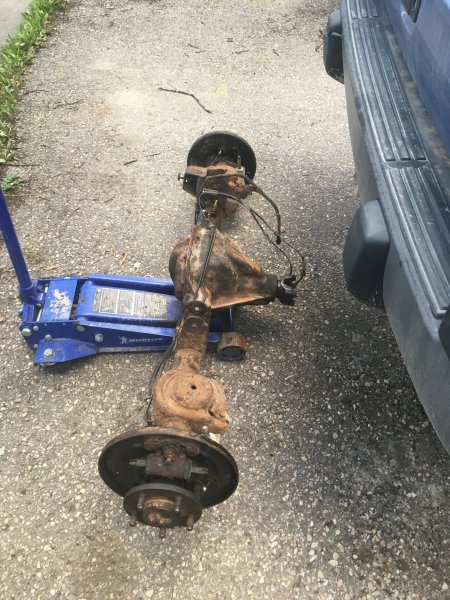
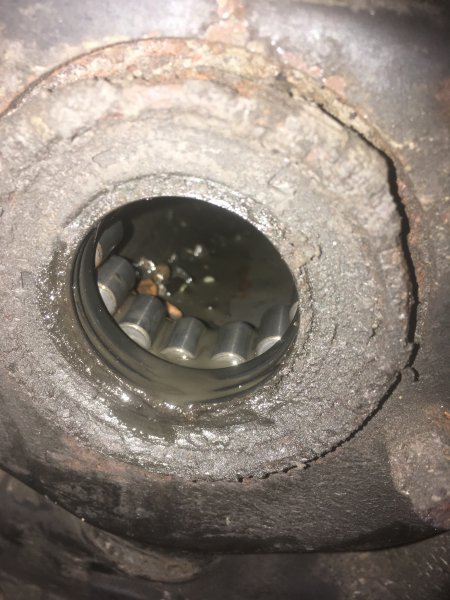
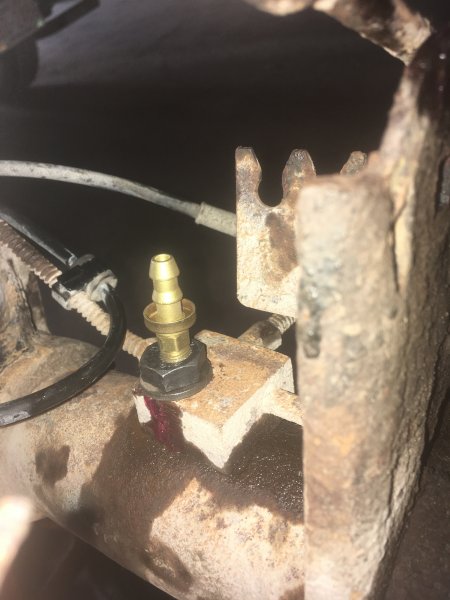
The head scratcher, why am I like this? So concerned about preserving originality, instead of putting another one in, I have to fix the D35... Still need to get the axle back under the ZJ, but this is take two at the TrueTrac install. The D35 has been making noise since roughly that trip up to the DC-3 crash site. If you’ll recall, the TrueTrac went in because the pinion bearings were loose, because the pinion nut had backed off. I didn’t really set up the gears, I just put all the shims back where they were on the new carrier. Well suffice it to say, running with the pinion flopping around hadn’t done the gears any favours, and they didn’t exactly take to the new pattern. Also probably doesn’t help that I somehow tore the axle vent out, pulled the threads clean out of the axle tube, so when I pulled the shaft I found this: Rocks and glitter... the ladies might like them but I wasn’t happy to find either in the axle. Somehow the bearings atill looked pretty good for the most part, although they were all pretty new still from my last attempt. So not only have I done the dumb and thrown money at a D35, not only did I put new gears into it, I left them the same ratio. 3.55 on 31’s. Setting up the gears wasn’t the massively huge deal that it’s made out to be, although the amount of stress out there over getting it correct definitely meant I was making damn sure I knew what I was doing. I also had the final pattern approved by a journeyman mechanic before I buttoned everything back together. The master install set I got came with a note telling me not to use shims under the pinion bearing cup to set up the gears, except the shims that came with it were for under the pinion cup, so that was annoying. Also the markings on the new pinion or the one that was in there didn’t make sense with what all the guides suggested I should be seeing for my initial shim pack, so I just started out with all the old shims in the same place again. This resulted in gears pressed so hard together I couldn’t spin the diff. Shifting the carrier over 0.030” got it spinning again but with so much backlash it wasn’t worth measuring. I moved it back .010” and got .008” backlash which is in spec, but I wasn’t happy with the pattern, so I moved it another .005” which resulted in .004” backlash, but still not an ideal pattern. I needed to increase the pinion shim to bring it closer to the ring gear, so I put a .005” shim under the pinion cup like I’m not supposed to do, and because that was supposed to decrease backlash I also went back to the carrier shims from when I had .008” lash at the same time. This resulted in a good centred contact patch and .006” lash. Win. Only my 5th shim set. And yes, I did use a pry bar to load up the carrier to check the contact pattern. As far as addressing the torn out vent threads, the hose barb is also the hold-down bolt for the brake line T, and I wasn’t optimistic about finding another hose barb that could do the same job. So instead, I found the biggest bolt that would fit down the hole in the T, m12x1.75 in case anyone’s wondering, then redrilled and tapped the axle tube to that size, drilled a hole down the centre of an appropriately long bolt to hold down the brake T without interfering with the axle shaft, and then tapped the bolt head for an 1/8” npt barb. If it’s stupid but it works... And if attempt #2 at fixing the D35 also fails, it’s getting a junkyard axle. Throwing more money at this one would just be dumb.
-
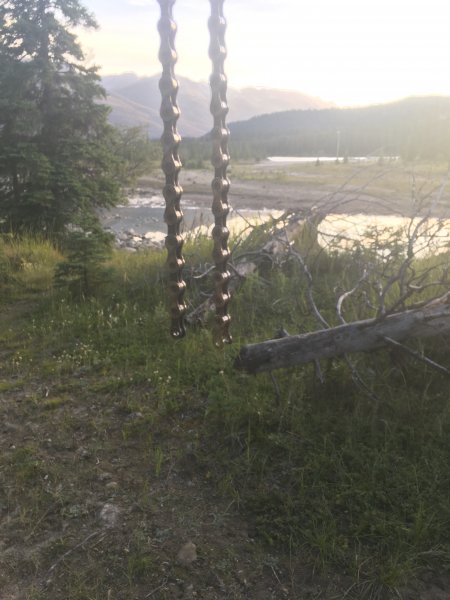
Another piece of advice in the form of a don’t-do-what-Donny-Don’t-did. My coworker who rides competitively told me he cleans and oils his chains after every ride. I thought this was overkill, and have only been doing that if I was riding somewhere wet or muddy, and needed to wash the rest of the bike. Well I went back out this evening just before sunset to do the loop where I ate $#!& earlier this summer for the first time since that happened. It’s not a super intense trail. Couple ups and downs but it’s a fairly level wide open path along the river, you cross a bridge and come back along the other side sorta deal. I downshift to go up a couple gentle switchbacks and my chain comes off. I stop, look down, and discover my chain isn’t just off the sprocket, it no longer exists. Well no, it still exists, but it’s still on the trail where it broke. The chain is only about a year old. And of course my phone decided right after that photo to do the thing where it dies at 10% battery life. Had to stash my bike in the bush and turn my half-hour bike ride into an hour-and-a-half hike home to grab the MJ and retrieve the bike. At least it was a nice evening to walk home in the fading twilight.
-
Because it came up that another member nearly lost a wheel, which is also a thing that I’ve had happen a few years ago, I’ll add tire rotations to the mix. Rotating tires is done to ensure even tire wear across all corners of the vehicle. Unevenly worn tires may have different diameters from each other. This can increase stress on differentials, and in extreme cases can affect braking performance. You also probably want the most life out of your tires that you can get. I rotate tires every oil change. It’s a good way to remember to do it frequently (assuming you change your oil regularly which if you don’t, change that) If you have directional tires (winter or performance street tires frequently are directional, some other tires are as well) then you’ll want to swap tires front to rear, keeping them on the same side of the vehicle. If your tires are not directional, I like to move the rear tires to the front on the same side, and cross the fronts over to the opposite side on the rear. Keeping the pattern consistent each time ensures all tires will see all positions on the vehicle, which helps with consistent wear. Some people like to include the spare in their rotation, but I believe the spare tire should always be the best tire, so I prefer to only use it sparingly. (See what I did there?) Tire rotation is a good time to check the pressure in the spare. It would suck to have a flat and find out your spare is also flat. Once you’ve got your tires rotated and they’re back on the ground the most important step is to torque the lug nuts. Use a torque wrench. If you don’t have one, they’re not super expensive. Torque spec per the MJ and XJ owner’s manual varied from ~70 to 85 lb-ft with no real change in the components involved. I go 85 if I’m using my good torque wrench that gets recalibrated, 100 if I’m using the cheap one that I carry around, because I don’t trust it’s calibration... but exceed manufacturer recommendations at your own risk. Loose lug nuts can always be tightened, stretched or cracked studs need replaced. The second most important step is to retorque the lug nuts after 20-30 miles. Even if they were correctly torqued before, the wheel may not have been correctly seated on the hub, or there might have been some dirt or debris on the wheel mounting surface preventing it from seating. Driving wobbles the wheel around a bit and gives the dirt a chance to escape and the wheel to seat itself. You want to retorque after this because if something works out, your wheel is now loose. Loose wheels kill. Use a good floor jack to lift your vehicle to pull the tires off. Chock the tire opposite where you’re lifting. The spare tire jack on most vehicles is intended for the odd emergency use and will not hold up to regular use, they’re not very stable, and reasonable floor jacks are cheap. Once the vehicle is up in the air, support it on good jack stands, or at the very least get something under the vehicle to stop it from crushing you if it falls. You can’t drive your MJ if you’re dead. Rotating tires also gives you the opportunity to see how other components are doing. Firstly lug nuts. Looking at them let’s your know they’re still there. Spinning them off regularly helps keep the threads clean of rust. If you have trouble spinning a nut down the threads by hand, run a thread chase down it. If that doesn’t help, replace the nut. If that still doesn’t help, replace the stud. Bad threads could indicate stretched or bent studs. At best they indicated rusty nuts that are likely to seize up on you. It’s better to find out about seized lug nuts in your driveway than at the side of the road with a flat tire, and have them snap off. If you’ve got one bad stud it’s good practise to also replace the studs next to it, but when you’re doing 3/5 on one corner, you might as well replace the others. Some people will recommend an anti-seize product on the threads to prevent this, however most manufacturers do not. In fact they mostly recommend against it. I’m going to say the manufacturers know better than I do so I’ll follow them. At any rate, if you keep the threads in good shape it becomes a non-issue. Rotating tires also gives you a great opportunity to inspect your brakes. Not just for wear surfaces, but also to make sure everything is moving as it should. It’s also an excellent time to adjust your drum brakes. Even with automatic adjusters, I find most people don’t reverse often enough or stop hard enough in reverse to actually adjust them. Adjusting them manually also makes sure the adjuster screws aren’t seized. I usually adjust them so the shoes are just barely loose enough to slide the drums over, then once the wheels are back on get out to a safe place where I can get up to 15mpg or so in reverse, and give a few hard stops to dial them up the rest of the way on their own. Sometimes I do that between oil changes if I feel the brakes are getting suspect. It goes a long way. Rotating tires is also a good time to check for suspension or steering component wear. If you’ve got the wheel off the ground and snug, give it a wiggle in all directions, make sure there’s no clunks or free play anywhere. Lastly, rotating tires is a good way to inspect the tires. It can be tricky sometimes to see the entirety of the tire when it’s on the vehicle. When they’re off, check for nails other other things in the tread you haven’t noticed, and damage to the inner sidewall. Better to find out about stuff in the driveway than doing 70mpg down the freeway. Those four little contact patches of rubber are literally the only things keeping you on the roads and trails. It’s best to look after them.
-
Driver’s side lug nuts when loose will spin themselves off as the wheel wobbles around. Passenger side spins them back on but not tight enough, eventually the studs fatigue and snap off. Hence the old practice of left-hand-thread lug nuts on the driver’s side. But the wheel coming completely loose is more noticeable than it coming slightly loose. I had a similar thing happen after my first MJ sat over a year before I dropped the second engine into it. There was a regular clunk noise while driving for about a week, but I couldn’t figure out where it was coming from. Kept checking ujoints, springs, etc. Then I was passing someone in a less-than ideal spot, hit 130km/h, and when I pulled back in the rear end of the truck seemed like it was steering itself. I pulled over immediately (I’m sure the guy I passed was impressed) and when I stopped, the back wheel had about 45° of camber. Two lug nuts left holding it on, halfway spun off. Wheel was hosed. Studs seemed okay. I got a friend to come pick me up and I stole a wheel and nuts off my parts xj to get me home. Sketchy for sure. One advantage of regular tire rotations is that you look at your nuts and take them for a spin to see how well they’re doing. Clean them up, run a thread chase down them if you need to. Replace lug nuts that are looking sketchy. Torque and retorque after 20-50km. I rotate tires every oil change. It also means I know I’ll be able to get my nuts off if I ever have a flat. I’ve seen more than once studs breaking on the side of the road because the nuts were seized on. It’s also a good opportunity to get looking at your brakes, and other components. Preventive maintenance is a much better policy than reactive maintenance.
-
I won’t pretend to be an expert on lightning strikes, but I think you’d need a LOT of lightning rods to make it effective. They definitely work in the city, but buildings are very close together compared to mountains and hills. You see the odd tree from time to time that clearly was hit by lightning, but not many of them seem to stand out as obvious targets. Partway up hills and not the top, no taller than any other tree around it, that sort of thing. I can’t say I’ve seen too much evidence of lightning strikes along ridges, at mountain peaks, etc, but you’d think those would get hammered if every lightning strike for like a mile surrounding was hitting the same spot.
-
Our schedule at work had been adjusted back in April so we had no more than three people in the shop on any given day, which resulted in an alternating “overlap” day, basically a paid day off every two weeks. That ended at the beginning of the month. Around the same time masks because mandatory in shared spaces at work, and we now have a municipal bylaws requiring them in public spaces were it’s not possible to distance. Seems extreme, but it’s a big tourist destination and with people coming from all over the place and failing to follow any sort of cautionary measures, locals and business owners are much happier with the bylaw. It’s made an appreciable difference in tourist behaviours. Usually visition rates are about 40% from outside the country, but were still at normal seasonal numbers. Lots of people getting out and doing stuff “outdoors”. Crown land camping outside the park is getting a bit out of hand too. Just google “Abraham Lake” for a taste of that. School is starting back up for kids. I’ve got my annual 8-week session starting next week as well, although I’ve had no official word as to how much will be in-person vs online. Just keep being told to “wait for the email” and directed to the school’s propaganda about how great their safety measures will be but not what they’ll be. Our supposed extreme fire season they forecasted turned into a summer of rain. Snow at higher elevations. I’ve already thrown a couple snowballs this month, walked through fresh snow.
-
-
The $20 kit I was looking at included a couple tools to get the job done. Not sure specifically which ones without checking.
-
Well it is an iPhone, so...
-
I read an couple online guides and while “simple” might not be the word I’d use it didn’t exactly look difficult, either.
-
Yeah, I think I can get a new battery for around $20. But if I got another SE with more than 16GB storage, then I wouldn’t necessarily need to get a new battery. And unfortunately internal storage is not exactly upgradable. I’m sure it could be done, but there’s a certain point where “just get a phone that already has the things you need” becomes a compelling argument. For now this phone still does all the things I need it to do, beyond the battery barely lasting a whole day, so I’m not too concerned.
-
No rear brakes
gogmorgo replied to Dickinson County Comanche's topic in MJ Tech: Modification and Repairs
The valve should be sitting a bit above horizontal, roughly the 2 o’clock position, according to a guy on Facebook who claims to have been on the team that designed the valve. Low fluid without a leak present may mean your pads or shoes are getting close to the end of their useful life. But lots of older vehicles could do with a bleed. It used to be standard to change out the fluid entirely every couple years, but that practice is long gone, and no one pays attention until they start having issues. Poor rear braking may also just be the brakes are out of adjustment. Self-adjusting drums need harder stops in reverse than most people seem to ever do, so when I get the older fleet trucks in for an oil change I like to find a safe spot in the back of the yard to get up to 10-15mph in reverse and stop a couple times until braking improves. -
I remember a long time back asking how to switch back to the desktop site, and was told the mobile and desktop sites were now one and the same. I’m running iOS 13.5.1 on an SE I got when they were just coming out. I only “upgraded” to 13 this spring, and had been running iOS 9 before that. Basically got forced into the update. From time to time I’ve had long image upload times, but I’ve associated them with big activity on whatever network I was on and hadn’t really thought too much about it. It also seems to help to upload images individually instead of a bunch at once. The biggest issue running an older phone that I’ve been having is that a lot of web pages seem to be optimized for larger screens, and I can’t always zoom back out or scroll over to the side to see what’s getting cut off. My battery is also getting old, so there’s only 75% of original capacity remaining, and it’d be nice to have a hair more storage space, so now I’ve got the debate over whether I just change the battery or find another phone... except I don’t want a different phone because they’re all HUGE now, so it would be another SE just with more storage.
-
I’ve had an issue with roommates disposing of fish guts in a freshly emptied kitchen garbage and letting that sit for a week... Floor drains can also be a culprit. I’ve had a couple places I’ve lived where I’ve had to dump a couple gallons of water down the basement drains to refill the p-trap and stop sewer gas from coming up into the house. If there’s any sort of drain you don’t use much I’d try that.
-
See now this is why I can’t comprehend wanting to live down south. Anything above 25°C and I don’t want to be outside. It hit 30 again this weekend and I had to climb up out of it to somewhere more reasonable.

-
My impression was that it was plumber in instead of the heater core. He also says at one point that his a/c is now colder than ever, which it would if he no longer had flow through the heater.
-
McMaster-Carr has CAD drawings of most of the things they sell available for free on their webpage. Might make the file creation part quicker for you.
-
Even the supposedly barebones fleet-spec work trucks we get at work have power windows, etc. Invariably they all have an immobilizer and some sort of alarm. We frequently set them off if we have to boost them when they’re completely dead, or sometimes even if we unlock them with a programmed spare key instead of the fob. The keyless entry systems where you just have the fob in your pocket just make everything worse, because on top of that they’re constantly scanning for your fob and wake up and communicate with every other fob that walks past and drains the battery if you’re not using it more than once a week. One of my roommates has a fully loaded Juke, and dealing with that crap really makes me appreciate my older stuff that can sit for a couple months at a time and be fine. But there are advantages to it. It would be kinda nice knowing someone can’t just shove a screwdriver into the ignition and drive away.
-
Maybe, but she’s usually pretty careful about keeping her doors locked (or so she says) and I haven’t heard about a break-in. But there were a couple suspicious vehicle fires in town shortly before she noticed it... but it seems like there’d be easier ways to set a car on fire if that’s what you were trying to do. She’s had kids in the back there too I guess, but I’m pretty sure they’ve all been under two. But she does load up the back seat with shopping, etc, pretty frequently from what I’ve seen.