


scaleless
-
Posts
528 -
Joined
-
Last visited
Content Type
Profiles
Forums
Gallery
Everything posted by scaleless
-
PM sent!
-
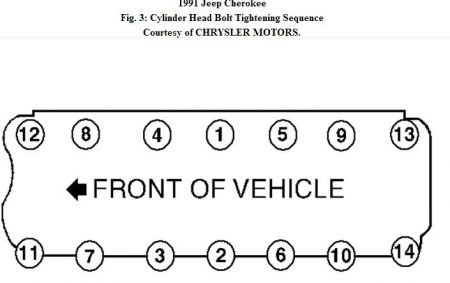
100ft-lbs final
-
That would be #11
-
Well, there's a lot of color swaps between the years. Here's a thread about it:
-
However the wiring harnesses do swap and swapping to get rid of the C101 is pretty popular. The 89-90 ECU swaps too and also has a different fuel curve that gives you a little more horsepower.
-

21 slot on ebay
scaleless replied to eaglescout526's topic in Craigslist/Marketplace/eBay... i.e. Not Your Stuff

-
Fuel Injector Retaining Clips
scaleless replied to WahooSteeler's topic in MJ Tech: Modification and Repairs
https://www.autozone.com/screws-pins-and-clips/fuel-system-retainer/sorensen-connector-clip/79660_0_0 I wouldn't really worry about the clips - the connectors seem to hold just fine without them, frankly. For $6 you can get whole new connectors, too. Just search for EV1 connectors. -
The starter relay has a terminal labeled "F" - this is connected to the fuel pump and bypasses the ballast resistor when cranking. Sounds to me like there's a corroded connection or bad wire that is getting bypassed when you're cranking. I'd hook up a fuel pressure tester and check if it builds pressure in the ON position. Or perhaps just listen to hear if the pump is on at all. I'd check the fuel pump ground behind the driver side tail lamp, as well.
-
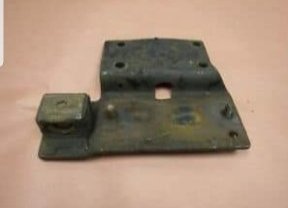
You know, this thing? Sits between the AX15 and the crossmember. It's the last thing I need for my drivetrain swap, gimme!
-
Aside from the tow mirrors (which aren't those), Comanches use the same mirrors as an XJ. I can't see how those are attached other than some sort of screws. Unless they have REALLY good double-stick tape.
-
Possibly. But start with the cheapest and easiest checks first: block one side of the hose that goes to the MAP and suck on the other. Holds suction? If not, replace it. Common failure point. Make sure there's no leaks anywhere on the line.
-
Those aren't stock, are they? They look like crappy little aftermarket mirrors that someone put in with self-tappers.
-
fuel guage has stopped working
scaleless replied to Romain's topic in MJ Tech: Modification and Repairs
A floating ground is one that has a different voltage than another electrically connected ground or isn't really even connected at all. In this case, it would happen if the ground for the fuel sender or the fuel gauge aren't making good contact with the chassis. It's probably not your issue because you were able to measure both 50 ohms at pin 17 and 12V at the input, but it still doesn't hurt to check both the grounds, I guess. Based on what you said earlier, it really does sound like pin 17 is shorted to ground, though. Perhaps try to connect the fuel gauge directly to the C203 with jumper wires to eliminate the flex board from the equation? -
I agree about not trying to clean the lifters - stock lifters are only, like, 4 or 5 dollars so I don't think it's worth it to try! And there shouldn't be any worries about new lifters on an old cam, as long as oil with a proper amount of ZDDP is used.
-
Is this clean enough to paint?
scaleless replied to scottie005's topic in MJ Tech: Modification and Repairs
Depends on what paint you use. A rattlecan paints a really thin finish that recedes around pitting and such, but thicker paints like POR15 adhere perfectly well with proper preparation. And also last a lot longer and are much more resilient in general. -
fuel guage has stopped working
scaleless replied to Romain's topic in MJ Tech: Modification and Repairs
I don't have a Comanche fuel guage in front of me at the moment to verify the internals, but I can speak on guages of this era, at least. First make sure you have a good ground. You said you saw 12V between power and ground so you probably do, but a floating ground will peg the guage below E, too. Failing that, the guage is basically a small electromagnet wired with very thin magnet wire, and if you shorted Gnd to 12V while fixing your cluster, you could have overheated those windings and fused them or burnt them out (depending on the position of your fuel sender). You could test it out of the vehicle by hooking up 12v and ground (I don't know if it has an open circuit failsafe or not so this might not be definitive) it may peg full. Hooking a 0-90 ohm resistor or pot to ground on the sender line should change the position, too, if you have that available. Depending on how it's wired internally you could also short the sender line to 12v and it'll either work or burn up. Either way, if you've got 12V, GND, and your sender line hooked up and showing a resistance, it sounds like your guage is dead. -
Looking for a 87-90 Tachometer
scaleless replied to Romain's topic in MJ Tech: Modification and Repairs
-
What I mean is the cams are to my knowledge interchangeable, and unless you built that engine by hand (and, really, even if you did) you probably can't be certain that the previous owner or builder didn't put an early cam in. Given most of your numbers are evenly in-spec for an early camshaft, I think that's much more likely than the alternative.
-
Does my truck have ac
scaleless replied to 89restoration's topic in MJ Tech: Modification and Repairs
Check for these, like Eagle said. Unfortunately I don't have a pic of the heater-only climate control panel.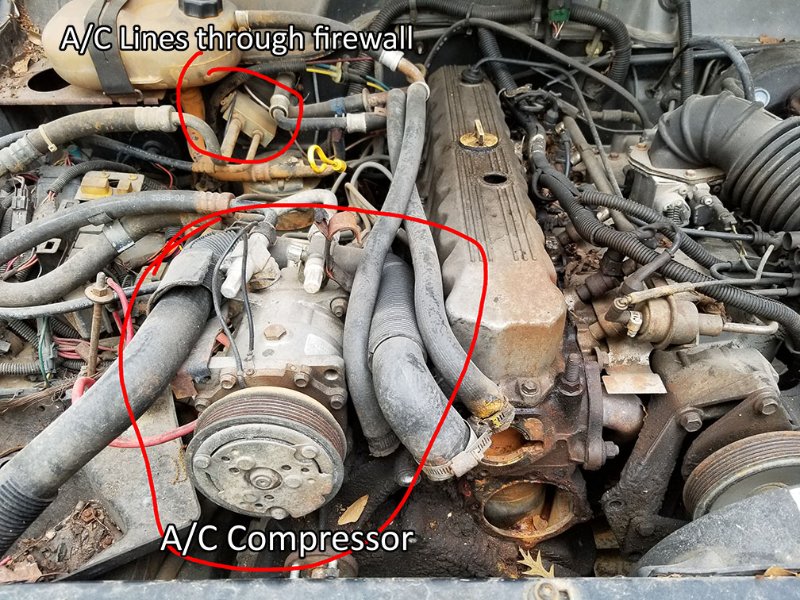
-
The lift specs you posted are for 96 and up. Earlier used .397 on both intake and exhaust, which most of your measurements are pretty in-spec for. I think you just have an early cam in your engine, which shouldn't be an issue. #6 intake seems pretty poor, though. Isn't that where you said the noise seemed to be coming from? Might be worth another measurement.
-
Sputtering, missing, black smoke.
scaleless replied to nomad's topic in MJ Tech: Modification and Repairs
He said if he couldn't figure the problem out, he would just put a carb on it. Which I don't think is a very smart idea. -
Yes, the the 18 and 23.5 Gallon tank are both 13.6" tall, but the 18 is 30" long and the 23.5 is 36" long.
-
The LWB tanks are different, but use the same sending unit. The only difference regarding sending units is V6/diesel vs I4/I6.
-
Overheating Diagnosis [1989 Jeep Comanche 4.0L I6]
scaleless replied to james-mc's topic in MJ Tech: Modification and Repairs
If you still struggle to resolve the issue, just pull the water pump and inspect it. Too much air in the system can lead to weak pumping action, but I've also seen my share of failed pumps. Water pumps are generally considered wearable items, so it's quite possible you're due for a new one. But don't throw a new one at it without checking! -
Specifically, #25: Valve Cover Mod http://cruiser54.com/?p=131