
schardein
-
Posts
2190 -
Joined
-
Last visited
-
Days Won
2
Content Type
Profiles
Forums
Gallery
Everything posted by schardein
-
which steering wheel puller do you own?
schardein replied to Pete M's topic in MJ Tech: Modification and Repairs
I can get a pic of mine later. You aren't going to get a steering wheel off a junkyard vehicle without a puller. At least I've never had it happen. If a steering wheel has been off and on multiple times, it might get loose enough to come off by hand. I had a Chevy like that. Not an issue, splines were still good and the nut held it on. If the nut has been on and off multiple times, a little loctite might be a good idea. Most FSMs will say replace the nut every time, like a pinion nut. -
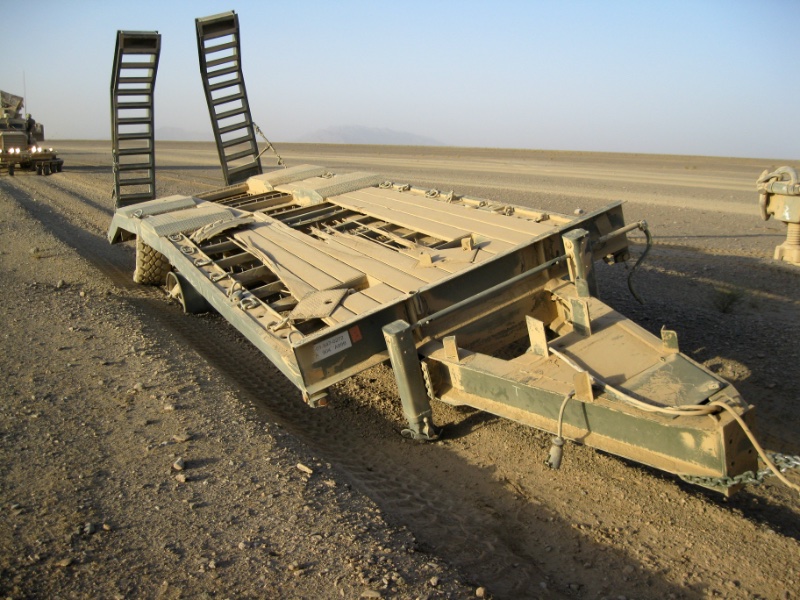
I mentioned earlier that the replacement for the 900s and 800s is the 7ton (MTVR). On 1 August 2009, we were on the return leg of a Combat Logistics Patrol traveling from Nowzad to Camp Leatherneck, Afghanistan. A 7ton hauling an EET (engineer equipment trailer) was struck by an IED, but it was the trailer that set it off. This initiated an enemy mortar attack on the convoy. After the mortar team was located and suppressed, we started the recovery of the down vehicle, normally a tedious process. In this case the truck was still good to go, so we pushed ahead about 10 km to distance ourselves from the ambush site. Then we stopped to evaluate the trailer. You can see the pics. Given our options, I decided we would push on as far as we could, and only take further action if needed. That 7ton drug that EET by the safety chains 25km through the desert, and then another 25km on hardball road, all the way into Camp Leatherneck. First pic is a MK23 7ton (MTVR). Other pics are the trailer.
.JPG.219402c74951407f0b11d36feb868c68.JPG)
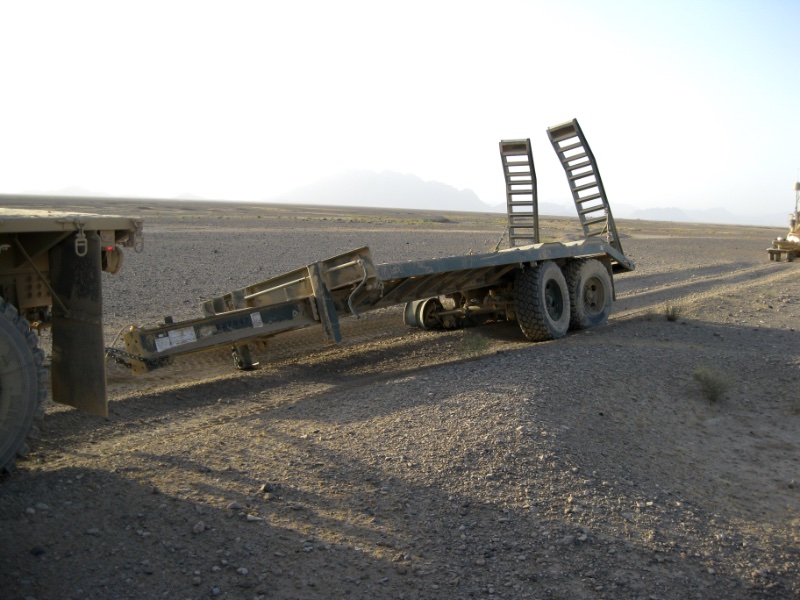
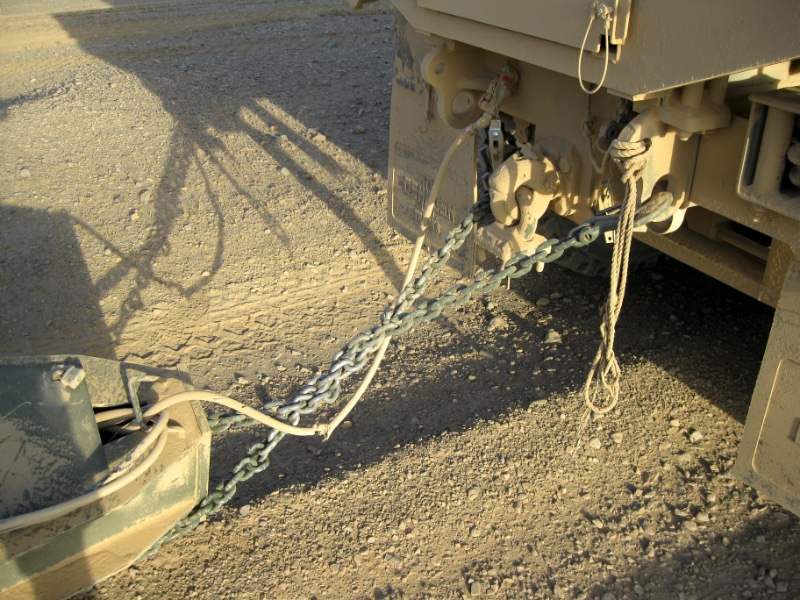
-
Just realized I wrote the second set of dates wrong, should have been Jan-Jul 94, so it would have been close.
-
One Saturday in the Fall of 1990, me and four other guys were snatched up for a Saturday working party. I was sulking about working on a Saturday until I found out we were driving five M813s from Camp Lejeune up to Morehead City, NC to be loaded on ship headed for Desert Shield/Storm. It was just the five of us driving five trucks, no a-drivers, following the SSgt in a M1009 (K5 Blazer). And when we saw the trucks, the cab canvases were removed and stored. It was an awesome Saturday.
-
You are welcome. I've got tons of memories driving these trucks. If you look closely at the top of the tailgate, you will see two handles sticking up. These are used a grab handles when lowering and raising the tailgate, but also as a place to put your foot when climbing into the back. And driving on the left side of the road! My time in Oki was mostly spent Dispatching haha. Or driving a HMMWV, as I was with 3/3 on UDP out of Hawaii (Jul92-Jan93, Jan-Jul 94), so all we had in the Motor Pool (Camp Hansen) were HMMWVs. And you are 100% correct, these trucks will roll over a car like it isn't there. We had a student confuse the clutch pedal with the brake pedal near New River Air Station, and barely tapped the rear end of a brand new Chevy S10 being driven by a Cpl. It pushed the bed into the cab and totaled the truck. Luckily no one was injured. Until 1996, it was common to see these trucks rolling around Jacksonville, NC with "student driver" signs on the front and rear- I used to warn all my friends to stay out of their way. Semper Fi
-
The whole hood tilts forward on these to service the engine. You can see the "T handle" hanging down from the top of the grill. You grab that with one hand, put a foot on the bumper and get it started opening, then grab the other handle on top of the hood to get it all the way open. The T handle is supposed to be stored horizontally, along the top edge of the grill on a small bracket with a lock pin. You can barely make out the lock pin hanging from the T handle on its safety wire.
-
These really aren't that hard to drive. What was sometimes scary was sitting in the pass street as an Instructor. A friend of mine was instructing, and as the student was making a left turn at a 4 way intersection, in traffic, in the rain, laid the truck over on the pass side in the intersection. This was just before lunch. The instructor was picked up by our boss, driven back to Base, where he checked out another truck and was back on the road training after lunch. Haha, ya think? Luckily, we rarely needed low range. Six wheel drive, 1st gear, high range was usually enough. Deep sand while hauling ammo and a 155mm howitzer was an exception though. Couple other observations- the one in the picture has a canvas top, guaranteed to collect water and leak. In the Marine Corps, only the wreckers got hard tops and everybody wished they had one on the cargo variants. Like some of the old flat fender Jeeps, the windshield glass folds out so you can catch a breeze while driving (no AC). When these trucks were fielded, they had smaller rims/tires, and dual tires on the rear axles. A spare tire was stored between the cab and the bed. You can see the crane that was used to lift and lower it in the pictures. In the late 80s, all the trucks were switched over to "super singles", the rims and tires in the pictures. The larger tire won't fit between the cab and bed, so the spare was either in the bed... or not carried. Pretty rare to get flats anyway, and with on board air, you could fill up as needed (assuming you had the air hose). With the CTIS, you could keep pumping air to a tire that was leaking, and as long as it wasn't shot to heck, keep moving almost indefinitely, in theory. There is a small trap door on the pass floorboard under which is the dipstick for transmission. Straight air brakes on this truck, while the M813 had a standard hydraulic brake system with air assist. It was common to test new Operators in the motor pool by telling them to check the brake fluid in all the M923s (there isn't any), then telling them to check it in the M813s (there is, under a trap door on the driver side floor). As Operators, we were responsible for changing tires. I've changed my share of the old duallys, as well as these super singles. These trucks were equipped with fold down troop seats in the back, as well as bows and a canvas to keep everything covered. Looks like it's missing the bow components. On the pass side, there are 4 petcocks to drain the air system. They are in a vertical row, and the 3rd one down should be drained first as it is the "wet tank" where water in the system collects. You'd be surprised how much water comes out after a full day on the road in humid weather. These trucks were equipped with an ether bottle cold weather start system- there was a button on the dash you could push to give it a shot of ether, if the bottle was in place under the hood. Better than the 813s which had a manual hand pump on the dash, with a pressure gauge, that you pump with your left hand while engaging the starter switch with your right.
-
Specifically, that's an M923 standard cargo variant 5 ton truck. More than likely US Army originally as it is equipped with CTIS (central tire inflation system) which the Marine Corps trucks never got. I was licensed on that truck in 1989. Most of us preferred the M813 (from the M809 series) which was a similar truck but equipped with a manual transmission. The US Army stopped widespread use of the 5 ton around 1999 and went to a different family of vehicles. The Marine Corps continued using them until around 2001-2002 when the new 7ton trucks were introduced (MK23). The M923s were good trucks, but the air brake system could be touchy and cause wheel lockup/skids when on wet pavement. You also wanted to remember to never shift into reverse when in low range- the transfer case would explode. We were specifically taught this, and I saw it happen to a wrecker variant (M936) during Desert Shield. Later on, I became an Instructor on this truck, and taught it a little, but have more experience teaching the HMMWV and MUCH more experience on the M813, which I instructed specifically for over 3 years. The new (I guess they aren't really new now) 7tons are absolute beasts, and when up-armored are nearly as survivable as MRAPs (mine resistant ambush protected) in an IED threat environment.
-
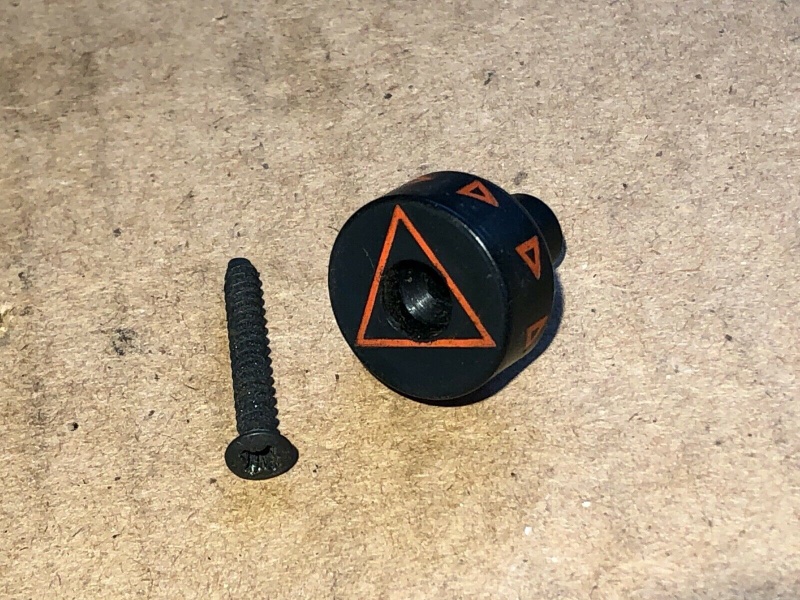
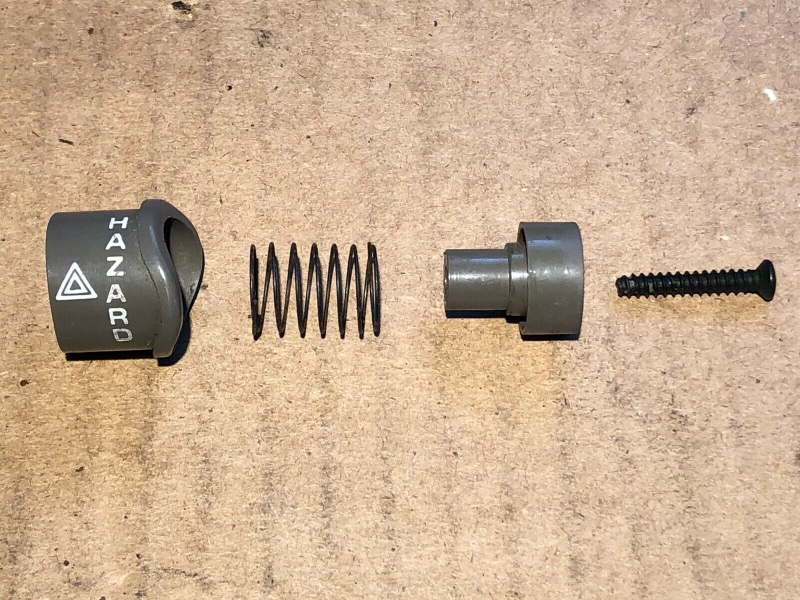
Jeep Comanches used two (possibly three) different knobs throughout their production: First pic was possibly used in early 1986, but usually seen on 84-85 XJs. 2nd pic used 86-90 3rd pic 91-92 some GM/Chevy hazard knobs will work, but are different. Early to mid 70s trucks used a simple screw and knob similar to the 87-92 Jeep type, but later trucks used a two piece assembly with a spring loaded collar, last pic. Trucks were always black, but various colored ones can be found in Cadillacs of the same era.
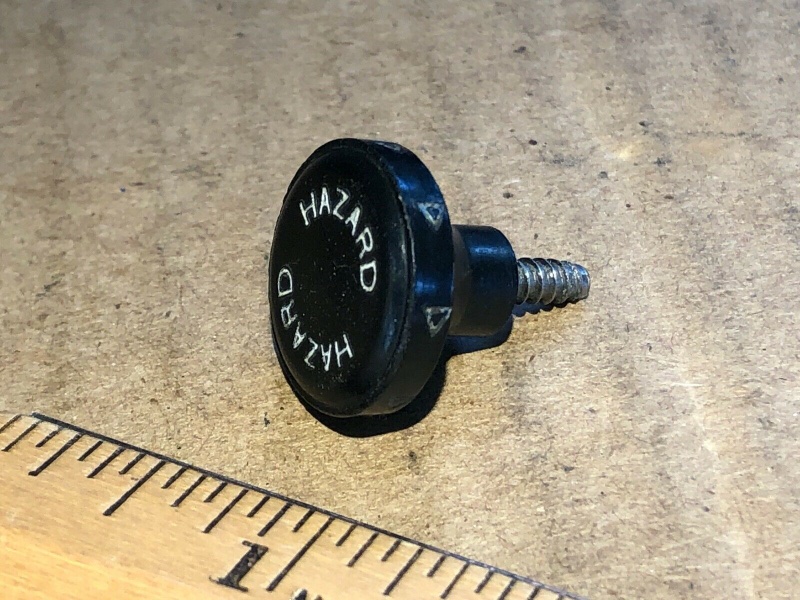
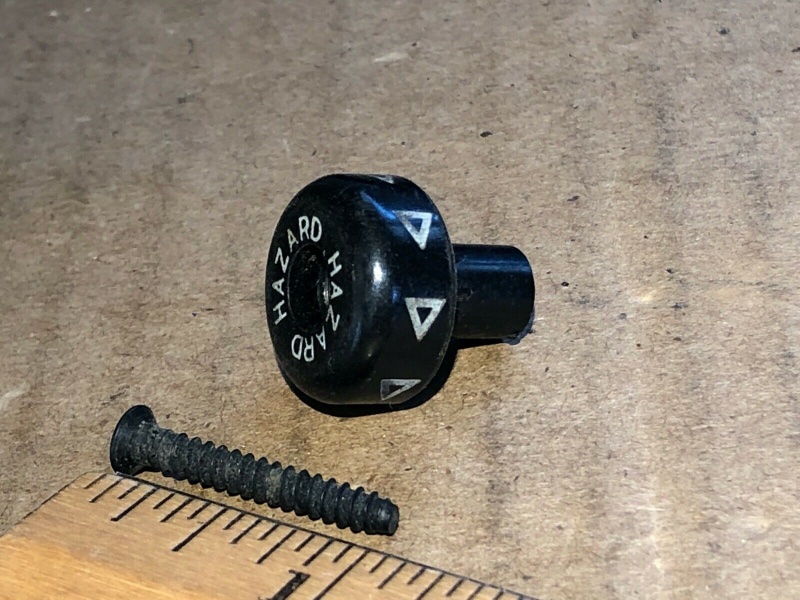
-
Last week, plus a throwback to this past Spring.

-
So the rear box is missing from the ambulance?
-
Valve cover / crank case breather
schardein replied to Dave Vig's topic in MJ Tech: Modification and Repairs
Technically that's not the PCV valve, it is the fresh air intake for the crankcase ventilation system. That hose is hooked to the air cleaner where it draws clean filtered air into the engine. The Positive Crankcase Ventilation valve is the part stuck in the rear opening of the valve cover. It has a small metered orifice that is connected to a manifold vacuum source on the intake manifold. Engine vacuum draws crankcase gases out of the engine, and in turn fresh air is drawn in through the front hose. Excessive blowby could mean the metered orifice is plugged with carbon, sludge, dirt, etc and preventing the system from working. The crankcase pressure is then forcing gases and oil out the fresh air intake hose because it has nowhere else to go. Cleaning the rear metered orifice could help. Given the age of our trucks, the excessive blowby could also be caused by bad piston rings allowing combustion chamber pressure to escape into the crankcase. It's still a good idea to check the PCV orifice and clean it if necessary. -
That's a great idea on the registry! And, I agree about the interiors. Unless you have a Country or other upscale trim, the interiors on the late model XJs are just blah.
-
The extended idle is from a Police Package XJ. On an MJ it won't do anything unless you run a wire from the switch to the proper terminal on the computer. And as far as I know, that terminal is present on the 91 and up HO computer, I don't know if a Renix computer has that function. The wipe/wash switch is for the rear hatch wiper on an XJ. It won't hook up to anything on an MJ, although you could custom wire it to control something if you wanted to. It might help if you added some information about your rig to your signature line. Welcome to Comanche Club!
-
Do you have this on your build sheet: RA8 Delete Radio My build sheet has that and the radio that was in the truck when I got it was likely dealer installed. And I definitely remember the Supertuners. I have a vintage one in my workshop now, along with some other vintage shaft type radios, including an Alpine 7168.
-
Rockauto has the newer style for $32 + shipping. I can't speak to quality. I'd bet OEM is better. https://www.rockauto.com/en/catalog/jeep,1991,cherokee,4.0l+l6,1180055,body+&+lamp+assembly,header+panel,819
-
You know the header panel design changed in 91. 91 uses a one piece headlamp surround, while older header panels used a two piece headlamp surround. Also the grills were different, but I think those interchange. I can't remember the cross-compatibility of the headlamp surrounds, but it doesn't work one way- I believe you can't use the older two-piece style on the newer header. You may want to specify depending on what grill & headlamp surrounds you intend to use.
-
If that thing could talk, it could tell you tales you just might not believe.
-
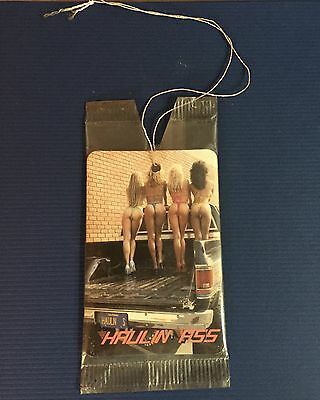
And I rocked this air freshener on my rear view mirror most of my senior year- 1986. Driving a 78 Chevy truck.
-
Guy driving, girl riding shotgun. Need one of these behind the seat.

-
80s was also dual/triple/quad/as many as you could fit shocks with bright neon shock boots. Triple/double roll bar. Need to spend as much on the stereo as the truck cost. Dark tint on the windows. Louvers over the back window. Bandana tied in a loop and hanging from the rear view mirror- or a blue bandana tied around the driver sun visor and pink on the pass side. Chrome or polished aluminum "mod" wheels. And the aforementioned KC Daylighters. I may or may not be speaking from experience...
-
The hazard knob attaches with a screw. It attaches to the turn signal switch assembly inside the steering column. If the hazard knob is missing, usually you just need a new knob and screw. If the hole the screw goes into is damaged, it is likely that a new turn signal switch is needed. They aren't super expensive, but to change them out requires some special tools. The steering wheel must be removed, which requires a puller. Then a lock plate depresser is used to depress the lock plate and a small lock ring is removed to gain access to the switch. When replacing the switch, the wiring must be "fished through" the steering column from top to bottom. This isn't a full description of the work, but something to give you an idea of what is involved. Someone experienced in this kind of repair can do it in less than an hour with the right tools. If you just need a hazard knob and screw, I have one available, and I'm sure other members here do as well.
-
I'd say without doubt that the most common interior color in the XJ Cherokees was gray. Not so sure on the MJs. From my experience, it seems like there may be as many tan as gray. And it seems like the other colors (red, burgundy, blue, black, etc) are more commonly seen than in the XJs.
-
Have you pulled the dash panel, then HVAC panel, to inspect the switch and wiring connector yet? I ask because it's not uncommon for the terminals to overheat and melt the connector. The symptom would be the switch doesn't seem to do anything, when it's actually getting power but the bad connection is at the switch itself.
-
I bought a 78 Chevy K20 in 1985 that was close to that color. Later had a 79 K5, painted it the same color.