


gogmorgo
-
Posts
5984 -
Joined
-
Last visited
-
Days Won
4
Content Type
Profiles
Forums
Gallery
Everything posted by gogmorgo
-
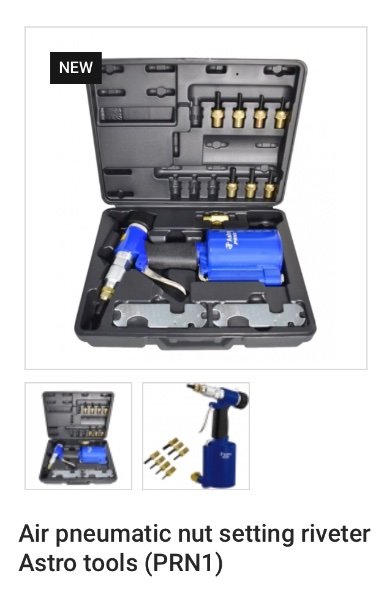
Another option, which I’d do long before cutting holes in the frame for access, would be to drill the hole just big enough to get a nut with the correct thread through it, using a stepper bit to keep the hole on centre, then weld the nut in place. Grind it flush. I’m not saying this is necessarily the most correct way to do it, but I don’t think there’s much better way without access from the top. I’m not super thrilled about rivnuts under a vehicle because corrosion is an issue here, but they do work. If you’re set on using them, a pneumatic tool is the way to go. https://outilsquebec.com/en/air-tools-and-accessories/7748-air-pneumatic-nut-setting-riveter-astro-tools-prn1.html This one’s only good up to m10 or 3/8”, so you might need the next one up if you have to go bigger, but it’s a lot easier than doing it manually.
-
-
I'm half expecting it to hit that here this summer. Going to have to go tune up my bike... I don't really see it coming back down from this level much either, unfortunately.
-
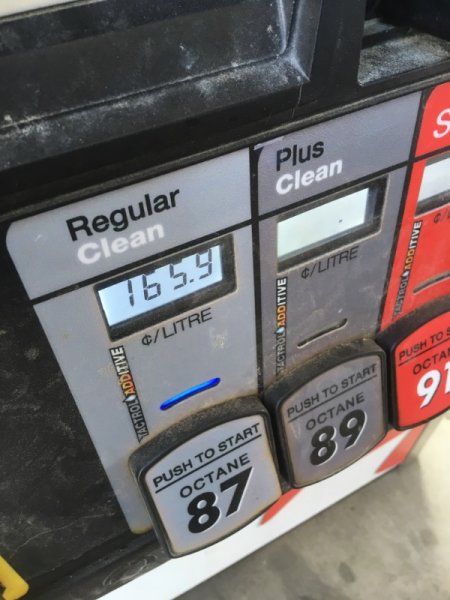
Just got gas. Gross. This is getting real close to the most I’ve ever paid for fuel, and this is my gas station at home, not some sketchy backwoods boat dock in rural Oregon where I was getting some crazy high-octane boat fuel.
-
I remember the first time seeing our wildfire guys doing sling training. The helicopter was doing real short laps with the longline but didn’t seem like it was carrying much, but I couldn’t make out what it was. Then the wind shifted and they started buzzing our shop on takeoff and I did one heck of a double take.
-

Aftermarket repair parts. Whats new?
gogmorgo replied to camjeep3's topic in MJ Tech: Modification and Repairs
Good news if you haven't heard yet, in the last couple years Key Parts has started producing some high-quality panels that didn't exist ten years ago. Rockers, beside patches, taillight lenses currently available with more in the works. Fenders are definitely available from the aftermarket, although I would still look for an original in good condition if you can find one. Large panels like that can get damaged in shipping pretty easily, unless you've got a good local supplier. -
So far I've mostly found squeaks to be due to metal on metal contact, usually due to lack of lubrication. A perished or loose rubber bushing with a metal sleeve will also result in metal on metal contact, however. Get underneath and (carefully) give it some bounces, see if you can trace the noise, see if there's play in any pivot point. You might need to have weight off the suspension for that. Having someone turning the steering wheel back and forth just past the point of taking up and slack can also be helpful to the process. Having someone walk around outside while driving slowly can also be helpful to pinpoint to specific corners.
-
89 Comanche Dana 30 Hub Bearing
gogmorgo replied to NC Toy Boy's topic in MJ Tech: Modification and Repairs
Yeah. I've got an axle that as best as I can tell was pulled from an '86 as well, but it's non-CAD. High pinion, early knuckles, small ujoints. Came with an AMC 20 supposedly out of the same truck. I guess the only way I'd know for sure that it's from an '86 would be to open it up and get date codes off the gears, but also all the early XJ's I remember seeing in wrecking yards had non-CAD axles, not that I've seen many or actually been checking them all, just a trend I'd been noticing. But I'll fully admit I'm making assumptions based on anecdotal evidence with that. And we're getting pretty far . -
My back when I think about carrying everything I’d want from a wrecking yard in one trip: Nice haul.
-
89 Comanche Dana 30 Hub Bearing
gogmorgo replied to NC Toy Boy's topic in MJ Tech: Modification and Repairs
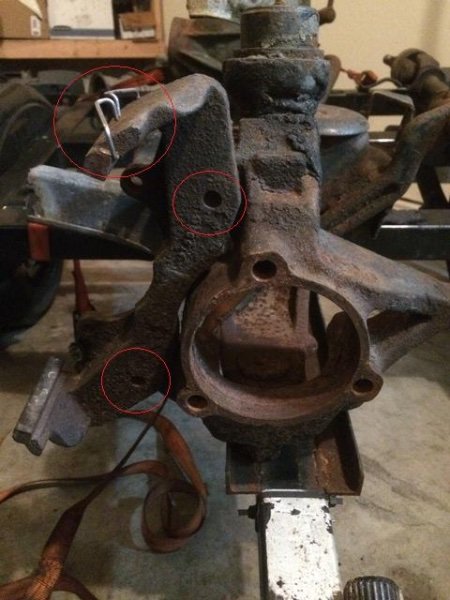
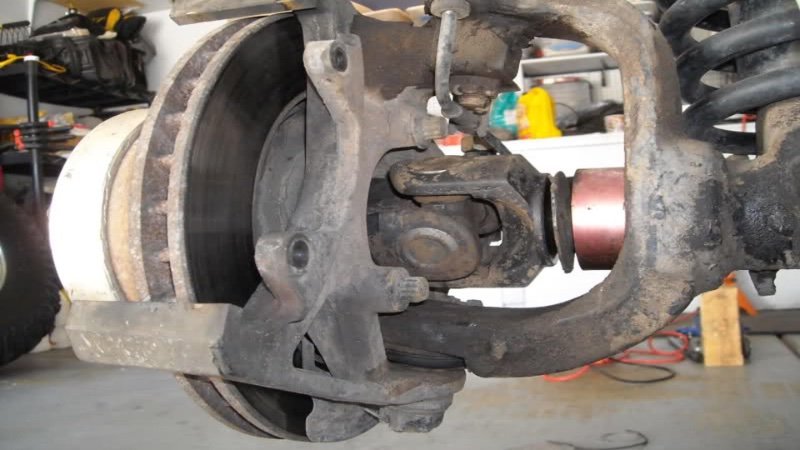
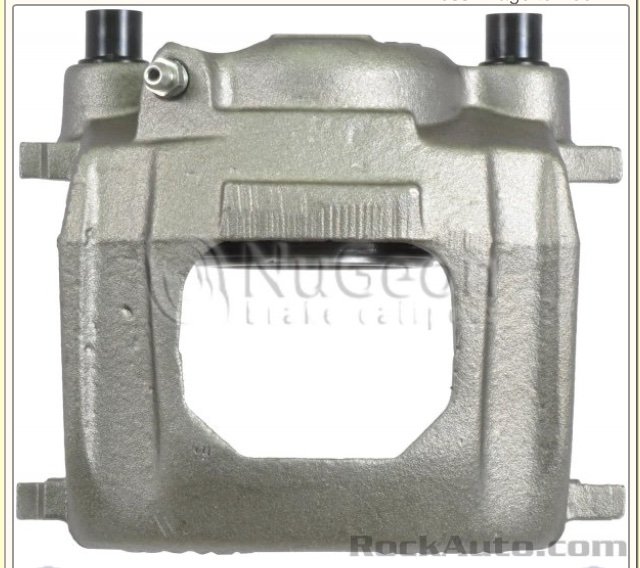
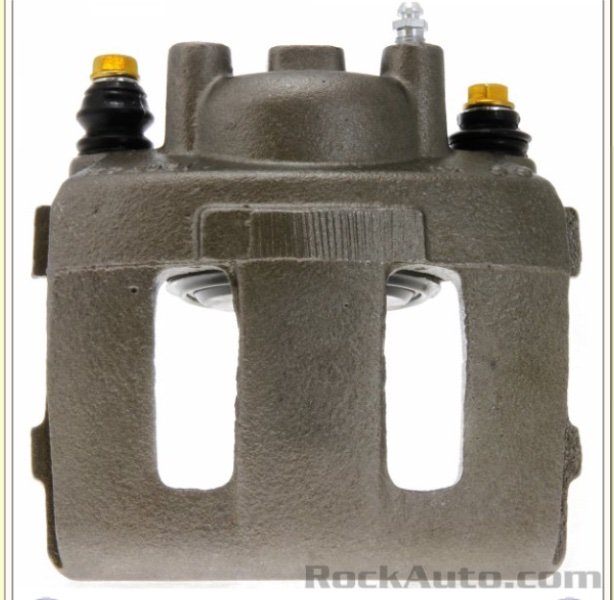
I guess I could’ve been clearer there. I was referencing the ‘84-‘86 models as not having a CAD, although I think it had more to do with the transfer case in question than specific production dates, and I think the CAD was mostly a 231 thing, although I have no hard data to back it up. Either way, there’s enough non-cad D30’s floating around with the early style steering knuckles and enough CAD axles with the later knuckles to make it an unreliable way to tell which knuckles, bearings, and brakes you have. Year isn’t a good indicator either bot just because they could be swapped, but also because the 2wd applications hung onto the early knuckles for a while after the 4x4’s switched, just to confuse things. Much better to look at the components themselves. Early steering knuckles with bolt-on calliper brackets: Later knuckles with integral calliper brackets: Early calliper with single large window: Later calliper with two windows: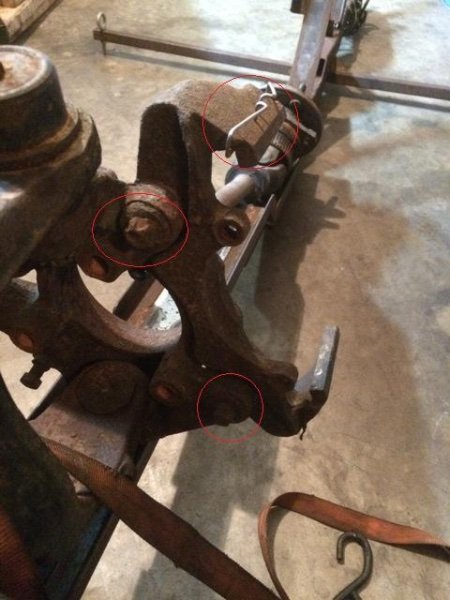
-
89 Comanche Dana 30 Hub Bearing
gogmorgo replied to NC Toy Boy's topic in MJ Tech: Modification and Repairs
The other tell is the back of the calliper, the later style has two narrow rectangular windows, the early one has one big round(ish) one. I wouldn’t recommend using the CAD as a tell. The early XJ/MJ Dana 30 didn’t come with a CAD, and neither did the select-trac XJ with the NP242, plus the CAD carried over for a few years past the change to the new knuckle/brake/hub combination. There’s also nothing preventing someone from swapping early to later style knuckles on an earlier axle. Either way though, your pics don’t really show the CAD area very well, it would be in the middle of the passenger’s side axle. You’re definitely wanting the later hubs. My preference is the Timken 513084, or you could just get them for like, a ‘95 XJ if you prefer to walk into a parts store without confusing the staff. Note you’ll also need the later brakes when it comes time to change them. -
89 Comanche Dana 30 Hub Bearing
gogmorgo replied to NC Toy Boy's topic in MJ Tech: Modification and Repairs
Do your brake calliper brackets bolt on or are they cast into the knuckle? If they bolt on, get the hubs for an ‘89, if not, you’ll need the ‘91+ style. -
What Fluid Are You Using In Your Ax15 ?
gogmorgo replied to Biotex's topic in MJ Tech: Modification and Repairs
I wouldn’t add an extra quart. Run what the manufacturer suggests. Running the gears too deep in oil can mess with the splash lubrication, and also runs the risk of aerating the oil, which can cause lubrication issues. Plus it makes a mess when you pull the fill plug to check the level. I was waiting to chime in on this thread until I’d swapped out the trans oil in my ZJ to my prefered Royal Purple Synchromax, because I hadn’t actually run it yet in an AX15. Only in every other manual trans I own. And it’s still my prefered trans oil. When I bought the ZJ, I don’t know what was in it. The owner’s manual actually calls for 75W90 GL5, and I’m kinda thinking that’s what it was, but this was four years ago and I don’t think I even drove it much before I changed it. I wasn’t able to get any manual trans oils locally or even a gear oil I could guarantee was yellow-metal safe, so I ran some 10W30 synthetic, ran that for roughly two years. It wasn’t the smoothest shifting in the world, but it got the job done. Then I managed to track down some Redline MT90 that came so highly reviewed, and I wasn’t super impressed. No difference in feel over the 10W30, and while it’s hard to compare directly because I changed it in the fall, I didn’t feel the Redline was shifting as easily in the cold (mornings below -20°F are normal here) as the 10W30 did. It’s also much more difficult for me to get my hands on than the Royal Purple. So after a year and a half with the Redline, now I’ve got the Synchromax in my ax15, and it’s a noticeable improvement. At just shy of 200,000 miles I can’t say it’s exactly buttery smooth, but the gears go together much more nicely. It also seems to be running more quietly, but I’m willing to allow might just be my own personal biases telling me things. Shifting is definitely better now though. Even reverse which isn’t even synchronized is going in better than before. And while I don't think we'll be having any more extreme cold until next season, I've historically never had a cold-related issue with it in any other trans, even down below -30°F. As far as the long-ago OP’s asking about 50w oil, I don’t really have the experience to contradict Novak either, but I’m not 100% on what they mean there. I live in a much colder climate than Novak does, and I can’t say I’ve ever even seen a straight 50w gear oil. A 50W motor oil exists, sure, but I once put 15w40 in an AX5 in the winter because it was on hand, and I dumped it less than a week later because it was like shifting through glue, like, push the lever sideways in neutral and it wouldn’t even spring back to centre on its own. I can’t imagine a 50W engine oil would actually improve shifting in anything that hadn’t like, sucked in a pile of silty water, or something. -
Need to replace cooling system
gogmorgo replied to Smokeyyank's topic in MJ Tech: Modification and Repairs
In theory you can also future proof with the later radiator and still leave it as a closed system just with added rad cap, leaving the option to go open in the future should you decide to do so. -
Yup. Crank position sensor would be super easy to miss if you weren’t the one unplugging everything. It’s also pretty exposed and possible to damage during engine removal and installation, as it sits as close as you can get to the flywheel. Also make sure all your grounds are hooked up. Cruiser54.com has a good reference to where they’re all at.
-
What Clutch Should I purchase?
gogmorgo replied to Allontommy's topic in MJ Tech: Modification and Repairs
No real advice on brands to give you, but it sounds more to me like an issue with the clutch hydraulics than the clutch itself. But I suppose if you’re in there having to change an internal slave cylinder you might as well replace the clutch at the same time. -
Find anything with a grease nipple and put grease into them. Crawl underneath and bounce the truck and try to locate squeaking noises? There's a lot of moving parts in the suspension and you'll have to narrow things down somehow. It could even be something in your seat creaking.
-
I'm pretty sure there's also a rule on the books that all trailer wiring has got to be hot trash from the factory. My parents have an old Trillium fiberglass "egg" trailer that's old but has been excellent in terms of reliability. No leaks ever. Everyone I know with a more modern trailer complains about leaks, everyone with slide-outs has rodent issues, people complain about the flooring shrinking and peeling off in the winter, but my parents haven't had any of that. It makes me wonder why they moved away from the fiberglass egg model. And while I doubt the fiberglass would survive particularly well in a collision, I can't imagine it would be much worse than the modern trailers that turn into matchsticks and crushed pop cans.
-
Again, a worn off 3/4-16 is going to seem a heck of a lot like an m18x1.5. Honestly with some of the made-in-china tolerances out there they might even fit new.
-
I didn’t catch the M18 vs M20 bit. The imperial filters are 3/4-16, not a 7/8” thread. 18mm is just shy of 3/4”, and 16 tpi works out to a thread pitch just a hair over 1.5. It’s close enough it might screw together, and maybe even tighten down, especially if the slightly larger 3/4” threads are worn off. But if a 3/4-16 filter like the Wix you have doesn’t fit properly anymore, I think you should probably get a new adapter.
-
I had a lug nut on one of our highway plows recently that I couldn’t get off even with the 1” impact. It took 280 lbs of me jumping on the end of a 12-foot piece of square tube over a 1” breaker bar to bust it loose. Needless to say that hub got all new studs and nuts that day.
-
Really that only comes down to what people are willing to pay for. To someone who wants to trailer it to one car show and leave it in storage for the rest of the year, originality is going to be worth more. To someone who wants to drive it every day, they might value reliability enhancements. But to me it seems most people would prefer an original survivor in good condition to do with as they see fit, instead of paying for stuff done to it they may not necessarily want. Personally I’d rather have original patina and faded and cracked decals than a fresh paint job I don’t know was done properly, and some rust spots starting without having ever been addressed rather than a good-looking repair that may need redone because no internal rust prevention was done and/or magnets stick to the repair because there’s thin steel mesh right under the paint and it’s otherwise just bondo over cardboard and your “nice” rocker panel falls out the second time you take it down a gravel road, and the a few years later when you cut into the “better” but still failing rocker panel to hang some square tube, you discover it was all done with steel roof flashing with a skiff of bondo over it all, and there’s not a ton of structure to hang the square tube anyhow. But I’m not bitter at all.
-
My two cents, if the metric filter fits and doesn’t pull off or anything and you’re happy running them, I see no real reason to change it out. After owning a bunch of cars I’m personally happier not having to remember I need something other than what the parts store lookup tells me I do, especially on service items that I’ll be replacing reasonably often. I’ve been bit on that before. In the case of oil and filters I’m currently able to run the same thing on all my vehicles, so that’s not as big a deal because I’m still only remembering the one thing. If the PO did a full conversion to MPFI and it’s easier for you to remember you need only ‘94 engine parts, maybe that’s the way to go for you. Up to you I guess. In my case there’s currently no difference in local availability for either filter, they’re both a day away from a central warehouse. I’ve never bought the metric but sometimes they’ve had one of the SAE in stock locally, sometimes I’ve had to wait the day, even pre-pandemic. The metric is all of two cents cheaper. There’s ten times the inventory at the warehouse for the SAE, but not a low enough number on the metric I’d ever be concerned about finding one, even right now with weird supply chains. But that’s just me, at my tiny parts store, in my tiny town in the middle of nowhere. Your situation could be very different.
-
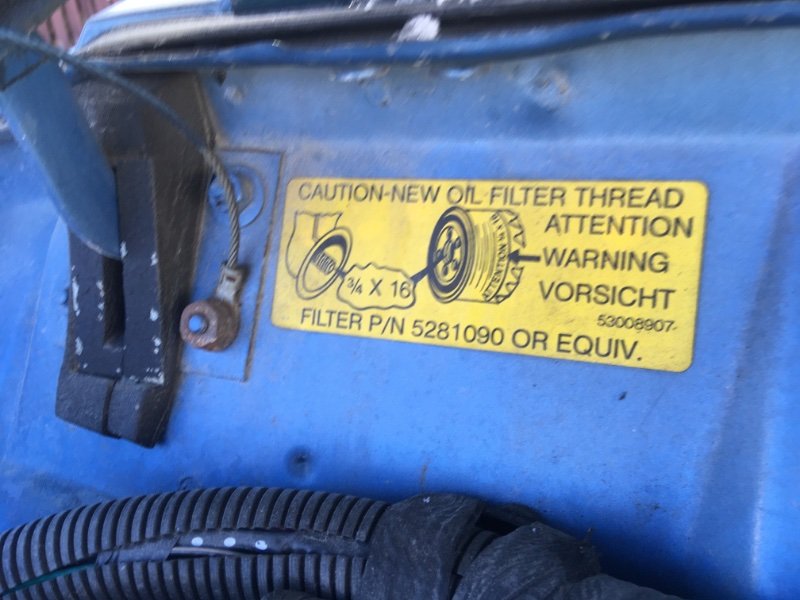
No, that's the correct oil filter for a '91-2001 XJ/MJ. 2.5 and 4.0 run the same filter, so you won't get anything different asking for one for a '95. Do you happen to still have the number for the filter you pulled off it after you bought it? Could be the PO was getting the wrong filters without knowing and stripped it out for you. Getting an adapter that you know will work will cost you less than replacing filters repeatedly until you find one that does. From the parts manuals at XJJeeps.com, they're the same adapters for 2.5 and 4.0. Interestingly the '91-'93 manual lists metric vs SAE for the 2.5 but breaks them out by application for the 4.0. The '94-'96 has the SAE and a third part number for an export 2.5, but only the SAE listed for the 4.0. The '97+ manual only lists the SAE for either engine. My '91's both have a sticker under the hood warning to use the SAE filters. Hard to say if that's a factory thing or maybe it's possible the dealers were swapping them over and stickering them or something.
-
904 auto trans Dodge D100 slant 6
gogmorgo replied to dragordie's topic in MJ Tech: Modification and Repairs
Yeah I've also seen them used, but they aren't OEM wheels that say Jeep on them, and I have my eccentricities.