
gogmorgo
-
Posts
5984 -
Joined
-
Last visited
-
Days Won
4
Content Type
Profiles
Forums
Gallery
Everything posted by gogmorgo
-
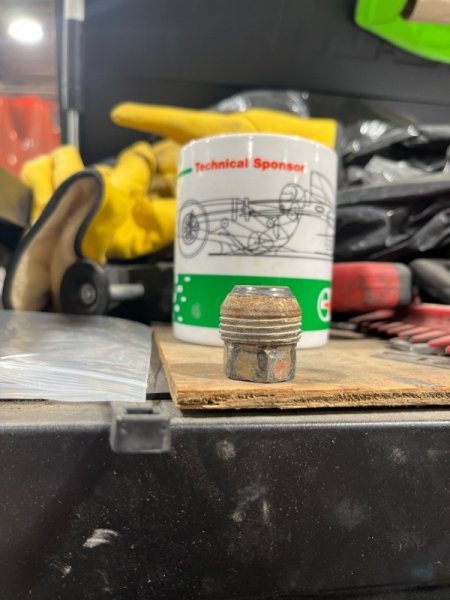
Continuing the discussion on lug nuts This is a nut off a 3/4 ton chev that’s been used with steel wheels for about 20 years. It’s hard to get a good photo of it with my phone but that worn in patch at the top has a pretty good step to it. It’s not really an issue here because it’s matched pretty well to the wheel it came off. But if you were to put it on an aluminum wheel that worn ring wouldn’t touch the seat on the wheel and you’d just have a tiny little lip on the outside of the nut contacting the wheel. Throw some driving stresses on it and you’ll wear out that little lip of aluminum and your nut will get loose. If you keep retorquing the nut you’ll eventually wear in the wheel to match the nut, but you’re probably better off getting new lug nuts if you notice some wear on the tapered seat of the nut. You may also notice a similar effect putting new nuts onto used wheels. In the context of the truck it came off it’s not really a big deal. Not only have the nuts worn in with the wheels, it’s a hub centric wheel that still fits nicely on the hub so it’s going to stay where it needs to sit. But if you had lug centric wheels you might have trouble getting the wheel to seat correctly with a worn taper on the nut, even with a steel wheel.
-
Not a lot to it, no. You may not get caster or front pinion angle as part of the alignment at a shop, I think in the DIY thread linked in Pete’s signature there’s a guide on driveway alignments. When inspecting steering or suspension stuff you want zero play in any pivot point. You can get someone in the driver’s seat to turn the steering wheel back and forth to look for play in the steering linkages. Lift the axle off the ground, onto jack stands. Try to wiggle the tires around. Any clunking is bad. Top/bottom of the wheel moving in and out is likely a ball joint. General wobbling around is going to be a wheel bearing issue. You’ll be able to push the wheel back and and forth in the steering axis, but any clunking while it’s happening will be an issue in the steering linkage. If you shove the front end of the truck left and right and there’s clunking, that’s a likely a track bar issue. Check the control arm bushings as well, there’s always going to be some give in a rubber bushing but you shouldn’t be able to easily move them around. And while we’re on the subject of rubber bushings, anything with one should be torqued in its final position. With control arms this means at ride height. Leave the bolts just barely touching their seats, and at minimum bounce the truck a bunch with weight on the wheels to settle the suspension, but ideally go for a cruise around the block to wiggle everything into its happy place and then tighten everything down.
-
I ocasionally wave at oncoming vehicles, but I don’t really make a habit of looking to see who’s inside or what they’re doing. I’m not going to get upset over whether or not anyone waves back.
-

Getting Rid of Rodents
gogmorgo replied to H3ADBANG4L1F3's topic in MJ Tech: Modification and Repairs
Smells do nothing. If it smells strongly of food it could even attract them. Best deterrent is to park somewhere nice won’t want to go. Avoid vegetation or anything that would give them cover around the truck. They won’t want to cross open areas. If you have to park on grass, vehicles that move around don’t attract mice the way parked ones do. Don’t always park in the same place. Kill traps are the best method of reducing numbers. Don’t use poison, it can make natural predators or your pets sick, which will work against you. -
The point of this thread is learning so everyone wins if that’s what we’re doing. Used lug nuts can be strange. It’s definitely true that you can leave an imprint of the steel wheel in the nut which will affect how it seats in the wheel. But even when switching between aluminum wheels I’ve had to retorque more than once. Not too sure what causes that, whether it’s a mismatch in the softer nut seats, corrosion holding the hub off the face slightly… doesn’t seem to matter if I clean off the hub surfaces or anything, I just end up retorquing every 20 miles or so until they stop moving before the torque wrench clicks. On a similar note, if you’ve left a vehicle sitting for an extended period, it’s a good idea to check lug nut torque before putting it back on the road.
-
If your wiper motor is struggling to wipe a dry windsheild it’s probably due for replacement anyhow, and a replacement will feel like a pretty big improvement.
-
Like, one with the correct plug on it so it just plugs in? Just order one for your year truck if yours is getting weak. The newer one doesn’t wipe any faster than my old one did. Any difference in torque can be explained away by it not being 33 years old and stinking of electrical failure.
-
What’s the difference in lug nuts? Conical seat nut is conical seat, no? Bleed screws usually respond very nicely to heat. Even a small butane lighter can be enough to do the job. It’s my go-to when I can’t get them with a 1/4” ratchet.
-

-
Weird thing I noticed recently. Looking at parts listings I noticed two lengths of sway bar end link. 7.25" and 8.25" are available. I would have assumed this was 2wd vs 4wd, but in '91 there's a date split, up to 5/20/91 uses the short and after uses the longer one. Does anyone know what changed? Looks like the sway bar didn't, and I have a hard time imagining the body mount point moving. So I guess that leaves the brackets on the axle?
-
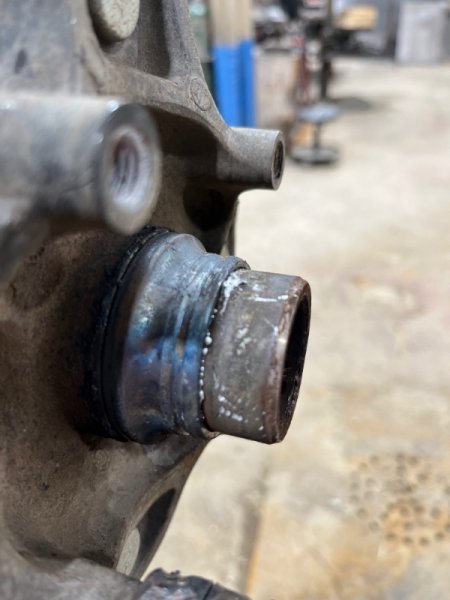
We’ve all done them. Maybe if we share some of us will learn something not to do. I’ll start: Trying to get a bearing race off an aluminum hub in the shop today. Hit it with the torch to expand it so it would slip off, but before it got there the aluminum hub started bubbling out from under the race. Whoops.
-
I just took a look though Prolink and I’m only seeing the TTX upper control arm and ball joint listed. Sorry about that, I should have looked before making the suggestion. I haven’t done much with KJs, but the TTX is what I used on my 3/4 ton GMC when I did them last year, and there’s a few of the TTX in the work fleet now. I will say that an old boss liked to buy the cheapest stuff Napa sold, and it didn’t look great when it showed up, and I’ve changed the same parts again couple trucks more than once within a few years. I tried to go for a more middle of the road approach and haven’t really noticed that issue.
-
If it is actually themed it’s just a play on the midlife-crisis corvette owner stereotypes.
-
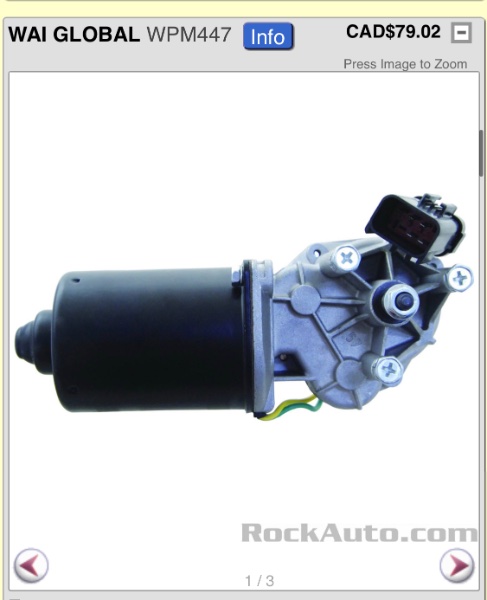
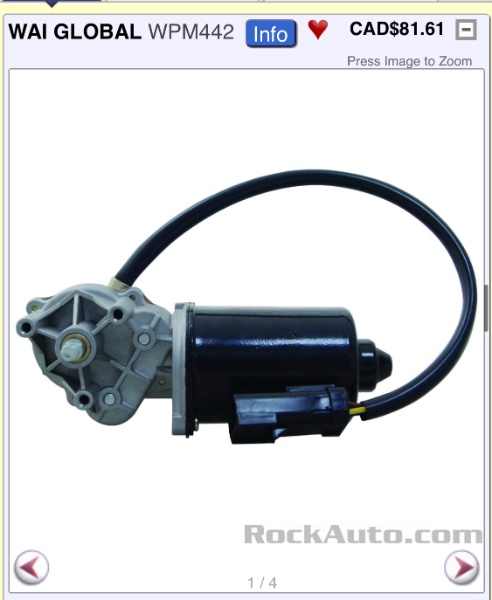
Just going off the pictures on Rockauto the two look like mirror images of each other. XJ: TJ: Basically looks like the motor body angles the opposite direction from the head. Its possible it might go in that way I guess. Hard to say without trying to do it. If I was buying a replacement I would just get the correct one. I still haven’t seen evidence to support the later motor is any different to the old one other than the plug. Think about it. Has anyone ever replaced an old worn out starter motor without noticing how much faster the new one turns over their engine? Why would a wiper motor be any different? I changed mine because it was struggling to sweep across a dry window. But the speed of the new motor doesn’t seem any faster than the old one did over a wet window.
-
I got a good impression of the Napa TTX ball joints I’ve handled, although I don’t really have long term reviews on them. I think they’re made by Mevotech. Mopars are available on Rockauto but they’re not exactly cheap. I’m inclined to just do the ball joint. Not as much cause to go get an alignment after the fact than if you change the whole control arm. I’ve also had real poor luck trying to extract the camber bolts from Mopars, and they’re a lot more expensive to replace than you’d expect when you have to cut them out.
-
punch way above our weight, yes.
-

-
-
JBWeld is an epoxy
-
If it’s below 1/2 tank it won’t spill gas on you pulling the sending unit if that’s what you’re doing. Don’t put your mouth on the hose when you’re siphoning. If you’ve got access to compressed air and a blow nozzle, blow it across the end of the hose. For a larger hose, cut a hole near the end, stick the blower in the hole and blow towards the end of the hose. Or just put the blower into the same hole you’ve got the hose in and seal it off with a rag to pressurize and blow the hole out. Alternatively if you’re having trouble coming through the filler neck and replacing the tank anyway because there’s a hole in it, just make the hole bigger and either put the hose in there or stick a drain pan underneath and catch it coming out. My preference is to pull a fuel line, pop out the fuel pump relay, and jump across pins 30 and 87. Pump it dry, put the relay back. Of course that only works if the fuel pump does. But it keeps any potential sparking well away from where you’re working with the fuel.
-
Adjustable track bar out of adjustment!
gogmorgo replied to Warthog's topic in MJ Tech: Modification and Repairs
Is the axle properly centred under the truck? Once you take the old track bar out there’s nothing stopping the axle from moving left and right. -
Blower switch - all or nothing
gogmorgo replied to JZLAJeep's topic in MJ Tech: Modification and Repairs
Yeah, at that age everything starts becoming a wear item. But once you replace everything you’ll have a new truck, right? Blower motor is pretty quick and easy too. 15 minute job, it’s just in the engine bay, passenger side of the firewall, not buried in the dash somewhere. Three fasteners and the connector. Don’t miss the gasket in there. I just did one of mine and didn’t notice it was still stuck to the old motor until I already had the new one in place. And I won’t tell you how long I had the new one sitting on the shelf. -
Blower switch - all or nothing
gogmorgo replied to JZLAJeep's topic in MJ Tech: Modification and Repairs
Generally this is a resistor issue. The highest position on the switch sends full power to the blower motor. The lower fan speeds feed through a combination of resistors to achieve reduced voltage and lower fan speeds. If the resistors burn out you’ll lose some of the speeds. The blower motor resistor pack is pretty cheap and easy to get to under the passenger side dash. If the blower motor is getting old it may have internal shorts that cause it to pull excessive current, which can lead to premature failure. Same if the bearings are failing or there’s something obstructing the fan and slowing it down. It’s worth investigating at the very least. A lot of places will recommend replacing both resistor and blower motor at the same time, but you can buy a bunch of resistor packs before adding up to a blower motor, and resistors do eventually fail over time or if they get covered in dust or something that holds the heat in. Not saying it couldn’t be the switch. They should be available pretty cheaply too. Napa had a listing last I checked, I’m sure other places do as well. Oil pressure gauge is more likely to be a sending unit than the gauge itself. If there’s oil leaking out of it its definitely time to go. The way the failures start to go is they’ll start dropping out intermittently, and start seeping oil, and eventually will pop and start gushing the oil out. Cause its on the pressurized side of things you’ll pump out the full volume of oil from your pan in a matter of minutes, if you even get that long. -
Nah that was three weeks ago. Turkey boy’s in the wrong month. 😉

-
there’s a joke in here somewhere