

rokinn
-
Posts
570 -
Joined
-
Last visited
Content Type
Profiles
Forums
Gallery
Everything posted by rokinn
-
Closed to Open Cooling System
rokinn replied to 1989 Eliminator's topic in MJ Tech: DIY Projects and Write-Ups
HOrnbrod & Pike, thanks. I might see if I can find a venting cap for the renix bottle that fits??? but at least I know what's needed now. -
Closed to Open Cooling System
rokinn replied to 1989 Eliminator's topic in MJ Tech: DIY Projects and Write-Ups
I considered the Mac's tank and 2.5 overflow tank until my stock renix radiator started leaking. I have already purchased 91+ open radiator and have considered which way to install an overflow tank. While I like the 2.5 tank, it means relocating the ballast resistor (which is easy) but also the EGR. The EGR system is all new and I intend to keep it. Not only for emissions testing but because I think it serves a valuable function. Some differ I know. I picked up a Tracker bottle that fits in the 2.5 tank location but I still have to move the ballast resistor and EGR, but only slightly. The Tracker bottle just barely fits (backwards, maybe). The easiest thing to do is to run the overflow to the existing renix bottle and location. QUESTION: does an overflow bottle need to be vented to work properly? Anyone? If not, then I'm good to go. If so, then I still have some thinking to do. Thanks. Pike, I like your solution. And such a clean engine bay. -
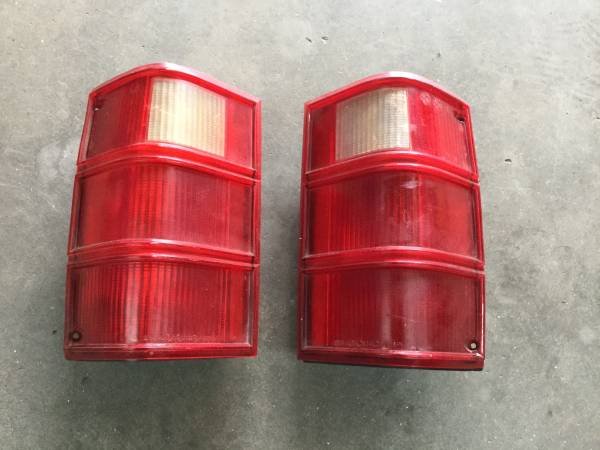
Just down the street from me. https://fortcollins.craigslist.org/pts/d/jeep-comanche-taillights/6548947412.html
-
So NOW you tell me!
-
My buddy is out of town next week, so, perfect
-
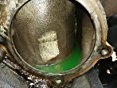
Thanks for the info. I seem to recall that big open chamber now from last time. I think the square hole is now round so extraction is likely what it will take. Just afraid I'd get half way through it and find myself stuck. I'm considering this thanks to Sinkrun's link. https://www.amazon.com/Thermocure-TC001-Coolant-System-Remover/dp/B00R74I5UY/ref=cm_cr_arp_d_product_top?ie=UTF8 Photo is of our engine in customer reviews. My concern is that I'll loosen up all that "structural" rust and have to replace my freeze plugs too.
-
I'm going to do a closed to open cooling conversion and do a chemical flush as well. I put in a new closed radiator 3 years ago which now has a small leak so it's a good time to convert. I was unable to get the block drain plug out then and it now appears to be pretty well buggered for any future removal. Hard to tell really since I can't really get a good look at it. When I did just a water flush last time the coolant bottle collected quite a bit of rust particles in the bottom of it. What I need to know is how to get all of the water out of the block once I'm done flushing. I don't have compressed air. I was thinking of trying to pump it out with a pump and a hose inserted into the water pump opening into the block. Not sure how the cooling channels are configured. Is this even possible? I'd rather not remove the water pump but will if necessary, but even then there is still water left in the block. I expect I can just leave it in there and just add antifreeze with that in consideration but I would like to use distilled water. Just once I wish something were easy on this thing. Thanks.
-
Closed to Open Cooling System
rokinn replied to 1989 Eliminator's topic in MJ Tech: DIY Projects and Write-Ups
Reviving this thread for my open cooling system conversion. I'm looking to repurpose my stock coolant bottle also. Did you install a vent tube or was it unnecessary? I assume the side hole was just capped off somehow? -
Another heater control issue
rokinn replied to coolwind57's topic in MJ Tech: Modification and Repairs
I'm in the process of switching to open system as well. What brand funnel did you buy? Did you get the direct connect hoses and if so, where? What are you using for an overflow bottle and where did you mount it? So many questions, I know Thanks, much appreciated. -
Bought the RU-13. Labeled on the unit itself as 1.6 ohms. Stock unit is labeled 1.1 ohms. Stock unit reads with my ohm meter (Craftsman) as 1.6. RU-13 reads 2.2 ohms. Any thoughts as to appropriateness of the "upgrade." Switching from closed to open cooling and looking to relocate as well as upgrade this unit.
-
I did a 2500 mile R/T this last fall towing 1400 lb popup trailer and a bed full of gear and water. My rig is pretty similar to yours . It's a slight gradual elevation gain from CO to WY and then strong head winds on I 80 west about as far as eye can see. 5th gear was pretty much a down hill only event and, 4th and sometimes even 3rd depending on the up grade and headwinds. When it started to rain as I got near to the end of the trip out it got even worse. This led me to believe I had a spark plug wire problem which I checked when I got to my destination. Sure enough my # 6 wire had begun to corrode at the spark plug. On the return I could cruise at 75/80 on the flat in 5th, uphill incline of any significance still required 4th gear but overall it was better. I may still have other items of performance to address but I've also concluded that the 3.07 just isn't going to cut the mustard so I intend to re-gear to a 3.54 or 3.73 in the D44 I have. I welcome any thoughts as to which might be preferable if anyone cares to comment (don't want to hijack the thread but perhaps it applies to OP also). I'm leaning to 3.54 given the type of uses and driving I do. Also I think it will be easier to find a front axle in 3.54 or 3.55 for later possible 4wd conversion?
-
More than one way to skin a cat, no? The springs aren't really springs per se. They're really just a lattice work of thick wire that has convexity in shape to it to sit on. There is only about an inch of space between each row of wire so there is really no penetration of spring into the foam to speak of unless the foam is totally disintegrated, and it's really pretty high quality foam at that. There was also some fabric between the spring and the foam. Not sure if this was standard or not. Of the two seats only one had it. Adding in the spring was a fair bit of work so adding in the plastic might be the way to go. Or not
-
Good time to run the seat covers through the washing machine too
-
A big part of the problem is that the springs under the foam aren't substantial enough and stretch and sag over time and use. The foam in it may well still be good. If you can acquire a second set of springs....this is what I did....copied from an earlier post. "I also got the two seating springs from each side. I zip tied the new springs overlaying directly onto the old one in my seat. I think I used close to 100 ct bag of the mini zips at every conceivable point it might shift out of alignment. I then used longer zip ties in an interlacing pattern so the convolutions in the double spring setup wouldn't allow for much separation between them. I then covered that with a heavy fabric, put the foam back and the seat covers on. The sag was reduced dramatically resulting in much better support. Finding the second set of springs for this is the challenge but I can imagine there are a few just sitting around left from those who have switched to buckets. Just another possible option for those wanting to keep a bench." I picked up the floor brackets from an MJ at the JY just the other day. I should have gotten the springs too I guess, but didn't need them myself. A pair of hog ring pliers and rings are handy for putting the fabric back on.
-
Advice...Torque Sensing LSD for MJ Dana 44
rokinn replied to rokinn's topic in MJ Tech: Modification and Repairs
Thanks, good to know. I was thinking that the bit of lift (as has been mentioned on CC before) I got from the new springs would compensate for the added length of the D44. -
Advice...Torque Sensing LSD for MJ Dana 44
rokinn replied to rokinn's topic in MJ Tech: Modification and Repairs
Thanks, you've validated my concerns about it also. Too bad. -
Advice...Torque Sensing LSD for MJ Dana 44
rokinn replied to rokinn's topic in MJ Tech: Modification and Repairs
I'm assuming this helical system is similar to the Truetrac??? -
I'm looking for advice and opinions on this Ring & Pinion and LSD carrier for my MJ Dana 44 rear axle. https://www.ebay.com/itm/Torque-Sensing-Dana-44-Limited-Slip-Differential-30-Spline-373-3-73-Gears/122839102736?hash=item1c99c7f510:g:CDgAAOSwkLhaIcrJ&vxp=mtr The axle currently has a 3.07 in it with a shot Trac-lock. I was going to go with 3.55 gears but 3.73 would be acceptable, especially at the price for this setup, assuming this is a fit for the MJ Dana 44. The truck currently has a D35 in it and I'm also going to go for new GS military wrap MT springs. Hoping this will allow me to keep the same drive shaft. Thanks in advance for any input.
-
My Stant thermostat failed not long after installing. Took forever to get up to temp but didn't stay there long depending on type of driving. Got a thermostat from the dealer and problems solved.
-
1991 in Washington
rokinn replied to rosco11's topic in Craigslist/Marketplace/eBay... i.e. Not Your Stuff
4 speed transmission?? Did the 91 HO come with a 4 speed or do you suppose this is replacement with an earlier year?? -
Every state is different. Some states require a certified paper trail of mileage. Just saying, you and your build don't have a problem in CO per state statute.
-
When I swapped in a full gauge cluster and reset the odometer to reflect the actual mileage on the original I checked the Colorado statutes. It is only illegal when there is an attempt to defraud.
-
Rear bumper opinions/options:
rokinn replied to Sir Sam's topic in MJ Tech: Modification and Repairs
No problem. I agree, there are probably better options as far as aesthetics and even construction if price isn't the limiting factor. It was for me. Good luck.... A Second for Colorado Baby! -
Rear bumper opinions/options:
rokinn replied to Sir Sam's topic in MJ Tech: Modification and Repairs
It's the play between the hole size and the bolt size as it attaches to the brackets that attach it to the frame that allows it to rotate a bit. It's not going anywhere. It's certainly stronger than the stock bumper for towing. IMHO I also showed it so the OP has the info to make a decision as to the possible detractors of this particular bumper based on my experience with it. Like I said, larger diameter bolts might take up the slack otherwise I may have to ream the holes for bolts with closer tolerances. Admittedly, not something I should have to do. It's my only complaint with the construction of the bumper. Otherwise it is quite soundly constructed. -
help with identifying axles
rokinn replied to motiusclyde's topic in MJ Tech: Modification and Repairs
The rear load sensing valve is also disconnected and hanging down. You'll need to deal with that to have proper braking response in the rear.