


Eagle
-
Posts
15698 -
Joined
-
Last visited
-
Days Won
27
Content Type
Profiles
Forums
Gallery
Everything posted by Eagle
-
Trey, I just noticed your signature. Did you swap the transmission? An '88 should have a Peugeot transmission.
-
Mornin' Stellantis, time to dust off the Jeep Comanche
Eagle replied to Salvagedcircuit's topic in The Pub
Nah. If they do, it will be full of gimmicks, and the base price will be double what it should be. Because Stellantis has zero understanding of the Jeep marque. -
I'm subscribed to your YooToob channel. Thanks to you and Heather for some spectacular videos, and thanks to both of you for using that MJ the way an MJ deserves to be used -- nothing crazy, not making it a point to try to destroy it every time you go out, just making it better with each upgrade.
-
Personally, I would b royally pissed off if I bought a set of "factory replacement" springs and they sat 3 inches higher than stock ride height.
-
Many years ago I did autocross, times trials (on road racing courses) and hillclimbs in a 1968 Javelin.
-
Most 88s came with Goodyear Wrangler Radials. The absolute base level SporTruck came with more of a street tire, but still Goodyear.
-
My condolences on your loss. It's not easy. I lost my father in 1982, my mother in 1994, and my wife in 2014. It didn't get any easier with repetition. I'm too far away to offer any kind of support other than moral support but feel free to reach out if you need any sort of advice or just a sounding board.
-
I hadn't heard that Advanced is closing stores. It's a surprise, because O'Reilly's is building new stores.
-
Chalk up one more who doesn't have a Fecesbook account -- and won't.
-
How bad is it? From the photos, it looks basically intact. Intact enough that a little TLC should be able to put it back on the road.
-
Then those are not metric ton springs, they're lift springs. The factory metric ton springs didn't ride any higher than standard 4WD springs. I have to say that if I ordered what I thought was a set of replacement springs for my stock MJ and the new springs produced a 4-inch lift over stock ride height, I would NOT be a happy camper. But too many people have reported that the General "MT" springs result in a 3" to 4" lift. I'd rather roll my own with junkyard leaves than pay premium prices for something that doesn't do what it's supposed to do.
-
Is the belt tight? If so, there should be some rather loud noise and a smell of burning rubber. Basically, there's a good chance one of the pulleys the belt runs over has a seized bearing: Water pump, alternator, a/c compressor (or idler), power steering pump.
-
No knock sensor.
-
Looks interesting. Thanks. Now I just need to figure out if the coil rail is actually the problem.
-
What's the Viper mod y'all are mentioning?
-
This is a technical problem, but it's outside the MJ years so I'm posting in The Pub. 2000 XJ Sport has started throwing OBD-II codes: P0303, P1294, and P1494. It runs fine with the check engine light on, and the fuel mileage doesn't appear to be affected. My reference says code P0303 is "Cyl 3 misfire." The 2000 XJ has the coil rail ignition rather than a conventional coil and distributor. I hope this doesn't mean I have to replace the coil rail assembly, but I'm afraid it might. Does anyone have access to a better explanation of what these codes are supposed to signify?
-
Cool! Thanks for the info. I had no idea that such a network of cabins existed.
-
In this latest video Heather mentioned "another" maintained cabin, and I recall a cabin in one of the previous videos that showed a cabin that seemed to have some fairly new (-ish) accoutrements in it. I was surprised that the new-ish stuff hadn't been stolen or vandalized. Who maintains these cabins, and for what purpose?
-
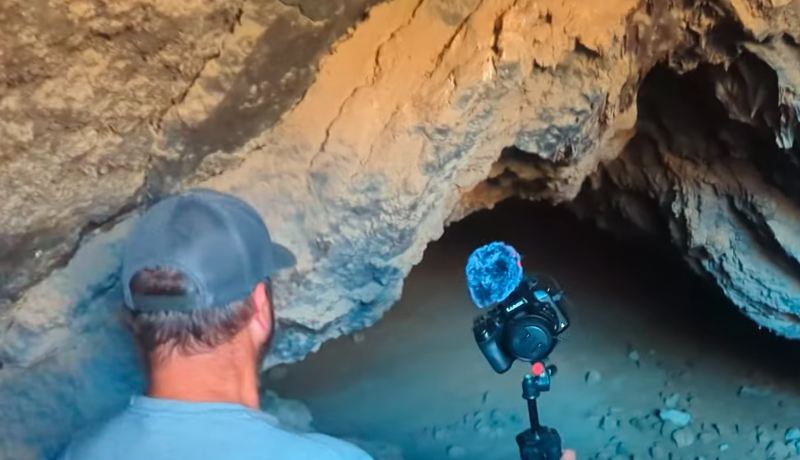
So is this the Lumix? What's the microphone you have attached to it? I guess I haven't priced DSLR cameras for awhile. $2k strikes me as a lot to pay for a camera unless you're a professional photographer.
-
I just watched part 2 on YooToob. Some very cool stuff. I had a quick glimpse of your camera when you were entering the lava tube, but I couldn't read the brand. I was expecting a GoPro, but what I saw was a DSLR. What's your primary setup? Camera make and model, microphone, etc.?
-
Oops. I guess I was reading those subscriber numbers a bit optimistically. The quality of your videos is right up there with anything on YooToob, but what I love is your MJ. It's still an MJ. You put a mild lift on it, added some trekking gear, and it's being used the way an MJ should be used. I cringe every time I see someone take a perfectly good MJ and carve it up to make a tube buggy rock crawler out of it. With an LS engine, no less. What's the point? Start with an XJ, not a rare MJ -- or start with an S10 or a Ford ranger. Your MJ is where I would have liked my off-road MJ to have gone. Life intervened.
-
1950 Hudson Pacemanker 1960 Rambler American wagon 1959 Rambler Classic sedan 1966 Rambler convertible 1966 Rambler American hardtop 1955 Ford station wagon 1946 Hudson pickup 1947 Hudson pickup 1946 Hudson pickup 1950 Hudson sedan 1949 Hudson sedan 1968 Javelin 1968 Amx 1964 Austin Healy Sprite 1968 Javelin 1968 Javelin 1968 AMX 1968 AMX 1968 Javelin (6-cyl) 1980 Renault LeCar 1982 Honda Civic 1300 FE 1988 Jeep XJ 1978 Jeep Cherokee (FS) 1993 Honda Accord 1987 Jeep Comanche 1988 Jeep Comanche 1988 Jeep Comanche 1986 Jeep Comanche 1989 Jeep Comanche 1986 Jeep XJ 1987 Jeep XJ 1989 Jeep XJ 1999 Jeep Grand Cherokee 2000 Jeep XJ Classic 2000 Jeep XJ Sport I'm probably forgetting a few, but that's most of 'em
-
Yay! Another one of your videos. Looks like you're closing in on 200,000 subscribers! That's very good. I love your videos -- I'm too old and too poor for any more road trips to the western U.S., so I have to live vicariously through your videos. Keep 'em coming.
-
I will look forward to the video(s).
-
89 Renix...needs coil? CPS?? EGR issues???
Eagle replied to kaidenlem's topic in MJ Tech: Modification and Repairs
You DO realize that if the starter is making the engine rotate, that's "turning over" -- right? What you man is that it cranked over but didn't fire.