

Gojira94
-
Posts
718 -
Joined
-
Last visited
Content Type
Profiles
Forums
Gallery
Everything posted by Gojira94
-
Been busy with work and travel, meant to post back with results. I'd say what I got is a 60-70% improvement in return to center. I think it's possible to squeeze another degree of caster out of it without inducing front shaft vibes. None noticed with the recent adjustment. Next steps: 1) Diagnose cruise not working - most of this I can do in the garage (pretty wet here in central NC last few days/ next few days). 2) Figure out whether I want to try to adjust the doors to get rid of a significant gap at the top of both, or trust a local body shop to do it. I had a guy who retired about 1 1/2 years ago that I trusted with absolutely anything, Philip Lee of Lee's Collision in Garner, NC. He recommended me another local shop that could do it last time I spoke to him. I can't drive it in wet weather or leave it outside until that is addressed. 3) Find a spot where I can assess 4WD functions. I believe I may need a small cable adjustment to engage 4Lo without it possibly slipping out into neutral.
-
I wouldn't mind it looking more 80s!
-
Made an adjustment to shorten my upper arms while on lunch break from job #1. 4 whole turns in on both sides, arm is 1" - 14 so that makes them .2857" shorter. Angle finder tells me I got back 3* of caster. Front pinion to shaft angle difference is 4.3-4.5* static now. By extension, that puts my caster at about 4.8-5.0* now. I've driven it about 70 miles all in so far. At low speeds it's felt wander-y, more stable at 55-65 but not ideal. I'll drive it to job #2 later today and see how much of an improvement it is. This truck will never see much time in the left lane on the highway. I need to look up the cross-caster spec (technically set a hair less on the driver's side for right lane driving/ road crown). I'll probably lengthen the left upper or shorten the right upper a half turn for that once I'm happy with road feel.
-

Fuel system venting - high level of vacuum in tank
Gojira94 replied to 87MJTIM's topic in MJ Tech: Modification and Repairs
You read my mind. I'm thinking plugged vent line (hard line to engine bay/canister). Mine took a couple hours to unplug when I first stripped my rig down for rebuild. -
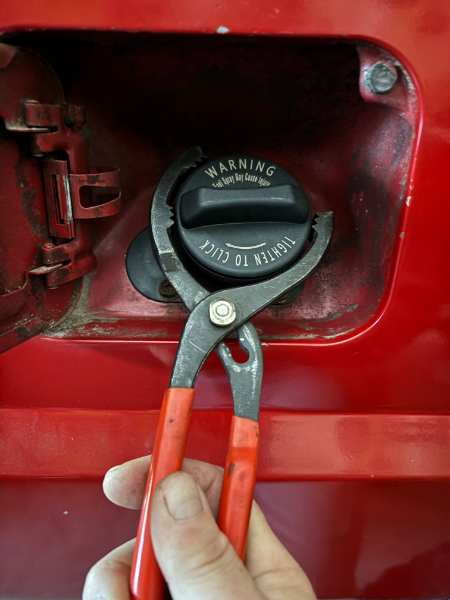
No, no bad at all. All ideas, all the time. I mean, that cap is going to be trash as is and needs to be replaced anyway so breaking it apart would always be an option. I'm lazy and have a lot of tools
-
True, but once the top breaks off you're at the point of breaking pieces off and that gets tedious in a hurry. Here's what I mean:
-
Too bulky for the space if they're big enough to do the job, I'd think.
-
Slip joint oil filter pliers.
-
Another Battery thread, oh boy!
Gojira94 replied to NC Tom's topic in MJ Tech: Modification and Repairs
I'm also running a 34. And running the plastic tray for now. With a taller battery and the plastic tray, I recommend terminal covers of some sort in case the tray cracks/ breaks. -
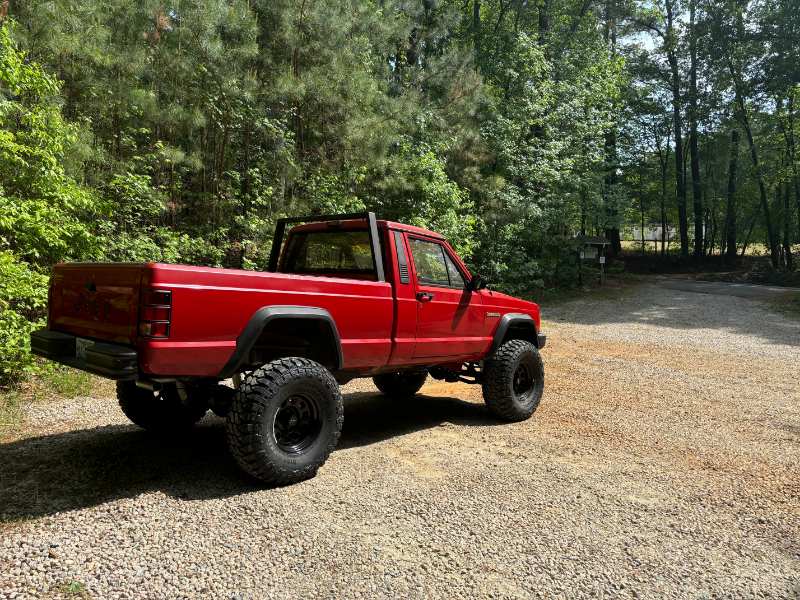
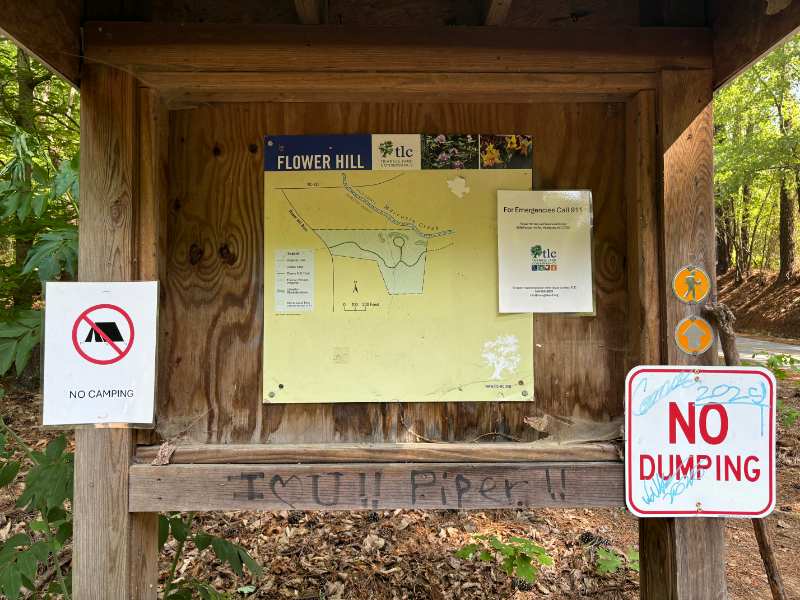
I originally said I was going to build this thing mostly to go pretty places (and light to moderate trails). Had her first outing on Saturday - 30 miles or so round trip, close to the house. First stop was an old traditional picnic spot from the 1800s, Flower Hill, which sits literally on the Piedmont to Coastal Plain fall line. I can feel the lack of caster, and the tires are a little overinflated, but it holds the road well. I may dial back the uppers a couple of turns and check for front shaft vibes soon but it's fine for now. No DW noted over some bumpy secondary roads between 45-65MPH. Cruise control does not work at the moment but that should be easy enough to figure out. Zero issues with clutch and gear engagement, such a relief to leave CSC stuff behind. I stopped on the way back for hot dogs at the local store. This is Percy Flowers' old land, all of it out here where I live. He was a legendary bootlegger. He made so much white lightning the sugar to make it arrived in rail cars... That D35 looks tiny under there...
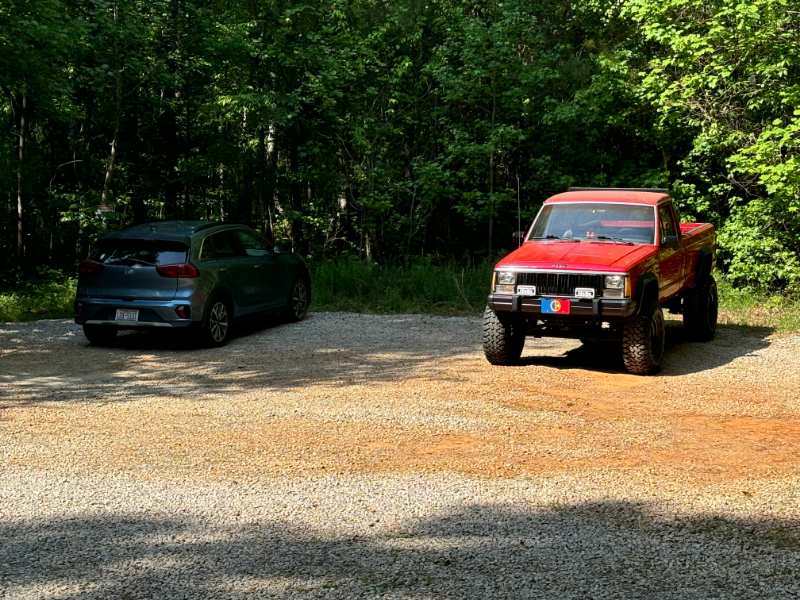
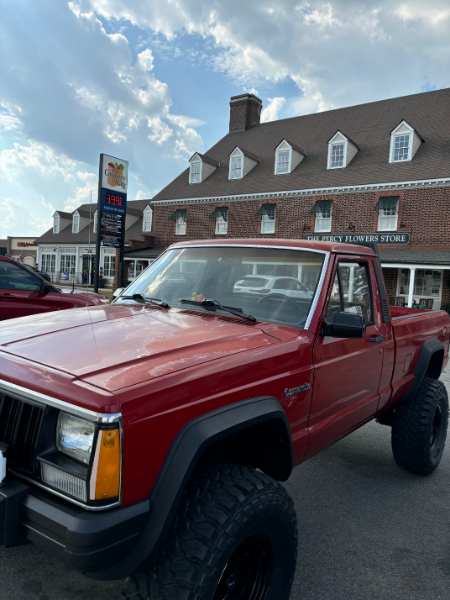
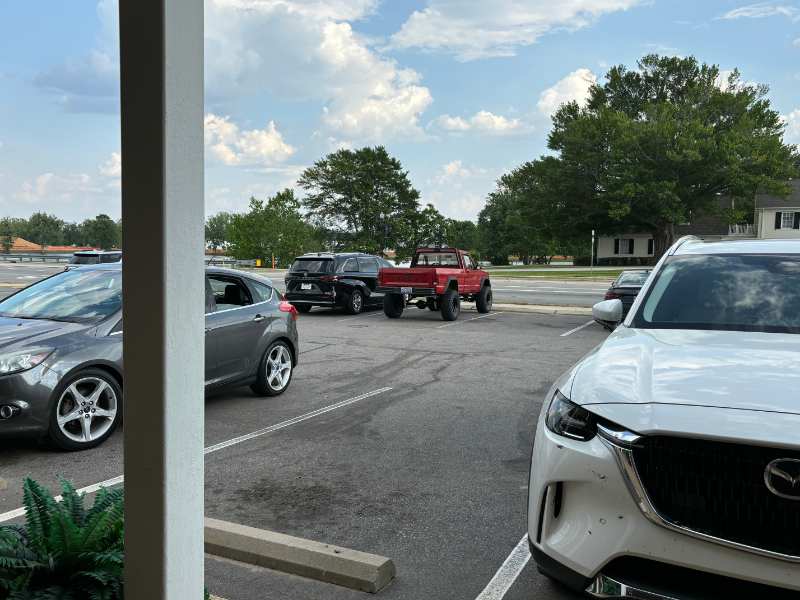
-
Thanks! There was a lot of sheet metal repair in the area of that 3rd pic, kinda embarrassed, but the rest of the front half I'm happy with, much prettier. I'm looking forward to pulling the bed and rear bumper for a little clean -n- coat back there before I call it really done.
-
I've been busy sorting through pics from an automotive archaeology dig on Sunday, forgot to add these from Saturday...
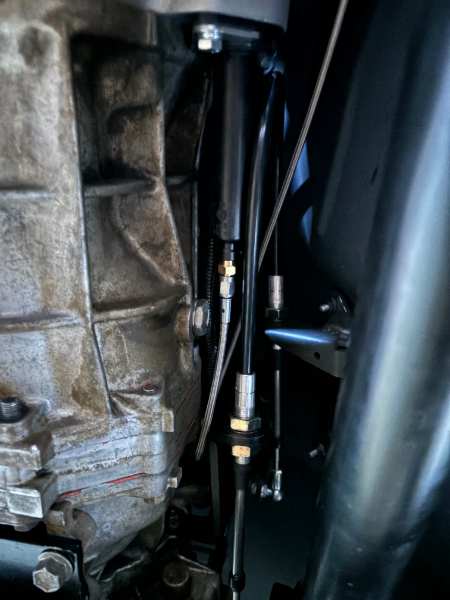
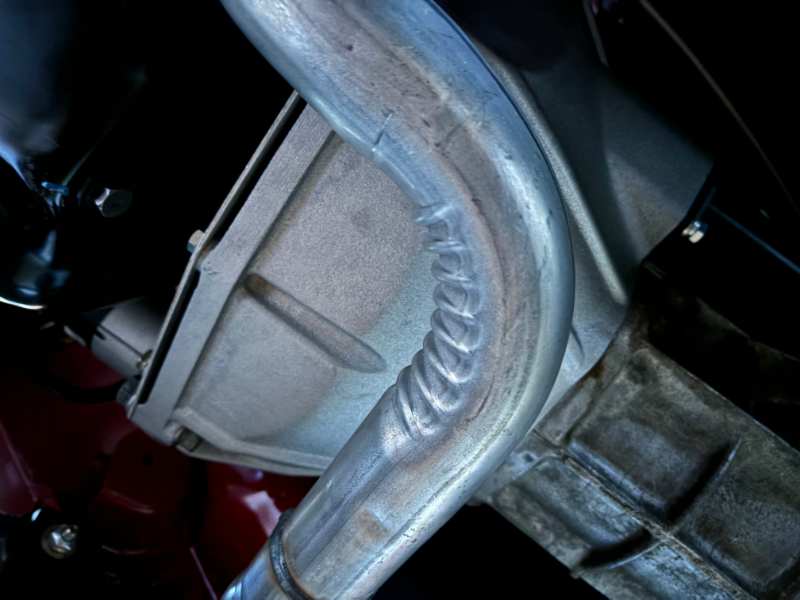
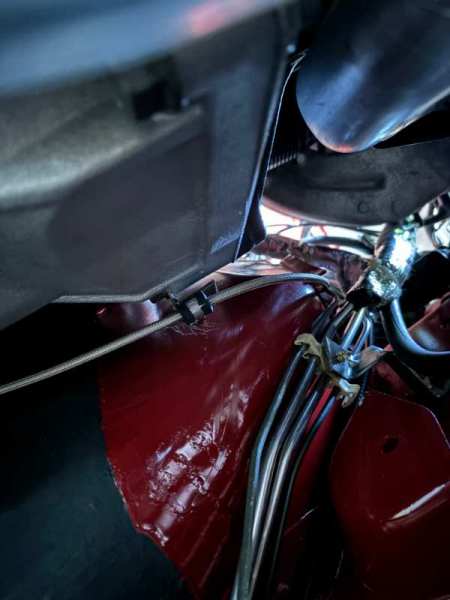
-
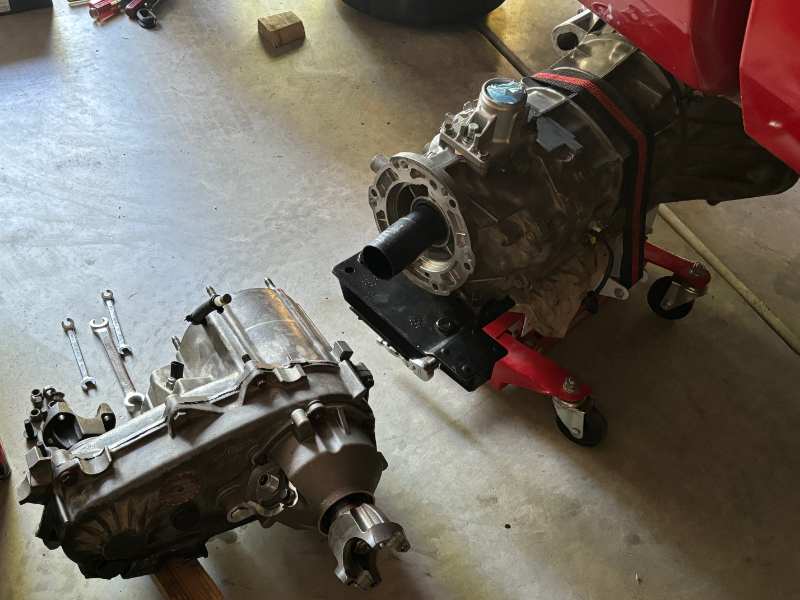
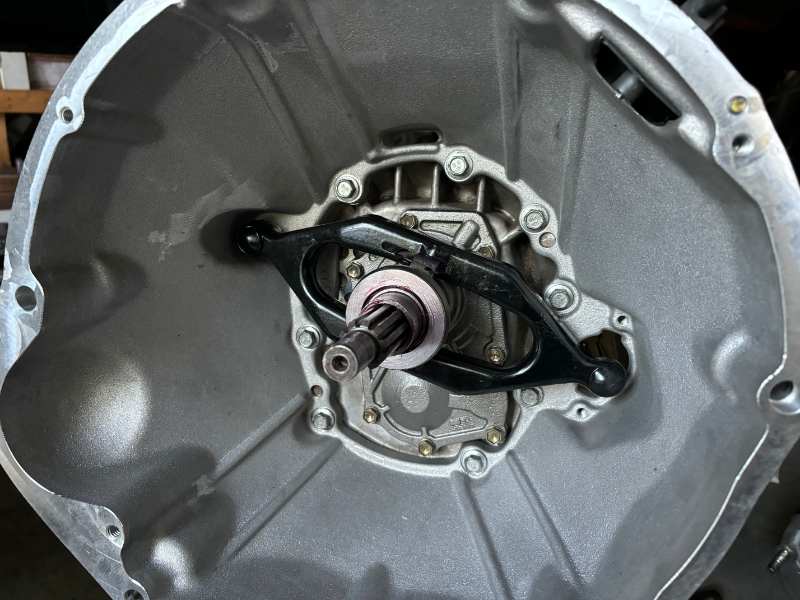
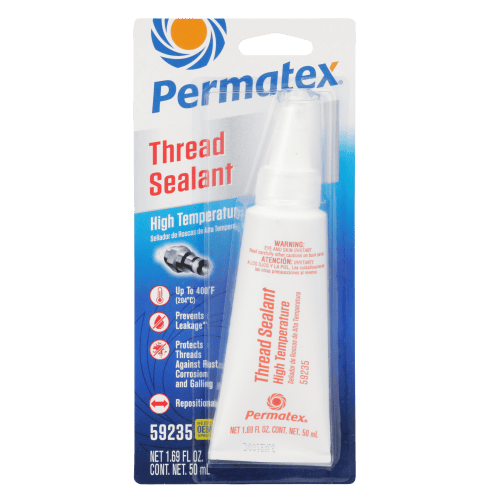
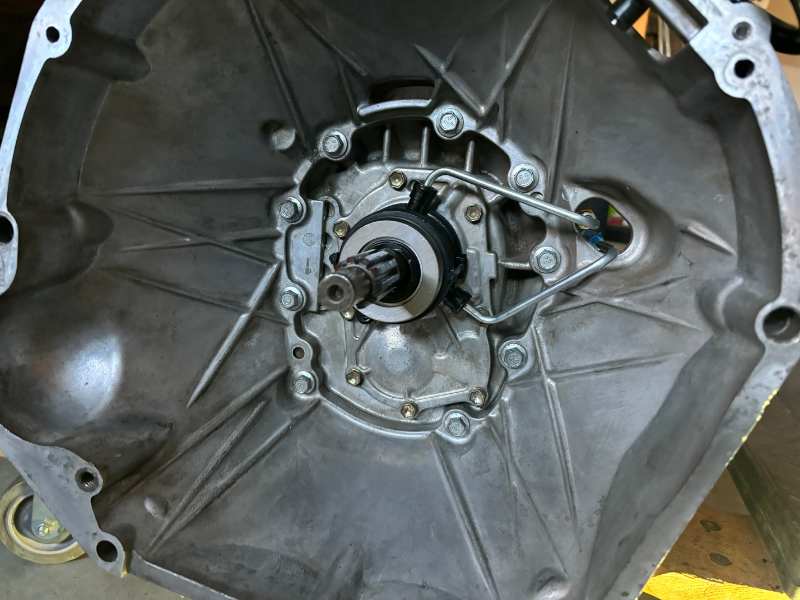
External slave parts showed up Thursday, got a late start yesterday. I ran out of time to reinstall the shafts and bleed it but trans and TC are back in. With a 6" lift, I can roll the trans right out from under on a trans jack. I borrowed this one from a neighbor. He got it at Harbor Freight (Pittsburgh brand scissor style with a strap). Old: New: Important detail for anyone doing this swap - the input shaft cover bolts do need a thread sealer. I've used Permatex 59235 for years on head bolts in water jackets and for stuff like this. Remember to knead the tube really well each time before use! Most parts house stores are only going to have the small tubes (.3 oz) and you'll have to order the big one. Today I'm off to look at a 1972 F350 long chassis with a dump bed/ 390/ NV435, a mid-70s D100 and some other cool stuff, about an hour west of here.
-
I did all my own cutting, grinding and prep. But since it’s been now more than 20 years since I did any welding I hired a friend of one of my kids that works for me at job #2. I paid him more than he asked - $325. Well worth it. He’s someone who welds every day, trained at the local community college. You could probably get hooked up with someone at your local CC. I agree this is a job for a professional, or at least a seasoned journeyman. Start with pulling the carpet and seeing the extent of it.
-
89 2.5 L comanche fuel pump
Gojira94 replied to Overlandmark2020's topic in MJ Tech: Modification and Repairs
If you go for a rebuild of the sending unit, these guys. They did a clock restoration for my project: Instrument Services, Inc. 4075 Steele Drive Machesney Park, IL 61115 (800) 558-2674 https://www.clocksandgauges.com sales@clocksandgauges.com M-F 8AM 4:30PM Central Speedos Tachs Gauges Clusters Sending units -
Mine is the 89-93 AX-15 internal to external slave conversion behind a 4.0. https://www.advanceadapters.com/4993 My truck did originally have a 2.5 and AX4 but they're long gone.
-
MayDay!! - Hard Accel Killed Idle
Gojira94 replied to AnotherOldJeepGuy's topic in MJ Tech: Modification and Repairs
A bit of exhaust is siphoned into the intake manifold upstream of the injectors. There tends to be a gummy/ sooty buildup of stuff that would normally be going out the tailpipe in the EGR valve and in the intake where it's attached. We normally would picture nothing but clean filtered air and fuel going in the intake... Reduction of combustion temps via EGR matters the most for newer generation engines with relatively high compression that depend on EGR for: using all the timing it's calibrated for to produce/ maintain rated power/ torque levels (reduced temps/knock retard) to minimize NOx to meet emissions standards For an old engine design essentially from the end of the 50s, with 8.8:1 static compression, that runs on low octane fuels, EGR isn't doing a lot for it. -
MayDay!! - Hard Accel Killed Idle
Gojira94 replied to AnotherOldJeepGuy's topic in MJ Tech: Modification and Repairs
Totally agree with getting rid of the EGR if your state won't ding you for it. Surprisingly, the siphoned exhaust gasses help reduce combustion temps. Two benefits - reduce chances of pre-ignition/ detonation from elevated combustion temps and reduce oxides of Nitrogen (NOx). High NOx is what fails emissions when EGR is deleted or not working properly. Most people don't like the idea of the buildup of combustion by-product in parts of the 'clean' intake side of the engine. -
MayDay!! - Hard Accel Killed Idle
Gojira94 replied to AnotherOldJeepGuy's topic in MJ Tech: Modification and Repairs
I would never suggest arbitrarily spending $260+ just to have a REM II, though it can give a lot of insight as to what's going on. Depending on where you are, there might be a member who has one, not too far from you, who could stop by and get some data that might help spot some useful clues? -
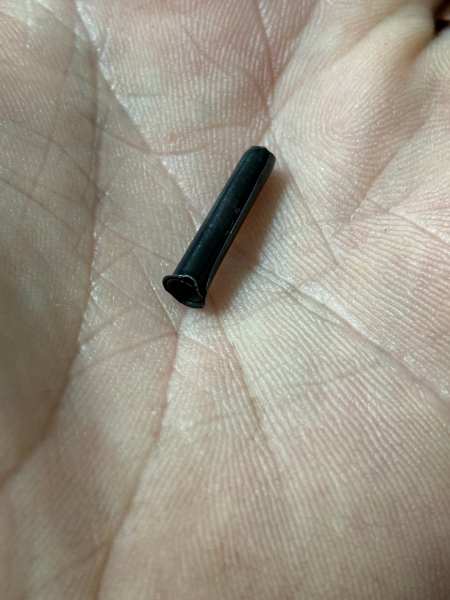
I was just changing out the transfer case front output yoke seal (thought I'd done it but nope) and noticed something just peeking out at the trans inspection cover/ spacer. If you know what this is, you know how I'm feeling right now. I've had it with internal slave. Advance Adapters conversion kit ordered today. After swapping the clutch master with a LuK LM206 shifting into 1st and reverse when warm was a lot better, briefly. Slightly cockeyed slave engagement took that away. At least I know what happened... The level of frustration with not being able to just get out and drive is getting to me. Spent a decent chunk of yesterday doing a blower motor in a Volvo XC70 (ask me how much fun that is). Today was my day to replace the transfer case seal and take it out for some more miles in nice weather.
-
MayDay!! - Hard Accel Killed Idle
Gojira94 replied to AnotherOldJeepGuy's topic in MJ Tech: Modification and Repairs
Just a thought, what you asked your MJ to do is probably well outside of how you normally would drive it. WOT would ask a lot of steps of the IACV, and immediately followed by a lot of steps the other way on hard decel. If you've had any carbon buildup in its normal range of operation (fairly narrow), it may have stuck itself close to closed off on hard accel. That smoke could have been from some of the buildup breaking away and being ingested/ burned. -
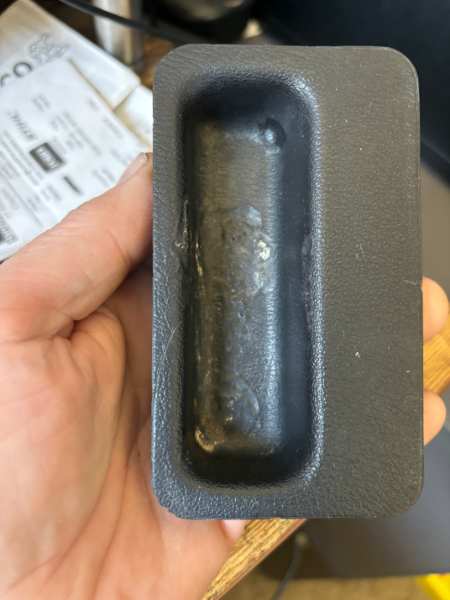
You can have this 2WD cover plate for the console if you want it. Not in the greatest shape, it looks like something rubber reacted with the plastic a long time ago. But the tabs are all good/ unbroken. You and I are local-ish to each other, let me know.
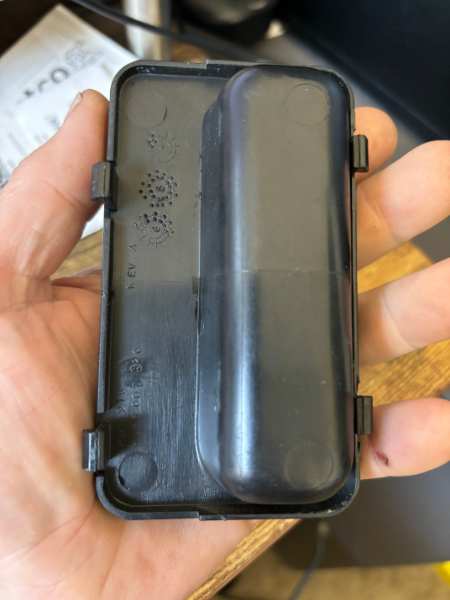
-
@schardein makes and sells them. Highest quality materials and craftsmanship:
-
Maybe not controversial, maybe it is... Ultimate engine swap of the future will be a hydrogen cell conversion for any GM Gen 5, Mopar or Ford small block. GM Gen 5 already has direct injection provisions needed to do the swap. All the power and beautiful noise with near absolute zero emissions. And no BS electric crap and all its impacts on mining Lithium, rare earths, geopolitics around those materials, etc. And I'd go nuts if someone started making DI retrofit heads for SBC Gen 1 & 2 as well, since I've already got 2 of those.
-
Looking at your pics - it appears you've got most of what you need there. That looks like the Renix fuel rail and throttle body, both just kind of sitting there. Eagle_SX4 is spot on, you'll need to adapt the Renix TB and linkages to the HO intake and make a way to secure the fuel rail. The Renix fuel pressure regulator will have you at the right pressure. Those injectors look like 33007127, from a 91-93 HO, not the 53030778 grey tops that would have come on a 96 engine. Also looks like you already have a temp sender or fan switch in the thermostat housing, which is it? EDIT - forgot to mention that you'll need a Renix distributor, the HO one won't work due to the CPS to sync sensor signal incompatibility. That begs the question of what transmission is behind this engine you've swapped as well. An AX15 will need a Renix flywheel, AW4 will need a Renix flexplate.