

Ωhm
-
Posts
3191 -
Joined
-
Last visited
-
Days Won
6
Content Type
Profiles
Forums
Gallery
Everything posted by Ωhm
-
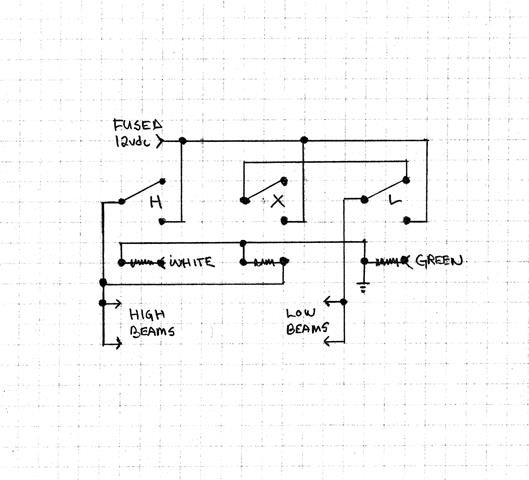
If you're going to use three (3) relays, might as well put relay x to work. Schematic needs proofing. Mark-up at will. Possible weak link: Headlight ground circuits. Factory never intended both Low and High beams to be on at once. Relay Logic: This (LB) or (This (LB) and That (HB)).
-
47 years ago for me, Feb 19th, funny how certain dates are chiseled in stone. Not sure on the new weaponry used today, but I'll bet they still holler at you.
-
Renix yes. Bring your baby home with a trailer. Vehicle may have other problems. Welcome to the CC forum.
-
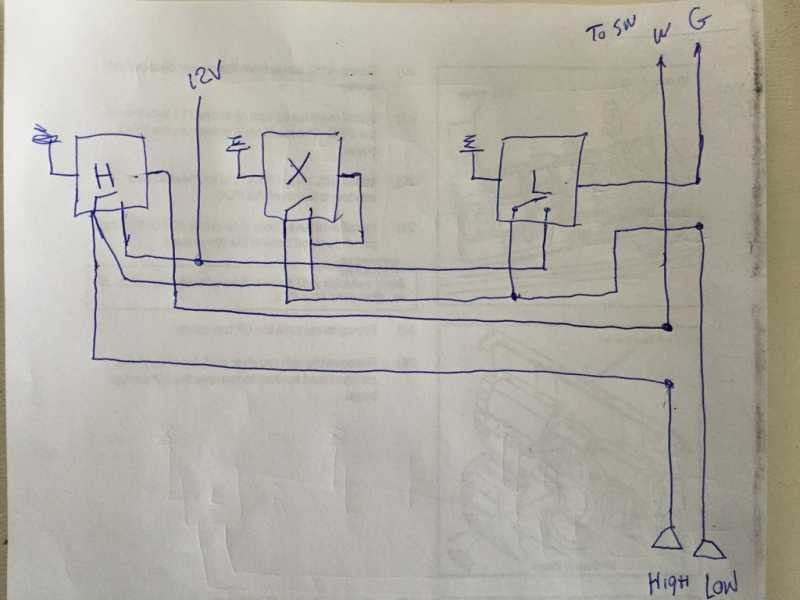
Photo taken from thread "How To Make All 4 Headlights Illuminate With Wagoneer Header" Not sure relay X serves any purpose here. Relay H carries current for both the High and Low beams. Yes schematic works.
-
YEAR?? ENGINE?? Add this to your signature. https://comancheclub.com/settings/signature/
-
BUMP Cleaned up request (post 1). Cleaned up chart explanation.
-
RENIX 21
-
Two hour story with a good ending.
-
Does the O2 heater work?
-
Not sure here either, but did the vehicle ever have dual batteries?
-

89 MJ - Only starts with no MAP Vacuum
Ωhm replied to Divus's topic in MJ Tech: Modification and Repairs
I don't see no TPS cannonball. -
During engine crank only the ignition switch will ground certain bulbs, gauges or both. This function is called "bulb check". Could be normal for what you are seeing happen to your gauges.
-
No spark and no power to the fuel pump
Ωhm replied to Jeepfanatic89's topic in MJ Tech: Modification and Repairs
Also, make sure your IGN Module is powered up (I1 feed) and module is grounded. C213_A (I1):C213_B (GND). From 88 electrical manual. -
You didn't add it again. Your 1987 electrical manual has new information in it. NOTE: 4.0L engine control has no ballast, no O2 sensor WOT bypass, plus diesel stuff. Should be saved somewhere for easy access.
-
Aren't some photos from websites just links to other websites?
-
Full Gauge Swap, Nothing Works
Ωhm replied to mrmel2you's topic in MJ Tech: Modification and Repairs
Special Tool: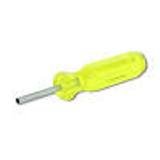
-
Full Gauge Swap, Nothing Works
Ωhm replied to mrmel2you's topic in MJ Tech: Modification and Repairs
If you can just pull pin C213_C (green w/tr), three pin connector at IGN Module, vehicle will START. -
Full Gauge Swap, Nothing Works
Ωhm replied to mrmel2you's topic in MJ Tech: Modification and Repairs
Does water temp and fuel gauge peg with Key On only (not cranking)? Try disconnecting the IGN Module to see if Tach is pulling the circuit low. -
New EGR valve and solenoid runs worse
Ωhm replied to Cochise's topic in MJ Tech: Modification and Repairs
Are the vacuum lines at the EGR solenoid connected correctly? YR? ENG? -
Prior to putting your vehicle on the dyno, they must set the inertia weights for your vehicle. If this weight is set too high, you'll never slow down in time. Each vehicle is different. Tire grip comes into play here and make sure rear brakes are adjusted properly.
-
Error message - Don't have permission
Ωhm replied to johnj92131's topic in Forum Issues, Ideas, Testing
Is this why when I sign out I lose the most current postings? It's like I jumped back in time 30 minutes upon signing out. -
Good looking Website, but it sounds like "Buyer Beware"
-
Not here to sell anything, but has anyone ever seen, heard of, used, this company before? Sensors, Components, Relays, Connectors, things based on your year, model, engine. Check it out. Might get asked if your a robot question. Simple too answer. WELLS VEHICLE ELECTRONICS - Fond du Lac, WI 54936
-
Two (2) things will happen. Fuel trim will compensate (within its range of authority) for your lean condition to the point of going from closed loop to open loop.
-
1987 includes the Engine and Fuel Controls for the diesel. Plus other diesel stuff.