


gogmorgo
-
Posts
5984 -
Joined
-
Last visited
-
Days Won
4
Content Type
Profiles
Forums
Gallery
Everything posted by gogmorgo
-
Aluminum bases are just asking to let water in if you live anywhere near salt. Aluminum corrodes worse than steel. Plastic and a fully potted board and hope for the best. The biggest failing then is the itty bitty wires they always use… just because 22awg can hold the current necessary doesn’t mean it’ll hold up to the mechanical stresses or survive for more than a few days if the insulation gets compromised.
-
 Pressure works in all directions at the same time. The pressure is going to be pretty consistent through the entire system. Restrictions in the flow may cause slightly elevated pressure in certain spots, but they’re going to be in the hottest parts of the engine, not the radiator where there’s cooling and contraction happening. The pressure in the radiator is never going to be substantially higher than the pressure in the reservoir. There are tons of people running a 22psi Volvo cap on the reservoir and they’re not blowing up their radiators. Running an open style cap rated for 16psi has nothing to do with the radiator problems.
 -
Coolant Leak from the transmission.
gogmorgo replied to DesertComanche86's topic in MJ Tech: Modification and Repairs
Second on what they said. But I’ve also had coolant run down towards this spot on my 2.5 due to a crack in the block by the driver’s side motor mount. Hopefully it’s not that. Look forwards and up generally to find the source of the leak. -
how do I save the seat from further damage?
gogmorgo replied to Armyvet25's topic in MJ Tech: Modification and Repairs
Easy is relative. If those nuts rust in place like mine did you may not be able to bolt the seat back down by the time you get them out. Can’t really get a ton of heat onto them with the carpet right there. -
Metal plate on the bottom of bumper chin
gogmorgo replied to Classy Comanche's topic in MJ Tech: Modification and Repairs
Date code perhaps? On Gojira’s thread, the H punched out corresponds with the model year vin digit. I don’t remember seeing it on either of mine but then again I’ve never been looking. -
I mean that was still early days for expecting a vehicle to last more than 100,000 miles in general, right? From a business perspective it doesn’t really make sense to make it last forever when no one but a fool would try doing that. Whether they were deliberately built to be disposable or not, AMC didn’t necessarily have huge amounts of cash laying around not to cut the corners they did, and it’s a strong testament to their engineering department that we’re still driving them 30 years later, some beyond 300,000miles.
-
Per OP's registry post, we're looking at a 2.5 mated to a 904 auto. I don't know what gear ratio it would have come with, given the build sheet said 4.78 and that's not an available ratio in any of the factory axles. I've spent some considerable time finding other examples to try to establish what axle ratio would come with that drivetrain combo, and I only found two where I could confirm the gear ratio before I decided it was a pointless endeavour when the OP would probably want to investigate their own truck regardless. But at any rate, one had 3.55 gears and the other had 4.10's. I can't count it as a hard data point due to the uncertain vagueries of memory, but I remember encountering another in a wrecking yard with the 3.31 gears. But from that very small dataset and the knowledge that 4.56 ratio was standard I'm sure we can establish that gear ratio is maybe lacking a bit in this particular instance. It's not really a sample size worth mentioning but there's a strong chance that truck was set up for something other than acceleration. We can speculate all we want, but I don't think we can discount gears without know what gears are in the truck. This is still a pretty flat torque curve. Other than the spike at 3200 it's what, 10% difference from 1500 to 4500 rpm? Personally I wouldn't go to the effort of putting a performance cam in unless I was having to change out the camshaft anyhow, but I guess it's cheap enough. Certainly cheaper than regearing.
-
Glow plugs or anything to cycle? I'm guessing from your jacket it's not super warm in there. It also sounds a little like it's trying to pop off on the starting fluid but not getting any fuel in to keep it running. I don't know if there's an air bleeder or primer for the injection pump, but I'd be making sure there's fuel in it, you don't want to be turning the injection pump if it's dry. The squeak makes me think there might be an accessory pulley seized. It can put quite a bit of load on the starter which could be slowing down the starter. It doesn't seem to be cranking over too quickly initially.
-
X2 on gears, although yours is an automatic so it might already be geared pretty deep. My 2.5 with 4.10’s on stock size tires is decent at low speeds even with a full load in the bed, but it does need the beans fed to it to climb hills at highway speeds. And gears isn’t likely to correct that one without making the highway experience less pleasant than it already isn’t. I’d be looking to open up the midrange, 3-4k rpm. But if you’ve increased tire size and you’re looking to get performance back, gears is going to be the way to go. It’ll have a way bigger effect on drivability than getting an extra ten horse out of an engine. Getting more air into an engine isn’t going to increase fuel economy. Ever. More air increases performance because it allows you to burn more fuel. Burning more fuel won’t save you fuel.
-
There’s also this weird thing that happened at my favourite wrecking yard. They crush nothing until it’s picked clean, but they stopped letting people into the yard to pick their own parts, and their inventory system is spotty at best. They’ve got a half-dozen MJs, but they’re not all in inventory and the parts on them haven’t really been added to the inventory system at all. But if they can’t find the thing in their inventory, they won’t go pull it for you. So unless they start letting people pull their own parts again, they’re just going to rot into the ground.
-
any strong opinions on aftermarket oil pans?
gogmorgo replied to Pete M's topic in MJ Tech: Modification and Repairs
I'd be cautious buying online. Much more likely to get beat around by a courier in transit. Haven't heard of any issues with parts store pans though. But if it doesn't seal on the initial install just RTV both sides of the gasket. The next guy might hate you for it, but how soon do you plan on pulling the pan again? -
Found during valve cover gasket install
gogmorgo replied to NC Tom's topic in MJ Tech: Modification and Repairs
It definitely serves a function. It reduces heat in the cab. This has been demonstrated very thoroughly. Whether that function is important or even useful is going to be a matter of personal opinion. To me personally, having a vacuum leak prevent me from getting heat into the cab when it's -40° is a significantly more important concern than keeping the cab as cool as possible at 100°F, simply because we spend a lot more of the year below 0°F than we do above 80°F up here, and in general preventing coolant from stagnating anywhere in the system is important for heater performance. But for someone with a climate where 100°F isn't even considered extreme, keeping the hot coolant out of the cab makes a ton of sense, especially with an a/c delete truck. Most of us are somewhere in between, which is where it comes down to personal preference whether risking heater performance is more important than compromising a/c. Although I'll point out that up here, the requirement for cold-weather performance means you don't get away with dumping straight water in, and corrosion inhibitors in antifreeze go a long way towards maintaining cooling system health and preventing your heater control valve from seizing or leaking. When I pulled my ZJ's original water pump out at ~289,000km, the inside of the block was still shiny bare cast iron. Vacuum leak leading to a non-operational valve is a far more likely occurrence. And another testament to that, an XJ I had a while back, the previous owner had it for about 15 years and said the heat never worked worth a damn since they'd bought it. It sat five years before I got it. I found and fixed a vacuum leak, and got full function of the heater valve back after it hadn't been opened for 15 years, more than adequate heat even at -45°C. I hadn't even put new fluids in it because it was just a parts rig. Look after your cooling system and it'll look after you. -
It may be an important discussion to have, I just don't think we need to be confusing anyone on this particular thread. There's a lot of overthinking going on already. Probably the best way to break it down for our purpose is how the system deals with expansion due to heat. A closed system has a pressurized reservoir with air at the top, and as the system heats up it compresses the air to deal with excess coolant volume. As it cools the coolant shrinks and the air expands. An open system doesn't leave an air gap. The expanding coolant pushes itself into an overflow bottle, and sucks back in as it cools and shrinks. There are many ways to configure the system, but unless you change that one thing, you haven't changed from closed to open or vice versa. The replacement caps listed everywhere are usually 15-16 psi. Would make sense a 16psi rad cap wouldn't ever open if the system itself isn't ever seeing more than that. Also the cap itself doesn't blow off, it would just be a release of pressure out the overflow. And if there was a small pocket of air in the filler neck, it would just release that, coolant wouldn't necessarily come out. If the overflow line is capped off securely enough nothing would ever come out of it. Any extra pressure held on the open side of the cap will also help to hold the cap closed, increasing its ability to hold pressure beyond it's rating. I don't know when the upper seal on the cap might fail and start puking out coolant, but I imagine it to be high. Sounds an awful lot like an open system to me. Once the rad is dealt with, if you leave some space in the top of the reservoir when it's cold and it fills itself back up after you run it to temp and it cools down, we'd know for sure.
-
Unless the rad cap is set up to move fluid in and out of an expansion bottle it's a closed system still. But it's more a difference in semantics than in function or configuration. Either system needs to retain up to the maximum pressure and adequate coolant volume on the pressurized side with some facility for expansion. You could even set up a cooling system with an expansion tank to act as a catch can when the pressure relief pops off instead of venting excess pressure straight to atmo/ground, and it would still be closed if it's not pushing pressure in/out during normal function. All you'd need to do that with a typical open system is install a higher pressure rad cap to stop it from popping open unless it gets real hot. Jeep themselves may even have been trying to do that in the ZJ when they went from a 16 to 18 psi cap without any major differences in the cooling system. Again, it's more of a semantic difference than one of actual function or even configuration. But we're getting in the weeds for no reason here. The way buddy's Jeep is set up here seems to work just fine as long as it's containing its volume of coolant, which it will once the cracked radiator is dealt with.
-
If you’ve got the means to grab stuff sometimes it’s better to do so. Some yards hang onto stuff until it’s picked clean, but others will only let a vehicle sit for a certain amount of time before they crush it to make room for new inventory.
-
Found during valve cover gasket install
gogmorgo replied to NC Tom's topic in MJ Tech: Modification and Repairs
It’s actually totally normal for the a/c and heater to “fight” each other. The a/c comes on in defrost to pull help pull moisture out of the air. The water condenses on the cold evaporator instead of blasting humidity at your windsheild. Minuit did a very well done comparison between a deleted heater valve and one still in the system and found there was a noticeable increase in vent temperature with the valve deleted while running the a/c. On the flip side, if you never run the heat and the valve is still in the system, the closed valve is very likely to lead to an accumulation of corrosion or otherwise that could block the heater core or stick the valve closed, meaning you won’t have heat when you need it. There are advantages and disadvantages to both having it and getting rid of it. Depending on what you prioritize, based on the climate you live it or whatever personal reasons. There’s really no sense fighting over it. -
The metal tank. What’s the pressure rating on the cap? The pressure through the entire cooling system, or at least the pressurized parts of it, will be pretty well even throughout. A closed cooling system is one where the entire system pressurizes. Imagine a juice box. Don’t poke the straw in just yet. Squeeze the box. Pressure builds inside, if you squeeze hard enough it’ll pop the little foil circle for the straw open to blow off the excess pressure, and for the sake of the metaphor we’ll say the little foil circle closes and seals again once the pressure drops. All the juice runs out onto the ground, but the system is happy because it’s no longer under excess pressure. So when it cools down and heats up again, it won’t build an excess amount of pressure, and the juice box stays closed and sealed, nothing goes in or out. An open cooling system is exactly the same, but now you’ve got a straw shoved into it. The other end of the straw is in a glass of juice. When you squeeze the juice box, pressure builds but now instead of popping the lid and dumping juice on the ground, it pushes it out through the straw into the glass. The level in the glass goes up. Then you let go of the juice box, and for the sake of the metaphor, we’ll say the juice box returns to its original shape, so it sucks the juice back in, pulling it back through the straw from the glass. The confusion I think we’re seeing here whether it’s open or closed is that what amounts to an open conversion was done without using the later parts that would be typical of an open system conversion. Instead of replacing the radiator with a later one with a cap, it just had a replacement reservoir put in with an open style radiator cap on it. This is advantageous because you won’t need to replace the radiator or reroute any of the factory radiator or heater hoses. This would be the easiest and likely cheapest way to covert the system if you had an old perished coolant reservoir that didn’t hold the pressure. The larger coolant volume it allows for will help keep temperatures more stable as well. Ultimately it makes no difference if you’re doing the fluid exchange from the top of the radiator or from the reservoir that at this point is essentially just a fat heater hose that collects coolant. Remember the pressure is the same through all the cooling system, so it makes no difference where you’ve got your cap on the system. I would say fill the metal reservoir to the top, and then make sure there’s some in the plastic reservoir. But unless the system is overheating, don’t bother adding coolant anywhere if you’re changing out the radiator on Monday, cause it’ll just all be getting dumped out anyhow.
-
It still shouldn’t be building enough pressure to pop the thing so long as that rad cap is working. Rockauto sells both 15 and 16psi caps as OEM replacements. The popular Volvo cap is rated at 22. But again, unless the overflow line is pinched or plugged, or the cap isn’t opening until way higher pressure than it should, it’s not making enough pressure to blow anything up.
-

-
Valve cover gasket is an easy job. Head gasket is a little more involved. Only thing a valve cover gasket will solve however is oil dripping down the side of the engine. If you do it, don’t overtorque the bolts. Get them snug, tight enough they won’t shake loose, but no more or you’ll distort the cover and you’ll never get it to seal correctly after that. Spec on them is so light it’s not within range of a typical small torque wrench. Taking a vehicle off the road to fix it is one thing, but don’t leave it sit for too long. I did that with my first MJ. It sat for two years before I got started, and I got interrupted partway through and three years later I still haven’t got back to it.
-
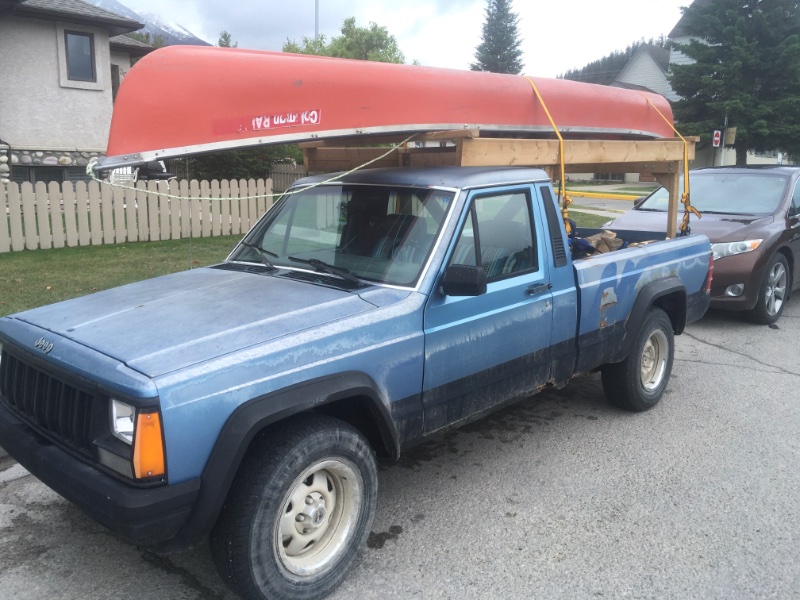
Kind of a dark charcoal sort of colour I guess. I must be associating it with some other graphic to think it was pink, maybe the red swoop that they also got. That first truck looks so much like mine, I’d have to guess it got the same blue/light silver.
-
I’d have to searching for. Don’t remember specifically where, just that it came up. S10 and Ranger bumpers as well.
-
Dakota bumper’s been done, don’t think it would bolt straight on tho.
-
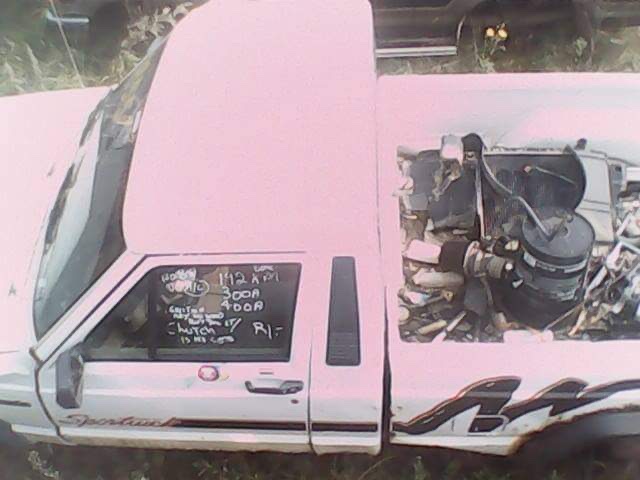
I think the “rare” sportruck decals are the ‘91 squiggle. I haven’t seen too many on here, but I took this at a wrecking yard with a crappy loaner flip phone almost ten years ago: My short bed has witness marks of the same decal, but it’s long gone. Pretty sure whoever put some fibreglass into the cab corners and painted the rocker guard over the bottom half peeled them off. For some reason until I dug up that first pic I had it in my head that the squiggle should be a magenta sort of colour. Maybe I saw someone else’s truck on here, maybe I’m just imagining it being appropriate for the era. Not sure.
-
Unless you’ve got a rad cap that’s not doing its job I wouldn’t worry about head gasket. You’re not going to overpressure the cooling system if the pressure can get out somewhere. Take it one issue at a time.