

EUREKA
-
Posts
564 -
Joined
-
Last visited
Content Type
Profiles
Forums
Gallery
Everything posted by EUREKA
-
The pattern of wear is not too concerning imo but the amount of wear is defiantly not right.
-
You really looked into this! There is a lot to say on this topic and since it is part of my living (and I have a background in biology) I happen to know a bit about it. But since this is a jeep forum I'll try to keep it brief. Human eyes certainty perceive the same mols of photons of light differently, according to wavelength. Blue specifically appears brighter than the same mols of most other wavelengths (a bit confusing because our rod cells are less sensitive to blue photons). This is captured in the metric of "lumens" and why we say "lumens are for humans" (as in not for plants). This perceptual difference is not only a matter of eye cell response (which is similar for all types of cone cells) but also signal interpretation in the brain. We actually use "trichromic simulation" in all but the darkest of settings, which means our brains combine signals from all types of vision cells. "Night vision" has more than one meaning so you are smart to refer to "true night vision" meaning only rods cells are active, it is also called scotopic vision. We are essentially never using only rods or only cones when driving at night. Night driving in the country would use "mescopic vision". But even when using "photopic vision" (cone dominant) the wavelength (as well as quantity) of photons makes a difference. Our cones "wake up" or begin functioning with less exposure to blue light than red. Our headlights certainly are preventing us from ever using true night vision (scotopic) but that does not mean there is no advantage to using headlights that are less blue, or dash lights that are red. Because we will experience less pupil dilatation from these lights, and thus preserve "night vision" (in the laymen sense). Red interior lights can also produce less interference at specific angles or "glare". PWM dimming can cause issues for human vision. It is best used for plant lighting but is not a common way to dim LED's. It has the advantage of potentially reducing duty cycle and heat. I know most of that was just restating what you wrote. Hopefully I added something.
-
Well I tried these LED which CLAIM to be dimmable, amazon "dimmable" leds they are not really dimmable. They don't dim until the end of the rheostats range. The proper way to dim led's is via current (or pwm). Varying voltage works when used a signal for a driver to reduce current, but trying to control brightness directly with voltage doesn't work well since LED's have a forward operating voltage that must be met before they light. I happen to own a company that manufactures led horticultural lighting.
-
Will do. I just ordered the reds. I'm never bothered by interior lights driving around town, but on those longer, night time, highway trips it's nice to have a dark cabin.
-
I'm seriously considering going red. Never owned a vehicle with red gauge lights but when I've noticed how easy they are on night vision as a passenger. It wouldn't matter as much if they don't dim.
-
I have experienced this as well.
-
High volume oil pumps can also increase pressure. But I've installed Melling high volume pumps in 4.0's and still didn't see pressure as high as yours. The stress of finding a concerning noise on your own engine can be a real factor. Tends to make you seconds guess yourself. Exhaust guys are sometimes better at finding exhaust leaks (or ruling them out) than non-exhaust specialists. If I felt I could not rule out an exhaust leak myself with a stethoscope, I would take it by an exhaust/muffler shop to see if they can find an exhaust leak.
-
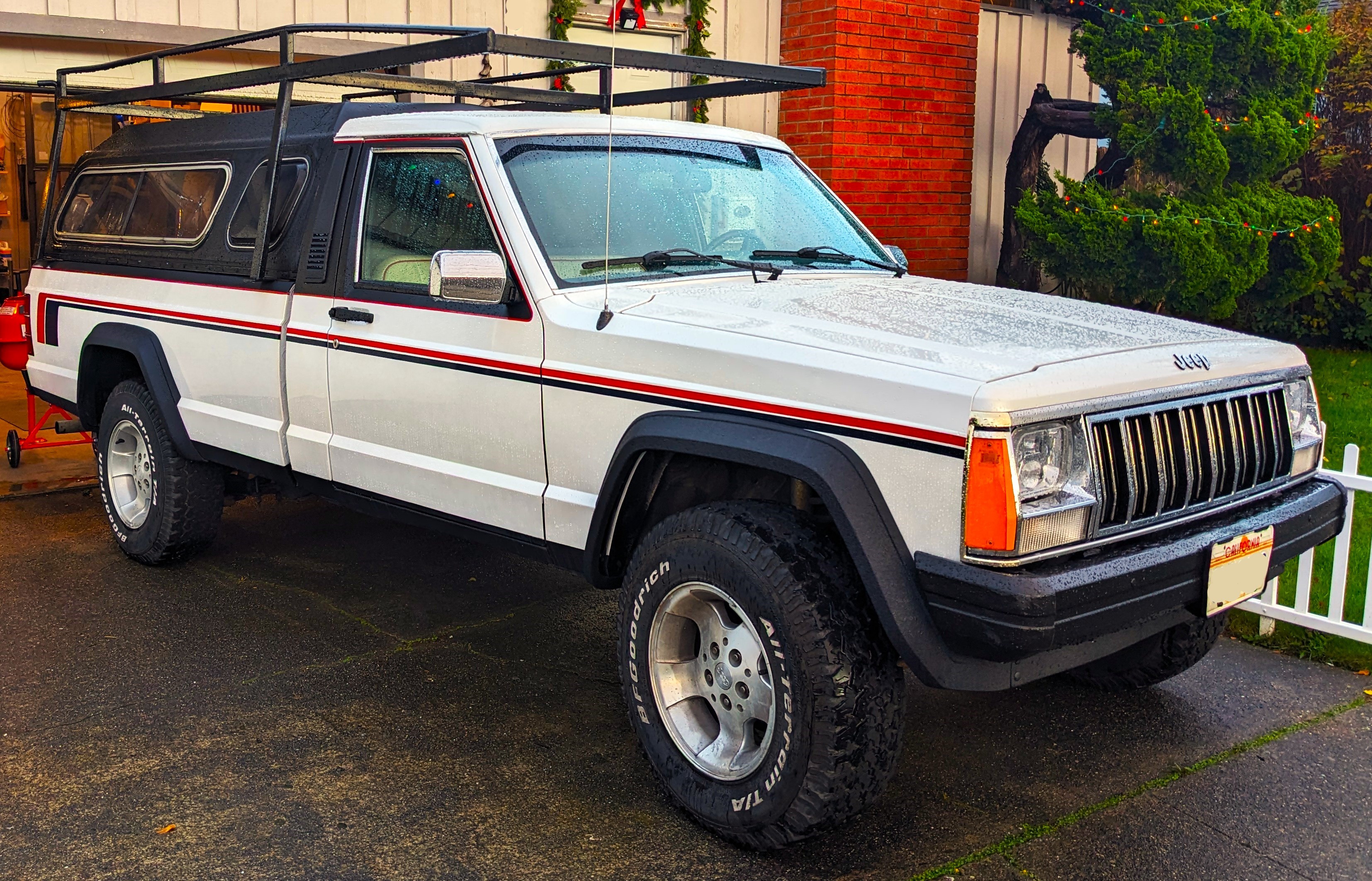
1988 Pioneer Long Bed Metric Ton Edition DD
EUREKA replied to EUREKA's topic in Member Projects: Your Comanches
Bypassed the power comfort switch and checked the associated fuse. Only 6 of Cruisers tips remaining. 10 – Trans plug connector refreshing 19 – Headlight harness installation 28-Improving blower motor performance 38-Improving the wiper motor ground 29-Improving the fuel pump ground 35-Reducing cabin wind noise 38-Improving the wiper motor ground -
Awesome, thank you.
-
Part # for coolant temp sensor (in intake)?
EUREKA replied to EUREKA's topic in MJ Tech: Modification and Repairs
Thank you -
Part # for coolant temp sensor (in intake)?
EUREKA replied to EUREKA's topic in MJ Tech: Modification and Repairs
Where is it on the engine? I only see the little one that feeds the gauge on the cylinder head. -
So you installed this in the airbox lid to replace the one in the intake? The images of the parts on rockauto don't seem to match. The pigtail has some protrusions that determine orientation, that I don't see accommodated on the sensor.
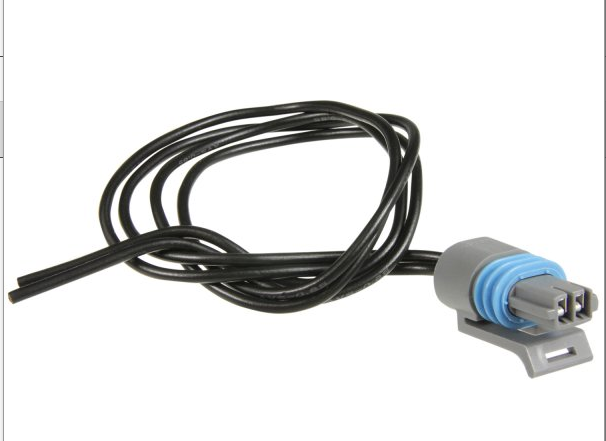
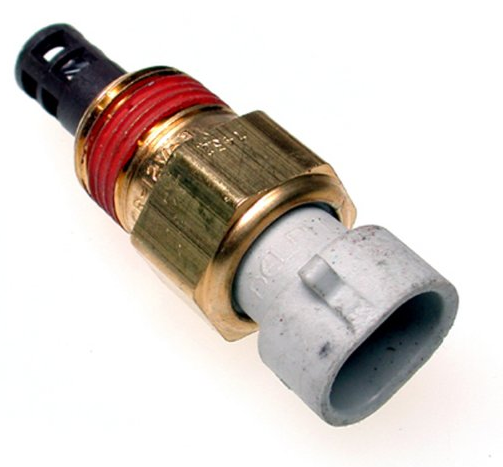
-
Part # for coolant temp sensor (in intake)?
EUREKA replied to EUREKA's topic in MJ Tech: Modification and Repairs
One remaining point of confusion, what are the sensors listed by NAPA for? They look VERY similar.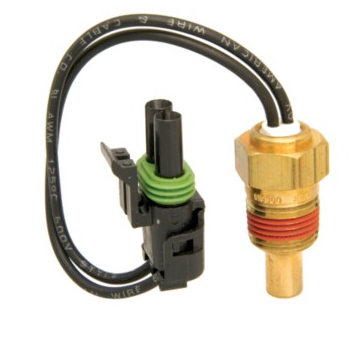
-
Part # for coolant temp sensor (in intake)?
EUREKA replied to EUREKA's topic in MJ Tech: Modification and Repairs
Of course. I'll solder and heat shrink the connector back onto mine. -
Part # for coolant temp sensor (in intake)?
EUREKA replied to EUREKA's topic in MJ Tech: Modification and Repairs
I see that its called "manifold temperature sensor" in that document. Thanks. Of course now I know that I won't find it by any name. -
Part # for coolant temp sensor (in intake)?
EUREKA replied to EUREKA's topic in MJ Tech: Modification and Repairs
It began with a misunderstanding. I ordered sending units for my coolant temp (gauge) and oil pressure from NAPA for a full cluster upgrade. When I showed up to get the parts they had included this in my order for some reason. I figured for $30 I'd go ahead and replace it even though I had no reason to suspect it was bad. Classic mistake. Next rookie mistake was cutting the wires so that I could use a socket insted of wrench to remove it. I am pretty new to renix and do not know how the ECU uses or does not use info from this sensor. Perhaps it is not really needed other than to plug the hole in the intake? I am not finding it when searching for "intake air temperature sensor". -
Dang, ok. I always dim mine, I like to see the road.
-
Part # for coolant temp sensor (in intake)?
EUREKA replied to EUREKA's topic in MJ Tech: Modification and Repairs
That is for 91 and later. This is on my 88.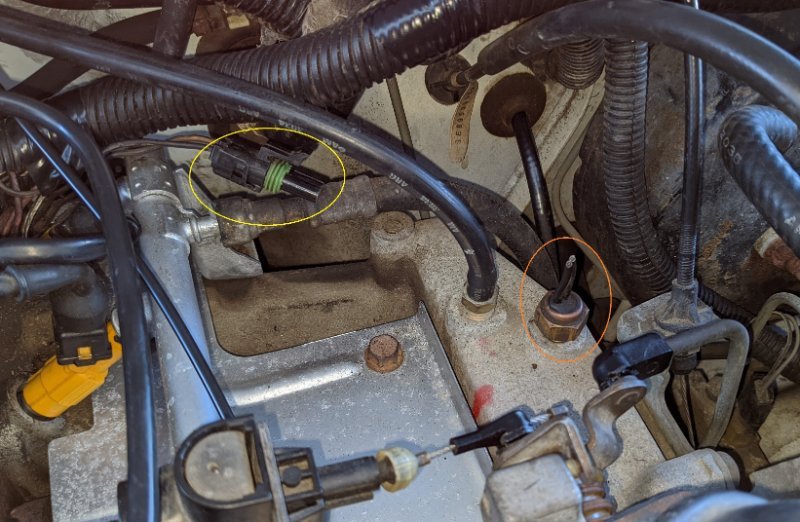
-
Can you confirm these have a nice range of dimming?
-
I recently tired Amazon ASIN: B07S7D16CH They don't dim until you get to the very end of the rheostat, and then the range is tiny.
-
Part # for coolant temp sensor (in intake)?
EUREKA replied to EUREKA's topic in MJ Tech: Modification and Repairs
When searching for parts, the only air temp sensor I find is the ambient air temp sensor.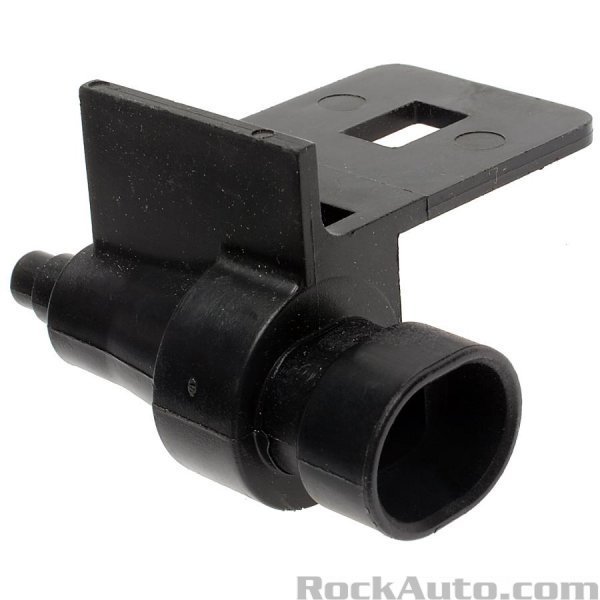
-
Part # for coolant temp sensor (in intake)?
EUREKA replied to EUREKA's topic in MJ Tech: Modification and Repairs
So can you tell me where the parts l listed install? Or the correct part number? -
Part # for coolant temp sensor (in intake)?
EUREKA replied to EUREKA's topic in MJ Tech: Modification and Repairs
Well I understand no coolant runs through the intake. I just thought the part had a silly name. -
Part # for coolant temp sensor (in intake)?
EUREKA replied to EUREKA's topic in MJ Tech: Modification and Repairs
No, my understanding is that the temp sensor in the cylinder head is for the gauge, this one is in the intake manifold. -
The part listed at NAPA ECH TS5018 was not correct. The thread size does not match. Mine is 1/2-18 and the TS5018 has a larger diameter threaded portion (I neglected to measure it before returning it). NAPA also lists TEM 207805 which looks similar but might be the correct part. It would take a week to get in stock. O'Reilly's said that their system suggest a part that interchanged with the ECH TS018, so it is probably not the right size either. Any advice?