

metrictonner
-
Posts
128 -
Joined
-
Last visited
metrictonner's Achievements
Comanche Fan (3/11)
-
I've found that the stuff that gums up the throttle body also gums up the IAC pintle shaft and pintle keyway inside the IAC. I can't imagine any way of cleaning the pintle shaft and keyway without screwing up the grease on the stepper motor threads. An expensive IAC is just as sensitive to being gummed up as a cheap one although I've found that an expensive one will PROBABLY run better at first. A start up that doesn't go right to idle but bounces to 2000 or so RPM most likely indicates an IAC that is poorly made or starting to stick. That's right, a 2000 RPM bounce is NOT normal, take this from someone who owned his MJ since it came off the assembly line. All this talk about cleaning the throttle body would only fix an IAC problem where the pintle is stuck in the trottle body when it is fully extended which means there is no bypass taking place which means that the thing won't idle...or even start. A high idle probably means the pintle is stuck open (retracted) and won't extend to decrease the bypass, decreasing the idle. Being able to decrease idle by pushing on the back of the IAC either means the mount is loose (not screwed in tightly) or the o-ring is screwed up (pinched flat spot or tear) because either way you are advancing the pintle head in the throttle body, decreasing bypass, lowering idle or blocking an air leak around the o-ring. It could also mean, although I have never seen this, that the stepper motor is busted loose from the mounting inside the IAC and is sliding back and forth in the IAC, although I would think the ECU would try to make up for this by just juicing the stepper motor until the idle is correct like it normally does. I seem to recall, a long time ago, that there was a big thing in Chrysler dealerships that attempted to fix injector leaking by replacing the factory Siemens Deka's (the AMC Jeep Bendix Deka's didn't have this problem) with Dodge Neon's. The dealers didn't think much of the problem and only did something if the customer complained. Having an early factory MJ that came with Bendix Deka's I never got into this. No maintenance chit was ever wrote up for this so I don't know if the injectors were leaking internally or externally. An internal leak would put a puddle of fuel in the intake manifold and cause the idle to pop on start-up, I suppose, but the 2000 rpm pop is so consistent, hot, cold, first, last, I doubt it is due to leaking. Maybe there is an ex-chrysler-jeep mechanic out there who can fill us in. A couple of years ago I actually bought a complete set of Siemens Deka's from a local dealer who had these things laying around due to the customer fix (20 years ago), at a sizeable discount, he just wanted to get rid of them. They work fine for me and a lot better than the crap advised to use on this board, including the Dodge Neons. Renix was designed around Siemens injectors. AMC Jeep got Bendix to make them stateside and when Bendix got out of autoparts Siemens took over the Bendix injector factory until Chrysler stuck their own injectors in the 4.0.
-
One more High Idle thread
metrictonner replied to NC Tom's topic in MJ Tech: Modification and Repairs
Not having any knowledge of what you drive, check my MJ and if it is near matching I have a couple of suggestions because I just fixed my high idle problem today and my problem sounds exactly like yours. 1. While a TPS should be adjusted correctly, an improperly adjusted one actually lowers my idle causing stalling problems. For some reason my DRBII sets the TPS voltage differential to 13% rather than the Renix manual 17%. So what is right? The 13% actually masked a sticky IAC problem. 2. My problem was a sticky IAC. The stepper motor innards were sticky, not the throttle body mounting. These things cannot be fixed so you must buy a new one. Much has been said on this board about how many IACs people have been through until they finally find one that works. I broke down and bought a $60+ one to replace a $40 one that lasted about a year. I think the $60 one is performing better than the $40 one when new. 3. The usual complaint about china parts can also mean that parts that appear to work when new may need to be replaced sooner than expected and regularly...the joy of owning an antique vehicle for which there are no OEM parts any more. You can test for IAC sticking by removing the air intake from the throttle body. With the engine roaring away, slide your finger up onto the throttle body bypass air duct that the IAC uses. If the idle RPM lowers as you slide your finger over the duct you have a sticky IAC. You can also check to make sure the throttle body butterfly is closed at idle. Good luck. -
Ignition Cylinder Issues
metrictonner replied to Ant_mant's topic in MJ Tech: Modification and Repairs
The cylinder is connected by a metal rod to the switch on the bottom of the steering column underneath the dash. Remove the switch and see if you have all positions of the cylinder with full rod movement. If you do, either take apart and clean out the switch, which is easy to do, or replace it, easy to find. If you don't you will need to replace the cylinder, which requires a complete steering wheel and guts removal, not a fun job. My bet is you have a gummed up switch. Good luck. -
87 Jeep Comanche surging
metrictonner replied to ComancheCrusher9800's topic in MJ Tech: Modification and Repairs
Although I know absolutely nothing about the 2.5, TBI or otherwise, it sounds like you have distributor problems to me. Yank the cap and rotor and pull and push on the drive shaft to check end play. The 2.5 distributor has a shim in it to keep things tight that may have gone away over the years causing a lot of play that can cause a small amount of surging. I would also advise retiming of the distributor by yanking the distributor and doing a TDC #1 cylinder, both valves closed replacement of the distributor except for the fact that the 2.5l doesn't work that way. You actually have a TDC sensor that keeps everything timed. Have you checked that recently? I figure since you did a TPS replacement you can do a TDC replacement too. Of course, don't do the replacement first thing. Check the TDC connector for contact cleanness and tightness first. Oh...and...good luck because I know absolutely nothing about the 2.5l, TBI or otherwise. -
Remove your fuel pressure regulator from the front end of the fuel rail. Stick in a drain hose into a clean bottle. Turn on the key (no need to crank the engine) and see what comes out. No fuel. Dirty fuel. Low pressure. High pressure. Its the regulator that maintains the 39 psi fuel pressure (minus manifold vacuum), not the fuel pump. Generally a good fuel pump will blast fuel through an unregulated system with enough pressure to clear most obstructions, like a thumb over the end of the open fuel rail. Be prepared to block spraying fuel. If the fuel pump isn't getting power the engine will fire up and die, not fire up and run 100 yards. Generally fuel filters don't clog up all of a sudden. My guess is check for crud in the fuel line, input to fuel rail and drain back to fuel tank or a bad pressure regulator.
-
If an ordinary tune-up fails a rough idle generally indicates bad fuel injectors not bad O2 sensor. Bad mileage indicates a failing O2 or MAT. Sometimes the MAT can be tricked out by sludge build-up in the intake manifold (from the EGR and CCV crankcase breather) outgasing and causing the MAT to run cool but this would only cause bad mileage not rough idle.
-
Boy howdy. Sensor schmensor. Sensors are very seldom the problem no matter what they say. Not only don't they generally fail but if they do the computer has defaults to replace bad sensor readings. More than likely the new junk they sell as sensors is what is bad. Yellow stuff in the distributor, now there's a new one. I've replaced many a flywheel and NEVER have I got yellow stuff in the distributor. Oil isn't yellow, coolant isn't yellow, gas isn't yellow, block rot isn't yellow (Bars, Prestone, STP, etc). When you take a plug wire in your hand and press your hand to the block and have someone crank the engine do you get a 40,000 volt jolt? When you press the fuel pressure depressurize valve on the fuel rail do you get a face full of gas? When you remove the rubber air thingy attached to your thottle body does your throttle body suck? Thats how to test for spark, fuel and air. Because of the asymetrical bolt pattern on the flywheel, they are impossible to install improperly on the crank. The BA tranny has no neutral lockout, I don't know about the AX. The 4.0 tilts on the front engine mount just fine. In fact you have to tilt it for the bell housing to clear the body tranny tunnel if you pull the tranny out from underneath the truck. You don't buy a NEW distributor, they only have rebuilt Renix ones. Sometimes you get them with the drive gear reinstalled 180 degrees off and since the gear has an odd number of teeth you end up with a distributor about 7 degrees out of wack causing a worse problem then you started out with. If you feel uncomforable pulling a little drive gear pin then I would stay away from any kind of distributor fix. You have a shifter, reverse light switch, engine speed sensor, a breather tube, clutch lines coming off the tranny itself (BA). The transfer case has a breather, vacuum actuators and a shifter. Nothing should cause a no start condition. All of my LUK flywheels are LFW194's. LUK clutch kits, with their superior throwout bearings, are 01-035's. My guess is you got kids. Ask them what they did under the hood while you were under the truck. I must admit that the engine speed sensor, referred to as the CPS on this board (actually the distributor sync sensor determines crank position), seems like a likely candidate for problems. While the distributor sync sensor input problems can be defaulted away the engine speed sensor is required to determine when 300 rpm is reached. If your battery\starter never pumps out enough juice for a 300 rpm startup, Renix says you won't start, sorry. So while you may be getting air, spark and fuel to the injectors, the ECU may not be actuating your injectors because of low starting RPM. Then of course you may have old, filthy, open ECU connector contacts but hey, you have spark, right?
-
Pay some attention to cleaning the injector ports in the fuel rail and the intake manifold. They not only get dirty over the years but they corrode making a bad o-ring seal especially if you replace o-rings. Don't use anything that will increase the size of the port only something that will remove the grime or you will have bigger leaking problems. I've tried degreaser, vinegar and a fiber type brush on a Dremel type tool with some success. Don't forget to clean the o-ring channel in the fuel injector too.
-
renix computer overheating
metrictonner replied to xman9282's topic in MJ Tech: Modification and Repairs
Sure your heater isn't blowing on it? -
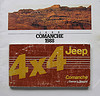
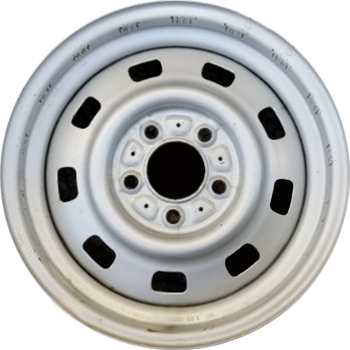
Sales brochure specs: Dana 44 heavy duty front and rear springs and shocks 15x7 styled white steel wheels full sized spare and tailgate BIG TON decal although I think I've seen METRIC TON too. Mine didn't have any because Chysler didn't know what it was doing when they made the thing. The AMC dealer said they would get me one but they went out of business before they did. Longbed was not a part of the package but a required option. The Jeep sales brochure actually compares the Big ton option to a Ford ranger and Chevy s-10 when actually it walked all over Ford, Chevy and Dodge full size 3/4 ton stuff.
-
What Engine Computer Do I Need?
metrictonner replied to al_brady's topic in MJ Tech: Modification and Repairs
If your Comanche starts and runs, the computer sounds OK. If things are burning out, melting, fuses blowing etc sounds like the previouus owner has connected some ground points to electrical power. I'd get a maintenance manual, like Chilton or Haynes and go completely through the wiring diagram from stem to stern with a VOM meter or have a local auto electrician do it. Your computer is a DRBII machine not an ODB 1 or 2. Napa didn't do you any favors except show their lack of smarts although it does point out how Renix maintenance is becoming such a dark ages project. -
new water pump won't spin
metrictonner replied to jbuds690's topic in MJ Tech: Modification and Repairs
The pipe that screws into the right side of the water pump goes right down to the blades. Did something fall down into it? -
New throwout bearings are almost impossible to bleed if you didn't follow the installation proceedures: Don't touch the throwout bearing compression straps or clutch pedal until you have filled the master cylinder and done the first bleed, then, with a full master cylinder, press in on the clutch pedal for the first time and refill master cylinder. To save the day you will probably have to open up the bell housing, reattach the compression straps and start all over again. How do you bleed the thing without stepping on the clutch? With a small hand vacuum pump brake bleeder.
-
clutch master cylinder
metrictonner replied to 86manche207's topic in MJ Tech: Modification and Repairs
If the leak is on the fusebox it is the master cylinder. If the leak is on the ground then it is the clutch line between the master cylinder and the throwout bearing. -
I've found the Felpro one piece still needs sealant on the front and rear parts, which is a good thing when you think about it because the sealant holds the gasket in place while you get the pan up against it. I use Prestone ultra grey on the bearing cap and front cover, gasket top and bottom AND oil pan. Just a light coat on each surface prevents oozing yet insures the sealant is sticking to all surfaces.