

AnotherOldJeepGuy
-
Posts
860 -
Joined
-
Last visited
Content Type
Profiles
Forums
Gallery
Everything posted by AnotherOldJeepGuy
-

PS Pulley Picture Please
AnotherOldJeepGuy replied to Porquer's topic in MJ Tech: Modification and Repairs
I took a look to see if the 2.5 and 4.0 might be the same, if they were I was gonna take a pic of mine and send it. But it looks like they have different part numbers so a pic of mine won't do it. But just in case the part number is useful, this is what I see in the part cat.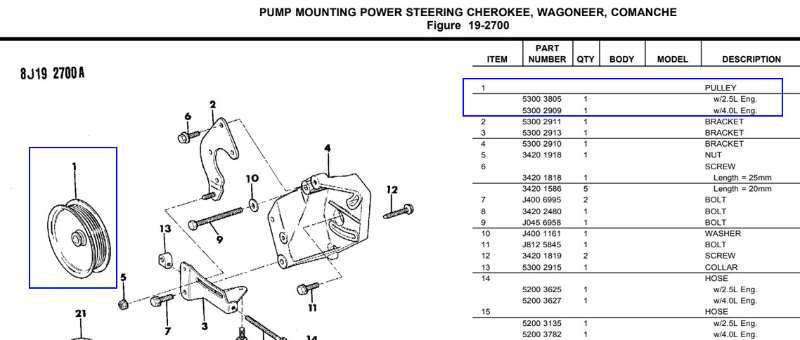
-
I see both Permatex 81844 and Permatex 81840 "Extreme" out there. I am a bit challenged to believe one it really any better than the other, but they cost essentially the same and "Extreme" sound more cool, so I'll try that.
-
Mine finally fell off today. The glue had to be pretty good stuff given the difficulty of sliding the center window back and forth and the fact it's been attached for 36 years. My first guess is the stuff you use to attach a rear view mirror, but I don't know if that stuff would survive pushing and pulling on it every day. I have the 3 window, sliding center configuration. I don't really know what is making it difficult to slide, I don't really see anything in there to generate the resistance, but the resistance is there none the less. I guess I can try squishing in a little bit of lithium grease in the bottom track, not sure that's the best approach for the top but maybe if I grease up the bottom a little the resistance should at least be less.
-
Good points on the inconsistencies. So it sounds like "adjustable" doesn't mean "user adjustable", but somewhat of an on-demand kind of thing, and the one that isn't adjustable is in someway going to attempt to maintain a preset pressure, which seems to still be kinda on-demand adjusting thing so hmmm again!
-
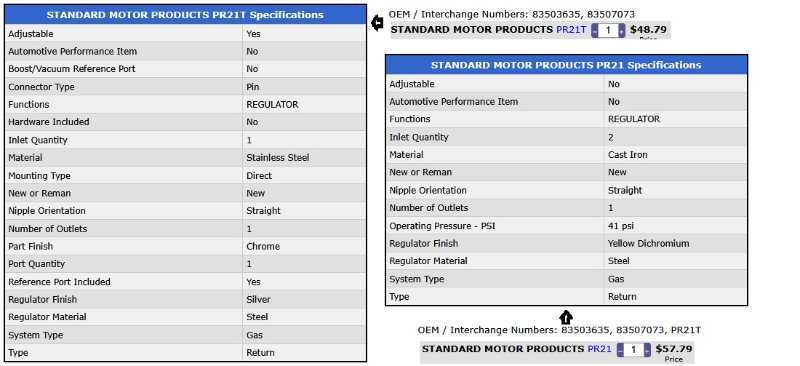
Rock Auto lists a PR21T (Adjustable, $48.79) and a PR21 (Not Adj, $57.79). They look the same in the pics, and there isn't anything in the details that explains what adjustable means (although I assume it's pressure) or how you adjust it. Both list the same OEM numbers. I'd prefer not to mess with adjusting, but, what does it take to adjust it and should I consider this? And of course I'd rather spent 49 that 58, but if the adjustable is something I'm going to have to screw with often, the extra 9 would be worth it.
-
Find just the threads I started?
AnotherOldJeepGuy replied to AnotherOldJeepGuy's topic in Forum Issues, Ideas, Testing
Perfect! Thank you! -
Is there a way to find a list of the threads I started? I can search for my username, but that get's every post. It would be nice to be able to pull of a list of the threads I started.
-
Here's a new one good through Oct 23. Code 353005636172570460

-
Yeah, a friend still has his he bought new. His is the Adrenalin model. Fun driver, but bed way to small for much that needs a truck bed. If the OP pic were available with at least the original short bed at Comanche length, I'd be interested!
-
No heater controls
AnotherOldJeepGuy replied to Jackrabbit41's topic in MJ Tech: Modification and Repairs
This is the one that came apart on mine multiple times resulting in defrost air only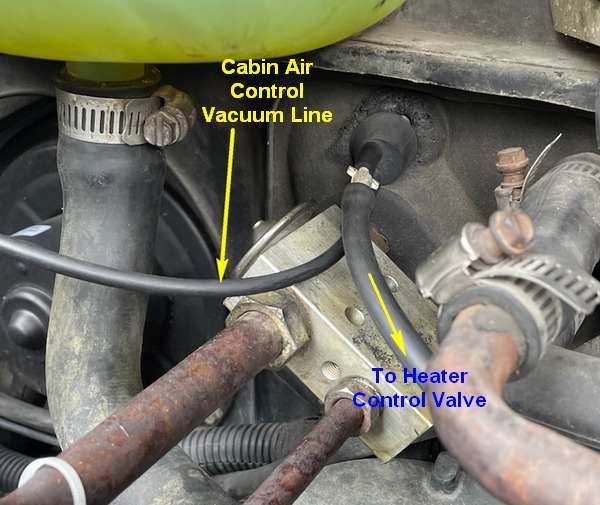
-
I Second!
-
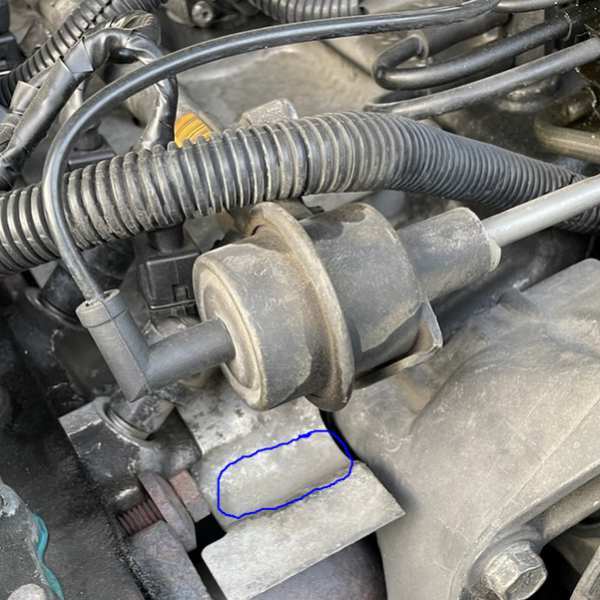
I figure a leak is a leak, so I have some work to do. But I'd still like to understand an intermittent leak in the fuel injection delivery. About a week ago I smelled gas, looked, saw one leaky injector. It appeared to be leaking at the seal into the hole it goes into. I have had these leaks before, I have replaced 3 of my 6 injectors, and the last time I had it apart I replaced all the o-rings and had no leaks. But that's not the question, the question is still why intermittent. I have looked a couple more times over the last few days and the leak has never showed up again. I looked at both engine hot and cold. So scratch head. This morning I installed a new battery and started up to make sure the new battery was happy. I smelled gas again, looked, the aforementioned injector was dry. But I see dripping fuel from the bottom of the fuel pressure regulator and a small fuel pool under in in the area of the blue outline. So Alexa, add a new regulator and fuel line quick connect to my shopping list. But 10 minutes later I decided to look more closely and capture the leak in a pic, it's no longer leaking and the fuel in the pool has dried up. There is some dampness still visible on the regulator but no active leaking. Again the intermittent question. Truck has not been driven or even run long enough to warm up a lot, but still, scratch head more. Anyone care to kill my cat (quench my curiosity for those that don't decode that metaphor)?
-
Intermittent wiper module repaired
AnotherOldJeepGuy replied to The86manche's topic in MJ Tech: Modification and Repairs
Sounds fair to me. I see a few on EBAY for about the same price and if it were me I would much prefer buying from someone here to a stranger on EBAY given the two choices. -
This topic makes me remember looking for a small truck in 1990. I don't remember for sure what all I looked at, but several of the then available similar sized ones. Two things made an impression for me. First, inside it looked and felt like a truck, the others felt more like a car, I already had a car. The final decision came when I opened the hood. On everything I looked at other than the Comanche, the hood was for sure a one hand lift, was wobbly, and when you closed it, it sounded wimpy. The Comanche hood was actually solid, heavy, and when it closed there was a satisfying and firm "thud". 36 years later, I still think I made the right choice .
-
You might scan my recent May Day post. It's a bit long but it does document a handful of things I did that resulted in pretty good results. In particular the ECU relearning step that did more good that expected.
-
REM Gauge Readouts Engine 0705.pdf
-
Great!
-
Got a new one good through Sept 25... 349948498172570460

-
There are actual bulbs in the fixture, perhaps they have burnt out?
-
1997 Avalon Oil Pan litter
AnotherOldJeepGuy replied to AnotherOldJeepGuy's topic in Member Projects: Other Cool Stuff
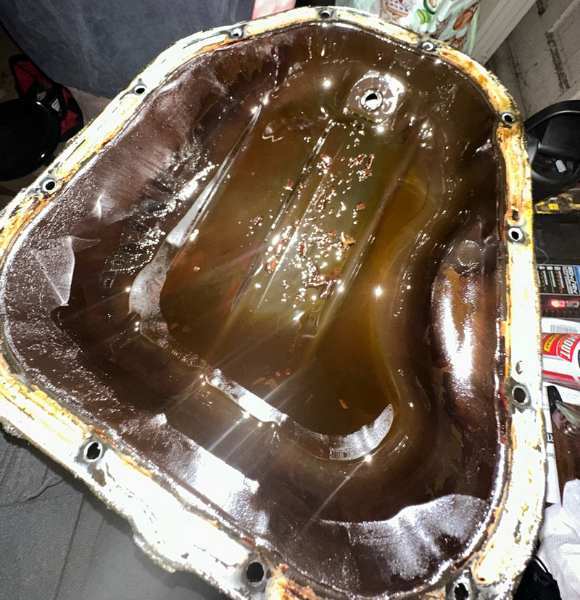
I went over a took a look and it turns out these were not metal, and it just looks like pieces of RTV from removing the pan. So doesn't look like there's a problem here! Glad it wasn't metal pieces afterall! -
My son pulled his oil pan to put in a new gasket, and maybe a new pan cause the drain plug location is a little messed up / bent, and he sent me the pic below. He said he doesn't really see where the chips in the pan came from. The car is running well just has an oil leak. Any thoughts on where these might have come from? I'm going to ask him to double check they are really metal with a magnet, cause just from the pic it looks like it could possibly be pieces of the old gasket to me, but all I have to go by is the pic. Any thoughts?
-
Intermittent wiper module repaired
AnotherOldJeepGuy replied to The86manche's topic in MJ Tech: Modification and Repairs
Look closely at the contacts for the solenoid on the control board, I believe that was my issue... -
K Suspension headlight relay harness
AnotherOldJeepGuy replied to jodawill's topic in MJ Tech: Modification and Repairs
If I were in your sitch I guess I'd swap the headlight bulbs just to rule out it isn't just a bad bulb. And of course check the voltage with DMM at the bulb connector. -
I got an email from the Jeep folks that says they are planning to honor "all eligible badge requests". They didn't go into detail how they define an eligible badge request. But the potential is still out there.
-
Seat fasteners to body
AnotherOldJeepGuy replied to 90BlackMJ's topic in MJ Tech: Modification and Repairs
I have bench.