


Dzimm
-
Posts
3580 -
Joined
-
Last visited
-
Days Won
11
Content Type
Profiles
Forums
Gallery
Everything posted by Dzimm
-
The more I read up on this the more likely this sounds. Where and how is it typically bonded if not in the panel? I suppose the water meter area?
-
This will happen sometime soon and the entire box will be done up correctly. As of now the shop wiring doesn't effect the issue in the house so it is going to stay as is until I get the house figured out.
-
I have been unable to locate them. I'm off to work for the night and will be back at it tomorrow. I'll start really digging into all the kitchen wiring and see what I can find.
-
That sounds about right.
-
Hot to box and hot to center screw is giving the same voltage
-
Bedroom - 3v Bathroom - 120v Spare bedroom - 60v Living room - 4.5v Kitchen (circuit 2) - 38v kitchen (circuit 2) GFCI - 11.2v Garage1 - 48v Garage2 I installed for my deep freeze, tied into same breaker as garage 1 - 120v Garage3 different breaker - 5.7v
-
Just pulled them
-
I'll smoke some ribs and brisket and provide the beer.. There is no other grounds at the panel so how would those be grounded back there? The 220/240 circuits all seem to not change anything in regards to power on the neutral. Even the shop one does nothing so I think those are probably all fine and not necessarily part of the issue.
-
To finish answering your questions, the dishwasher is tied into circuit 2. Washer is on its own 3wire 220v. All the outlets in the house were two prong aside from GFCI in the bathroom, I did the bad of putting in 3 prongs without a ground because screw those stupid adapters.
-
The shop panel is a mess and yeah they appear to be bonded.. incoming ground isn't attached to anything.. They've also got multiple hots under the same breaker screw
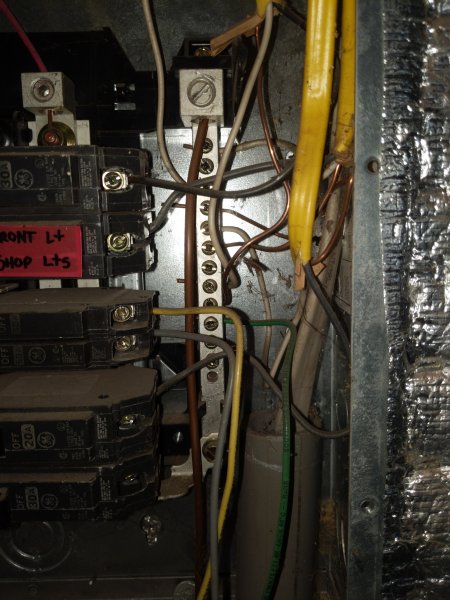
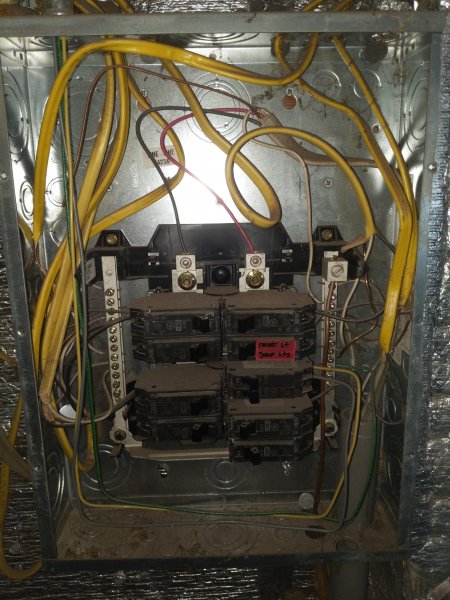
-
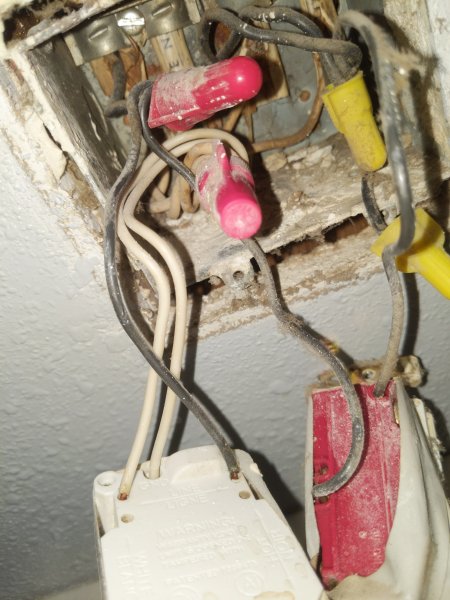
Bedroom doesn't appear to have that ground wire. Just pulled the bathroom outlet and vanity switch out. The GFCI ground and neutral are tied together. There is a ground wire attached to the box in the very back from I'm guessing the run from the panel. There is also a hot wire capped but it's paired white is still tied in with all the others.
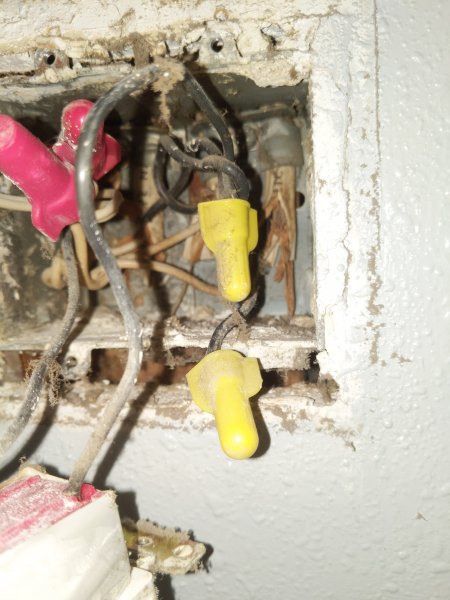
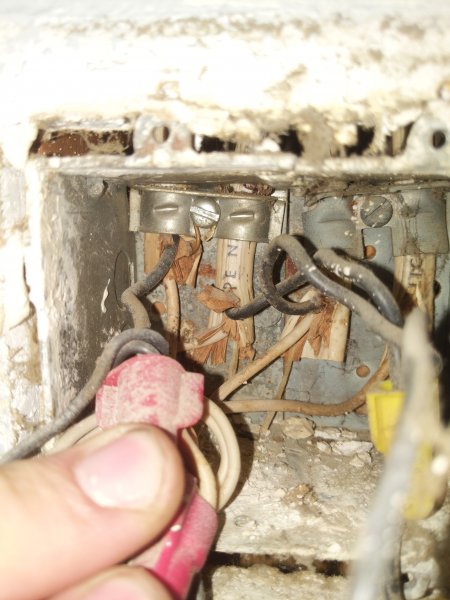
-
The stove is a 3 wire circuit and I disconnected the microwave first thing. It has been disconnected since the beginning of troubleshooting.
-
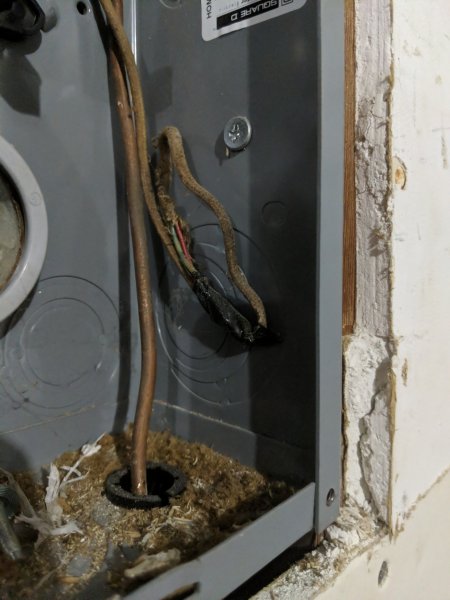
No insult taken, I appreciate you being so thorough and I fully understand why it's necessary. The gray wire in the panel from the top is one I added for my deep freeze. It's tied into a breaker that has 2 outlets on it. It is a double tap breaker and everything is tight there. The 220 that was added runs out to the sub panel in the shop that was built in 2003. The brown wire in the bottom corner of the box looks to be an old phone line or something, it's taped off and just tucked in there. There is only one copper wire running to the rod and it is the same one that's attached here in the panel. The reverse polarity is the replacement extension cord end, the outlet is fine. When we moved in I went around and replaced all the outlets in the house and made sure they were wired correctly, some of course we're not. Went around and tested a few outlets, plates off, hot to receptical mounts: Bedroom - 48v Bathroom - 120v Spare bedroom - 48v Living room - 48v Kitchen (circuit 2) - 38v kitchen (circuit 2) GFCI - 11.2v Garage1 - 48v Garage2 I installed for my deep freeze, tied into same breaker as garage 1 - 120v Garage3 different breaker - 8v
-
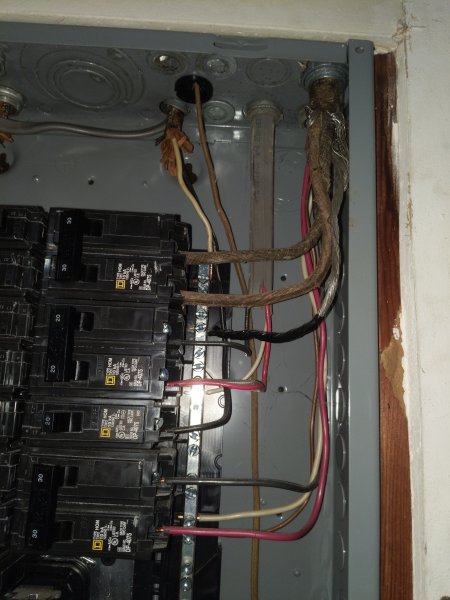
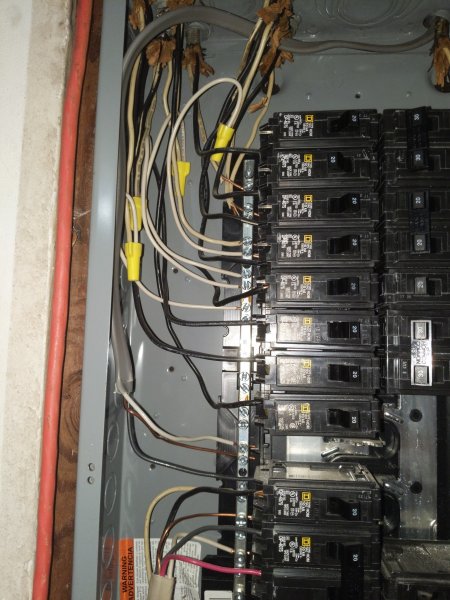
All the wiring looks to be hooked up where it's supposed to be. There however are no wires that come in by themselves for ground meaning the single wires attached to the receptical boxes are grounded elsewhere in the house.

-
Everything on both circuits was unplugged and the results were the same. I've got all the outlets on circuit 1 pulled out but I have not yet on circuit 2. The white wires under the sink are not together, they are capped separately and there is no voltage between them. The voltage is the same between the circuit 2 outlet box and the water pipes from one of the wires to pipes, slightly lower voltage on the other so they must both be neutral tied into something on these circuits. When we moved in the ground from the electrical panel was run outside on the opposite side of the wall as the panel and the copper wire running across the top of the ground to the rod, which was also protruding above ground. I buried it and hammered the rod as low as I could. I will grab a picture of the panel to see if you notice anything. I've got to go to work now so I'll do more testing tomorrow. Thank you so much for the help!
-
Breaker 20 is hard to test as it's only lights. 4 interior and 3 exterior. 1 switch controls 1 exterior light, another switch controls the other 2 exterior lights. 1 3-way switch setup controls 2 interior lights and there are two single switches for the other interior lights. Breaker 18 is a ceiling fan controlled only by the chains on the fan, and an exterior light on a switch. Would I need to pull all the light fixtures and switches out to test these?
-
So testing breaker 6, meter still on circuit 1 outlet neutral and receptical box. This breaker has an outside outlet, and two garage outlets. Plugged in is garage door opener, deep freeze, box fan, and sump pump. Unplugging everything individually results in no change except the garage door opener drops it 0.2v so there must be backfeed there. Switching breaker 6 off, it drops by 0.4v matching what is above. Could we say it's safe to rule out breaker 6?
-
So I went through every breaker in the house and tested with the probe on a circuit 1 receptical box and a probe on the receptical neutral. Constant - All breakers ON = 4.6v Breaker 24 off = 4.6-4.7v fluctuating Breaker 2/4 off = 4.6-4.7v fluctuating Breaker 21/23 off = 4.6-4.7v fluctuating Breaker 16 off = 4.7 Breaker 12 off = 4.7v Breaker 17/19 off = 4.7v Breaker 15 off = 4.7v Breaker 11/13 off = 4.7v Breaker 1 off = 4.7v Breaker 10 off = 4.6v Breaker 22 (circuit 1) off = 0.6-0.7v fluctuating Breaker 20 off = 5.2-5.3v fluctuating Breaker 18 off = 4.3v Breaker 6 off = 4.3v Breaker 14 (circuit 2) off = 4.1-4.2v Constant - Breaker 22 (circuit 1) OFF = 0.6-0.7v fluctuating Breaker 24 off = 0.7v Breaker 2/4 off = 0.7v Breaker 21/23 off = 0.7v Breaker 16 off = 0.7v Breaker 12 off = 0.7v Breaker 17/19 off = 0.7v Breaker 15 off = 0.7v Breaker 11/13 off = 0.7v Breaker 1 off = 0.7v Breaker 10 off = 0.6-0.7 fluctuating Breaker 20 off = 1.4v Breaker 18 off = 0.3v Breaker 6 off = 0.2v Breaker 14 (circuit 2) off = 0v Constant - Breaker 14 (circuit 2) OFF = 4.1v Breaker 24 off = 4.1-4.2v fluctuating Breaker 2/4 off = 4.1-4.2v fluctuating Breaker 17/19 off = 4.1-4.2v fluctuating Breaker 10 off = 4.1-4.2v fluctuating Breaker 21/23 off = 4.2v Breaker 16 off = 4.2v Breaker 12 off = 4.2v Breaker 15 off = 4.2v Breaker 11/13 off = 4.2v Breaker 1 off = 4.2v Breaker 20 off = 4.8v Breaker 18 off = 3.8v Breaker 6 off = 3.8v Breaker 22 (circuit 1) off = 0v According to this, I'm assuming +/- 0.1v is okay, this would mean these circuits are suspect: - Breaker 22 (circuit 1) - Breaker 14 (circuit 2) - Breaker 20 - Breaker 18 - Breaker 6
-
What do you mean connected? And the living room circuit is a different breaker entirely.
-
Yeah the cord is polarized but just realized it's wired backwards (someone changed the plug at one point) so that's a different problem.
-
We capped them, they weren't when we moved in. Ive got an extension cord ran from a living room circuit to test with and found neutral on that to the water pipe is fluctuating between 0v and 0.5v
-
Stove to water pipes is 0v
-
Yes. They connect to nothing. When we moved in we bumped one during the dishwasher install and it arched on the water pipes. It however doesn't show voltage with the proximity tester with all breakers on.
-
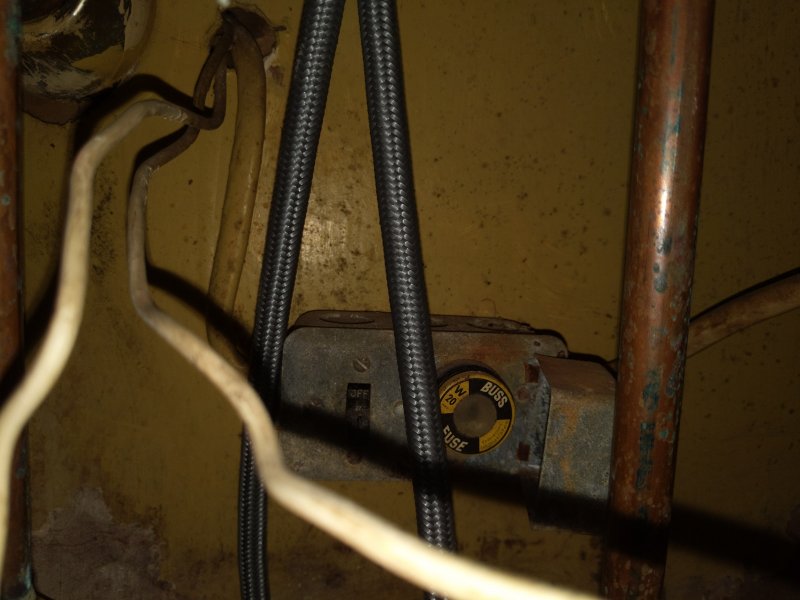
Just realized this fuse box with a switch under the sink is tied into circuit 2. NVM realized this is to the dishwasher. Doesn't change the voltage readings weather it's switched on or off.
-
Unplugging the fridge didn't change anything. I can't find anything else tied to either circuit.
