agamble
-
Posts
214 -
Joined
-
Last visited
Content Type
Profiles
Forums
Gallery
Everything posted by agamble
-
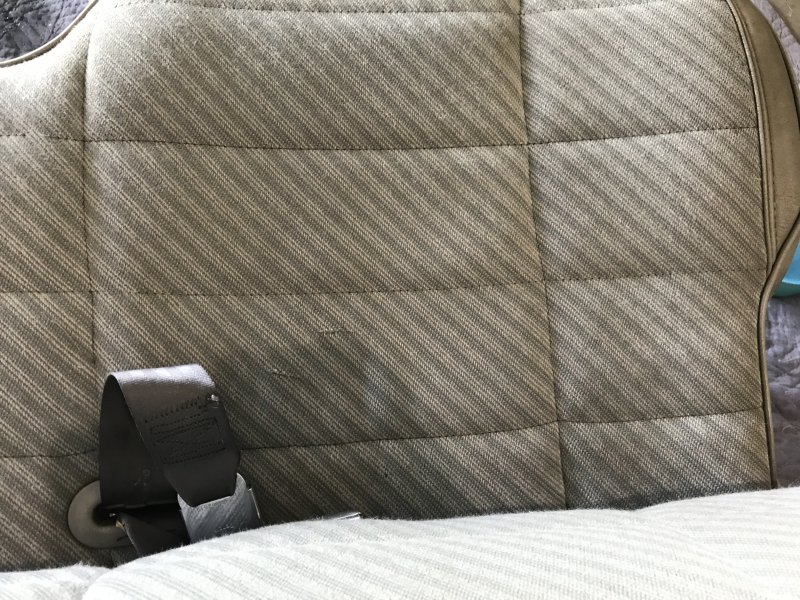
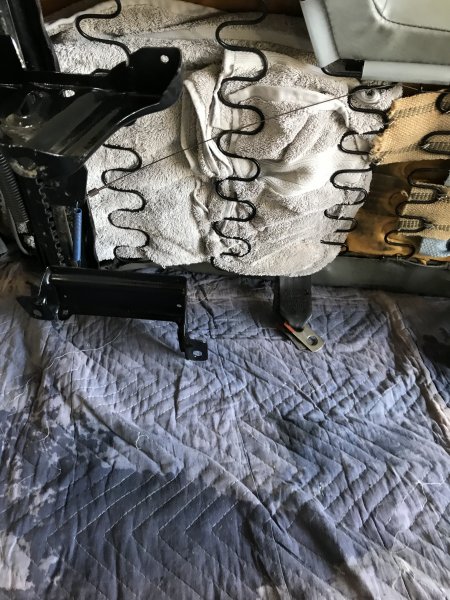
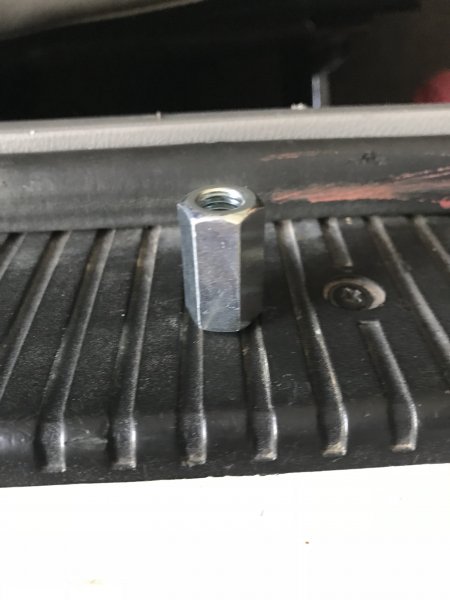
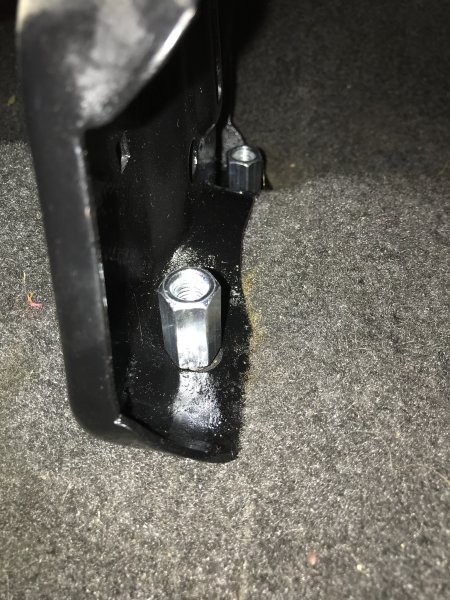
Spent the afternoon cleaning up the bench before reinstalling it. The seat brackets were showing the rust that had eaten away the floor boards. There was significant metal remaining and the were still integrally sound. A couple layers of Rust-O-leum rust inhibitor followed by Rust-O-leum Epoxy paint to seal it off. (Drivers side had much more rust) After sealing the brackets I moved my attention to the upholstery. The seats were covered in stains from who knows what. (Before) To clean I applied shout and used a stiff bristle brush to rub it in, then let it sit for about 5 minutes. Then I scrubbed with hot water and dawn dish soap. After scrubbing the excess soap and water was removed with the shop vac. The process was repeated until the significant staining was removed. (After. The dark spots are shadows created by me when snapping the picture) The seats were feeling a bit saggy. I’ve seen various remedies and experienced some. A previous vehicle felt as if I was riding on a board, a investigation revealed that to be the case. The P.O. has placed a board between the padding and the springs. Since I was not a fan of the board approach and I’ve had ample success with towels in the past, an extra bath towel or two was stuffed between the padding and spring to bring the firmness back in the seat. And the next mod I cannot take any credit for. I saw another member here in the forum so this and I thought it was genius. To protect the threads and lessen the potential for rusting threads I replaced all the nuts with couplers.


-
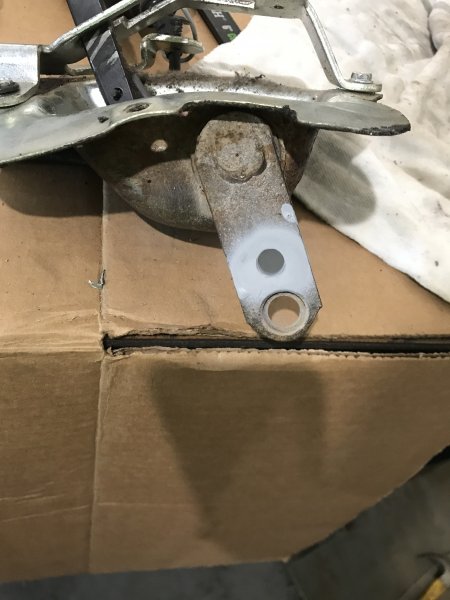
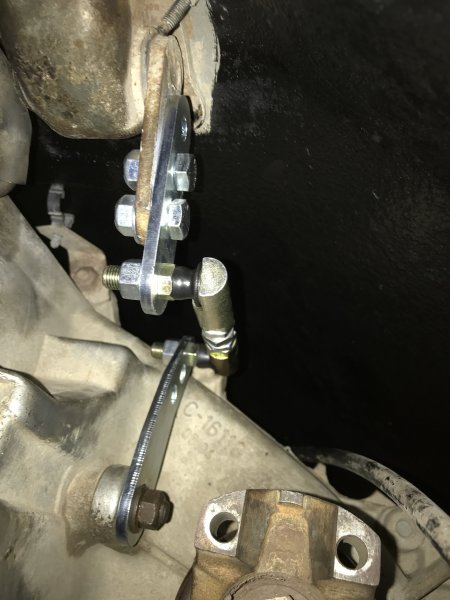
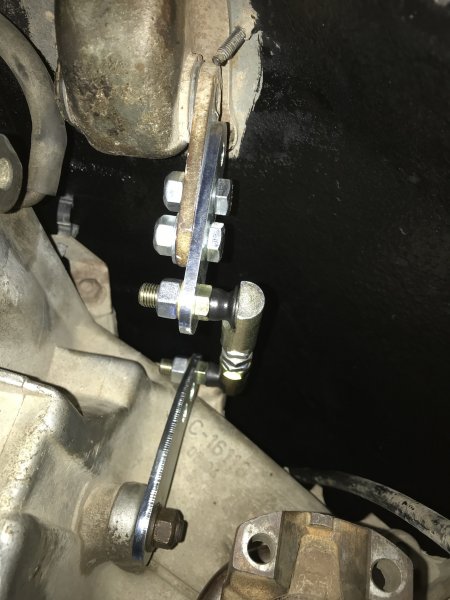
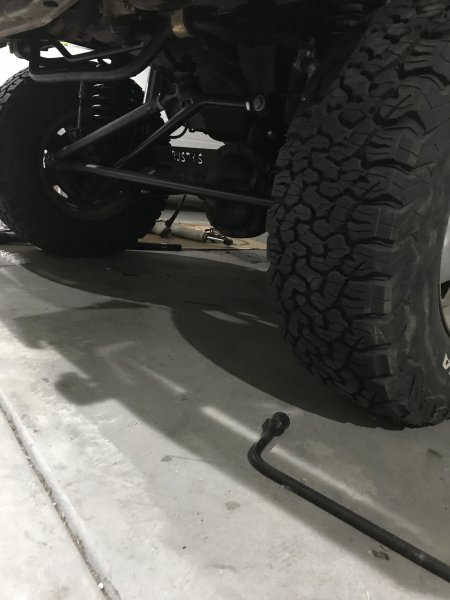
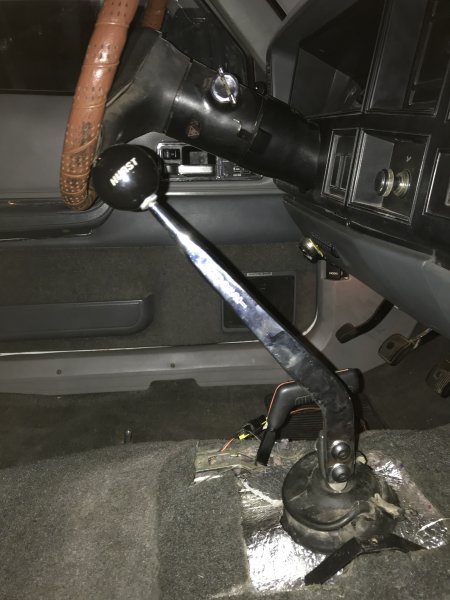
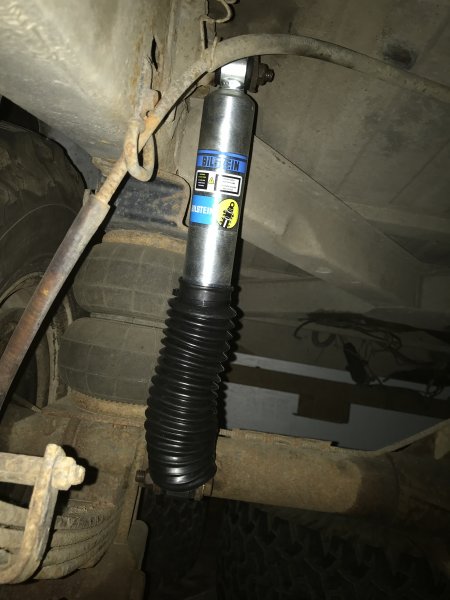
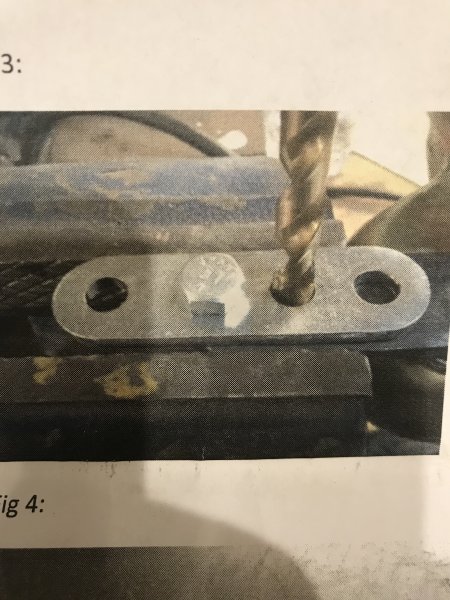
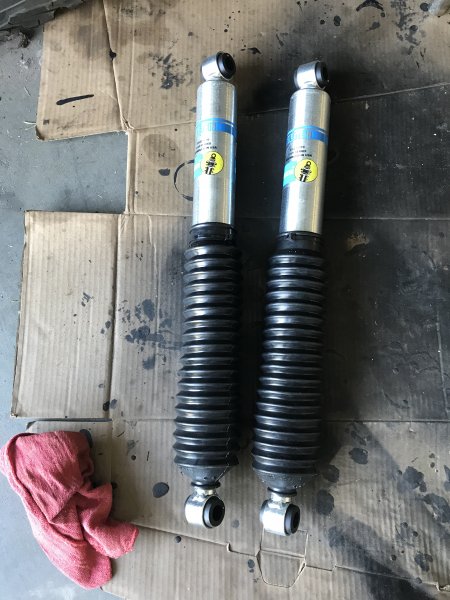
Finished up with putting in the CADless HP Dana 30 that I previously built. As it stands the caster and toe have not been fine tuned. Once the Jeep is drivable I will adjust accordingly. On the SWB when I did the BA10/5 to AX15 swap I used the the Novak SK2XC Cable Shift Assembly. While it provided the smooth shifting that it is purported to do, for me it was overly complicated. This time I wanted something that still eliminated the complicated stock Z-linkage, provided a smooth shift, and was simpler. Enter the Boost Engineering 231HD Linkage. It cannot get any simpler. A custom made shift tab moving the throw to the topside of the transfer case, two FK rod ends, two jam nuts, and random nuts to connect everything. The installation instructions provided were very clear and easy to follow. First step is to remove the shifter from the transmission tunnel. There are 5 bolts that hold it into place and then it lifts right out. The next steps I forgot to take pictures of the process but, I did snap a picture of the pictures provided in the instructions......I know cheesy. With the shift assembly out of the vehicle, cut and remove the plastic grommet in the end of the tab. With it removed, bolt on the provided tab and drill out a second 3/8" hole on the tab. Hit the freshly drilled tab with some paint to prevent rust, and reinstall the shift assembly. Once its in bolt on the new shift linkage and tighten the provided bolts and nuts. The test shifts were amazingly smooth, the first few times I almost couldn't tell if it was shifting or not. While I was under the truck I installed the rear Bilstein shocks. All the mounting bolts were very rusted, so a week prior I started soaking them in PB Blaster. Even with a weeks worth of soaking the top mounting bolts were very stuck. It took longer than it should have but, I went slow as I did not want to break the upper mounting bolts. Once the new shocks were on, as I have done on all of the bolts that I have since put back on the truck, a healthy coating of anti-seize was applied to the threads. And because I was on such a role. I installed the Hurst Short Shifter.

-

Hooligan OffRoad Hinge Support Install
agamble replied to agamble's topic in MJ Tech: DIY Projects and Write-Ups
- My door is propped out little bit as well when its closed, it is a result of the gap shown in picture of the hinges pulling away from the body. - If you're wanting the door to sit flush the hinge support will not help close the gap, you will need to close the gap up before attaching the supports. The hinge support will prevent this from occurring, if it has not already, or prevent it from getting worse or if repaired occurring again. In my case I didn't as the door being off by a bit didn't bother me and its not a show truck. - When installing, if you're not closing the gap between the hinge and body there is no need to weld the inside seam. If you're leaving the gap or it has not already occurred you don't need to weld the inner seem. Its doable without removing the door. However, there is not a lot of room. -
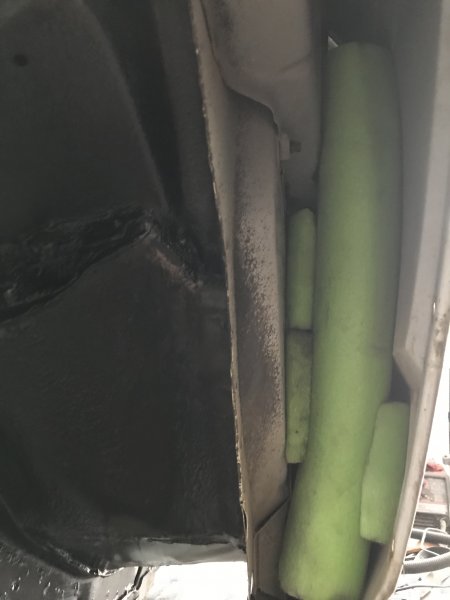
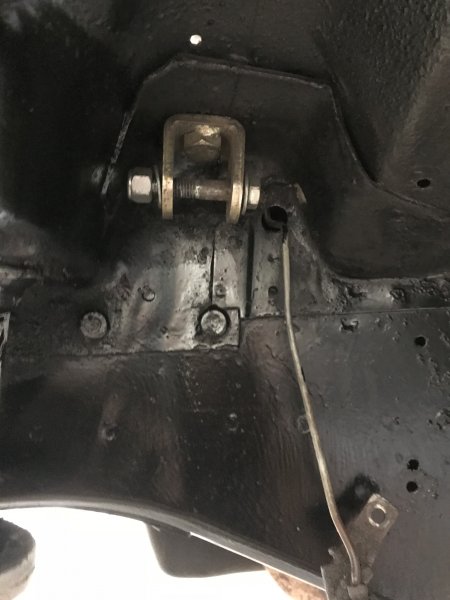
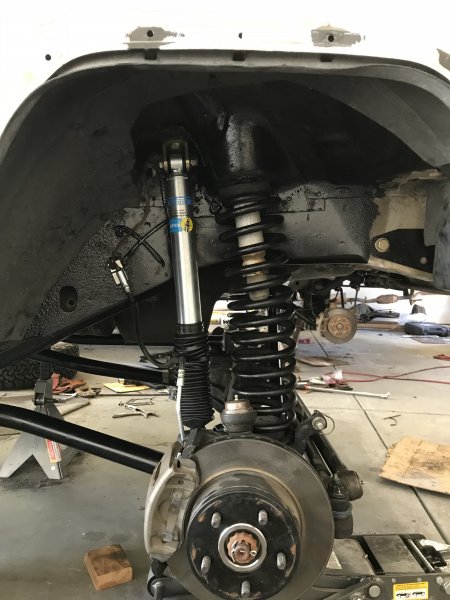
I have read on various cherokee forums of using a pool noodle to protect the door hinges from water and mud. With pool noodles being so cheap and plentiful I figured that I would give it a try to protect the door hinges. Installed new 5125 bilstein shocks (P/N 33-18552) on the front of Villa. The shocks measure 23.35" eyelet to eyelet, with a collasped length of 15.91", an extended length of 25.93", and 5/8" eyelets. I ordered these back in May during a memorial day sale. I thought I would take the easy route and have seller assist with sizing. My first order was through 4WheelParts, when buying from the website (first mistake) the page states that a sales rep will call to confirm size for your vehicle. Well the page listed jeep Comanche in the drop down so I put in an order for a set of four. 5 days go by no contact about the shocks, meaning no confirmation of order, shipment, or contact by the sales rep. So I phone into the customer service and to tell them I haven't had the shocks i ordered a week ago sized or confirmed. They give me the sales rep who is supposed to help and he doesn't answer on his direct line or return my call over two days. So I call the main number again, tell them I can't get the sales rep to contact me or return my call so they give me another one who call immediately. He looks at my order number, and after a minute says Bilstein doesn't make 5125 shocks for the jeep Comanche. Lets see if they have 5100s. I tell him hold up, hold up, I don't want 5100s. If I did I would have ordered them, I want 5125s. Again he says they don't make them for the Comanche. I ask is that what a webpage is telling you? He responds yes. I say they do make the right size, as shocks are simply measured from eyelet to eyelet to fit. He says well if you can find the correct manufacturer P/N for me I can order it. At which point I say, you want me to go to the manufacture page, find the P/N, call you back, give you the P/N, and wait for you to order it. Sounds like I am doing all your work. Do I get a 15% discount then? He says no. I promptly reply, well if I don't get a discount for doing your job and I have to do all the work why would I order from you. Cancel the order. I then went online found the sales brochure and 4 minutes later was on Amazon placing an order for 5125s. I know long winded, but morale of the story is don't go with a large retailer website. Accompanying shock tower for the upper eyelet.

-
As this build is directed more towards overloading, I figured that long arms would be a benefit on all aspects of the rig. Two jeeps back I had an XJ that I equipped with IronRockOffroad Critical Path Long Arms. To date it was one of the best modifications that I have ever done. When purchased it was purely from an offroading perspective but, the benefits didn't stop there. With an improved control arm geometry it absorbed bumps well and rode so smooth.....for a jeep. On-road handling there was a marked difference compared to short arms. As well ease of creating clearance for making front end maintenance much easier. Now I have only had good experience with IRO and while I liked the Critical Path Long Arms, I wasn't a fan of the caster adjustment that came with the driver side arm. While searching for a long arm setup, not being too picky only requirement was it needed to work with 3" of lift, I found IRO had a new rock-link system. The arms are designed for a minimum of 3" of lift, eliminated the previous caster adjustment and it was a true three link. Install was pretty straight forward. There is a good how to video for the long arm kit on the IRO webpage. The kit comes with two outer brackets that have the mounting points on the subframe for the arms. This setup allows for the cross memeber to be dropped without having to remove the arms as well. The only hiccup that was encountered during the install is the arms are designed for an XJ. Meaning, if you're familiar with the XJ, the rear brake line and fuel line run flat against the inner frame. On the MJ there are two rear brake lines and fuel line that bend out towards the transmission to wrap around extra bracing that is used to mount the stock cross member. The drivers side subframe mount for the long arms is designed to have a space for the lines to run between the bracket and the inner frame. So for the Wilderbeest I had to use a work around for the time being. I ended up removing all the retaining clips from the fuel filter forward to create enough flexibility in the lines allowing them to be pushed up on top of the bracket. I checked the clearance to see if the upper control arm moving up would smash the lines, and there was plenty of room. With subframe and cross member in place the new front axle was rolled into position and bolted onto the control arms.
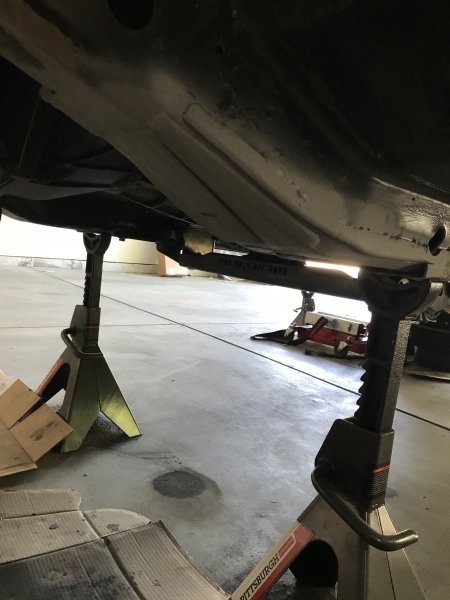
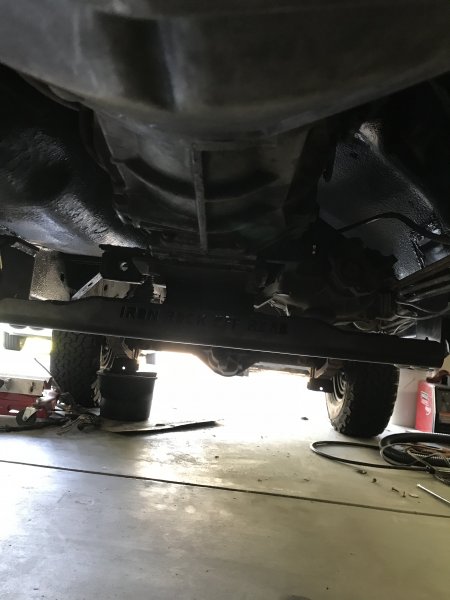
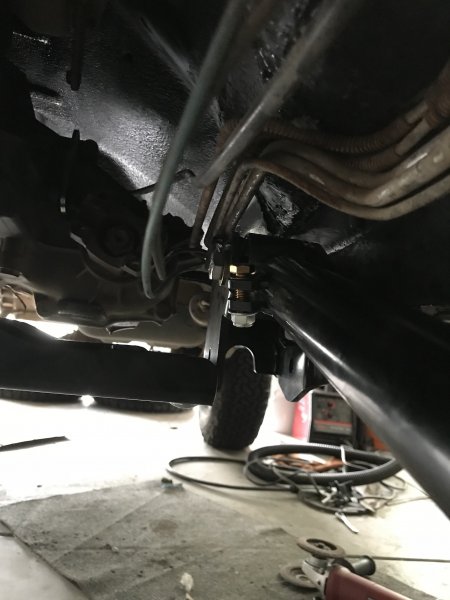
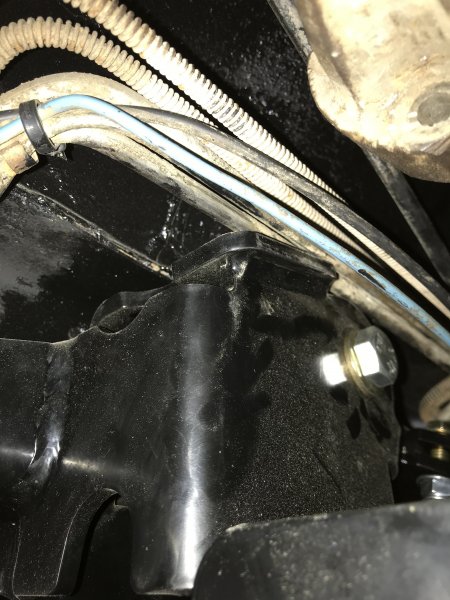
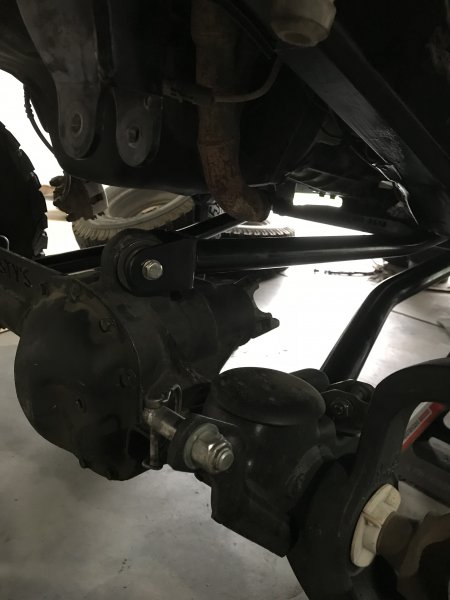
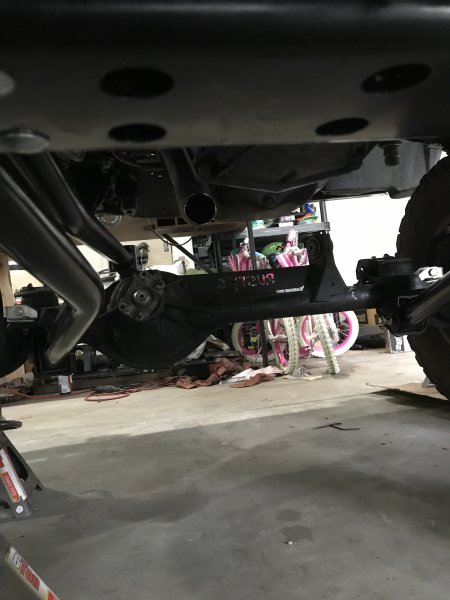
-
It took a lot of talking myself into it but I pulled the trigger. Its not the first time that I have cut off the control arm mounts, but there still is always a feeling of dread at the thought of doing something on that scale. The had to go to create the space needed for the rock-link long arms from ironrockoffroad. I didn't take any pictures of the cutting portion, just the aftermath. It took a total of six cut off discs, three per side, to get the lower mounts off. I started on the inside and worked my way out. Once the major cutting was done, the fine clean up and smoothing were completed with a flapper disc. Once smoothed and cleaned, a couple coats of primer were added to cover the bare metal. Then to continue the theme or removing and preventing future rust, two coats of Chassis Saver was applied.
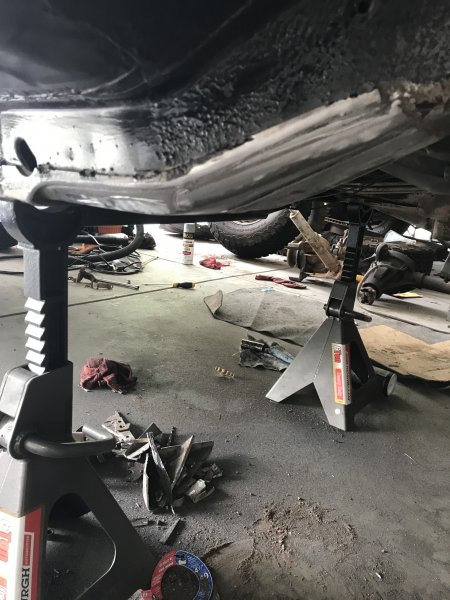
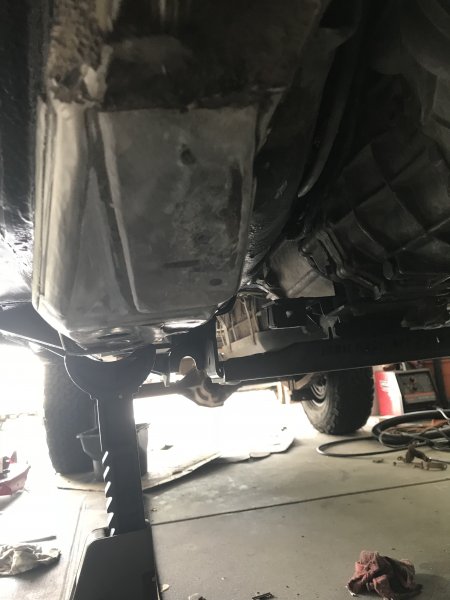
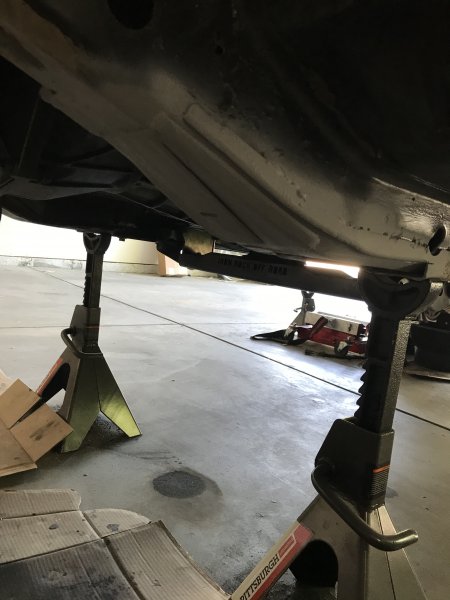
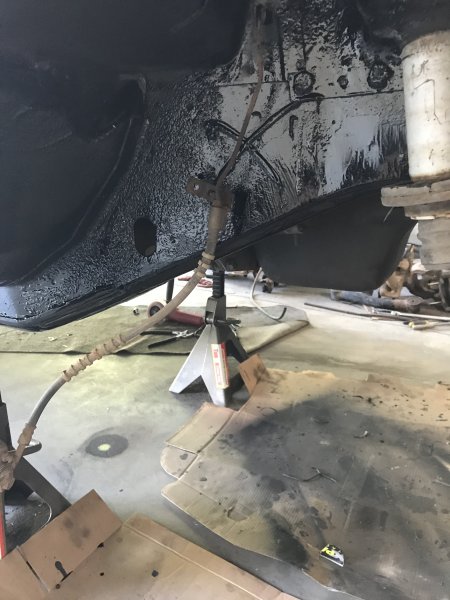

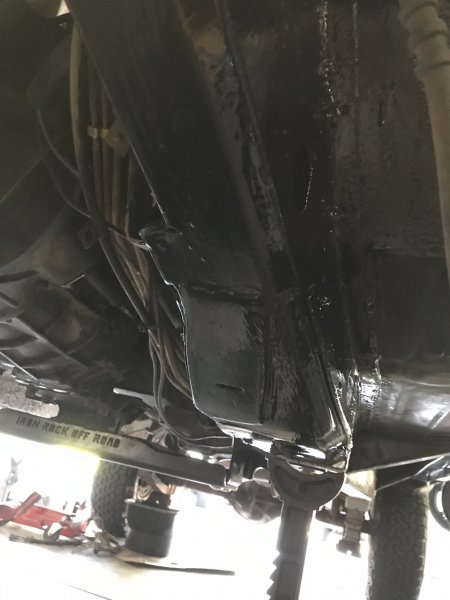
-
I want to say it wasn't more than $150, but I don't recall as it was a few years back. I can say that the service was fast and they were easy and great to work with. Really helpful on all fronts. Here in the very near future I am going to be contacting them again to rebuild the fuel sending unit on the new jeep that I have.
-
Started on the front axle swap this evening.
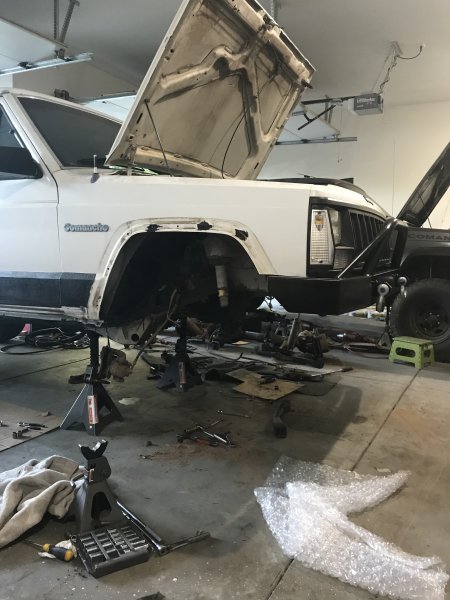
-
Internal slave to external slave parts list??
agamble replied to johnj92131's topic in MJ Tech: Modification and Repairs
It doesn’t appear that you’re missing anything. -
At at this point in time no. But you can never say never.
-
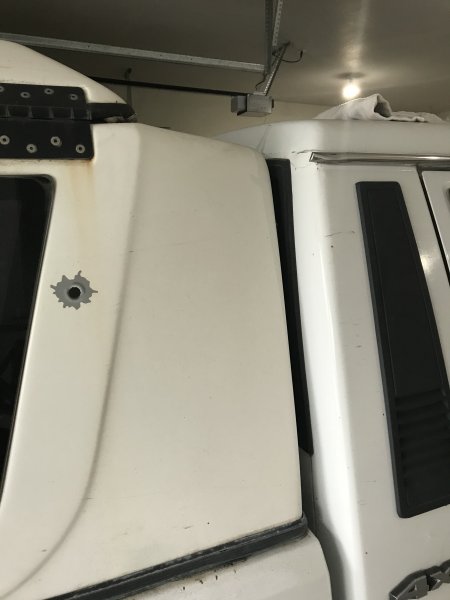
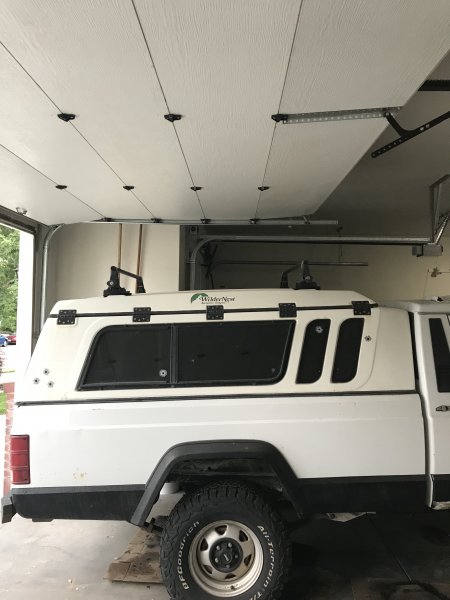
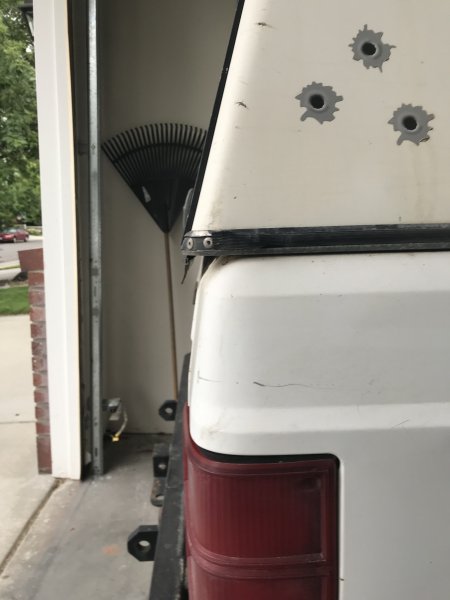
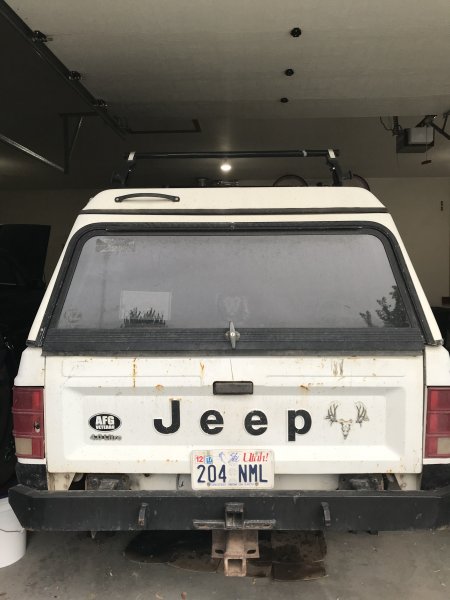
From what I have read up on they only manufactured about 300 a year and what little information on the web that I can find is that based off of the serial number it was built sometime around 1990? I do know for sure that if there are to small "S" shaped windows on each side it is from 1994 or earlier. The last two or so production years the opera windows were merged into one bigger window on each side. This is actually the second wilderness topper that I have had on Villa. The first one was about 4 inches to short, and I used a piece of flat iron to mount the front of the Wilderness to the bedrail. This one is the Tent Top Model Number 91/ Tip Top Model Number T91. Its designed to go with a number of light weight pick-ups with a long bed. A link to a brochure that lists model numbers: http://www.therangerstation.com/resources/pdf_documents/Wildernest_OEM.pdf. So as its a one size fits all approach it is not a perfect fit. Height wise it sits about 1.5" below the roof, width wise is a perfect fit, and length wise it is about 1.5" too long leaving a gap between the back door and tail gate. For it to fit on the long bed comanche it requires a rear door wedge, which I don't have. However, the fit is close enough that it is super noticeable; enough that it doesn't bother me.

-
Internal slave to external slave parts list??
agamble replied to johnj92131's topic in MJ Tech: Modification and Repairs
The AX15 never came in 21 spline. Only came in 23-spline. In order to do the external slave you will need: -a bellhohuseing from a 94' or later 4.0 motor. -External slave cylinder (https://www.quadratec.com/products/52010_05.htm) -A way to connect the external clutch slave cylinder to the clutch master cylinder. You can do this one of two ways: 1) purchase the setup, as it comes in one single unit (https://www.quadratec.com/products/52007_0013.htm). My understanding is you may have to modify the upper mounting point on the fire wall to make it work. I have no first hand experience as I've never purchased a complete kit. 2) AdvancedAdapters sells hydraulic fittings that allows youth retain the year specific clutch master cylinder already on the truck while mating it up to the slave cylinder at the bell housing. You will need the early master cylinder fitting that is a 7/16 inverted flare style (P/N 716130F) this fitting will thread right into the clutch master cylinder, the stainless steel hose (716130-60, 60" length or 716130H, 42" length), the TJ Master Cylinder Fitting and Slave Cylinder Fitting (P/N 716130 TJ) and O-ring (P/N 716130OR). -An external specific front bearing retainer plate (https://www.quadratec.com/products/52129_05.htm?gclid=EAIaIQobChMI0sGN6Lr62wIVVZ7ACh30yQ6EEAQYASABEgKnSvD_BwE) - Clutch release pivot (https://www.quadratec.com/products/52021_01.htm) -Clutch fork spring (https://www.quadratec.com/products/52012_03.htm) -Clutch throw out lever fork (https://www.quadratec.com/products/916914_07.htm?gclid=EAIaIQobChMI9umztbz62wIVhLXACh3PzAghEAQYASABEgI5K_D_BwE) -Clutch release bearing (https://www.quadratec.com/products/52004_102.htm?gclid=EAIaIQobChMItduIlb362wIVS7nACh01Vg0nEAQYBCABEgIQr_D_BwE) -New pilot bearing. Internal slave AX-15s have a pilot bearing with an Inside Diameter (ID) of 0.5934 inches, Outside Diameter (OD) of 1.055 inches, and depth of 0.719 inches (OE part number 53009181). The external slave AX-15 has a pilot bearing with an ID of 0.7518 inches, OD of 1.8161 inches, and depth of 0.719 inches (OE part number 33004041). The standard pilot bearing that comes usually will not fit into the crankcase as it will have to large an OD. A 72 - 73’ CJ, 350 V8 pilot bearing is recommended when swapping in an external AX-15 in an older 4.0L. It has an ID of 0.751 inches, OD of 1.056 inches, and depth of 0.88 inches (National part number PB77HD or Dorman part number 14674). -
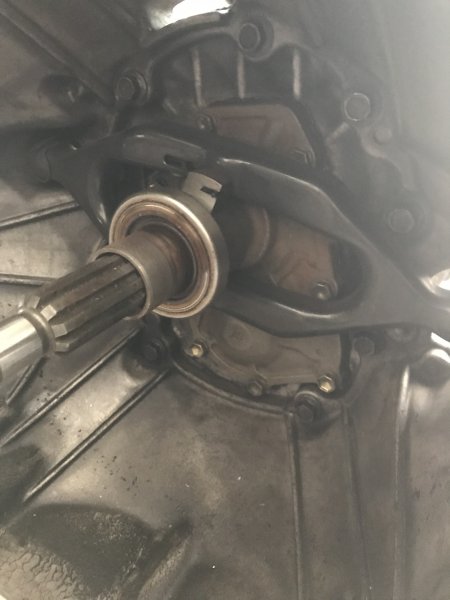
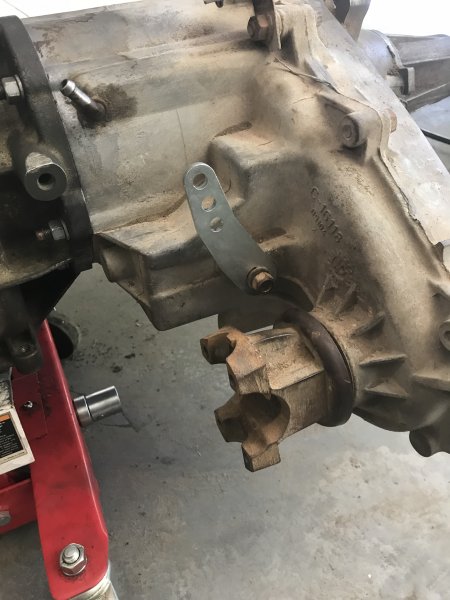
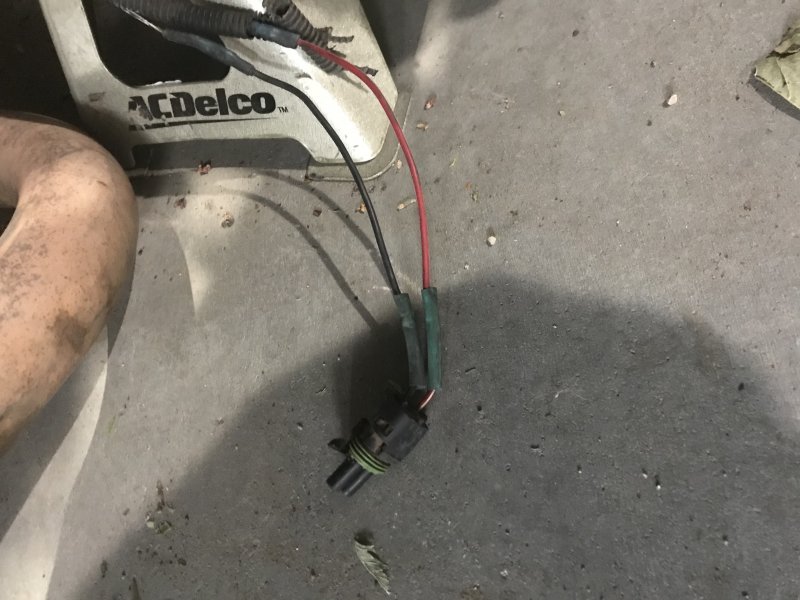
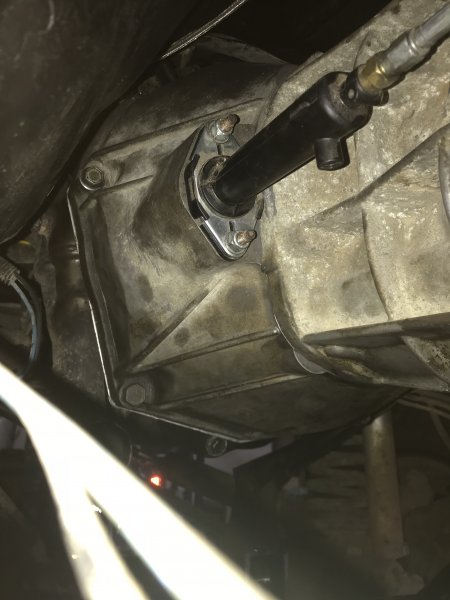
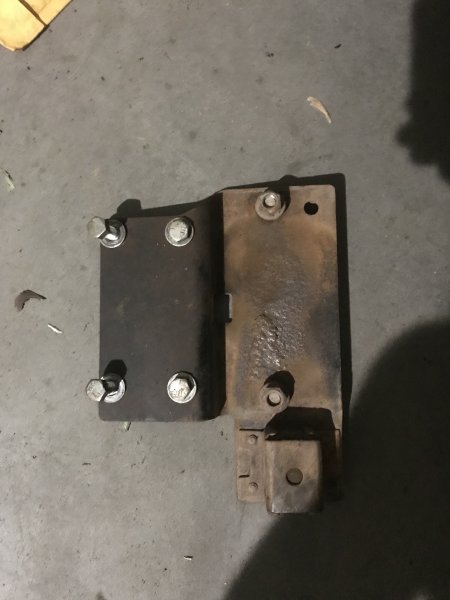
Phase III of the transmission swap The final phase of swapping in an external slave is that the bearing retainer needs to be swapped out. The internal slave bearing retainer is shorter and reveals more spline. In the picture below you can see the final setup, the throw out bearing in the front, followed by the clutch fork, and finally the bearing retainer plate. When swapping the transfer-case if you did not get an AX15/NP2321 combo you will need to get the correct input gear for the transfer case. The important thing to look for is the variations in the 231 transfer case input gear. The 231 comes in 21 spline (found behind the BA10/5, and I believe pre 91' AW4) and 23 spline (found behind the AX15 and post 91' AW4) versions. The input gear comes in long, medium (rare) and short variations. To know which length input gear you have or will be pulling from the donor just take a quick measurement. The long shafts protrude 2.1" from the front mounting face of the transfer case. The short version protrudes 1.2". The rare medium shaft protrudes 1.7". You should also be careful when swapping any of these gears due to different bearing widths and gear teeth. For my specific situation I'm going from an AX15 internal slave to AX15 external slave, and both transferases had the short input gear. So it was a straight swap. Another thing to watch out for is the 4WD shift linkage is different between the BA10/5 and AX15. You can take one of two approaches, you can cobble together a functioning one from the two or use an after market product (google returns several results). I went with the shift linkage from Boostwerks. A very important thing that I found out the hard way for myself as no-one ever mentioned in the swap posts I read and had the hardest time finding in the after math. When swapping from the BA10/5 to the AX15 the BA10/5 transmission bracket (it connects the transmission mount to the transmission) does not work on the AX15. The spot for the transmission mount 3/4" to 1" lower. You will have to use an AX15 specific transmission bracket. I didn't want to take the this path and spent several weeks scouring the internet to find the correct bracket. When mounting the transmission if possible, use the AX15 crossmember. The crossmember holes on BA10/5 do line up with the AX15 mount studs, but will move the frame mounting point further back. I've heard one work around is to drill and tap new crossmember holes in frame where the crossmember will then be located. I didn't use the AX15 crossmember, as I am putting in long arms (a write up on that will follow once its complete). Another easy fix is the reverse lamps connection. When going from the BA10/5 to AX15 you will need to swap the plug. You'll need to replace the silly two prong push-on with a two-pole Delphi Weatherpack (and you may need to extend the wiring a bit). You can buy a weatherpack new online or go clip one from any vehicle in the junkyard. All buttoned up with the new external slave cylinder in place.
-
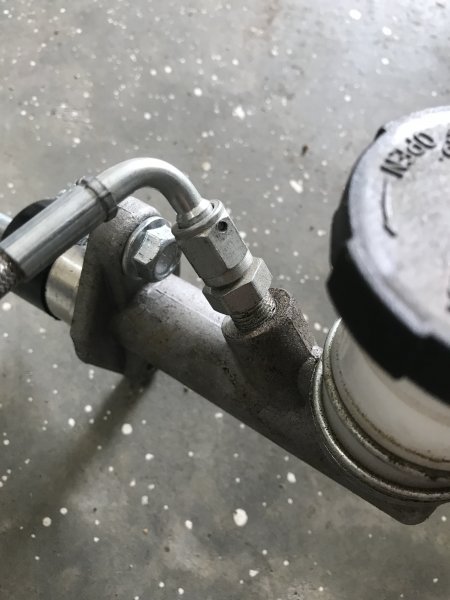
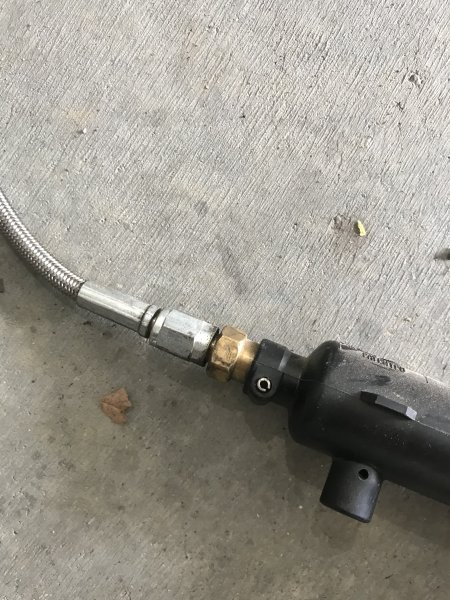
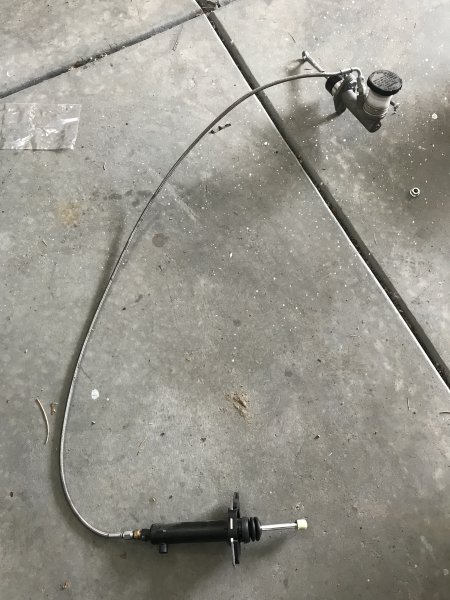
Phase II of the transmission swap When going from an internal slave to an external slave, there are various ways to go about getting the clutch master cylinder and external slave connected. One method is to buy the complete kit. The issue that I have heard with this is that it requires the drilling of a new upper mounting hole in order for the later clutch master cylinder. I have no personal experience with this so I cannot confirm this. To avoid headache and making unnecessary holes I went the second option. AdvancedAdapters sells hydraulic fittings that allows youth retain the year specific clutch master cylinder while mating it up to the slave cylinder at the bell housing. You can order the complete setup (Jeep Slave Cylinder Assembly For NV3550/AX15 Bellhousing, P/N 716340) or you can purchase the parts individually. Why I don't know but, I had a brand new slave cylinder laying around so I purchased the individual parts. To connect the stainless steel hose (716130-60, 60" length or 716130H, 42" length) you will need the early master cylinder fitting that is a 7/16 inverted flare style (P/N 716130F). This fitting will thread right into the clutch master cylinder. Then to connect the stainless steel hose to the slave cylinder you will need the TJ Master Cylinder Fitting and Slave Cylinder Fitting (P/N 716130 TJ) and O-ring (P/N 716130OR). Once its all connected you will need to prime the hydraulic system. The slave cylinder does not have a bleeder valve. In order to prime the hydraulic system you'll need to let the push fully extend (don't cut or break the retaining straps that come with the slave cylinder). While holding the slave cylinder at a 45 degree angle, pour the fluid into the slave until its full. At this point insert the fitting, o-ring, and hose. And place in the retaining pin. Once secured with the retaining pin hold the slave in a vertical position with the rod pointing down to the floor and slowly push the rod inward about 1". After about 10-15 strokes there should not be any air bubbles in the master cylinder reservoir. Bled, connected, and ready to install. Mounted up and waiting for the transmission to be put in.
-
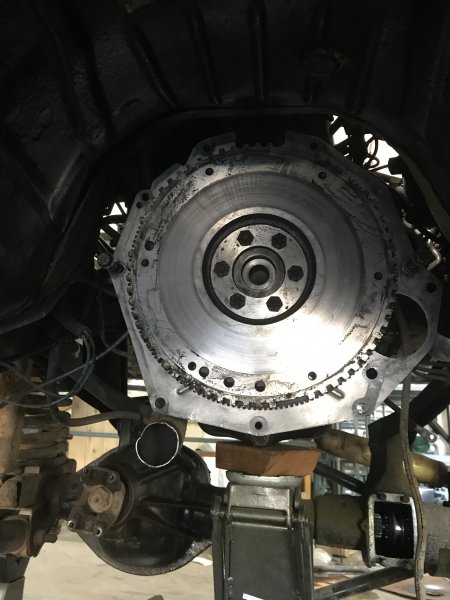
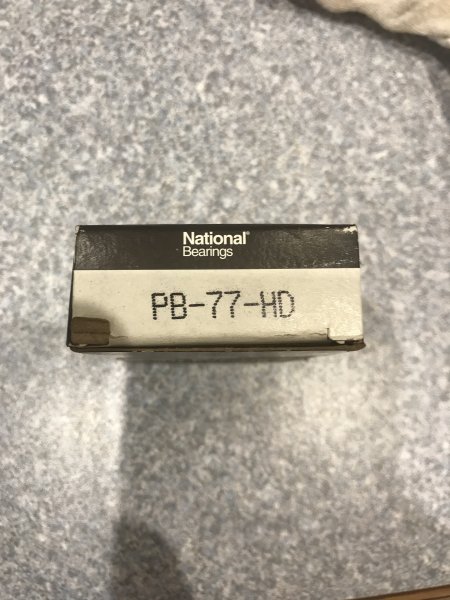
This evening I started on my transmission swap. In this instance I am going from an internal AX-15 to an external AX-15. For those of you interested the swap will essentially be identical if you're going from the BA10/5. In my case I am using an external AX-15 from a 98' XJ. It came complete, meaning I had the external slave bell housing, the clutch fork and bearing. If you don't already have these parts you will need to source them. Due to the differences between the Renix era and newer OBDI/OBDII computer systems, when installing the clutch system the Renix era fly wheel and CPS sensor must be used with the newer transmission. When Chrysler changed from the internal slave setup to the external slave, the transmission input shaft diameter was changed meaning if you are using an external slave AX-15 in an older 4.0L a new pilot bearing may be in order. The BA10/5 and internal slave AX-15 have a pilot bearing with an Inside Diameter (ID) of 0.5934 inches, Outside Diameter (OD) of 1.055 inches, and depth of 0.719 inches (OE part number 53009181). The external slave AX-15 has a pilot bearing with an ID of 0.7518 inches, OD of 1.8161 inches, and depth of 0.719 inches (OE part number 33004041). The standard pilot bearing that comes usually will not fit into the crankcase as it will have to large an OD. Side by side of the internal vs external pilot bearing (internal on the left, external on the right). A 72 - 73’ CJ, 350 V8 pilot bearing is recommended when swapping in an external AX-15 in an older 4.0L. It has an ID of 0.751 inches, OD of 1.056 inches, and depth of 0.88 inches (National part number PB77HD or Dorman part number 14674). For my application I went with the National bearing. The bronze bearings are impregnated with oil, so when installing do not use grease as it will contaminate the bearing. I've read to make for an easier install the night before place the bearing in some fresh motor oil and store it in the freezer. Now I may be incorrect, but I figured if its already impregnated with oil why would I need to soak it again. And in the winter its just as likely to freeze so it should not affect the bearing in any way to freeze it without additional oil. So 24 hours later I began the install. I used a make shift install tool...an old shop broom handle cut down to size. I slowly tapped it into place, taking care to make sure it was square while inserting it. (Sidenote, when doing this swap, BA10/5 to external AX-15 on my other Comanche the 73’ CJ pilot had too large an OD to fit into the crankcase, in that case I found that the external AX-15 pilot bearing fit into the space, so I ran that one.) With the pilot bearing in place I moved onto installing the Luk Heavy Duty Clutch Kit. At this point as long as the clutch kit is designed for the AX-15 it is compatible. The kit comes with an alignment tool to use when installing the friction disc to the flywheel. Fly wheel, pilot bearing, and clutch kit in.

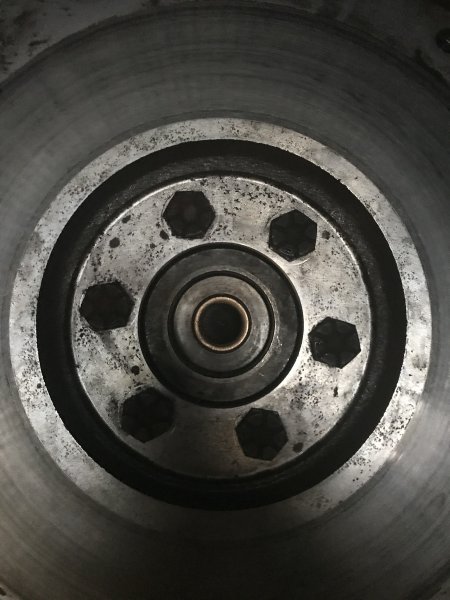
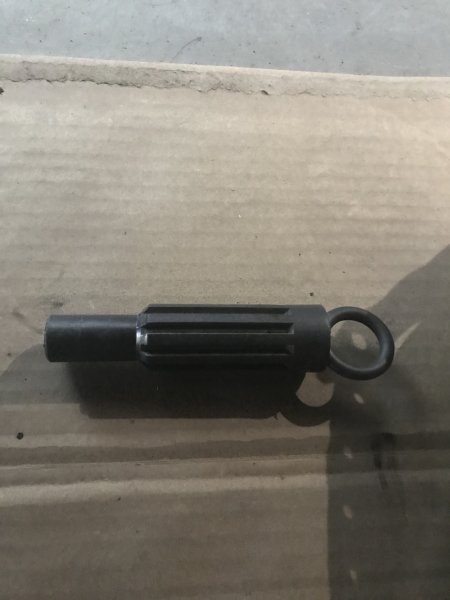
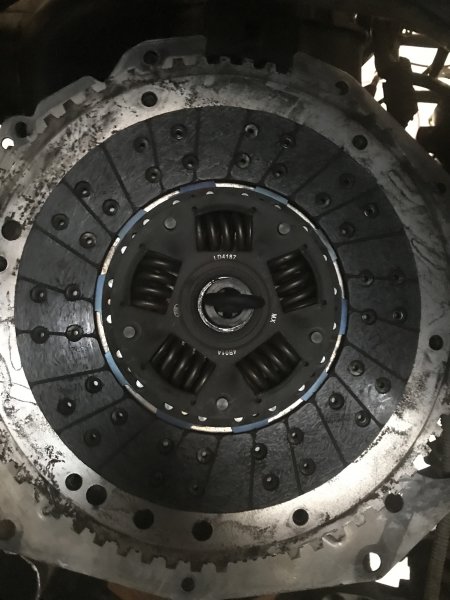


-
I sent my fuel sending unit into tristarradiator: http://tristarrradiator.com based out of Seneca Falls, New York. They were great to work with, fair priced, and fast turnaround. I maybe going to them here in the near future to have a second fuel sending unit repaired.
-
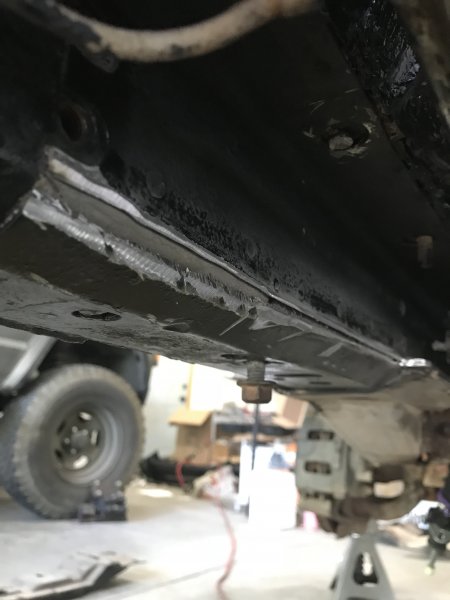
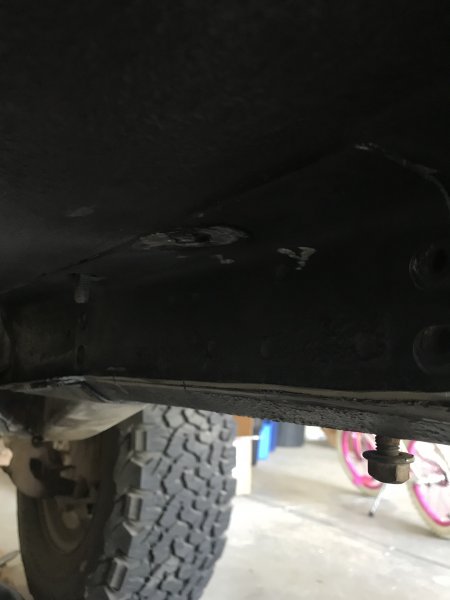
While waiting for the bumper to dry I started the prep work for the installation IronRockOffroad Rock-Link Long Arms that I purchased a while back. The instructions require that the area where the arm brackets mount all structures that stick out further than the frame rail need to be removed. As of now I have removed the extra brace brackets are used for the cross member, and trimmed the lip that sticks in towards the transmission. A second test fit showed that the rear stud for the extra brace needed to be removed for the arm bracket to sit flush on the frame rail. Once I had both sides prepped, I reapplied Chassis Saver to the areas of the undercarriage where it was ground off when removing the structures that would interfere with mounting the long arm brackets.
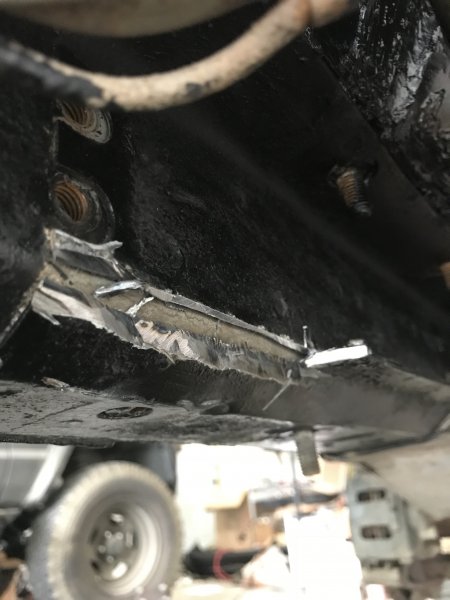

-
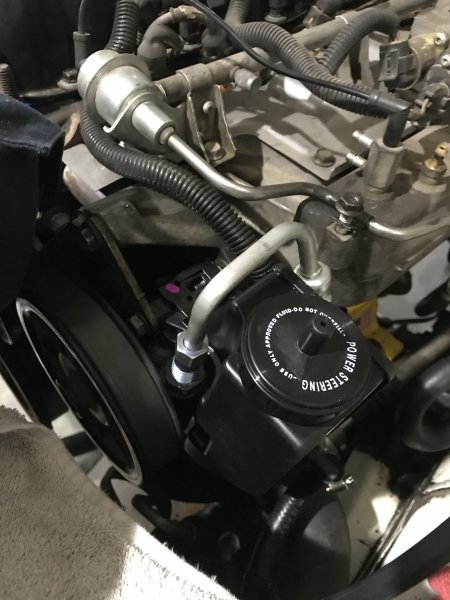
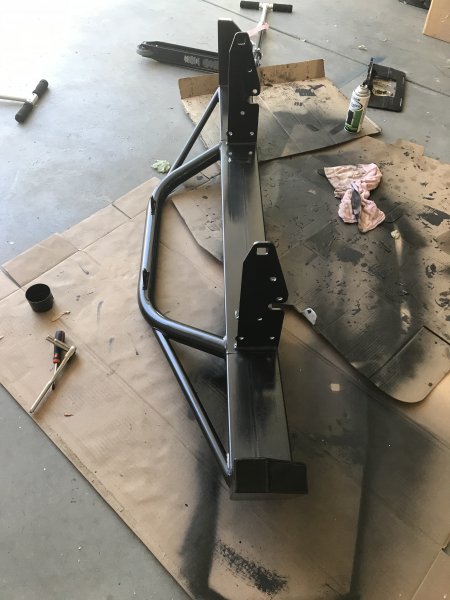
Earlier on in the process I swapped steering boxes. While trying to remove the return line on power steering pump I snapped the plastic nipple off and all the fluid ran out onto the garage floor. I always have the same feeling when it comes to buying new parts. It's a mixture of dread and joy. Dread at the fact of I have to spend money that I don't really want to spend, but joy that I get to/have a reason to buy a new part. Which usually means upgrade time. Alas, no upgrade was to be had this time. I've always been intrigued by the PSC steering reservoir, but I couldn't justify the $400 dollars for the system.Maybe one day, for now went with a remanufactured power steering pump. The swap went quick. I spent more time removing old grease and grime from the previous leaking pump. Once the pump was replaced, attention was moved to aesthetics by refreshing the front bumper that came on the Jeep. I'm not 100% sure, but my best guess is that it is a Nates4x4 based off of design. It meets my current needs. Future plans......how far in the future is to be seen, are to get a winch bumper. Refreshing of the bumper consisted of a quick scuffing with a flapper disc, followed by a coat of Chassis Saver on the areas that were showing heavy rust and pitting. That was followed by two coats of Rust-O-leum Appliance Epoxy. I've become a big fan of the stuff. I like the durability it provides compared to regular spray paint as well as the finish. I've taken to using it on bumpers and sliders. The major down side is you get only two color options, white or black.
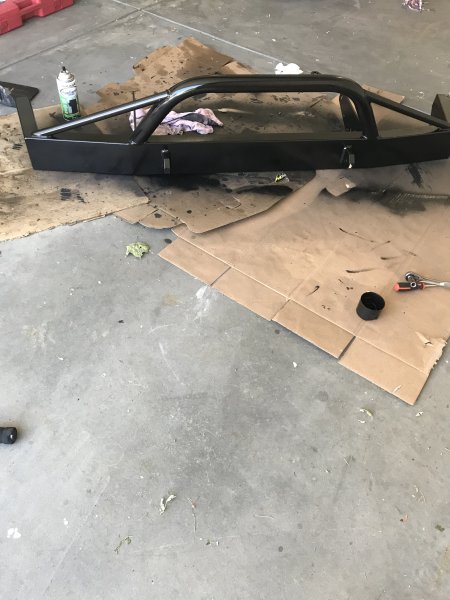
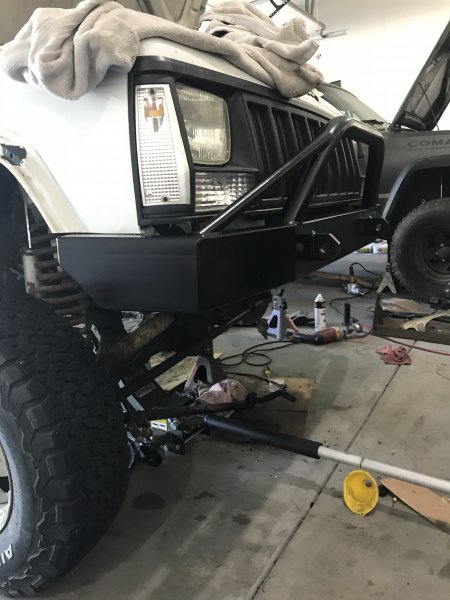
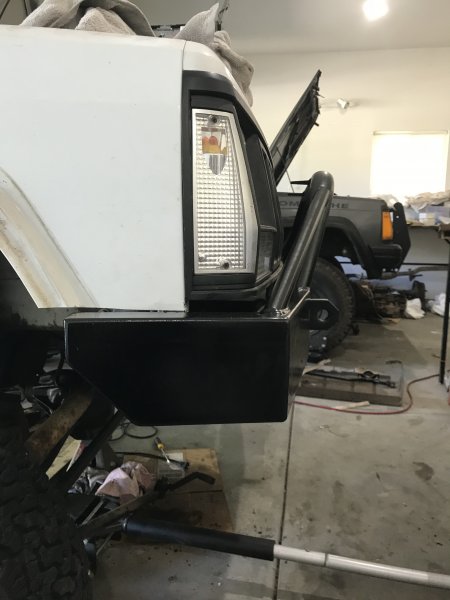
-
Hooligan OffRoad Hinge Support Install
agamble replied to agamble's topic in MJ Tech: DIY Projects and Write-Ups
I was hesitant at first. Now its a no brainer that if the hinges need repaired this is the way to go. -
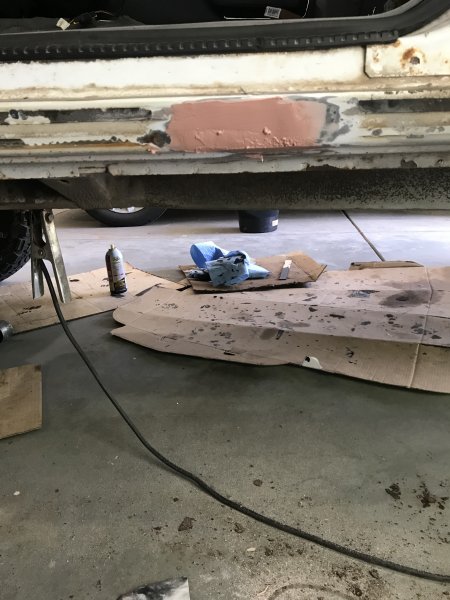
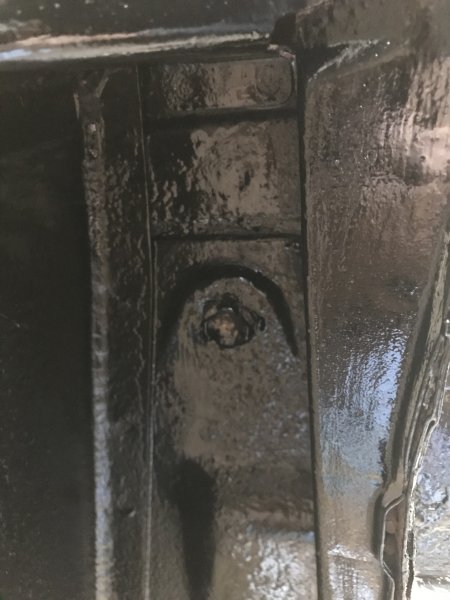
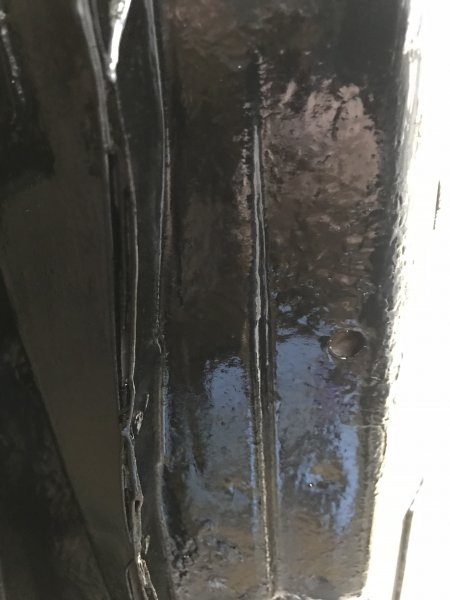
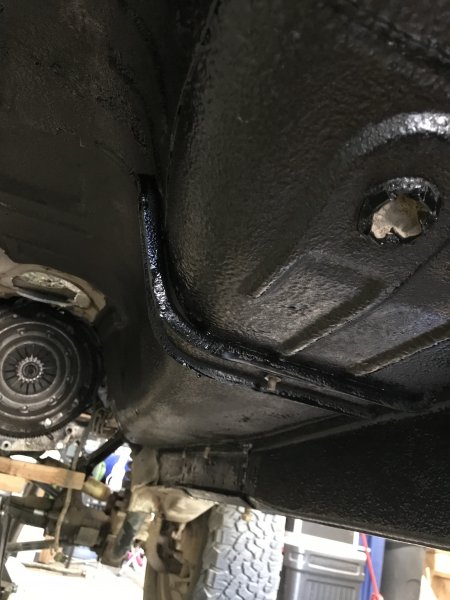
Spent a good amount of time on the underside of the Jeep cleaning and covering the undercarriage, paying particle attention to the cab corners and rear floor pans. to compliment all the rust repair (floor pans and portion of the transmission tunnel) and prevention on the interior. In hindsight I should have done some sort of wash on the under carriage before dismantling. But then again how well I would have been able to clean the undercarriage with all the drivetrain in place is a whole different question. I used a wire cup to brush off any loose dirt, flaking rust that was present, remaining factory sound deadening spray and whatever else was under there. The obligatory before shots: When working in the interior there wasn't any visible rust on the rear floor pans or the cab corners. During prep of the exterior I performed a thickness check and the rust appears to be superficial. My method for testing was very high tech, I took a screw driver and stabbed at various places to see if it would punch through... I know, super technical. I was not going easy on the punching and all impact points had a strong metal clang. I used the same product, Chassis Saver, that I used for the interior. Where there was exposed rust and/or sound deadening spray from the factory it adhered nice and thick on the first coating. As the product instructions state, it works great if it has something to bite onto. The roughed up painted areas took two coats to get good coverage. I also performed the screw driver test on the rockers. The passenger side was not an issue. When I got to the drivers side rocker the screw driver punched through a couple places. This side had a couple areas that still seemed okay strength wise but definitely have rust issues. I might see about getting some rust inhibitor to spray inside the rocker. But even that might not be enough. If I was still living where there are harsh winters and lots of road salt I would say that the rocker might make it couple more years before it gives out. But being in the high desert of eastern Washington, dry, very little snow fall, and I don't use this as a daily driver. It should last multiple years before I have any serious issues. In a couple months or year, I may just end up cutting out the rocker and replacing it with a new one. For now I cut out what material was bad and patched it using left over material from the floor pans. A little bondo smoothed the patched area. First coat: A Second coat to make it level after sanding down the first.
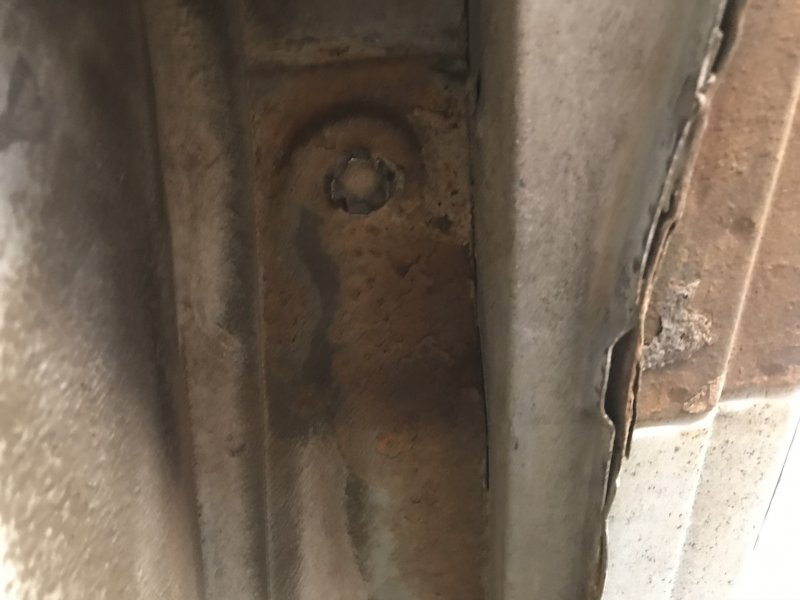
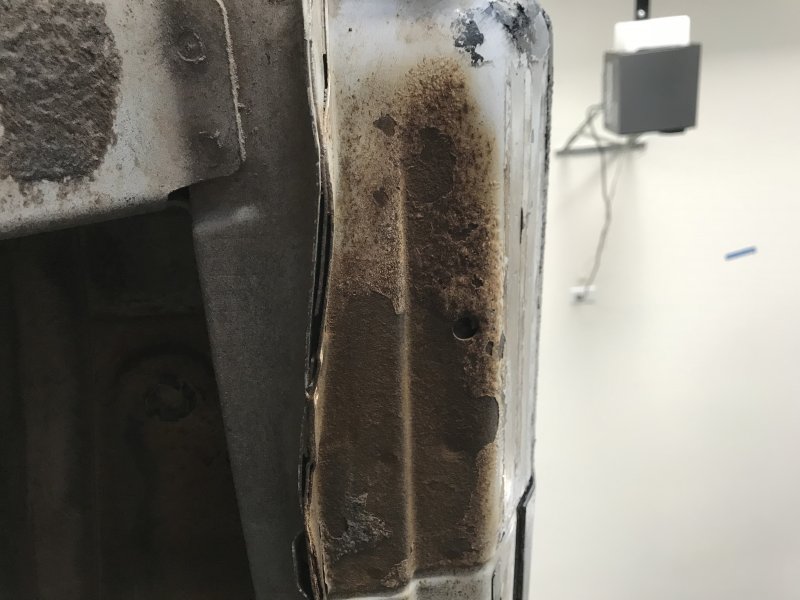
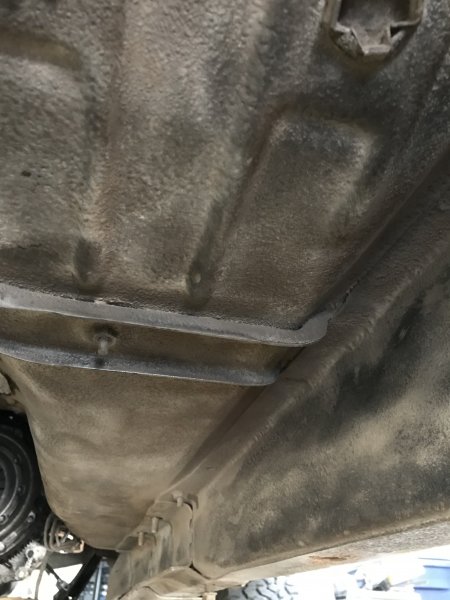
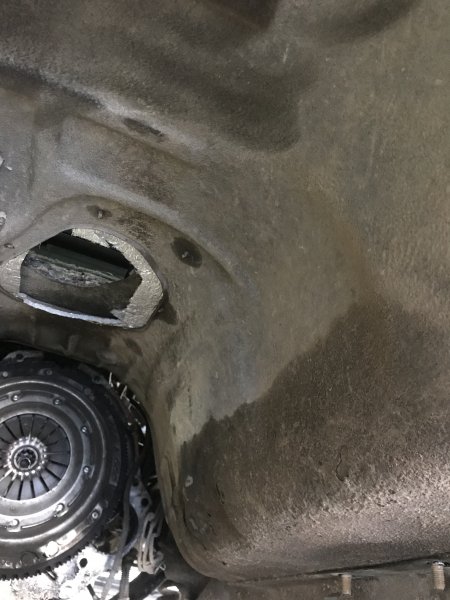
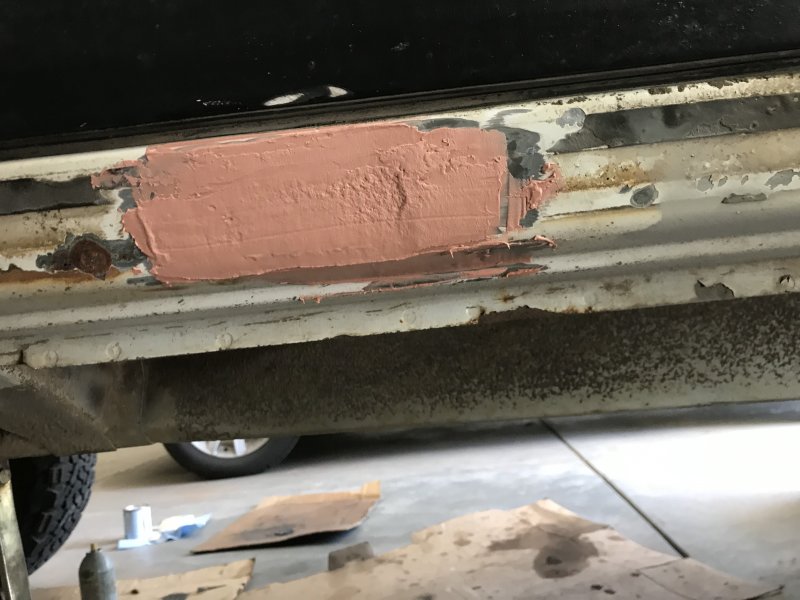
-
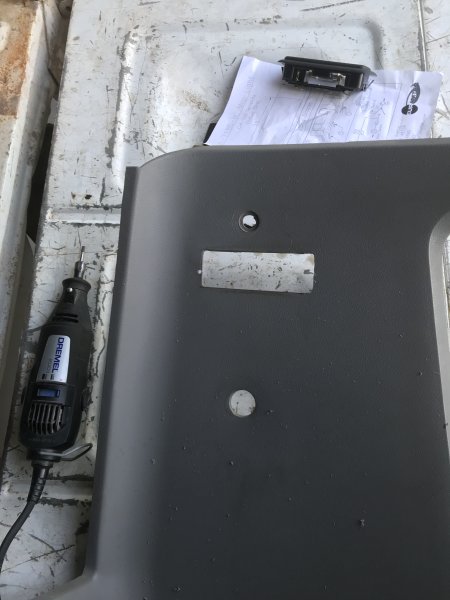
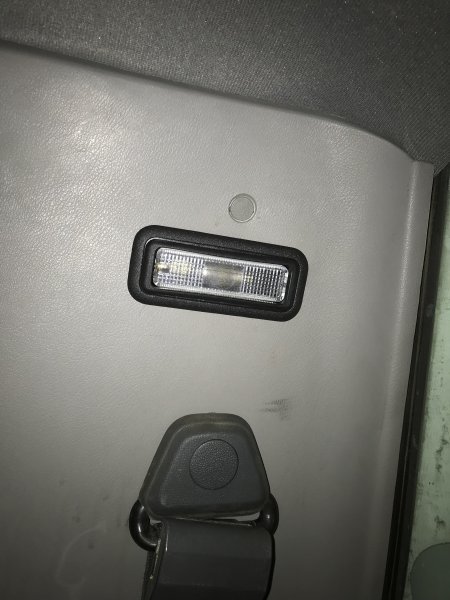
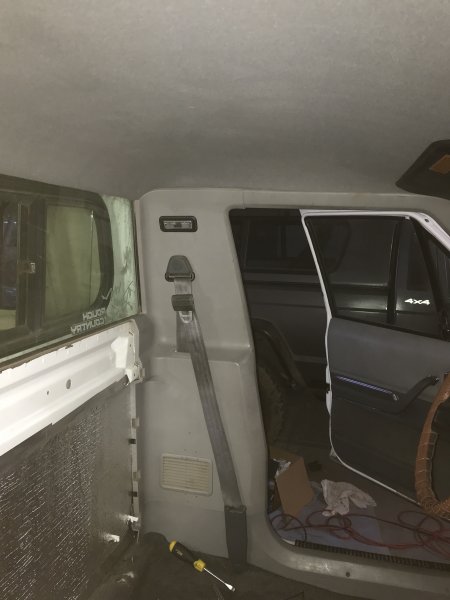
The OEM B-pillar lights no longer stayed secure in their mounting locations. As a cheap fix grabber screws were used to keep them pinched in place. I neglected to get a picture of this, but you can see the hole it left behind on the left of the light cut out. As a replacement I used some aftermarket Euramatec lights that have more of a stock look than other alternatives that I have seen used in the past. The installation is very easy. The existing hole needs to be enlarged width wise by about a quarter of an inch. A dremel with a rotary bit but made quick and easy work. Wiring was also straight forward. Clip the existing connector off, wire on three female connects, plug on according to the wiring diagram that comes with the lights.
-
Thank you! Time will tell how well the glue holds up.
-
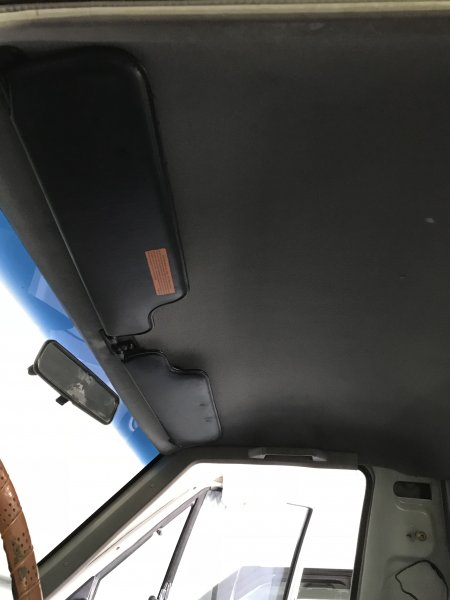
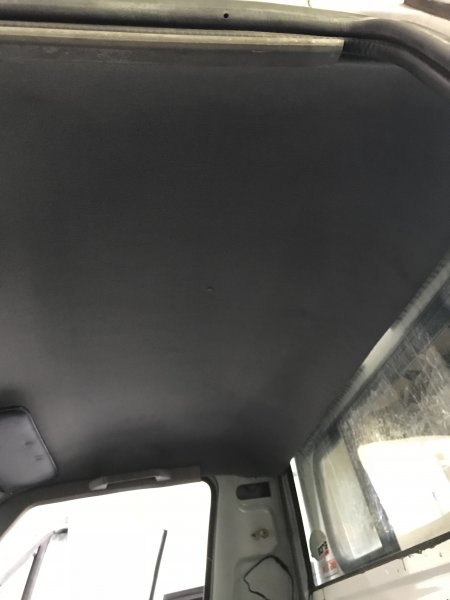
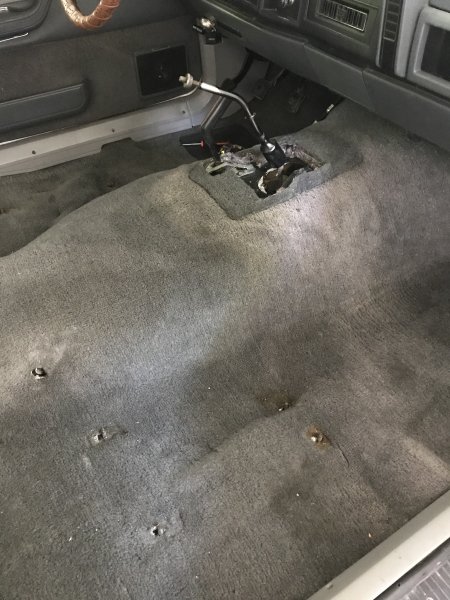
Finished with the headliner this afternoon, turned out better than I had hoped. With the head liner back in most of the interior was installed.
-
Haha, he must have good taste. Thanks for the compliment.
-
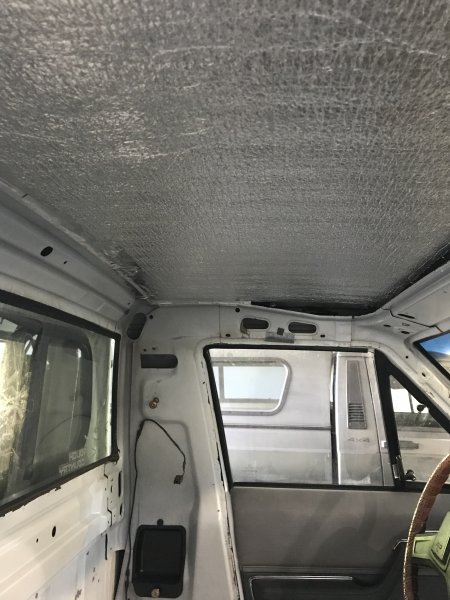
A couple days later, after letting the rust inhibitor dry and fully cure, some sound and heat barrier was installed.