
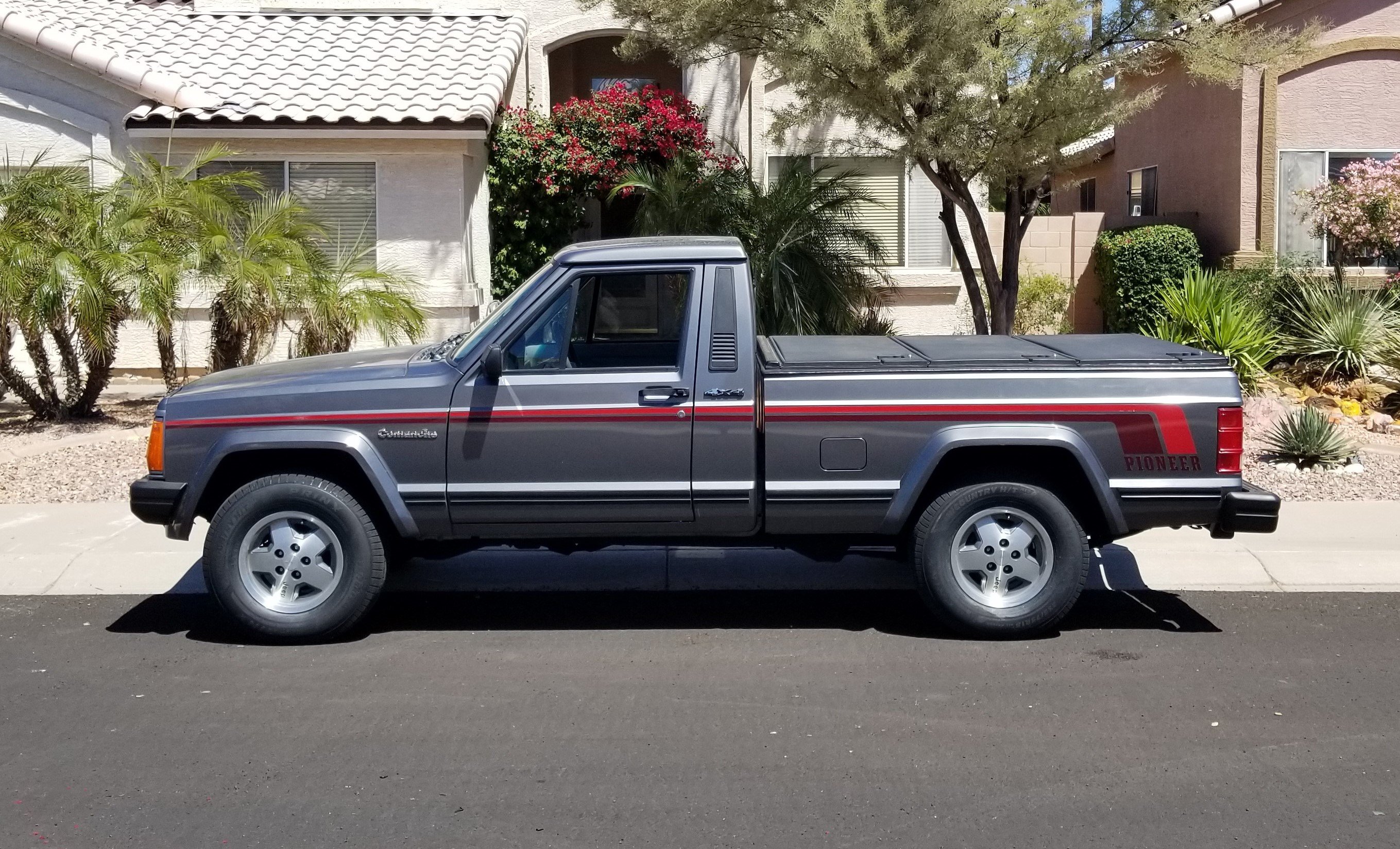

brucecooner
-
Posts
240 -
Joined
-
Last visited
Content Type
Profiles
Forums
Gallery
Everything posted by brucecooner
-
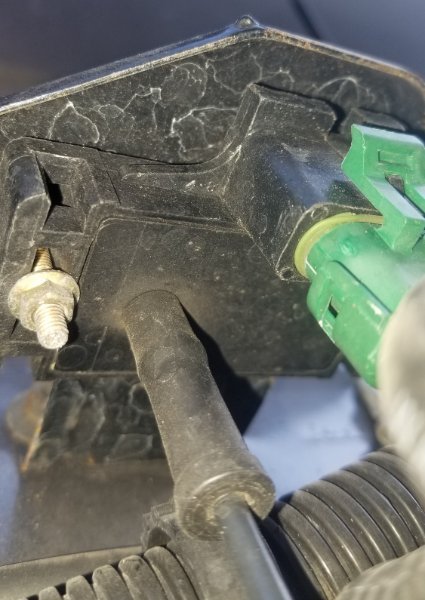
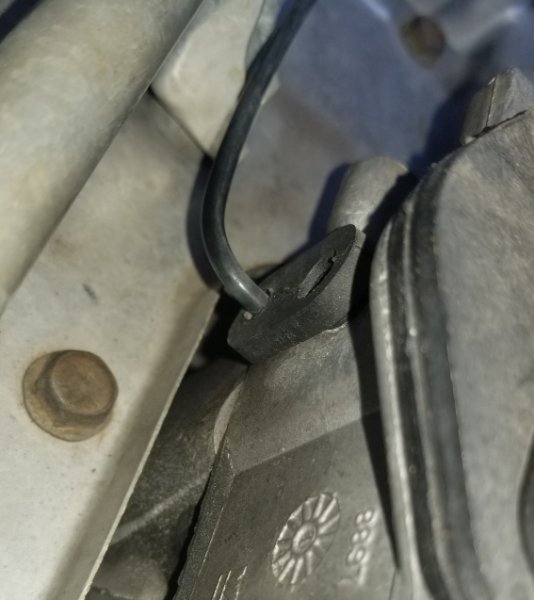
I managed to get the breather box off this evening (a most delicate operation given all the hoses and lines), but unfortunately even with that off I lacked sufficiently limber limbs to get to all of the intake manifold bolts that were hidden behind the exhaust manifold. At this point, I'm not entirely sure how people get it off without deconstructing the entire front of the vehicle. I had more success checking that throttle body to MAP line. I wiggled both ends lightly, and they seemed pretty secure. Would it be of any use to install a vacuum pressure gauge? Or would that just confirm what the surging idle is telling me? I see videos to fix "rough" idle on youtube, but I wouldn't describe this as a rough idle. It's just uneven.
-
Hard to start when warm ('88) - fixed
brucecooner replied to brucecooner's topic in MJ Tech: Modification and Repairs
I took several good whiffs of the dipstick while it was sitting cold this afternoon. I detected a faint sweetness to it. Pulled the filler cap off the valve cover and get the same there. I can't say for sure 100% it's gas but it seems close. I don't want to get a false positive on it just hoping I've found the problem though. No idea if these are the original injectors.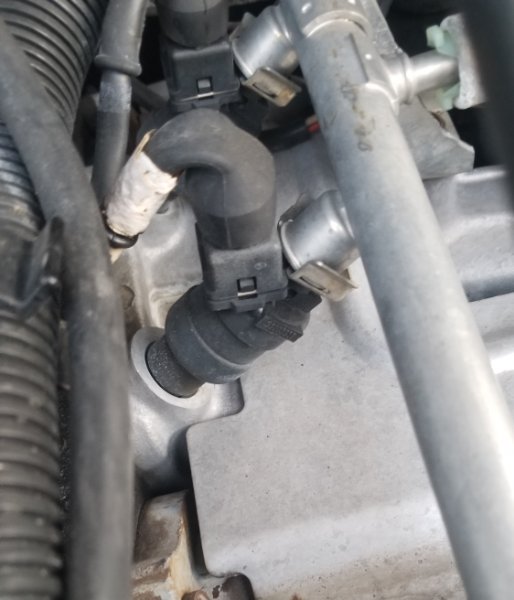
-
If I park my '88 for a while and come back to it while it's still warm to start it back up, it will turn over, but would really prefer not to start. Some application of the gas pedal, but not too much, will get it to fire up and after that it seems pretty okay. I'm wondering if the fuel system is getting confused while it's still warm. Cold starts don't have any issues. [EDIT -> THE ANSWER] If you've arrived at this thread after searching for why your 4.0 doesn't like to start when it's warm, I will save you some reading and tell you here that my particular problem was the fuel pressure regulator leaking through the vacuum line into the intake manifold. Also, I had the idea of turning the key to pressurize the rail, but leaving the engine cold, then trying to start it later, as a way to see if it's truly heat soak or something else. Good luck!
-
I actually had a few minutes to get out the wrenches the other day. I checked the bolts along the top of the intake manifold, I didn't have time to pull off all that breather box and related business around it. A couple of them did snug up, but only now do I see that I probably should have been testing them in sequence, dang it. I'll have to get all of that...stuff off the intake manifold and see if I can access the bottom bolts, and do all that in the sequence. At any rate, even after snugging those top ones, it's still got the surging idle. Are you thinking this would be a vacuum leak somewhere?
-
Yeah I think the next most logical step is CLEAN IT, so I know what's coming from where exactly, and not just guessing from bad photos. After watching a couple of videos my understanding is that the TPS is part of the throttle body assembly, and the throttle business is all over on the driver's side. Unfortunately I live on a nice street and can't just dump grease into the gutter, so I have to go to a car wash. For sure high pressure sprayers on the old engine with all of its delicate electrical connections makes me nervous. I'm thinking "stand way back" and don't get the nozzle up in there. But my plan is to just NOT spray any water on the driver's side of the engine, at all. And while I do like to know the various sources of oil on the old guy, my impression is that these things at 200K are just going to seep some oil, and it's not something I have to freak out about, right now. There are other more pressing things I should probably be focusing on, notably that irregular idle.
-
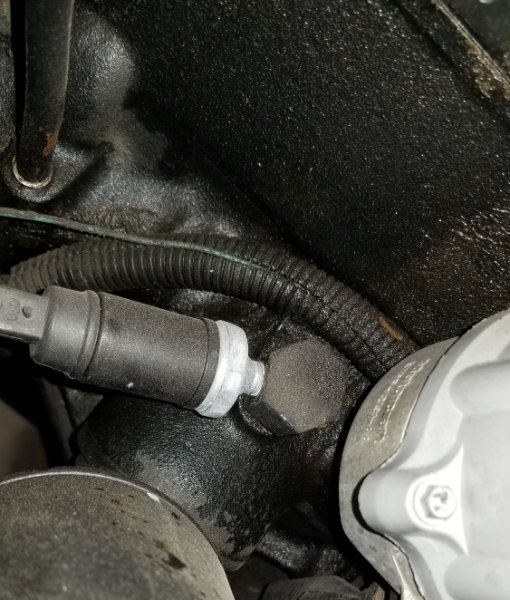
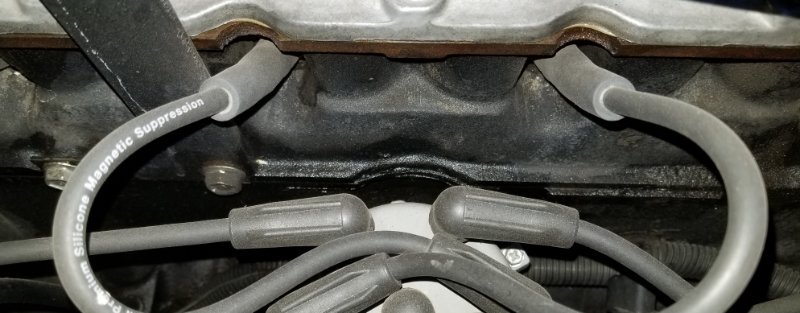
I was doing some more sniffing around the sending unit. I can't detect that it's losing anything where the unit itself screws in. It seems really dry around those bright colored threads. There IS a pretty good coating on the adapter below, but the way it is spread out would seem to indicate it's coming from the part that sticks up which the sending unit screws into, or even farther up. The picture doesn't show it well but the side of the block is all wet there, and you can see the buildup on that length of wire loom. Going up from there.... It looks like a pretty good film all across the block head seam, front to back, so maybe got a seeping head gasket. I'm not saying the other accoutrements aren't leaking, but this looks like another culprit. If this is the case, should I be worried about imminent blowout, or oil and coolant mixing? Or is this another of the famously longstanding standard Jeep oil seeps? I did gingerly put a wrench to the valve cover bolts. I only went with low medium force on the wrench, and only a couple budged , and only slightly at that.
-
April 2022-The Grabber Blue Eliminator
brucecooner replied to 89 MJ's topic in Comanche of the Month (MJOTM)
BOLD choice on the color. It works, and you won't see any others like it. The keyed interior makes for a really showable truck too. The stance looks great. A Comanche wears a lift better than most trucks out there. They don't look lifted, they just look like they were meant to be that way. -
Thanks everyone! I intended to put a wrench on the valve cover bolts and test them for tightness this evening, but family and other required chores got in the way. I haven't driven it in a week, and when I looked under it this afternoon there weren't any fresh drips in the pan I put beneath it. But I think that just means I needed to drive to push some more oil through the leak. I think the sending unit is working fine. The gauge shows 20-ish at idle and around 40 cruising warm, which my research indicates is within normal ranges. If that's the case, would it be okay to pull the unit, clean the threads really well, and re-apply some sort of thread lock to fix the leak? Or is a replacement unit a better bet? I'm not confident I could clean one up well enough to reuse anyway. As far as the valve cover, I found this video on youtube with a few pointers, and it looks like these guys are using the Fel Pro Blue others have mentioned. (I do wish the video had gone into more detail about removing the old gasket from the head surface.) Anyway I've always avoided any mechanical work that called for a pulling gasket, but doing that has been on my bucket list for a long time. If the blue jobs make it as straightforward as this video indicates, I think I can tackle that.
-
I just haven't had a lot of time lately to roll around under my Jeep (which I understand is one of the primary reasons people buy an old Jeep). I did take a closer look at the parts known to leak, and while this guy has all the popular seeps, I wasn't seeing anything like a stream that would lead to the steady drip drip dripping in my driveway. Homing in on the oil sender... (I think that's what this is) Yep, definitely got a leak there. Moving on to the oil adapter... (I think that's what this is) It's hard to tell from the photo in which everything is black, but there is a layer of grime to the left of the what I think is the adapter seam just above the oil pan. Don't see any gushers here though. What strikes me is that it appears the bolt holding the adapter in place is a hex head and NOT a T60 torx. Were some engines given a normal bolt on the adapter instead of a T60? The paint on the bolt corners looks touched, could somebody have gone after the adapter at some point and replaced the original piece? Or am I completely misreading what I'm looking at? (don't put it past me) Also note the bright blue squinches of a recently changed oil pan gasket. The mechanic who sold it to me said he had recently replaced the rear main seal and I believe him. He clearly specialized in XJ's, but whether he changed it right might be up for debate. Anyway, it's hard for me to say whether this particular layer of grime is from the adapter or the sending unit above it. I think I'd change the sending unit first, clean everything up, and see what happens in this neighborhood. Take a top down approach I guess. And on to the back of the head... Driver's side, near the back. There's something a bit moist there, not that dark looking but the lighting is not great here. Raking my hand over the backside... The flash didn't capture it, but that is a bit shiny and fresh, so yep some is sloshing out back there. However, none of these culprits seem to be outputting enough lubricant to form a cascade of drips. I crawled back underneath and looked a bit more closely at the bell housing area. Looks dry up around the oil pan on the starter side at least. Everything ahead of the bell housing looks dry. That...plate (the name of which escapes me) that covers the front part of the transmission is dry as a bone, and I couldn't find any streaks anywhere coming from higher up. Everything running down the engine is dark and grimy, while the drip coming off the bell housing is as clean as the dipstick oil. So I still think it does have a rear main leak, but I've learned some important stuff. I've learned it actually has several leaks. I don't see anything that's going to keep me up at night though. Now that I've seen what a rear main seal actually looks like (thanks for the links) I don't think there's any imminent danger of anything turning loose there. I'm okay dripping on parking spaces while keeping an eye on the dipstick, and working on the higher up leaks first. I do have another question though... The leaks I found have formed a rich thick coating of grime on top of the starter, which probably ain't good long term. And I'd just like to get it clean on the sides of the motor down low so I can get a better look at what's really going on. So, if I took it to the car wash, shot it with some simple green and spritzed at it in that area, how many electrical problems would I generate? As a consolation prize for anyone who's stuck with me this far, I took a picture with the hood up. This is what I saw when I first raised the hood. Yeah I know this is probably just the result of a power wash and some new hoses before I showed up, but I thought it was rather fresh looking under the hood to be 30 plus years old. Note all the stickers, and the still visible chalk date on the right of the radiator support "2-17-88". Part of me feels bad about having to park this in my driveway in the Arizona sun. But somebody's got to enjoy this thing and that might as well be me. Occasionally I get in a more rational mindset though. I told my wife the other day part of me thinks I should have bought something I could get straight out on the trails, a lightly used JK, or one of the literally millions of Tacomas roaming the roads. Then I said, "Man, if I had just spent three or four times as much money I could have had a really nice rig." And that made me laugh. One payment and it's mine, can't complain about that. And I get to drive something that I love to look at.
-Copy.jpg.3c4ebf7a5de11b8e94fa59d7cba9748a.jpg)
-Copy.jpg.37e0556d39aba3784b24a0b3eceecce1.jpg)
-Copy.jpg.9b3776c1ea2c92285f555d10b2f9c4c3.jpg)
-Copy.jpg.d3be2cbb15cf36ac604d9ebe86b4bb10.jpg)
-Copy.jpg.b5c17dbcdade8a88135c26032ae5e92b.jpg)
-Copy.jpg.1efd5dd6906d66afeb304fafaa0ec282.jpg)
.jpg.ecef28c1a28364af61519744147dc834.jpg)
-
Will do. Thanks again cruiser.
-
I've looked up top, but not closely enough to rule it out. I read the rear main project page linked from your signature. ( http://gojeep.willyshotrod.com/HowtoRearMain.htm ) That's beyond anything I've done to an engine, and I have read it's easy to do it wrong, but that's not as involved as I would have thought. Thanks for the info! My non-mechanic brain only contains a map of the major and generally expensive parts of the engine, so it's likely for me to jump to the most catastrophic conclusion. My eyesight's not what it used to be but I have a pair of glasses and a flashlight. I'll have to give the forward parts a closer look. Thanks cruiser!
-
Looks nice in solid black, and those wheels are getting the job done.
-
I drove the MJ a bit this evening, and noticed on the way home at a stoplight that sitting at idle, the RPM's go up and down and up and down, on about a 2 second cycle. It's not an extreme fluctuation, maybe 100-300 rpm up before falling. This seems to be a warm engine behavior, I have not noticed this when first getting in and going, but can't 100% verify it's not a cold behavior too. It's a recently acquired '88 4.0, all stock far as I know. I took a short video watching the tach. 20220430_195806.mp4
-
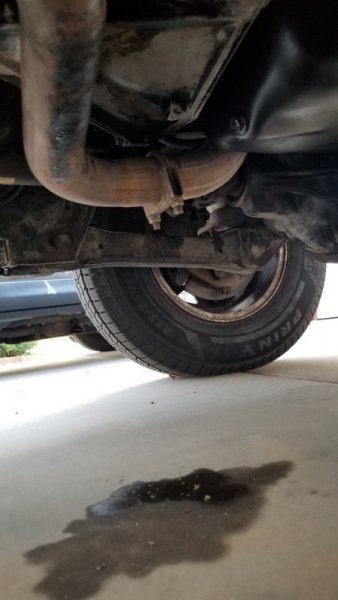
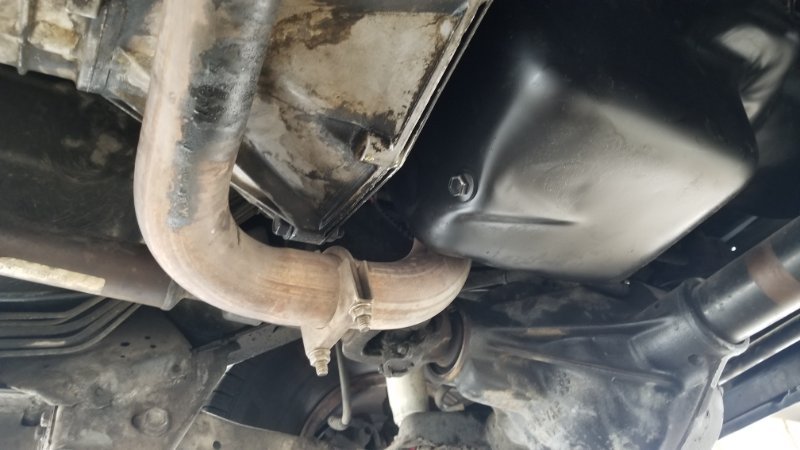
I understand that a rear main leak is a common issue with 4.0's around 200K. Mine is nearing the 200K mark and she's got a pretty good drip going under there. I also understand a leak from the oil filter can sometimes mimic these, but based on its location, coming from the front of the bell housing, I don't think this would be the filter. So be honest with me doc, how long does it got? Is this something that drips for a long while? Or is it a sign of imminent danger that had better be addressed sooner rather than later? I don't have the know how nor tools (nor a shop) to tackle this. How hard is it to find a shop that can fix this issue? I did talk to a local shop that specializes in classic and older wheels. The fella there said is was an engine out job, but I just said it was a 4.0, I don't think he knew what vehicle it's in. Is that the case? Does a rear main repair require extraction of the entire drivetrain?
-
Bruce has to enroll at MJ academy
brucecooner replied to brucecooner's topic in Member Projects: Your Comanches
Thanks everyone for the warm welcomes. It's convenient to have a thread to record my "journey". So I've started putting together a list of stuff to investigate. I think every owner probably has a list like this. engine/trans: * rear main leak ? https://comancheclub.com/topic/68978-the-rear-main-leak/ SOLVED: it was the clutch leaking, not the RMS. Hooray I guess? * difficult start when warm, requires delicate use of gas pedal to start https://comancheclub.com/topic/69080-hard-to-start-when-warm-88/* surging idle, if I race it lightly then let off during idle it will stutter, act like it's going to stall https://comancheclub.com/topic/68979-surging-idle/ * seems to be a clunk from down below when I let out the clutch during upshift SOLVED: Yeah, that was the clutch. Not heard after new one. * I need to learn how to check transmission fluid suspension: * I'd like to know how to look it over, what to inspect and what to look for * a clunk coming from down low somewhere up front when starting from a stop while steering interior: * lights don't come on when doors are open (FIXED! Er, SOLVED! Turns out I don't know how to work a light switch.) https://comancheclub.com/topic/68912-bruce-has-to-enroll-at-mj-academy/?do=findComment&comment=722982 * passenger side window only cranks down halfway electrical: * do those things cruiser says to do on his site brakes: *squealing a little, need a general inspection (Took a look, the front pads are actually nice and fat, still need to look at the drum shoes though) * very poor stopping power - pretty sure the booster is bad, need to check it out -
Looks great with the lift and lights. Something about the MJ's lines just make them look really good with added height.
-
4.0's favorite oil? (and change interval)
brucecooner replied to brucecooner's topic in MJ Tech: Modification and Repairs
and thanks everybody for your input. It looks like my first choice is sold out everywhere, oy. Time to go snoop through the big oil chart.... -
4.0's favorite oil? (and change interval)
brucecooner replied to brucecooner's topic in MJ Tech: Modification and Repairs
*clambers out of muddy pit wearing snorkel, collapses at edge of pit* Wow, a LOT of digital ink has been spilled on this topic. Not just regarding the best oil for an old AMC 4.0L, but on motor oil in general, for every engine. Literally. Millions. Of threads. I've never really known anything about oil except what kind tastes best on a salad. But now I own this really old truck so I had to dive in. Even after a lot of hunting and reading I still can't say I know much, BUT I learned a little... -The first number is cold weather performance of an oil. The farther north you live, the lower of a number you'll want. -The second number is the thickness of the oil when hot in an operating engine. Check your owner's manual for this number. -Jeep owners go looking for diesel oil because by classifying their oil as diesel rated first, and passenger car rated second, the oil makers have more leeway on the ingredients they can add and thus make oils more suited for older engines. In all my searching I did find a couple of more helpful than usual sources. Most anyone who's changed the oil in an internal combustion engine who has an internet connection knows that Bob truly IS the oil guy, and as you'd expect there's a pretty good "Oil 101" intro over there: https://bobistheoilguy.com/motor-oil-101/ More than a few folks here have probably read this one, so sorry to link to a near decade old thread, but salad's epic writeup over at CherokeeForum is helpful for unraveling what matters in an oil, and why. https://www.cherokeeforum.com/f2/rotella-worlds-first-ever-combined-hair-oil-foot-ointment-salad-dressing-188168/?ispreloading=1 There is also a very informative chart of oil specs by brand in that thread that's worth the price of admission. My super quick take on some of the ingredients... Zinc and phosphorous (which usually come packaged in a compound abbreviated as ZDDP) are seemingly necessary anti-wear additives in flat tappet engines, and are decent anti-wear additives in general no matter the engine they're in. Unfortunately phosphorous going out the exhaust over time destroys catalytic converters, but at spec-ish concentrations in a decently sealed engine it takes a long time. There are modern anti-wear additives, most commonly molybdenum and boron, that are useful in all engines while being friendlier to cats and are thus more popular in modern cars. (I wasn't able to tell if moly/boron can fully replace the Zn/P combo, I'm guessing not). Calcium cleans the engine, and Magnesium ensures the gunk stays in the oil without just re-depositing somewhere else. Unfortunately calcium breaks down phosphorous. So your cleaning agent is working against your security agent. Anyone who's read any oil thread knows that just about every point made in any given thread is debated there or elsewhere. Some will say that in time, the parts in an old 4.0 are heat worked to the point that anti-wear additives aren't all that necessary, or the ZDDP concentration doesn't need to be nearly as high, etc. Some guys will swear by a single weight oil they've run for 18 years with no issues, etc. All I can say I've really learned is that oil is a balancing act. You might gain something (better engine protection) but have to give up something else (the cat, eventually). Anyway, salad produces a great big useful table detailing the specifics of many popular brands of oil, and summarizes his findings thus: "For the Jeep 4.0L, Shell Rotella T6 is the most ideal oil to run. It provides the best balance of engine wear protection versus fuel economy, and is the best suited to provide the most reliable performance in all situations." Then later he says that due to his research findings, he's going to switch to another brand that offers similar performance at a cheaper price point. Which made me laugh, and I think drives home the point that you just have to get enough information to make yourself comfortable with a choice, grit your teeth, and follow through. For me, after all that reading... The first number.... Either 5 or 10 for the cold performance seems fine. I live in the desert and the coldest morning in the frigid depths of a Phoenix winter won't be anywhere near zero on the mercury. The second number... The excerpts from the manual I've seen (see cruiser's quote above) say that you can run 30 or 40 weight. But my engine has a couple of qualities that would make me probably lean toward the heavier weight. It has almost 200 thousand miles, and quite possibly enough wear to warrant the thicker oil. (hey, even the venerable 4.0s do age) It seems to have a nice rich leak from the rear main (I need to crawl under and make sure it's not the oil filter, Jeep ownership!) I'm not naive enough to think a higher weight of oil will magically seal it, but maybe it will help? (hope springs eternal, Jeep ownership!) So based on everything I've read I finally see why I feel confident going for the Rotella T6 5W40. For sure though, I will run it for 3k, and have it analyzed to get a peek inside. -
4.0's favorite oil? (and change interval)
brucecooner replied to brucecooner's topic in MJ Tech: Modification and Repairs
No sir, mine didn't come with an owner's manual. I really should download one and save you guys all the questions. It's interesting that the second spec goes to 100F. We can get strings of summer days above 110F here in Phoenix, which makes me wonder if I should aim for 10W-40. (my understanding is that the second number represents high temperature protection, with higher numbers indicating stability at higher temperatures) My hunch is that 10W-30 would work fine for my application, and I'm just over-analyzing everything. If 30 weight oil meant death to cars in Phoenix I'd probably have heard about it by now. -
4.0's favorite oil? (and change interval)
brucecooner replied to brucecooner's topic in MJ Tech: Modification and Repairs
Thanks for all the info everyone! I'm still in the data compilation phase. There's a spreadsheet involved. I'm not too worried about it currently having fresh 5W30 as opposed to 10W30. I guess it's just giving me some low temp protection I don't need here in the desert. The guy who sold it to me was an older guy with a shop who buys and sells a lot of XJ's, and had older iron on the lift when I'd visit (including a super nice J80 Cruiser) I feel like there's a decent chance he knew what he was doing when he changed the oil in mine. That said I do plan to switch for 6 quarts of Rotella T4 pretty soon. Of course there's a lot of threads out there where guys claim after a certain mileage the parts are heat worked or have a permanent coating or something and the zinc is unnecessary and whatever oil is fine. My preference is to go with factory spec though. My plan is a six month schedule, or every 3000 miles whichever comes first. I'm not sure on the filter, yet. I've still gotta look up the number on the Mopar filter. In my Ranger I've been running Mobil 1 oil and filters for decades now, so they're familiar to me. But there might not be much difference with any high quality filter though, particularly on a frequent change schedule, but I'm open to anecdotes. I seem to remember reading that some flavors of AMC used an oil filter adapter? Is that something I have to consider? Also, should I worry about draining one weight for another, or pouring in a different oil right after draining whatever was in it before? I know the SAE and manufacturers are particular about ensuring oils can mix without issues, but it's something I've only done a very few times. -
Actually I do have one. I'll DM you so we can make sure the sale is yours. Cool! I was wondering if anybody in the community here had one. Nice fleet too. I have considered making an FJ Cruiser. I've made almost all the other Cruisers, after all. I'm busy with custom requests right now, but if I make an FJ I'll let you know.
-
My recently bought MJ came with a pan full of fresh clear oil (all the fluids I've seen look fresh), but I forgot to ask the seller what he had put in it. They did say they put 5W30 in it, but that's all I know. I'd like to change it soon anyway, and put it on a schedule suited to a 4.0 close to 200K. What brand/formula do guys here roll with that's made their motors happy? Is a "high mileage" formula called for? If I switch to a full synthetic will it suddenly clean up a bunch of gunk and start seeping? What interval seems to suit them? I've heard conflicting things about time versus mileage. When I got the reman motor in my Ranger the tech said change it every 5K OR 5 months, whichever came first. That struck me as odd but maybe the extreme Arizona summers will break down oil even sitting in the pan? I work from home, don't commute, and have been putting just 2 to 4 thousand a year on my previous truck, but going by miles and changing the oil yearly would just feel weird, so I have been keeping the five month schedule on it.
-
Not being able to obtain all the Jeeps and other offroaders I've wanted over the years, I turned to making detailed fridge magnet reproductions on my laser cutter. Of course there's an MJ. And a few flavors of XJ... Front view too. Done a few ZJ's... And some older iron... Bowtie models are repped. Can't forget Blue Oval stuff... Even done some Cruisers too. I've done a few cars, but it's mostly offroaders and trucks. I've also done lots of custom requests, reproductions of rides as gifts or as mementos of cars once owned and fondly remembered. This rear wheel dragster was a difficult one to repro due to the livery, but the customer (buying as a gift for her dad who owned the real one) loved it. Another customer wanted their Tacoma overlander miniaturized, I made a model with the roof tent up. A former Jeepster owner wanted a frontend of the ride they once drove. I made this a larger model so I could add lots of details. I love making these, and I hope you enjoyed a glimpse of my hobby. If you're looking for a miniature ride to park on your fridge or toolbox I might have one you want on the lot at laserwheels.etsy.com. Of feel free to hit me up here.
.jpg.d916f526a8ccea42a1145ad85e5433b9.jpg)
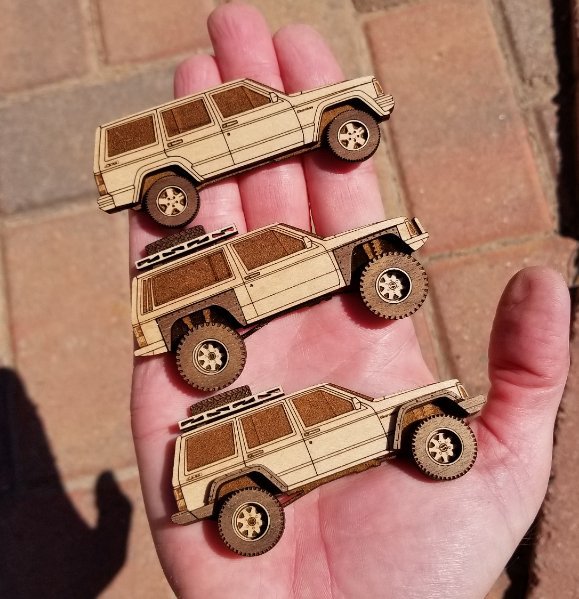
.jpg.824bfadd700535a2baf457bc876cae06.jpg)
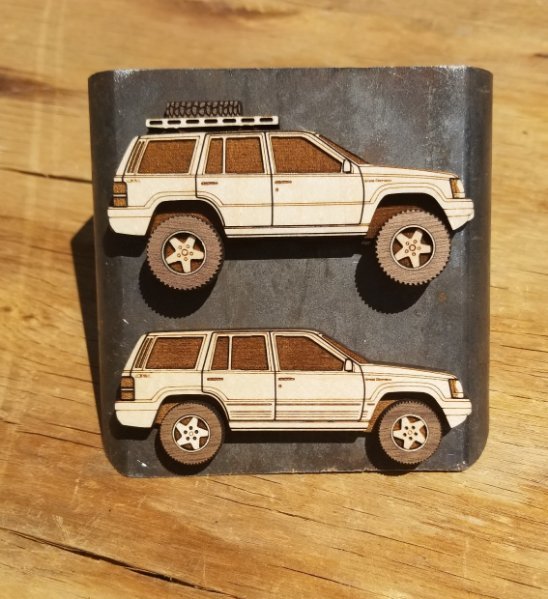
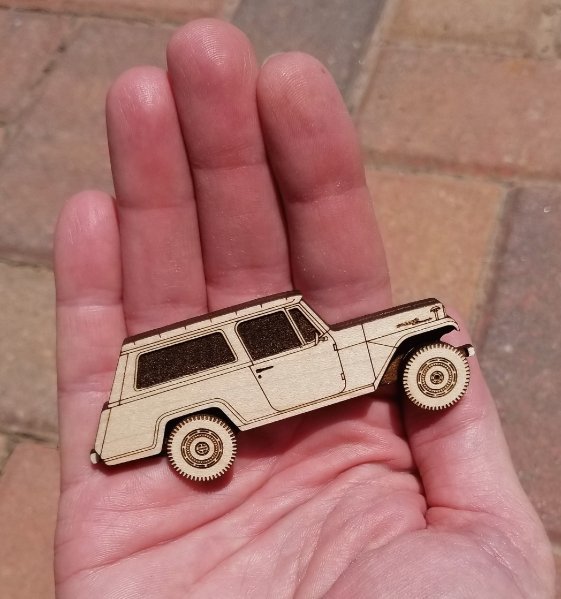
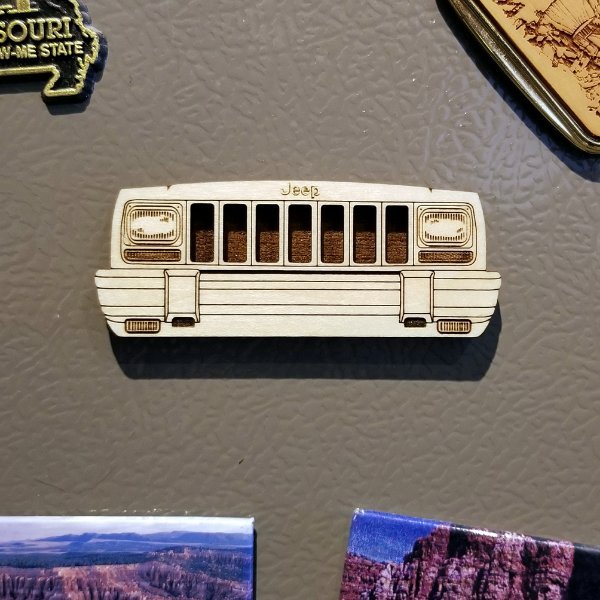
.jpg.b63fde4b5f6ac737de7129d0ee71bea7.jpg)
.jpg.92ddfd07d4a1368d29400e4776456730.jpg)
.jpg.076cf8110f421b173f078f8d797bbc11.jpg)
.jpg.1361c4ade5c974cec28e428bb9d438a9.jpg)
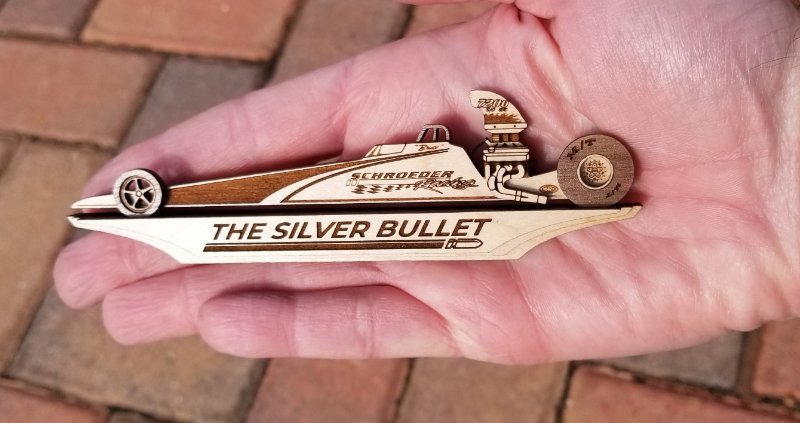
-Copy-Copy.jpg.b1664e6889bb2f042b210384fb98c091.jpg)
-
Missing an oil pan bolt
brucecooner replied to brucecooner's topic in MJ Tech: Modification and Repairs
It sounds like you're using the nut as a sort of rudimentary post cut tap, to ensure the threads are cleaned in the outbound direction, instead of grabbing a burr and sending it further into the threads on first insertion. Top level tip, the kind that gets in your head and doesn't leave. Thanks! -
Thanks! I'll definitely have more confidence when I lift it now.