
MJ H.O.
-
Posts
18 -
Joined
-
Last visited
Content Type
Profiles
Forums
Gallery
Everything posted by MJ H.O.
-
Driving on the street to street truck
MJ H.O. replied to 70barracuda's topic in MJ Hardcore Tech: Epic Journeys to Greatness
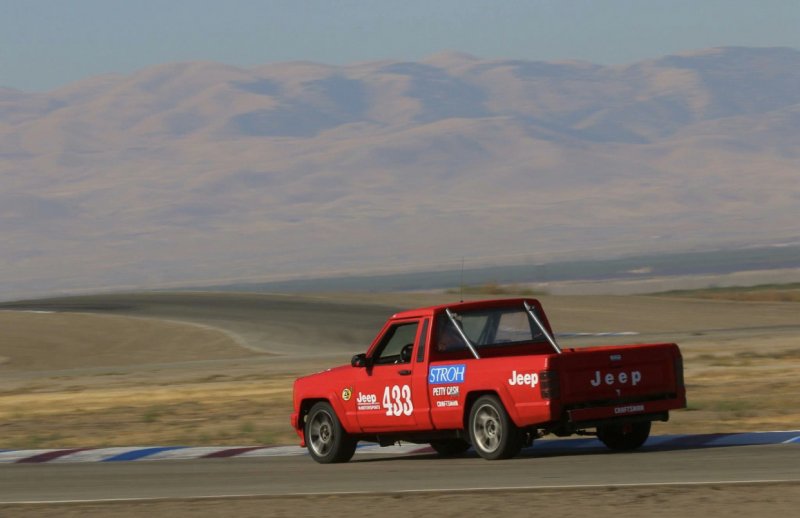
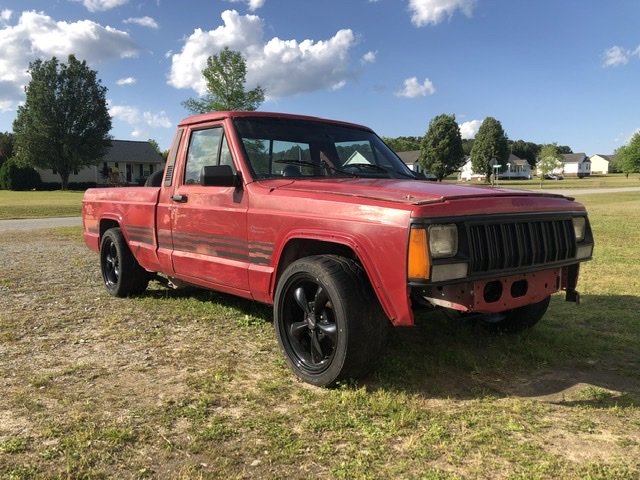
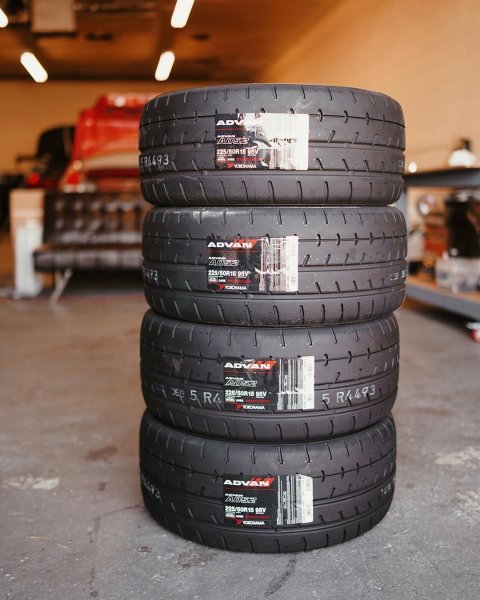
Consider tires with a 200 UTQG rating. There are some that are very street friendly. Example of this the falken azenis rt615k+. Amazing traction, good in the rain, low price for 17”s and don’t wear out quickly. Teampettycash runs a 255/40r17 Rt615k+on the blue Xj in the lemons races and swears by them. They did end up swapping the to a 5.3 as well. On their red mj they are running a 245/45r17 again same tire. I am running 255/40r17 on the Comanche and 195/60r14 azenis are great daily on the civic. The Yokohama a052 in a 225/50r15 would work on your existing ten hole rims. Sticky compound of a 200 tread tire would be more important than wider 300- 700 tread wear tire. hope this helps. Great build!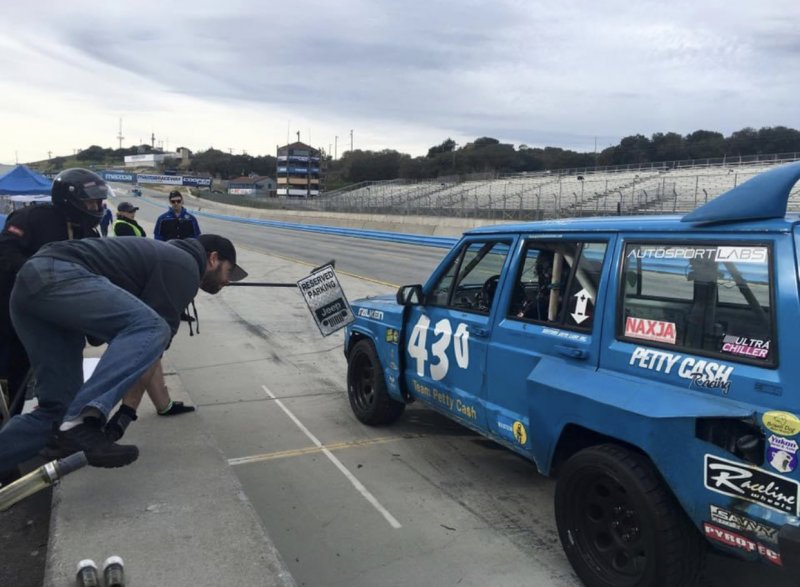
-
Driving on the street to street truck
MJ H.O. replied to 70barracuda's topic in MJ Hardcore Tech: Epic Journeys to Greatness
You are going to have a blast with that truck! The engine fits in there nicely and likely will help the take weight off the front end compared to having a 4.0 Couple questions regarding clearances What is the distance from the front axle to oil pan? What is the distance from the pad on the front axle to the steel portion of the front bumpstop cup? how much hood clearance do you have? what is the length of the new rear driveshaft from u joint to u joint? also Yokohama has a A052 in the 225/50r15 if a sticker tire is needed. -
Project "Flying down a backroad"
MJ H.O. replied to MJ H.O.'s topic in Member Projects: Your Comanches
Changed the rear suspension to fiberglass springs. These weigh 9 lbs each. Installed new shocks and a chevy blazer rear swaybar.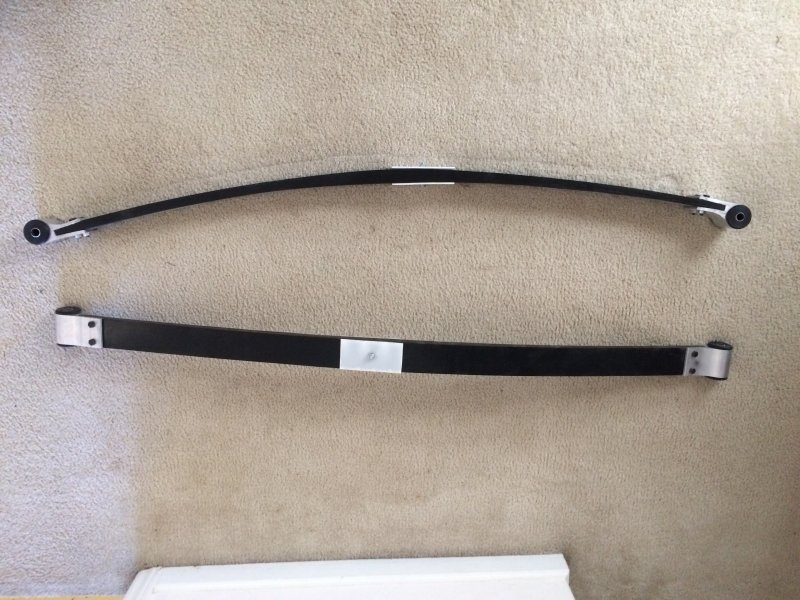
-
Project "Flying down a backroad"
MJ H.O. replied to MJ H.O.'s topic in Member Projects: Your Comanches
Installed a set of Xj shackles which lowered the rear slightly. Took a set of jk rubicon front springs and cut off one full coil. This dropped the front 2 inches. The truck still has 3" of uptravel. Checked clearances at full compression with the rubber stops removed and there's barely any room. The axle is about 3/4" away from the oil pan. The right upper control arm is very close to the engine mount and somehow clears the oil pan. Here's two inches lower in the front. -
Project "Flying down a backroad"
MJ H.O. replied to MJ H.O.'s topic in Member Projects: Your Comanches
Been running the following suspension setup for the past year. Larger sway bar from a zj grand Cherokee, upper and lower control arms from a wj grand Cherokee, poly upper control arm bushings on the axle side and 2" blocks in the rear. -
Project "Flying down a backroad"
MJ H.O. replied to MJ H.O.'s topic in Member Projects: Your Comanches
I have been running the "mini" stroker engine for several months Now. Everytime I drive the truck I don't expect it to accelerate that quick. The power to weight is much different compared to my old lifted renix XJ, civic and lifted 05 Lj rubicon I first had ran the 96+camshaft and 1.7 roller rockers for a couple months. More torque starting at idle and it would rev out stronger. Then located a $50 232 engine from a 1972 cj5 Next found a 80k mile Xj 4.0 Pulled the Xj engine out of a wrecked Jeep on a Saturday morning, checked the cylinder. Installed the 232 crank with new main and con rod bearings. Moved over my 1.7 roller rockers. Then pulled the mj high mileage engine and installed the mini stroker engine. Two long days but drove it to work on Monday I feel that the 232 crank and 96+cam with 1.7 rockers are two great "bolt ons" for the 4.0 There are many ways to build a 4.0 but Quench is important. The 232 crank swap is an easy cheap way to tighten up the quench to 0.030" and raise the compression. Yes, there is a slight gain in displacement and slight gain in stroke (3.50" stroke verse stock 3.411" stroke) but I believe the gains are in the higher compression and tighter quench(piston to head clearance at TDC) You could get the same result using a 4.0 crank and longer eagle rods 6.150" to get the quench to 0.040" Keep in mind stock quench is 0.076" and milling material off the head does change quench. Thinner head gasket, longer strokes and taller pistons tighten quench. Some cases such as the longer 258 crank you might use the shorter 258 rods with stock pistons or 258 crank with longer 4.0 rods but use shorter pistons. Follow the link below and scroll down to the quench section http://jeepm62superchargerkit.blogspot.com/p/misc-xj.html?m=1 Mine is the 3.50" crank with a quench height of 0.030-0.032" At top dead center, the pistons are 0.018" out of the block. The compressed head gasket is 0.050" thick. There is 0.030" quench clearance between the head and the piston. The top of the piston is in the head gasket area. It's counterintuitive but a build with tighter quench may be less likely to detonate and may allow you to run a lower octane. You get more velocity in the squish area as the piston comes in close contact with the flat area on the head forcing the mixture towards the center of the combustion chamber and heat is transferred from the head to piston during the close proximity. The piston is then being cooled by the oil beneath. But if your piston hits your head it could be bad. I have seen engines that have piston with evidence of kissing the head. High rpm can temporarily stretch connecting rods. There's debate on how tight is too tight for a given engine type and rpm range. We don't go that high on our jeeps. Quench at 0.030"-0.055" is better than building out at 0.080". Less than 0.025" on a 4.0 might be asking for trouble. It's a diminishing return so going 0.025" verse 0.035" would be slightly better but it's best to be below 0.055" I am running 0.030" quench and 9.7 static compression and 8.5 dynamic compression. Regardless of crankshaft used, 4.0 232 or 258 be mindful of quench and can be run tighter than stock 0.076" You will need the 255/50r16 tires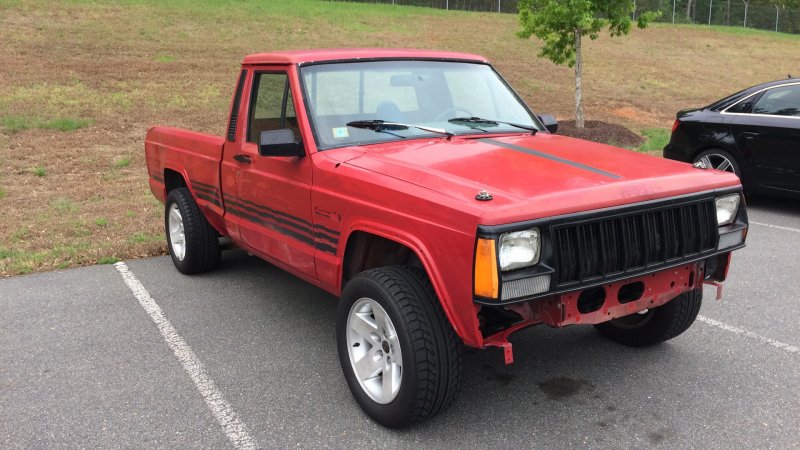
-
Project "Flying down a backroad"
MJ H.O. replied to MJ H.O.'s topic in Member Projects: Your Comanches
Installed yellaterra 1.7 ratio roller rocker into the 1996 engine. I highly recommend the 96 cam and the 1.7 roller rockers. I ran this setup while sourcing an low mileage 4.0 engine and a 232 crankshaft. A 232 not a 258 crankshaft. If no ridge is present in the cylinder, a 232 crank can be installed into a 4.0 block using the 4.0 pistons and 4.0 rods The quench height will be 0.030" using the thicker head gaskets available 0.050" compressed head gaskets not the 0.041" compressed gaskets some folks argue that 0.030" quench is too tight. A 232 crank is a great way to tighten quench and bump up compression. The static compression ratio will be 9.6-9.7:1 Great torque and response out of the engine. The jeep is a blast to drive. I have got 8 months on the 232 crank engine. She gets 25-26 mpg with a dirt bike and gear loaded. Even loaded up she is quick. Continued weight removal currently at roughly 2620 lbs. A set of 255/50r16 bfg tires help a lot to regain traction. -
Project "Flying down a backroad"
MJ H.O. replied to MJ H.O.'s topic in Member Projects: Your Comanches
Swapped in a 96 brake booster and master. Installed the later 4.0 intake. Installed an aluminum driveshaft Ditched as much weight as I coul including the jack, bumpers, spare tire and hoist then went to the track. Struggled to get the old tires to hookup in first gear. Took them down to 15 psi. Managed to run a 15 second quarter mile at 91 mph. -
Project "Flying down a backroad"
MJ H.O. replied to MJ H.O.'s topic in Member Projects: Your Comanches
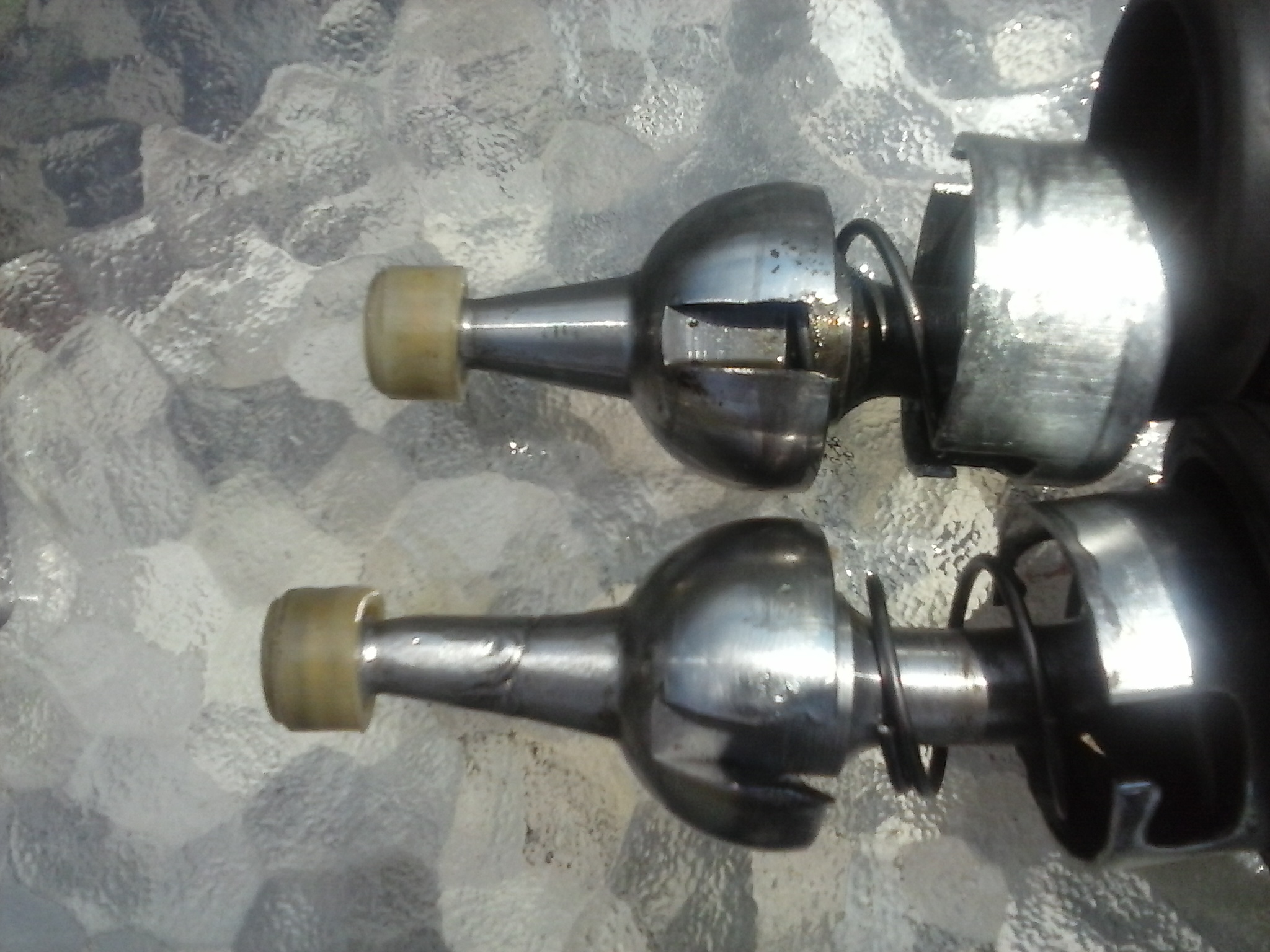
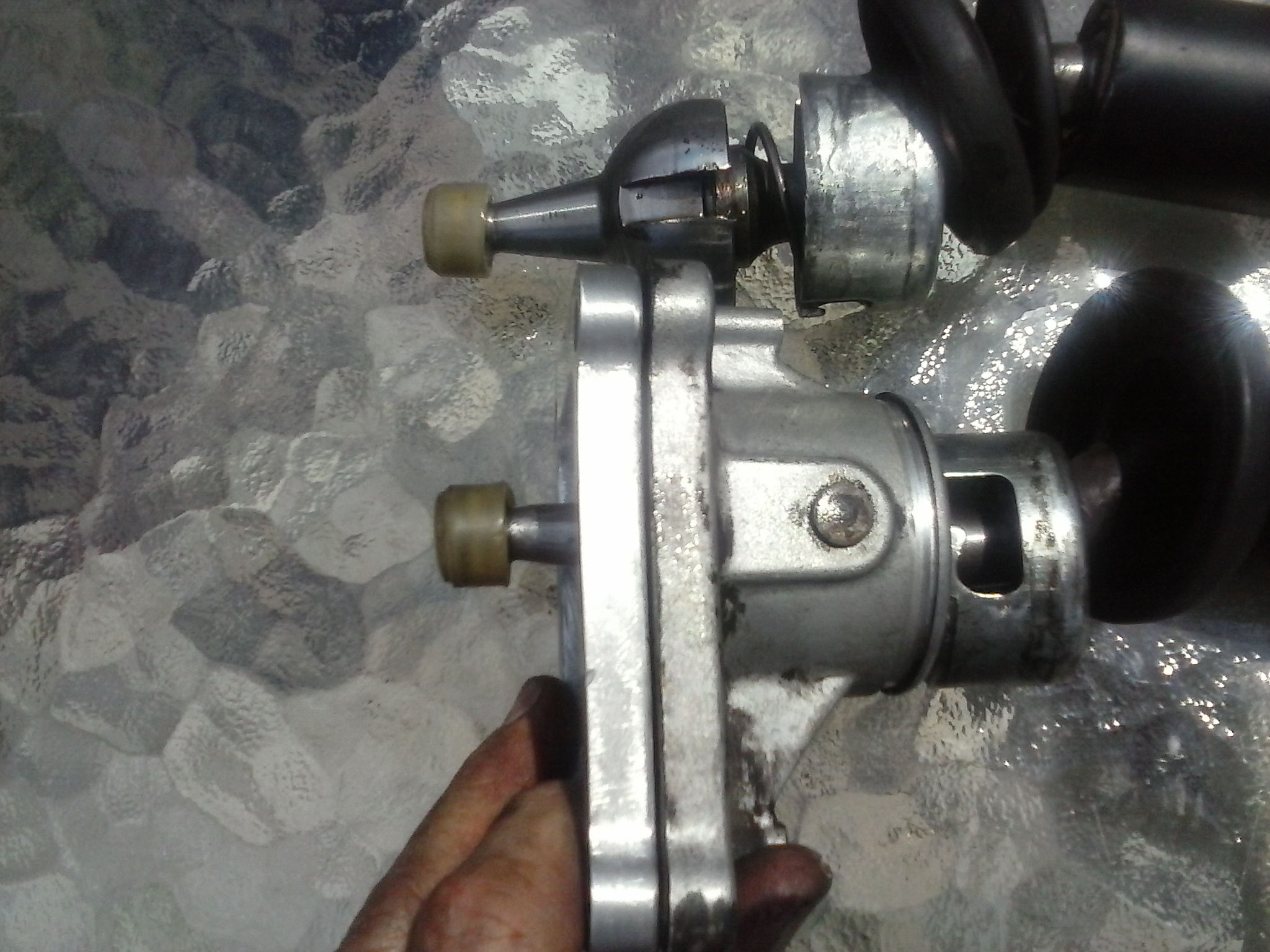
Made a short shifter using a spare ax15 shifter. Cut the ball off the end of one shifter and welded in an extension piece. Took one spare housing and cut it down to become a spacer. Installed longer bolts and two gaskets.The idea here is to lengthen the ball end and then move the pivot point higher. The travel between first gear and second was six inches and now is four inches.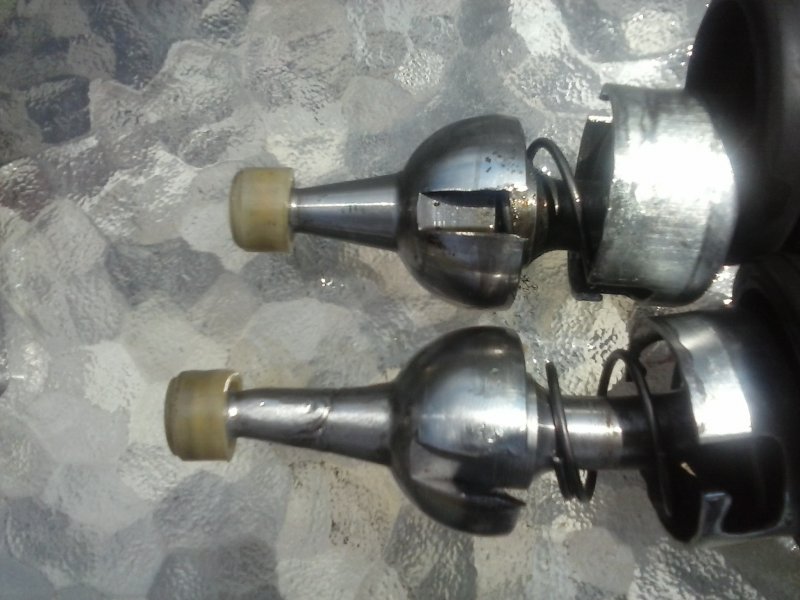
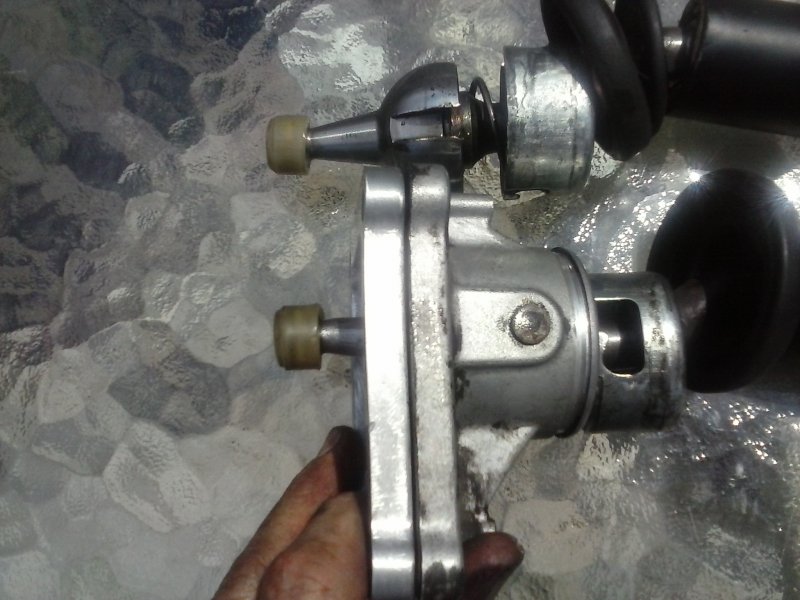
-
Project "Flying down a backroad"
MJ H.O. replied to MJ H.O.'s topic in Member Projects: Your Comanches
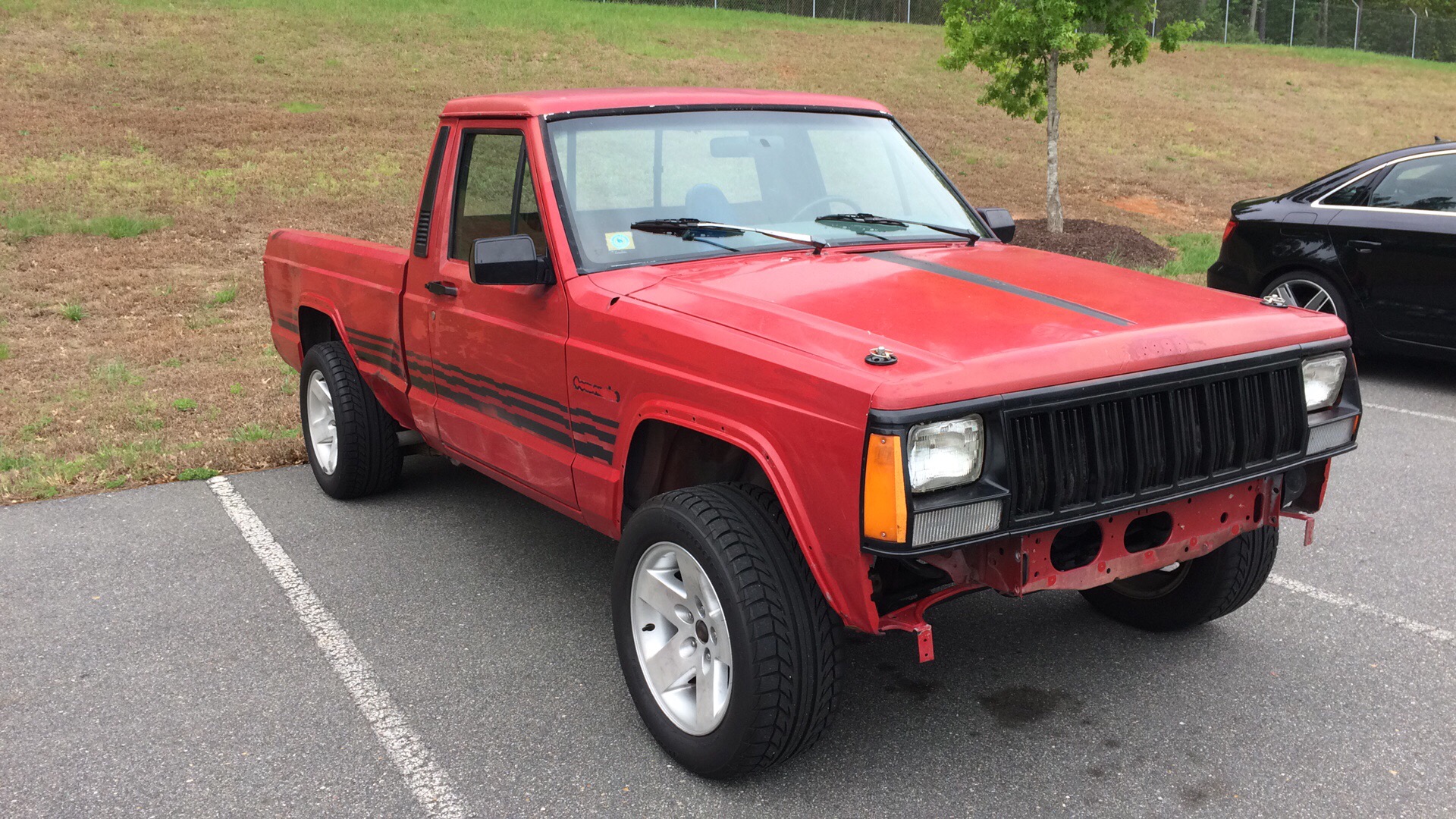
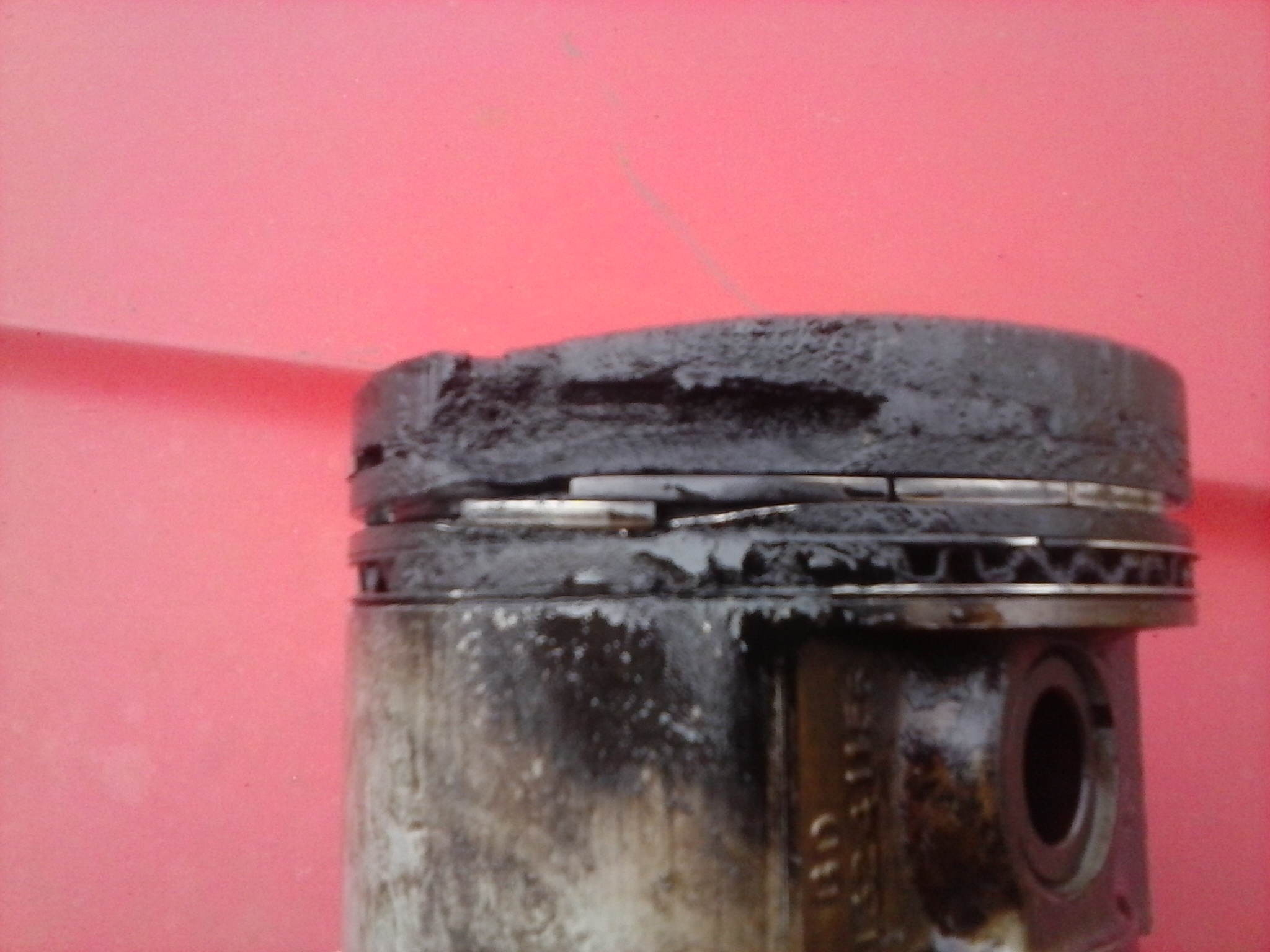
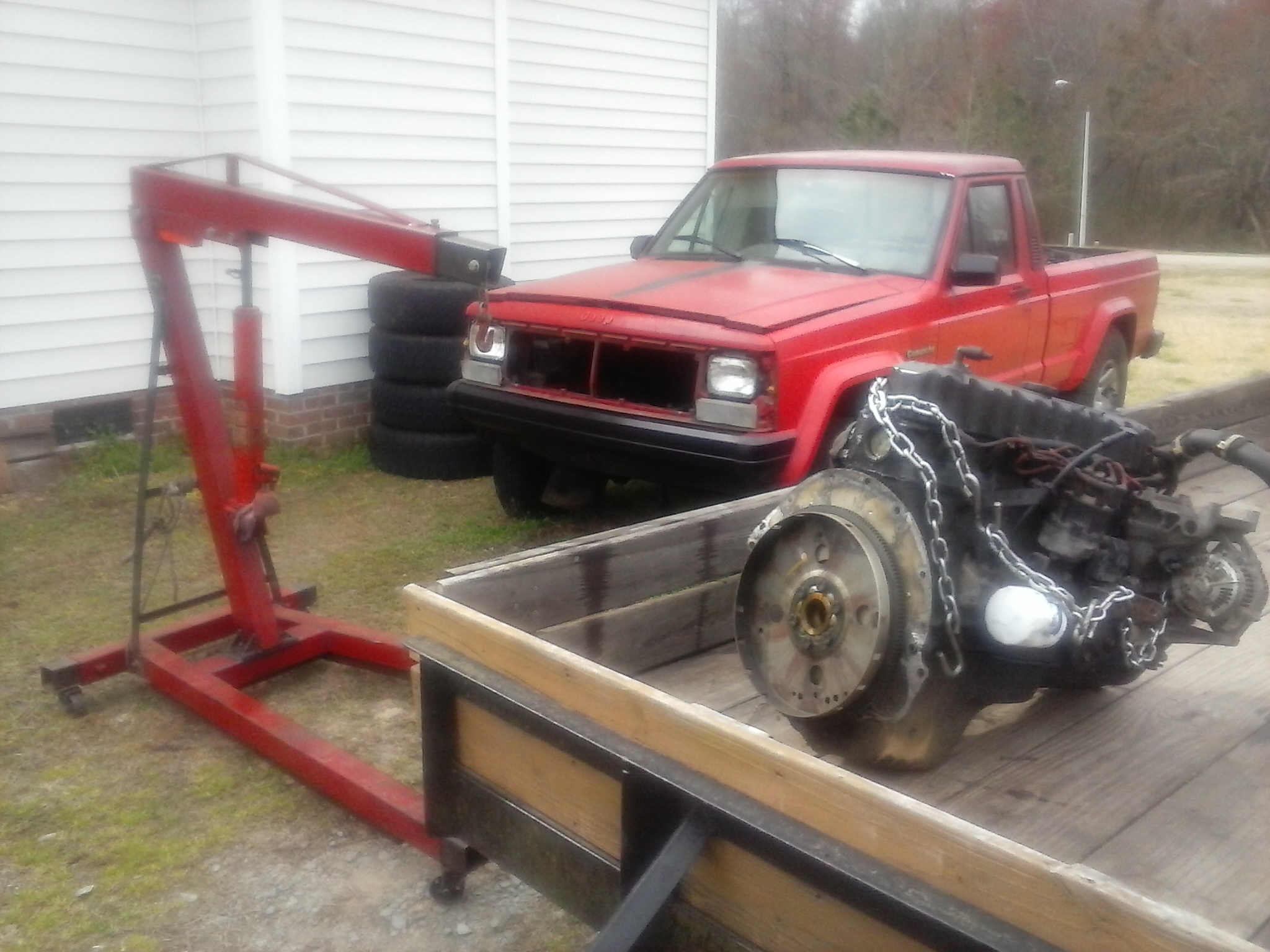
When I got the Comanche, the engine ran and you could drive it but it needed attention. Found there was no compression on cylinder number one. Pulling the head revealed a piece missing from the piston and a block beyond repair. I put aside thoughts of an engine swap to a ford 2.3 turbo and a t5. Pulled an engine from a 1996 Grand Cherokee with 220,000 miles. Moved over the flywheel and didn't bother to swap to an external slave. Just wanted to drive it. Installed an aluminum radiator and one later model Xj auxiliary cooling fan and wiring, ditched the mechanical fan. The hvac unit under the dash wouldn't work so it was pulled, then out came the air conditioning compressor and heater lines... the radio and speakers that didn't work - gone. Old Carpet and headliner- gone. Found a broken front swap bar link which meant swapping to thicker zj front swaybar Installed a new fuel tank and got the brakes freed up. Replaced the MJ exhaust down pipe with the 96 zj pipe. Installed the exhaust mount from the MJ and installed the Cat and new muffler. Dumped the exhaust out in front of the right rear tire. Bought a set of Jeep 5.9 rims and bald tires off of a Toyota 4cyl pickup. Finally it was road worthy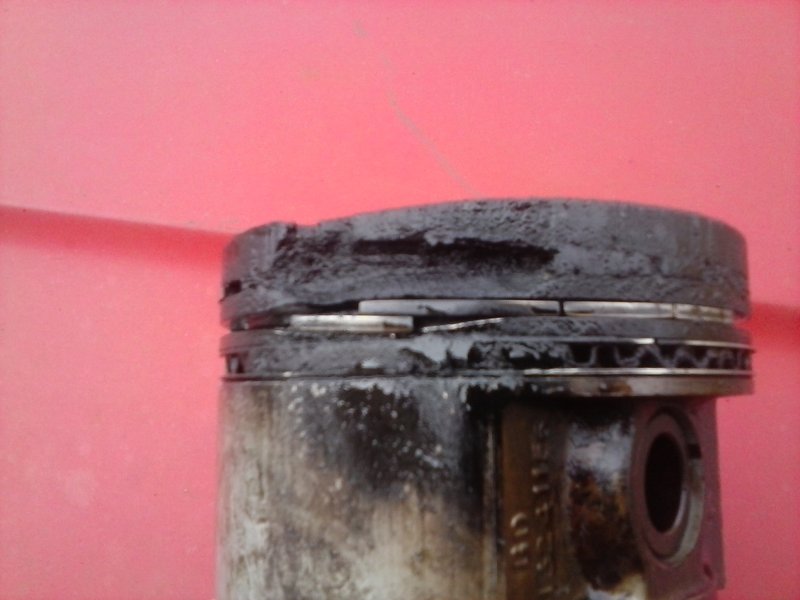
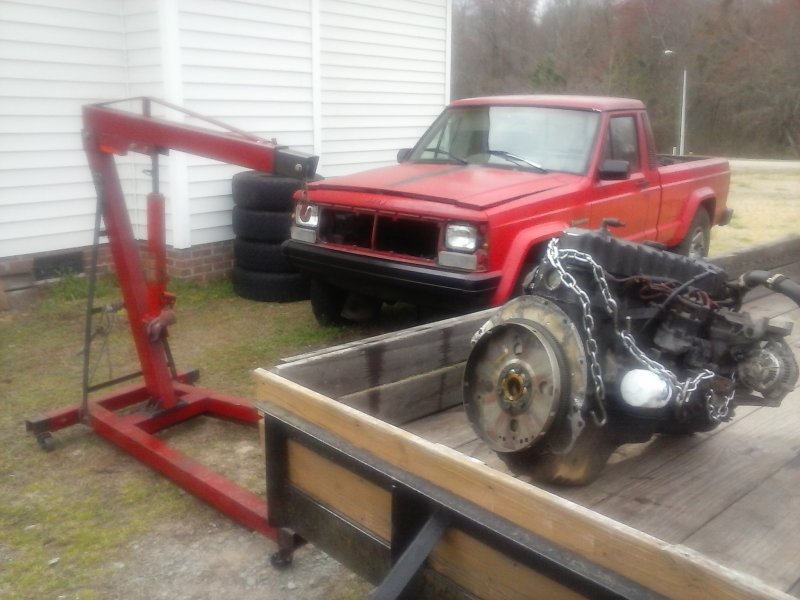
-
Fast and Easy way to raise the compression
MJ H.O. replied to omega_rugal's topic in MJ Tech: Modification and Repairs
I had considered milling a head to raise the compression and running a 0.043" compressed head gasket which gives a 0.065" quench Every 0.010" you take off the head you reduce the volume in the head by 0.5cc I was looking at taking 0.110" off the head which reduces the head volume by 5.5cc. Using shorter push rods from a 2.5 engine and the thinner 0.043" compressed head gasket. The static compression works out to 9.5 to 1 and a 0.065" quench The 232 crankshaft gave me slightly more compression 9.7 to 1 and a tighter 0.030" quench On propane, You could mill a head 0.110", shorter push rods, 0.043" compressed head gasket. While the head is off install a used 96 cam with new lifters. Run it then install 1.7 rockers when money is available. It's worth it! The 96 cam and 1.7s will give you more bottom end power mid and upper. I may install a roller timing chain and advance this cam as it pulls hard straight to red line. Now propane, a 232 crankshaft, 0.051" compressed head gasket and 0.110" would give you 10.5 to 1 and a 0.030" quench Beyond this things get more expensive Other options I was looking at: 1.milling the head 0.110" and decking the block 0.022" getting a 0.043" quench and 10 to 1 static compression 2.buying eagle 6.150 rods and using stock pistons (if no ridge in cylinder ) would get a 0.038" quench with 0.043" head gasket,stock block and head =9.2to1 static if then milling 0.110" off the head it would get 10.1to one For me the 232 crankshaft swap was quick and cheap way to get 9.7 to 1 static and a 0.030" quench I wanted to get the dynamic compression up at 8.5 to 1 with a tighter quench. Tell us more about this propane setup you have. I hope this information helps. I wish it was as easy as just running with no head gasket -
I installed a 232 crankshaft shaft out of a 1973 cj5 in a low mileage 1996 4.0 block with stock rods, stock pistons. You Must use a 0.051" compressed head gasket. The quench height is 0.030" and the static compression is 9.7 to 1 with dynamic at 8.5 to 1 Add a 1996 camshaft and 1.7 yellaterra roller rockers, pull the head use a carbide bit on the push rod holes for clearance. They fit under the 96-up steel valve cover. 1.7s are great as well as the 9.7 compression from the 232 crankshaft Add a 99 up intake manifold. Match the ports to the head. If you port the head focus on cleaning up the bowls and shaping the valve guides.
-
Fast and Easy way to raise the compression
MJ H.O. replied to omega_rugal's topic in MJ Tech: Modification and Repairs
I am running 9.7 static compression 8.5 dynamic on 1996 stock block, stock rods and pistons. Added 1.7 yellaterra roller rockers, 99 up intake, 96 zj down pipe, no mechanical fan, ported head meaning bowl cleanup and shaping valve guides, matched intake to head, took off the 90 degree edge on the bottom of the throttle body. I can run through all the numbers but You end up with a piston to head clearance of 0.030" it's on the tight side but it works You'll love the higher compression as it unlock more power every where in the rpm range. Yellaterra 1.7 works great on a 1996 camshaft because you can run stock valve springs but you will have to pull the head and clearance the pushrod holes. The 1.7s on a stock 4.0 96-98 camshaft had unexpected gains from idle to red line. These are the best two modifications to do to a 4.0 My 1991 is a blast to drive 5 speed with this engine and 2628 lb weight Search jeepstrokers.com and mini stroker. I can say first hand I can be done with stock rods and pistons! With propane you do the 232 crankshaft and take 0.020" or more off the head just pickup new shorter pushrods to get into 10 to 1 I hope this helps -
Thanks eagle! Spoke with archer brothers racing and they don't have left over fiberglass rear springs. Anyone got a set?
-
fiberglass rear springs. Does anyone have any specs on these used in the archer brothers racing trucks. Heard they were made by flex form. Looking for weight of each one, dimensions and a spring rate.
-
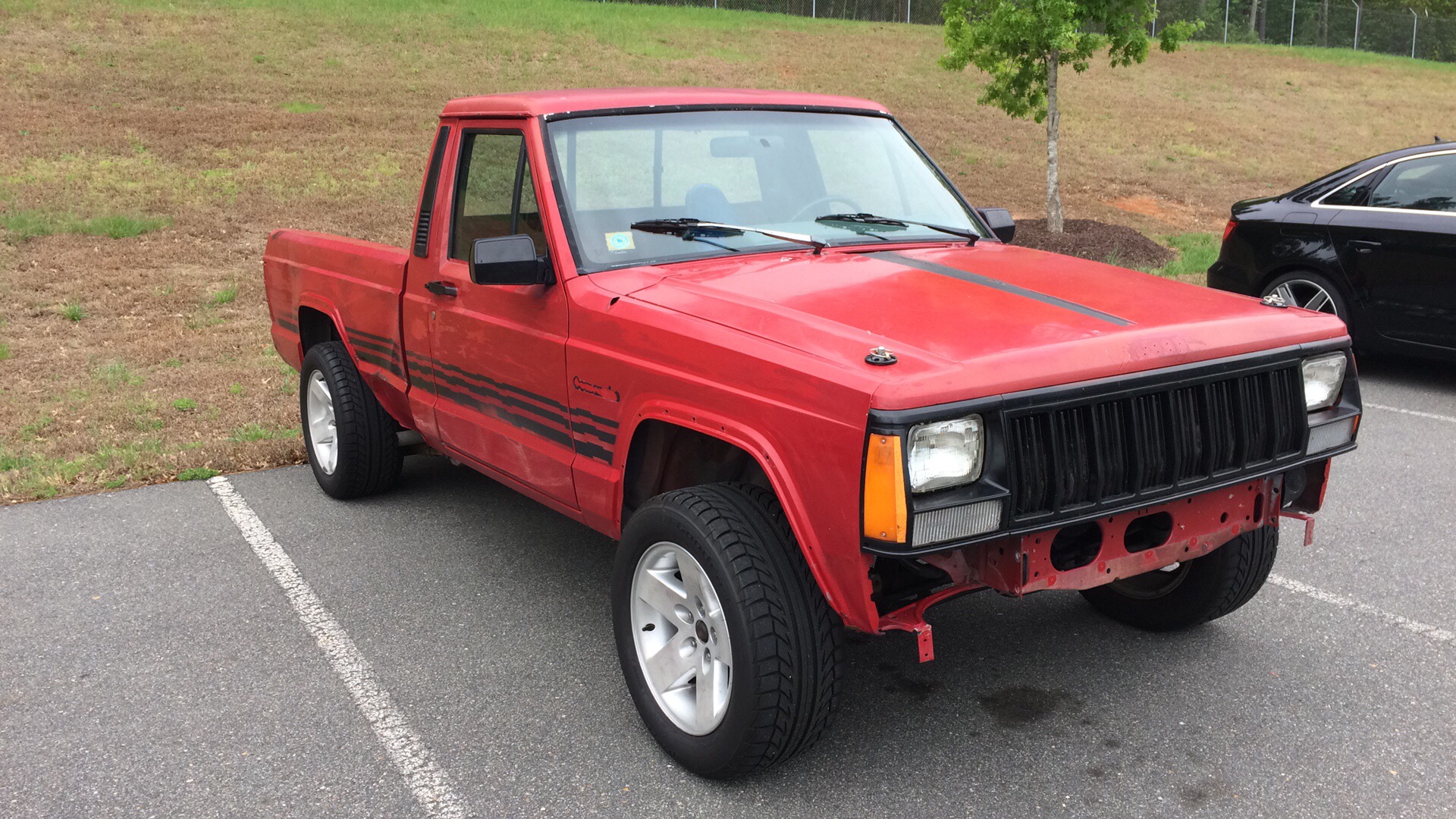
Project "flying down a backroad" came about after some of life's challenges. In a way, the jeep brings me back in time and moves me forward. I like things simple and light weight. The truck is meant for loading up dirt bikes and hauling down a back road. The truck differs from every jeep I have ever owned. It's two wheel drive. In the form of a 1991 Comanche short bed 4.0 ax15
-
Red comanche out in Clayton,NC
-
The rubicon rims look great on the truck. What size tires are you running?