

CaptainPatchy
-
Posts
105 -
Joined
-
Last visited
Content Type
Profiles
Forums
Gallery
Everything posted by CaptainPatchy
-

91' Eliminator Daily Build
CaptainPatchy replied to CaptainPatchy's topic in Member Projects: Your Comanches
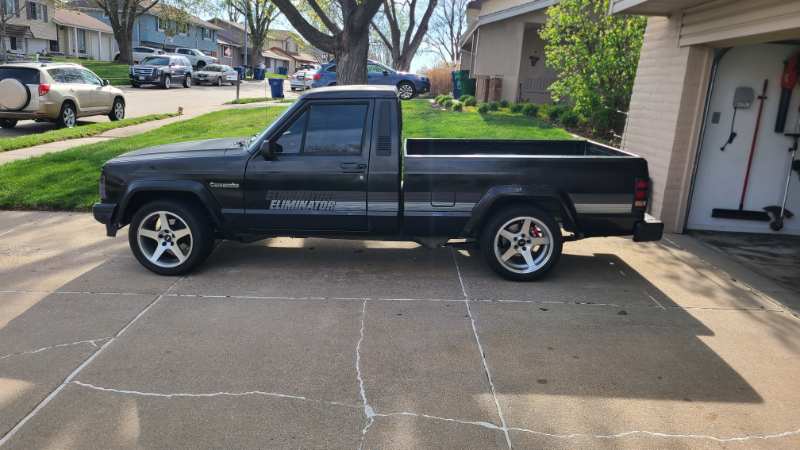
Took my time and got the rear brakes bled really well, and adjusted the e-brake a well. Significantly better braking than before, not sure if it beats the drums yet, but it feel good. With the nice weather, I got the Jeep out for it's inaugural spring run and ran it to a self-serve car wash. After that, I took it to my Niece's birthday party and parked it next to my brother's truck just for fun. Always crazy to me how small this thing it! I really want to spend more time this year actually driving it and enjoying it rather than spending so much time working on it in the garage. One thing I would like to look at is an upgraded bigger brake kit for the front. Does anyone have any experience with the Black Magic big brake kit, and would that fit on a 2wd front axle? From everything I can find, the outers are basically the same as the 4wd dana 30 of the same year, minus the actual stub shaft being different for the 4wd models.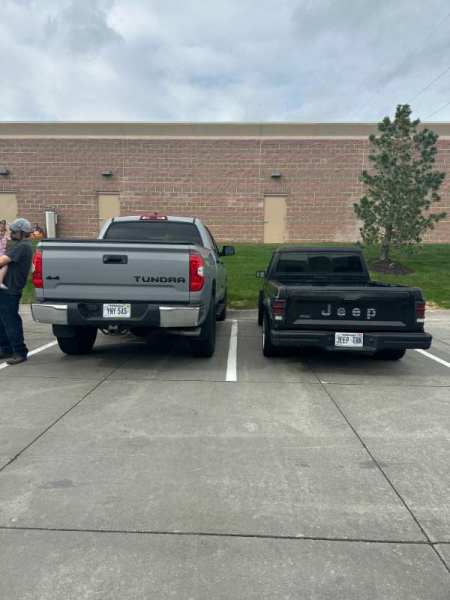
-
91' Eliminator Daily Build
CaptainPatchy replied to CaptainPatchy's topic in Member Projects: Your Comanches
Looked at the brakes some more, found some old threads for testing the booster and ran through those: With the engine off, pumped the pedal until firm and started the truck. Pedal sank down a little bit, maybe a few inches? Seems like the truck is idling low, maybe 600-800 rpm, but seems unbothered and I'm not sure it's any different than before. Seems to run fine otherwise, and rpm doesn't seem to make any difference in pedal feel. After first, initial soft brake, I let up and the second of third is much better. Even the first pedal push WILL stop the truck, just seems to have a lot of pedal travel to get it stopped quickly. Maybe I'm making something out of nothing, I don't know. -
91' Eliminator Daily Build
CaptainPatchy replied to CaptainPatchy's topic in Member Projects: Your Comanches
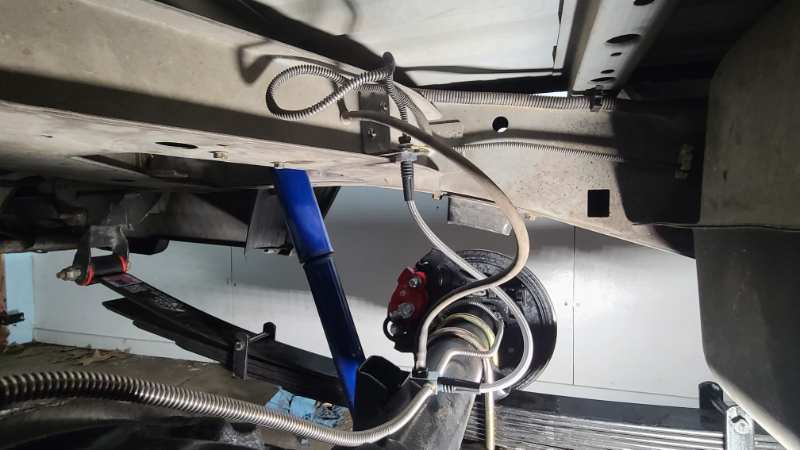
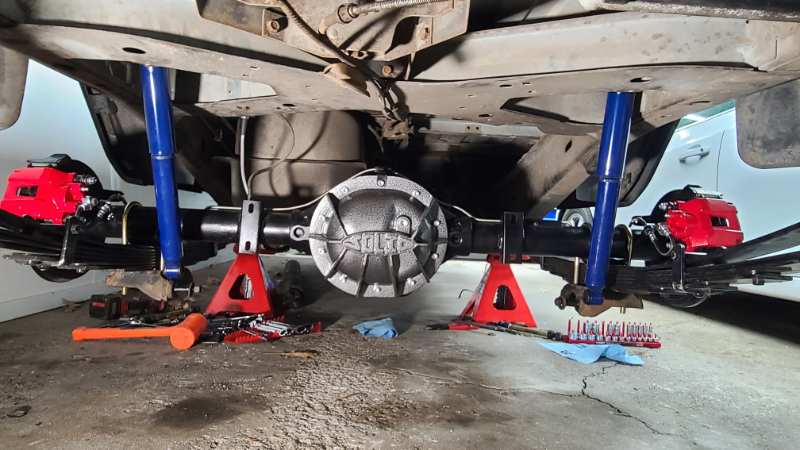
Made a trip down to Speedway Motors as it's reasonably local to me, and picked up the 1/2-20 flare plug for the master and the 3/8-24 X 3/8-24 inverted flare union I thought I'd need to couple the rear lines. (More on that shortly) So first step in removing the load sensing valve for me, was to take the line out of the lower front port on the proportioning block and block it off with the 1/2-20 flare plug. I removed the airbox to give me some more room to work, and because it's very simple to do. Once I got that snugged in place, I took the now-unused emergency line portion, and slowly followed it back, cutting it off as I went. It runs all along the frame rail and they twist over one another in a few places, so it'd be difficult to do without also removing the one line at the same time. Once I got back to the load sensing valve, I undid all the lines and carefully set the ones I was supposed to be keeping aside. I took the line coming from the front, and got it bent back on itself and ready to couple into the line running under the frame. This is where I ran into an issue: everything I'd read said both lines should be 3/8-24 and couple together with a union easily. Problem was, my line running from the front had a 7/16-24 nut on the factory line, which would not work with my coupling. I thought about removing the nut and trying to re-flare the line for the coupling when I noticed that the line had plenty of length to run to the factory location without the other piece, so I carefully bent it up and under the frame and into the factory bracket. This is where I ran into my second issue, the factory line ALSO only takes a 3/8-24 line as well, so that wasn't going to work either. I had purchased a slightly shorter braided stainless flex to use instead of the factory line, and it also takes a 7/16-24 line and adapts down if needed, so i set to about getting that installed in it's place. Then I discovered when the axle would articulate, my swaybar mounts/links would be a little close to the new line for comfort, so I re-installed the factory bracket on the front of the X brace instead and gently bent the lines some more to meet it. Its not the best routing at the moment, but it is going to be temporary until I can get my new nicop line ran from the front anyways. at this point I got the axle attached with the U-bolts, at the FSM specified 100 ft. lbs , Set the axle on jackstands so the total vehicle weight was on the spring, and attached the shocks at 44 ft. lbs, the Front Eye Bolt, Rear Eye Bolt, and Shackle to body all at 65 ft. lbs, making sure to hop on the rear bumper a few times and recheck. After making sure everything was clearing as expected. Before picture: Then I routed the e-brake cables, mounted with the flopshop offroad adapters and factory cable, which are now WAY too long, adjust them to where I could actuate the brake and not move the rotor by hand at all, and bled the brakes at all four corners using a bottle, clear hose and a little fluid in the bottom to do it solo. Checked the air in the tires, mounted them and took it for an inaugural spin around the neighborhood to test things. Everything was working fine, but it seems like the pedal has more travel than before and seems to take one pump to build decent pedal pressure, so not sure if I've got a vacuum leak, bad booster or possibly air in the lines, if anyone has any guesses I'm all ears. After re-checking lugnut torque and making sure everything looked good, I ran to the gas station to fill up my mower gas can and the truck, all smiles and running reasonable well! I'm a little disappointed in the current braking performance to be honest, not sure what's missing at this point? I believe it still has the single diaphragm booster, and it is likely stock as it looks like it. Once I get one pump or so on the brakes, the pedal feel is much firmer and it stops in a hurry, although it seems to drop the idle real low when I hit them hard. I'm not sure what's going on there, but it's back on the road anyway!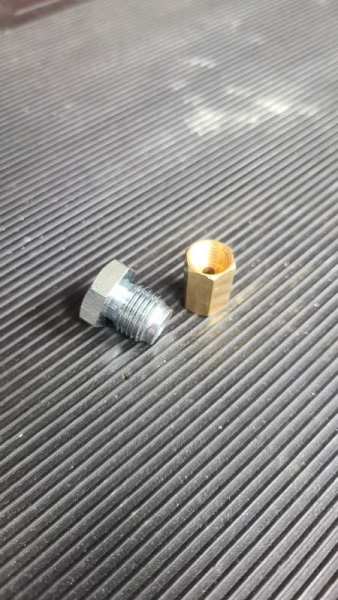
-
91' Eliminator Daily Build
CaptainPatchy replied to CaptainPatchy's topic in Member Projects: Your Comanches
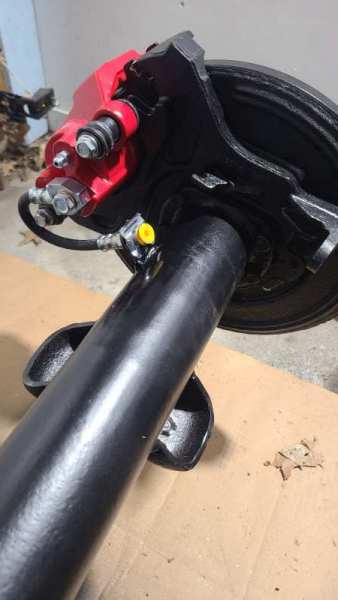
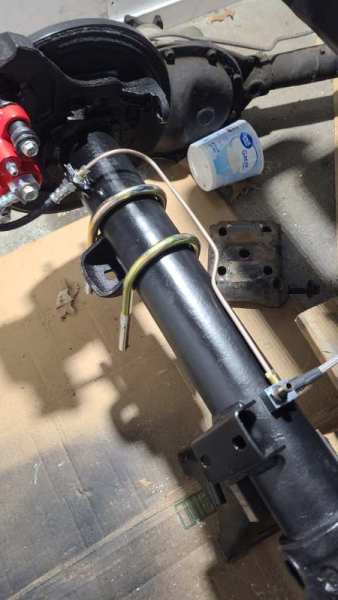
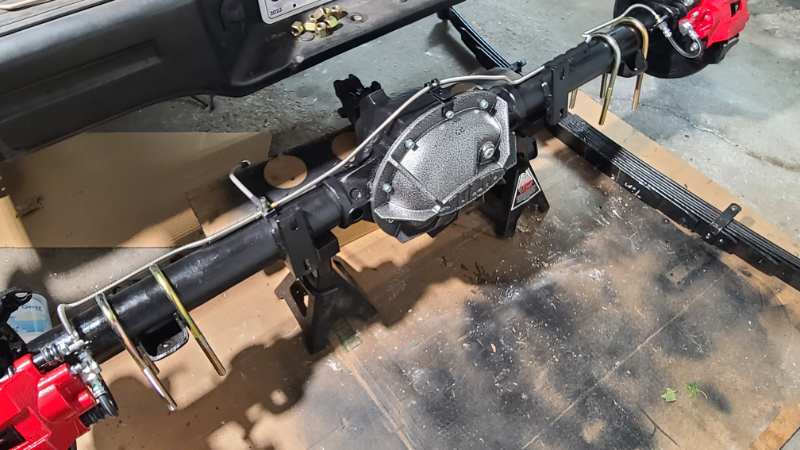
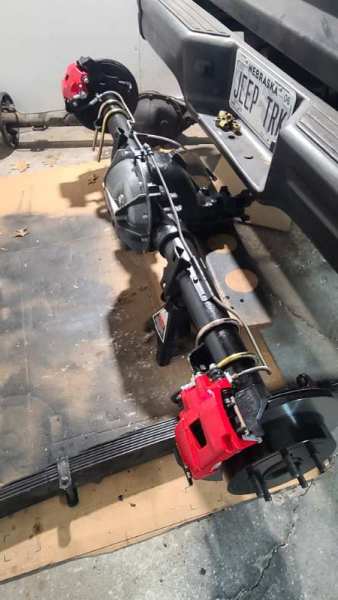
Thank you, I guess I'm a relatively detail-oriented person nowadays. Started off this evening with the goal of getting the brake lines mounted and everything ready to slide the axle back underneath the truck. Not pictured, but I also realized I didn't have a hard mount for the axle-side flexible brake line, so I welded a few tabs to either side and painted them to match. once I got the flexible lines in place, I was more than happy with the orientation. Then, after staring at it for a bit, I decided that it made more sense to navigate the brakelines around the U-Bolts that would soon be in place, similar to stock. I placed the new U-Bolts in place, and worked on getting the brake lines cut, flared and bent with the SS gravel guards. And after installing both sides, the new flex, and the SS gravel guards. Ran out of time tonight, but I'll work on getting the load sensing valve bypasses (for now) and getting the leafs and axle back under the truck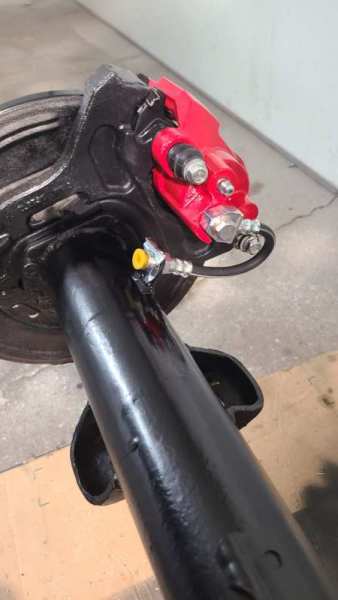
-
91' Eliminator Daily Build
CaptainPatchy replied to CaptainPatchy's topic in Member Projects: Your Comanches
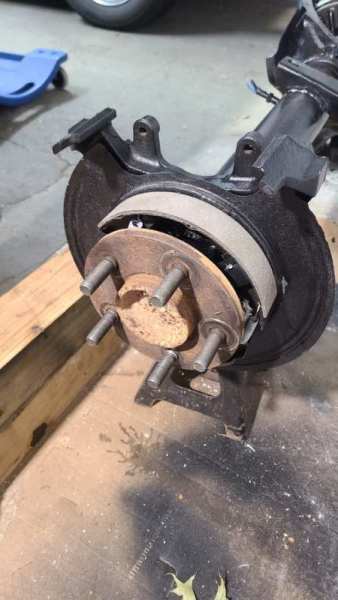
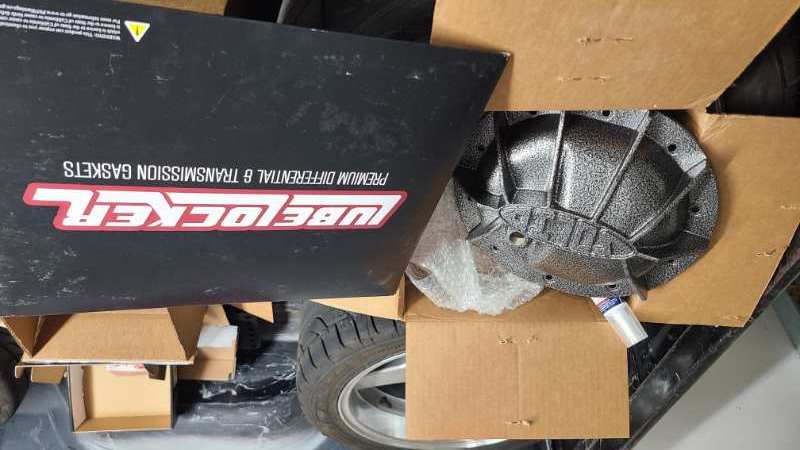
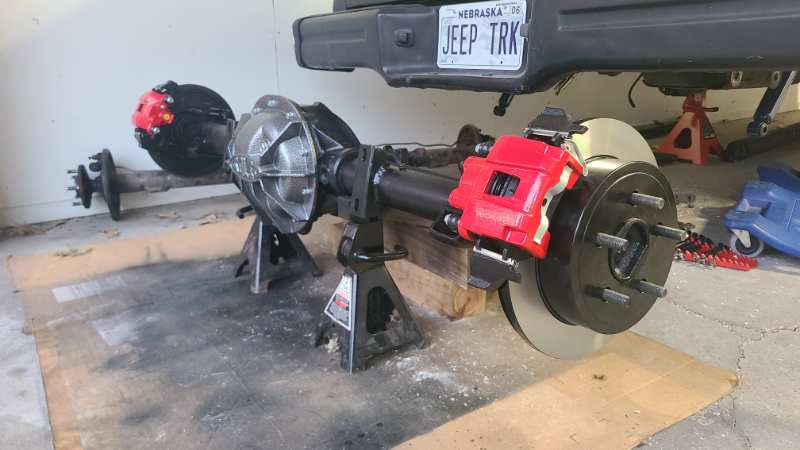
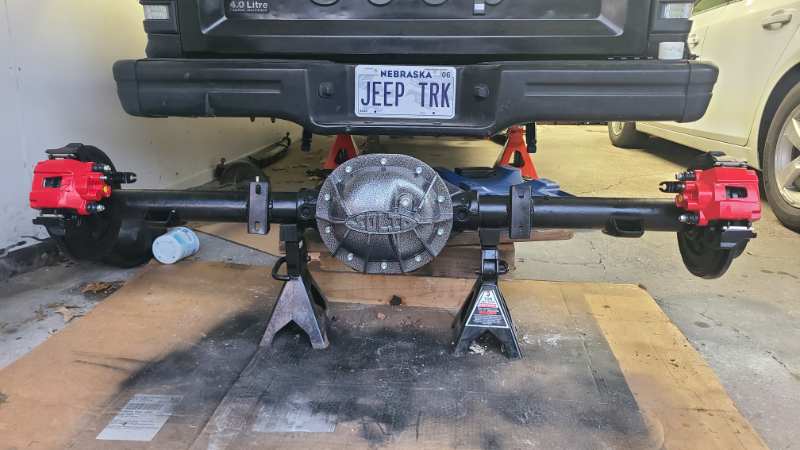
Ran into a couple of snags along the way of getting the new 8.25 rear axle in. First, I thought I could through-bolt the dust shields to the backing plates, however with the lip on the rear axle tubes that wasn't an option. So I tapped the backing plates to a 5/16 coarse thread, grabbed some bolts at the local Ace Hardware I could cut down, and got them mounted that way. Threw a coat of Rustoleum implement black on everything to match. Once they were installed, I was able to mount the parking brake hardware and get the axle shafts put back in. I used a new cross pin with some red Loctite to make sure it wasn't going to come out on me. I also cleaned up the axle shaft ends and painted them to match everything else. After that, I mounted the new rear Solid diff cover with a Lube Locker gasket, same as I had on my Cherokee Then it was time to get the discs on, parking brakes adjusted and ready to slide the new axle in! Everyone knows red calipers means it works better, right? Unfortunately, I totally spaced that the Dana 35 tube diameter is NOT the same as the 8.25, so actually mounting it up will have to wait until my new U-bolts arrive, but we're making solid progress! I've got a host of new brake hardware waiting, including parking brake adapters from FlopShop offroad, new NiCop line and fittings, SS brake line guards, Eastwood flaring tool, Ridgid bending and cutting tools and flexible lines that will be mounted. We're getting there, slowly but surely.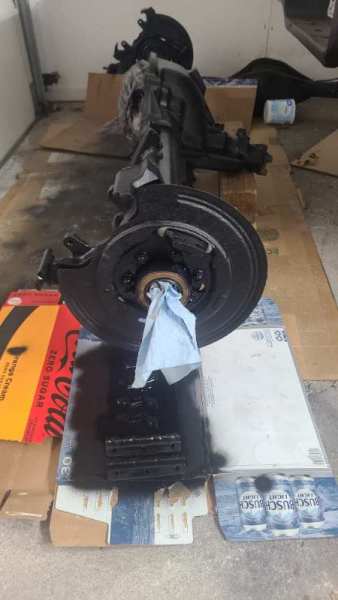
-
91' Eliminator Daily Build
CaptainPatchy replied to CaptainPatchy's topic in Member Projects: Your Comanches
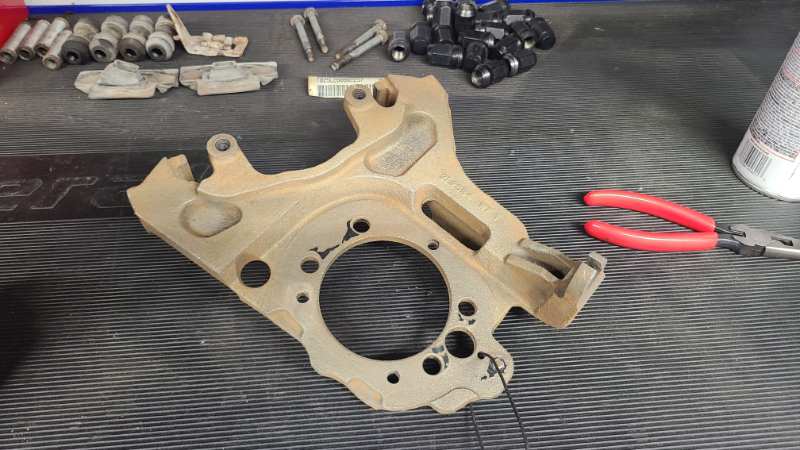
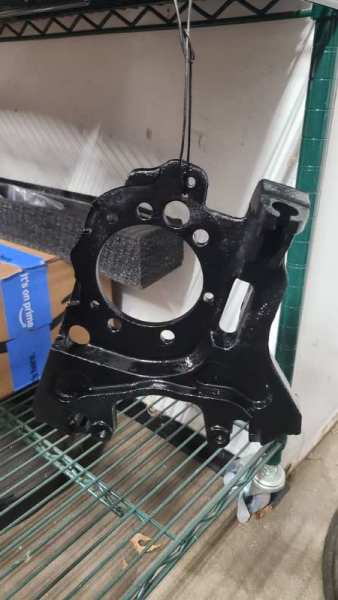
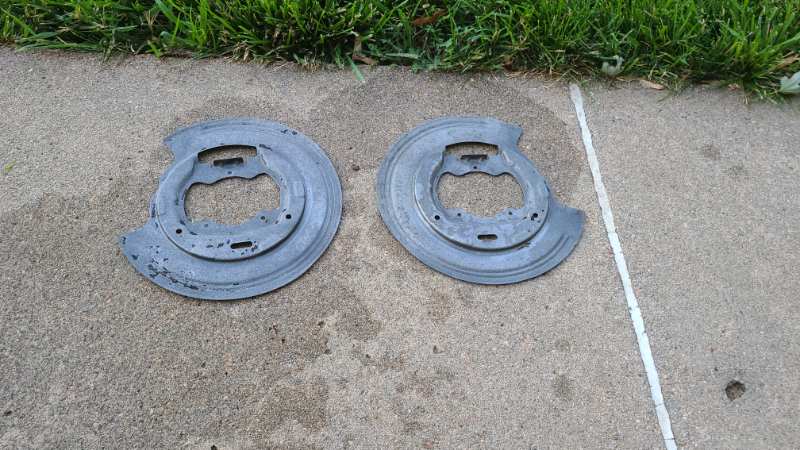
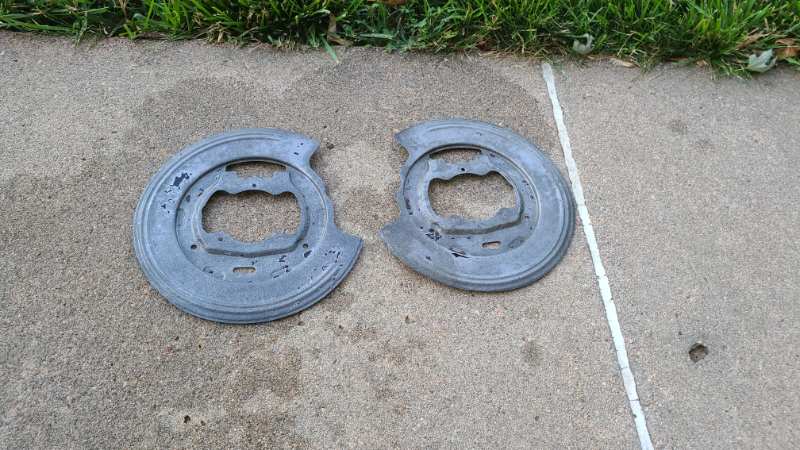
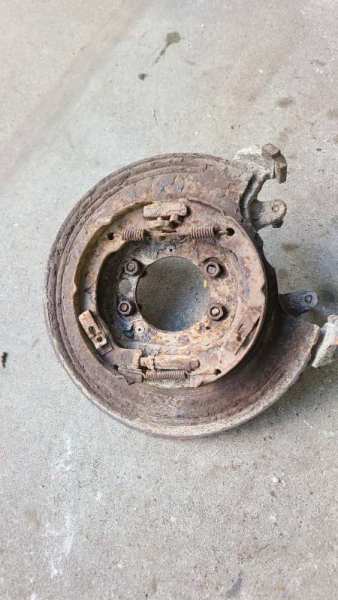
I love getting to work on it! Between finishing my bachelor's and studying for certifications for work, I don't get as much time as I'd like work on it, but still enjoyable. Thank you! I'm very happy with how's it turning out. Update: Started working on getting the axle painted with some Rustoleum implement paint in low gloss black. Then it was time to turn my attention to the backing plates. Grabbed some off a Liberty in a local yard. These had obviously seen better days, but all the parts were there. After searching, I found a video from backyard ballistics about a DIY "evaporust" concoction so decided to try that before attacking it with a grinder. The recipe is 100 grams of citric acid, 40 grams of sodium carbonate(washing soda) and an "appropriate amount" of dish soap per each liter of water (I used the hose). Mixed up a few gallons worth in some buckets and left it to sit for a week and do it's thing. I was not prepared for how well this worked, as it literally removed all the rust like it had never been there and left me with clean, bare metal! After scrubbing them down with a wire brush and more dish soap, I had to battle the bare metal flash rusting! That photo is after a light brushing to remove anything loose and letting them dry in the ambient air, at which point it promptly flash rusted to what you see. I hit it again with the wire brush, blasted with carb cleaner and dried quickly then hit them with a coat of paint. The backing plates themselves and assorted nuts and bolts were the same. After pulling them out and lightly scrubbing, clean and bare metal! I quickly got a coat of paint on these, and submerged the assorted nuts and bolts in a container of oil for now, but wow! I'm BLOWN AWAY with how well this worked for very minimal effort! I also installed the new bearing and seals in the axle, and pounded out the old axle-shaft studs to replace them with some front Dana 30 studs, which are about a 1/4" longer and should work great with the disc's and aluminum wheels. Once the paint on everything dries, I should be about ready to put it all back together!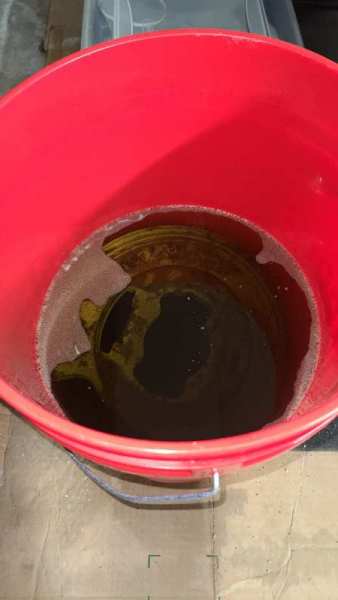
-
91' Eliminator Daily Build
CaptainPatchy replied to CaptainPatchy's topic in Member Projects: Your Comanches
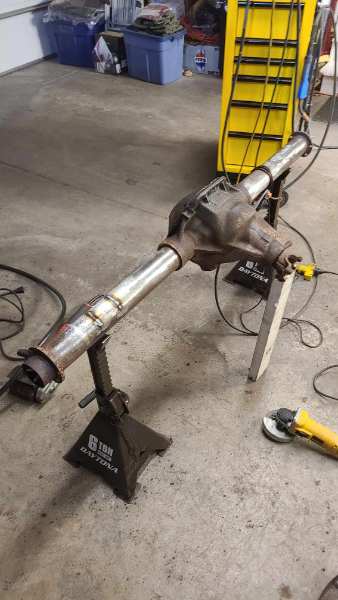
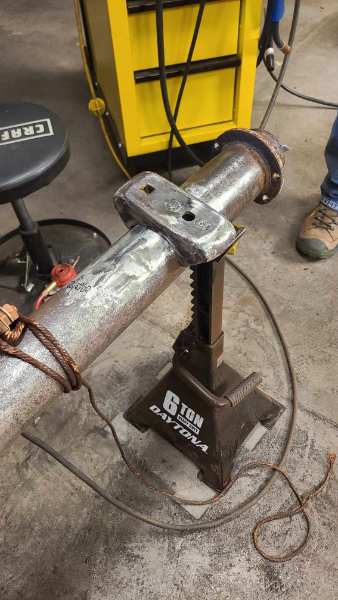
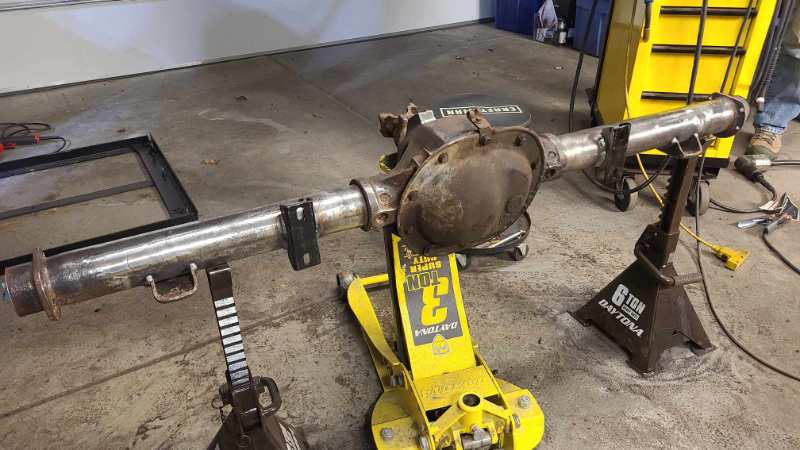
Long term update: -Have an MTS fuel pump assembly with a Bosch Fuel pump ready to swap in -enjoying driving the truck and seeing the attention it gets everywhere it goes -everything seems to be working well So last fall I was able to score a late model, 29 spline 8.25 from a guy locally that was parting out a manual Cherokee. I'd gone back and forth on swapping in a 3.07 axle as with the smaller tires, 3.55's and the AX15 first gear was all but useless. The donor had seen better days, but everything here has got that "patina" First step was to get the old perches cut off, as I'm staying SUA. With some careful grinder work, I was able to salvage the factory perches. I also pulled the drums and backing plates to prepare for a disc brake swap as well. Next I took the axle over to my Dad's place, as he's got 220V and a fancy new miller in his garage/shop. First we cleaned up the small gouges I'd made cutting the old perches out to give us a clean canvas. I also took this time to really get acquainted with a grinder and wire wheel, cleaning up the housing and tubes. After getting those ground flush, it was time to locate the perches. I'd taken measurements from my old D35, so I knew how far apart the perches should be (42") for the stock Comanche locations. Measured the overall width of the axle, found center and then subtracted the width of the perches Center to Center to get them setup on the axle. I'd also wanted to shift the axle rearward 3/4" to center the wheel and tire in the wheelwell and to also help give me some more clearance for the larger pinion snout of the 8.25" axle. Hopefully I won't have to get a new driveshaft, but it's gonna be close. Drilled a new 9/16" hole 3/4" rearward from center, and then rosette welded the center and rear holes shut for more strength. Used a pair of angle finders to set the perches and pinion to match the dana 35 that was in there. Not sure if that's the correct way to setup a new axle, but I didn't have any driveline vibration before, so I should have any now if I matched everything up correctly, or that was my thinking at least" Worked out to be with the perched set at 0 degrees, the pinion was point up towards the transmission around 10 degrees. It's backwards in that photo since we'd turned it upside down to weld it them on. Once that was done, it was a simple process of welding my swaybar mounts to the axle matching the previous setup as well and everything should be getting close! Once I've got a coat or two of paint on it, I'm going to start ordering parts for the disc swap. I've already made a a trip to the junkyard to get the backing plates off a Liberty, but I don't see the use in putting gnarly, rusted out junk in for everything else so I'm just going to buy mostly new. I also want to ditch the load sensing valve and go to a Wilwood adjustable for the whole braking system ran through nicop lines, but I'm still exploring those options.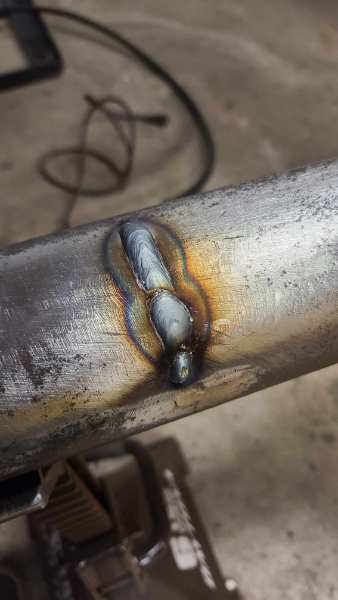
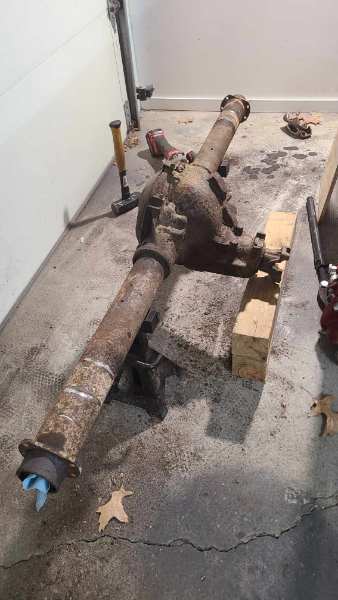
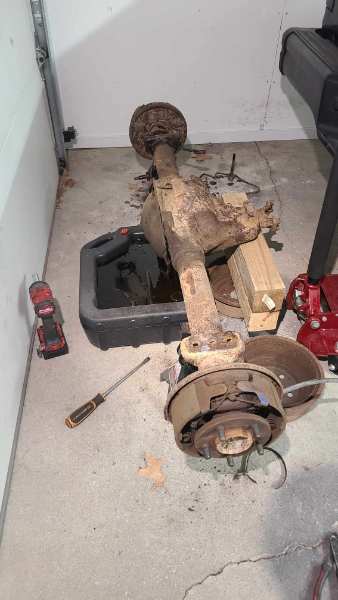
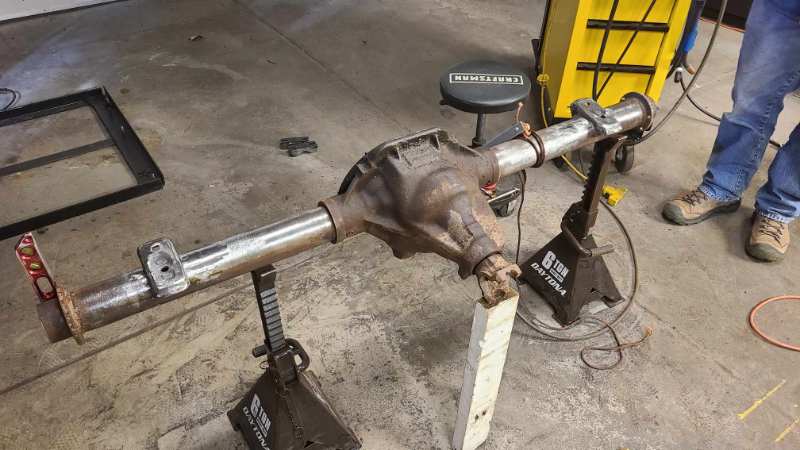
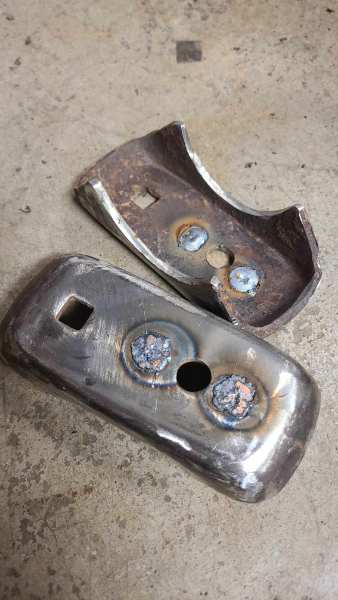
-
91' Eliminator Daily Build
CaptainPatchy replied to CaptainPatchy's topic in Member Projects: Your Comanches
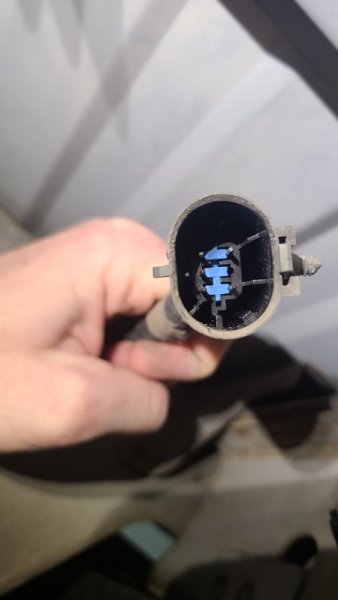
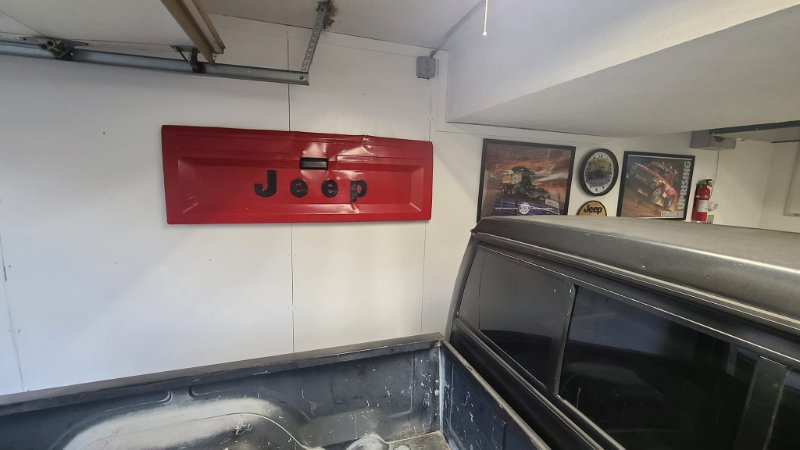
Been away for a bit, I didn't actually take any photos but I swapped the non-functional factory stereo for a reasonably priced bluetooth unit from crutchfield. I also put in some alpine front door speakers I had from another vehicle and put in some rear 6.5" using brackets from boxyjeep.com. Finally gave me audio in the truck, although it is severely lacking in bass at the moment. Boxyjeep also makes wall brackets for mounting tailgates as decoration, and I had picked this bent and mangled one up off a guy from the facebook group. Did my best to straighten it out and clean it up some and... Not too bad for the price I paid, and it looks cool so why not? I'd been busy with starting a new job, and I'd finished the big project(manual swap) so comanche projects had kind of gone on the back burner for a bit. We got a brutal round of cold and well over a foot of snow so going out was miserable, so I kicked up the heater a bit and started looking at the truck again. I'd been a part of the original Oracle LED tailight group-buy, but was looking to replace the entire rear wiring harness to avoid splicing mine. The 91-92 years have a different plug than all the other years (of course) and they're exceedingly hard to find as you can't even buy new connectors anywhere I could find I thought about converting the body side harness to something more available, and then decided I'd had enough. I can always splice them back together, so... first thing, these are BRIGHT. I knew going from faded 1980's tech would be an improvement, but I guess I didn't really think it'd be that much! Obviously don't have a chance to get it outside at the moment, but everything seems to function as factory, I was worried about the low impedance of the led's playing havoc with the flasher. My next project I've got earmarked is I'd like to fix the bad fuel level sender. The previous owner said the float had a hole in it and I know the gauge doesn't read right, as I can run it to empty and only get 8-9 gallons in it. MTS now sells the 91-92 complete sending unit, but I'd like to upgrade the pump while I've got the whole assembly out. Anyone have an recommendation for a factory+ rated fuel pump from a reputable manufacturer? Something like Walbro, Holley, or the like?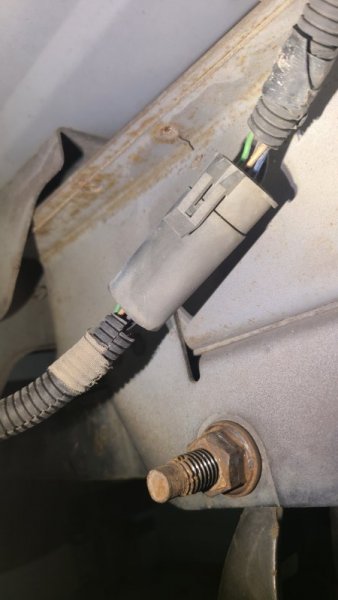
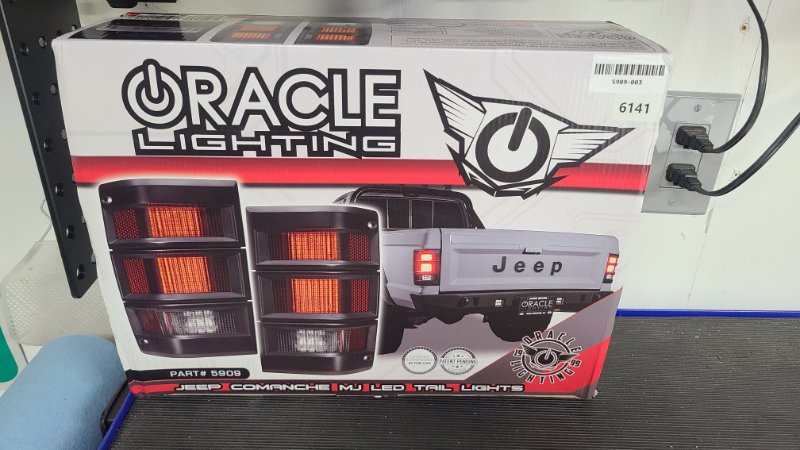
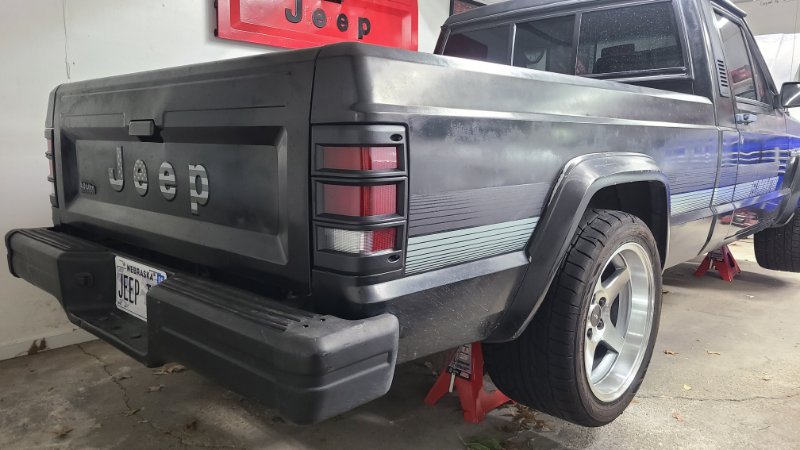
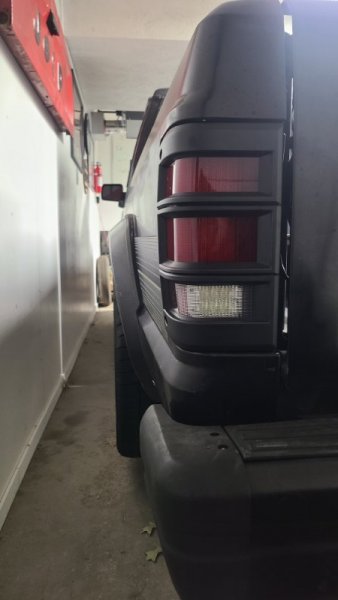
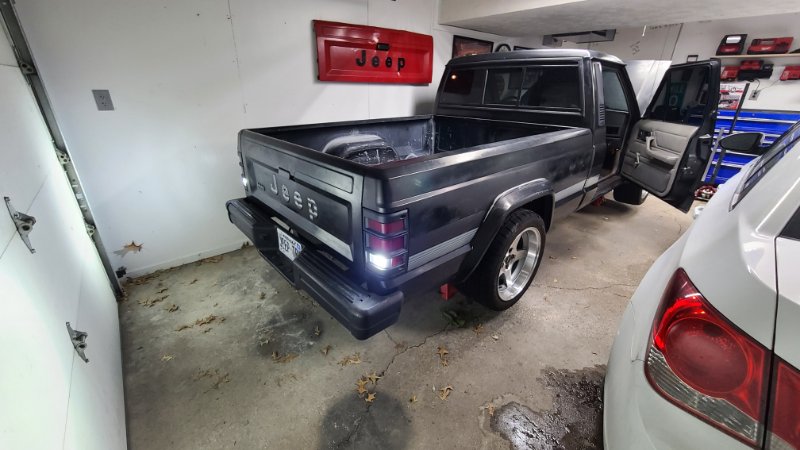
-
91' Eliminator Daily Build
CaptainPatchy replied to CaptainPatchy's topic in Member Projects: Your Comanches
Thank you, I really enjoy how it's turning out. Definitely different than most, but still cool. I wasn't able to find an answer to that question, seems like some guys are able to use the auto crossmember with a manual and others complain of terrible vibrations. I had planned to use spacers to drop the whole piece down 3/4" and use the auto crossmember, but was able to source a manual crossmember for a reasonable price so just went that way instead. They're identical as far as mounting holes and whatnot, other than the drop section in the middle. -
91' Eliminator Daily Build
CaptainPatchy replied to CaptainPatchy's topic in Member Projects: Your Comanches
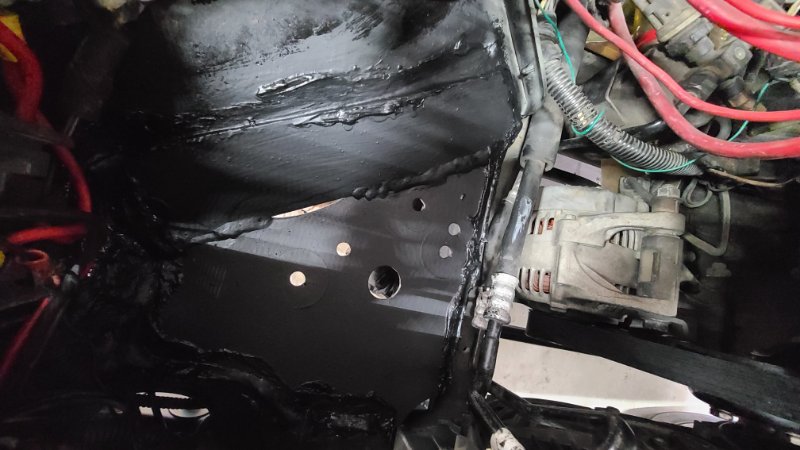
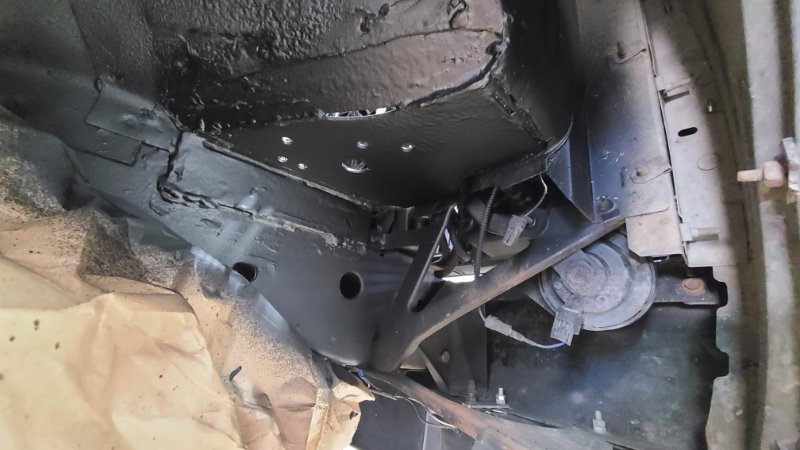
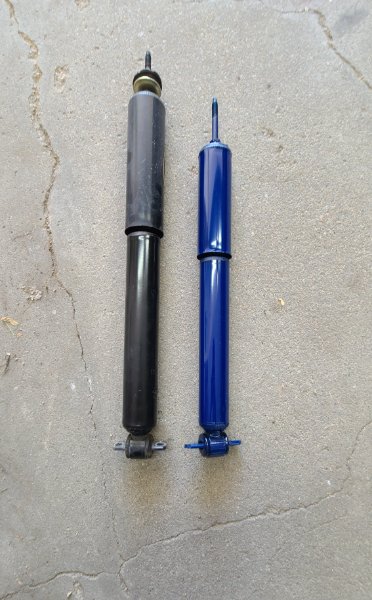
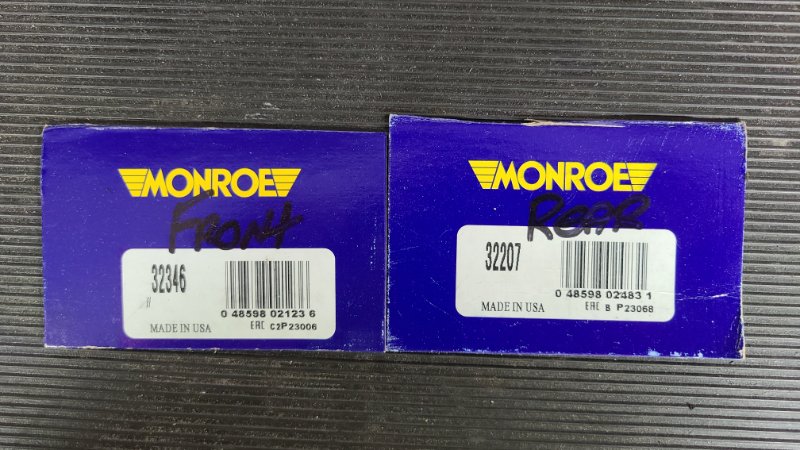
Found the source of my whine, the guy that rebuilt the trans apparently didn't feel the need to put any fluid in it! Got the ~3.5 quarts of royal purple 75W-90 yellow metal safe gear oil in it and she's running and shifting much better. Thankfully I only drove for maybe 20 miles without fluid and only on surface streets so with any luck it's going to be okay. It's much quieter now so that's a good sign? Got the patch panel finish welded in, needed to run a few welds to get it dialed in and looking pretty Not great but plenty of heat penetration. Had problems with the ~16ga frame/fender panel to the 1/8" patch panel but finally got the rust out Looking better, happy with those. Seam sealed all the joints and painted everything with some rustoleum matte implement paint. Undercoated everything in the fender well after paint. I don't really ever drive in the rain so it should last forever but wanted to make it weatherproof just in case. Next up was to get the shocks figured out. Pulled up the PDF of Monroe catalog for every shock they make and cross-referenced the stock MJ length and styles vs. some other lengths and found something ~3-4" shorter front and rear and got them ordered and installed. These are the numbers I used, but mine will be different from most with my custom leafs. Front shock difference. The rear (not pictured) was even worse since they accounted for the 4" drop blocks I removed. Crazy enough they STILL weren't bottoming out but they were still too close for comfort. I also trimmed 1.5" out of the rear bumpstops to give some more travel. It rides much better and smoother now, and doesn't seem to bottom out at all.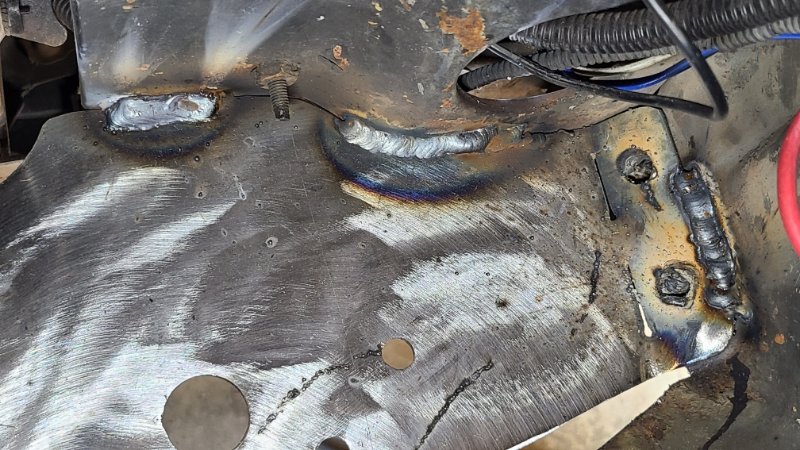
-
91' Eliminator Daily Build
CaptainPatchy replied to CaptainPatchy's topic in Member Projects: Your Comanches
Double update for tonight, got my new wheels/tires back from being mounted and balanced. My old tires were still the 17x9s that had 26mm of offset from an 03-04 mustang cobra. I needed to run 1.25" spacer on the rear to get the rears somewhat flush with the fenders as many have done, but I wanted to get away from the spacers if possible like I said. Enter the new setup: Those are 17x10.5" with 20mm offset matching cobra style rear wheels, with a nice fat lip. Finished them off with 315 wide Nitto NT555 G2 tires. Got it outside under its own manual power to take some quick photos. I couldnt be happier with it! Needs to come out about .5" either side to really be even with the fenders but she's sitting pretty now. Took it for a spin around the neighborhood quick, came back and rechecked the fluids and lug nuts and then took it for a quick spin out on the open road. First impressions are that 1st gear is all but useless! Acceleration is lightning fast even with 3.55s, would probably be a better cruiser with 3.05s but it's definitely quick enough for now. Speedo is STILL off, must have screwed up my math on that one, will have to explore further. Used a GPS speedo on my phone and it definitely gets out of its own way right quick. Had to hurry home to beat some storms but we made it! 4th and 5th gear whine pretty bad, especially under constant light throttle, probably needs more mileage to break in proper bit everything else is running perfect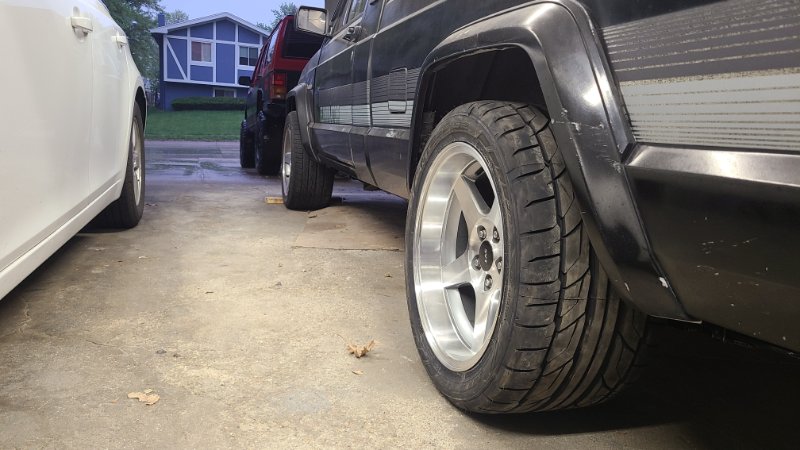
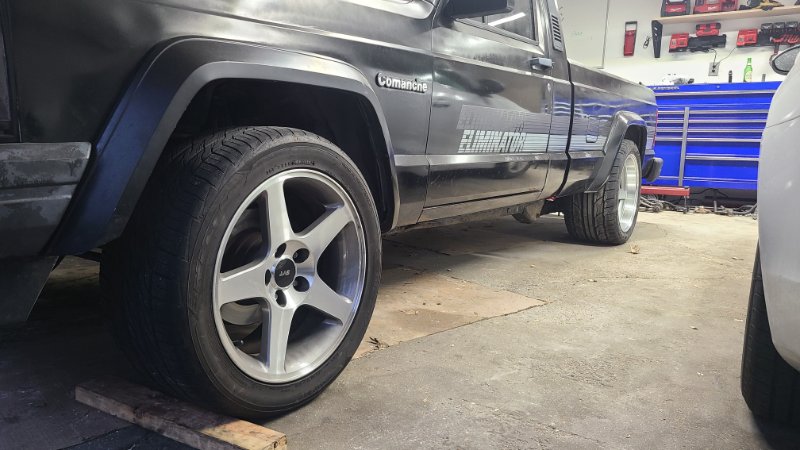
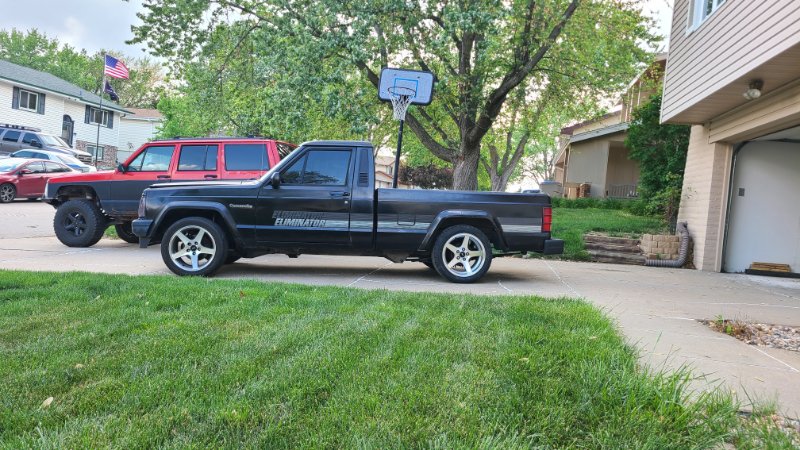
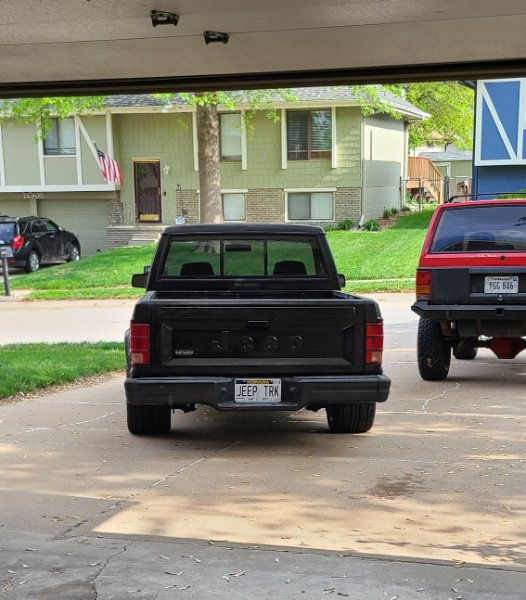
-
91' Eliminator Daily Build
CaptainPatchy replied to CaptainPatchy's topic in Member Projects: Your Comanches
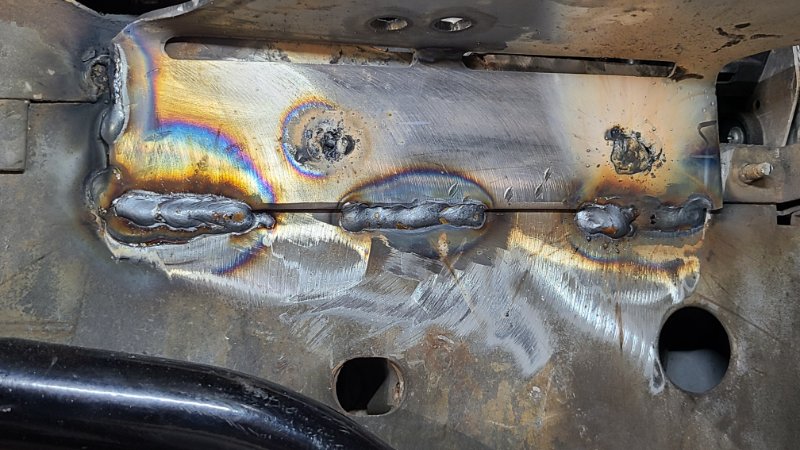
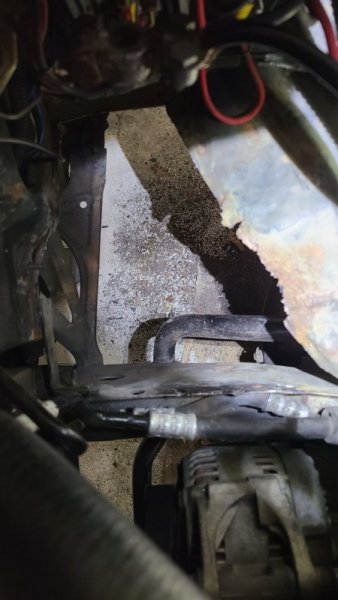
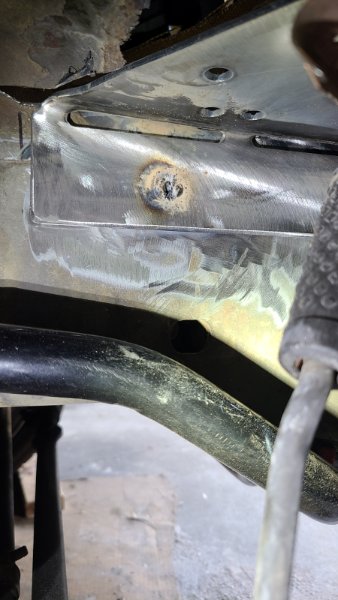
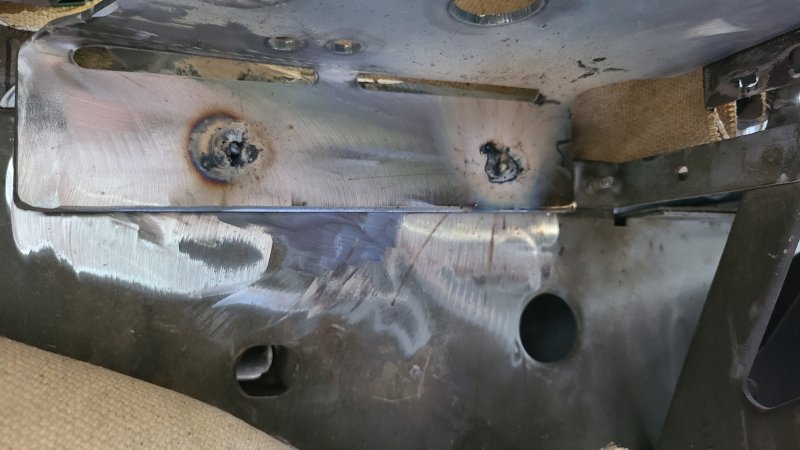
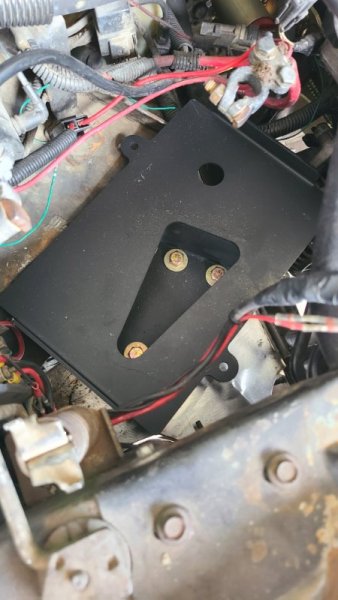
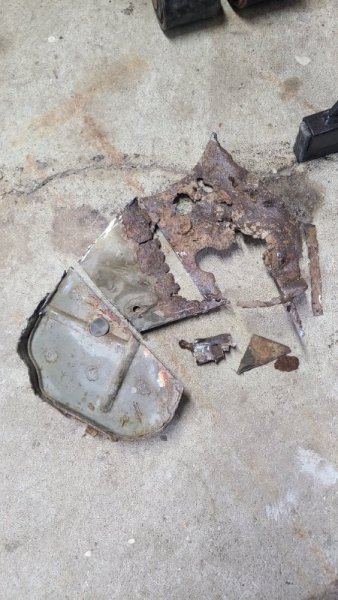
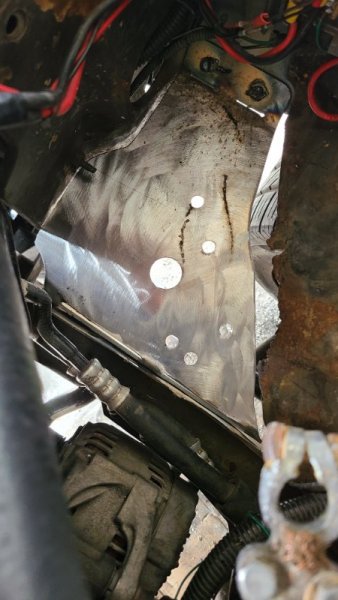
Got the rot mostly cut out from the inner fender. was able to cut/grind the spot welds and hammer the panel out with a prybar along the seams. This is the T&M metal fab panel I picked up. 1/8" plate is a little thicker than the inner fender panel but it's close enough. Got it bent up to follow the lines and test fit it against the frame. Borrowed a 110v Flux core from work to get it tacked before taking it over to my dad's to finish weld it with his 220v Miller and gas. Just wanted to get it secure enough to mount the battery tray so I could drive it over. Did two rosettes to the frame underneath and two small ones to the inner fenderwell up above. Secure enough to mount the dirtbound tray i picked up Battery feels very secure now, I'm going to finish weld it all along the front panel seams and cut some more plate to fill in that area in front of the fusebox but this will do for now.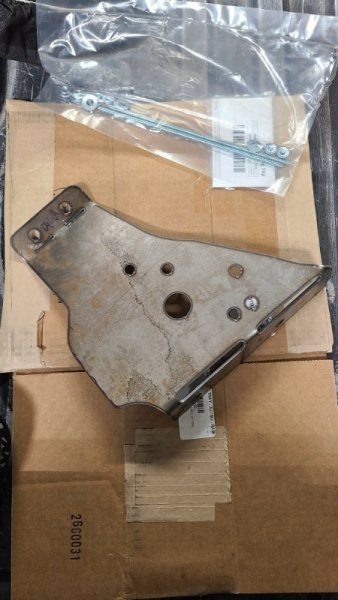
-
Super interested in these as my factory radio/speaker setup doesn't work anyways
-
91' Eliminator Daily Build
CaptainPatchy replied to CaptainPatchy's topic in Member Projects: Your Comanches
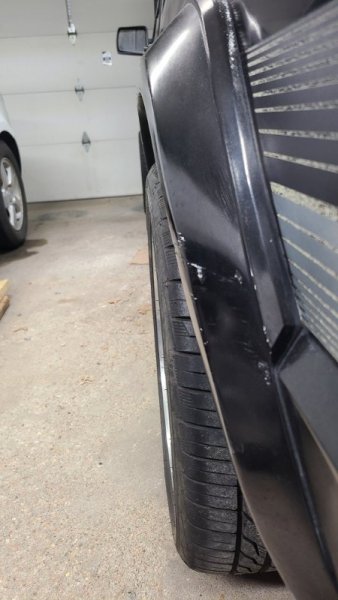
Sneak peek of another project. Old rear wheels with the 1.25" spacer from earlier. I've been really happy with them, but I don't like the idea of spacers at all so I'm working to get away from having to use them. Just a personal thing. And the fitment with the fender Again, I've been really happy with the look and fit of these wheels, however I have something else in store for the rears... No spacers on these, different offset and width. They're really close, by my math about 5mm further in, so slightly less than 1/4". I took the opportunity to measure my stock, 91' MJ dana 35 rear axle with drums and found it to be 60.625" (60-5/8") wms-wms. Information on these numbers is varied, and hard to come by but that's mine confirmed for this model,year and trim. Do with that what you will internet! I'd like to upgrade my rear anyway, so if I can find a rear axle with a measurement of ~61.5-62" I'd be happy but more research is needed. I could always run slightly longer studs with 1/4" shim spacers but that's a last resort. If anyone has any suggestions I'd appreciate it. Everything I've found says the late model 8.25s are around the same except the Liberty is ~63" which is a bit too wide but we'll see. I've looked into custom width 9" rear ends just with the wild thought I might V8 swap it down the line but they're pricey. The idea of an oem axle for cheap that's close to the right width and strong enough for the 6 now is appealing.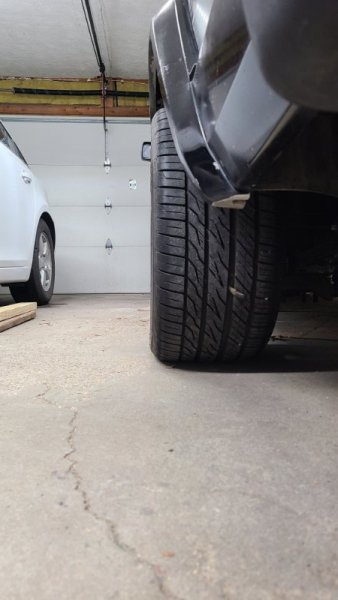
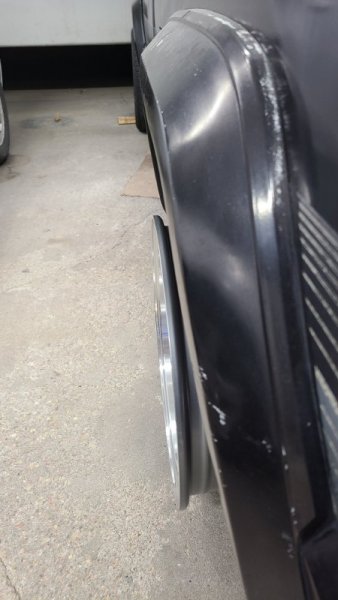
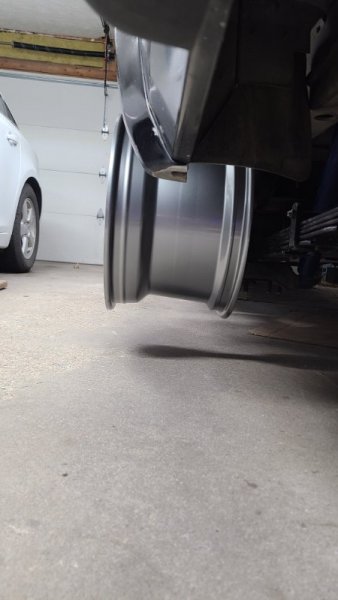
-
91' Eliminator Daily Build
CaptainPatchy replied to CaptainPatchy's topic in Member Projects: Your Comanches
I know right!? I've got a problem with tinkering with things I did however, completely forget one crucial thing that I had noticed while early in the disassembly. I've always said this truck was completely rust free, (minus a little surface here and there) but I had found a spot of rot right under the battery tray that was real bad and needed attention. Somewhere between the "garage-majal" reno and a million other little things I'd totally spaced it. Life gets in the way, ya know? Normally I'd chalk it up to "not critical, fix down the line", however this particular spot doesn't allow me to bolt the battery tray down to anything so that big hunk of electric mayhem is just sitting there, with nothing stopping it from shifting, shorting, and destroying, my prized vehicle. I've already ordered a T&M patch panel for this, and I splurged on a metal Dirtbound battery tray to finish the fix. Luckily, it's 40° and raining right now, so I've probably got a week or two before the nice weather is here to stay. I've pretty much made my deadline to have it "finished" by the time spring rolled around so tonight I'm just finishing off a few last minute touches.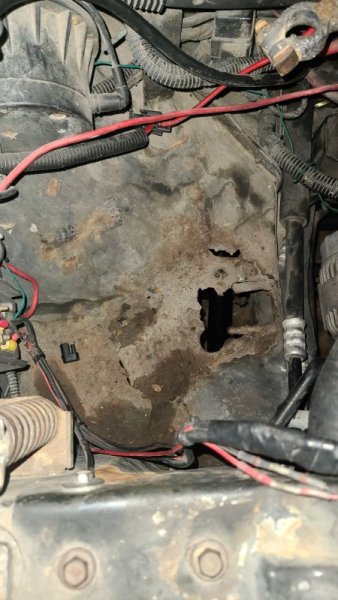
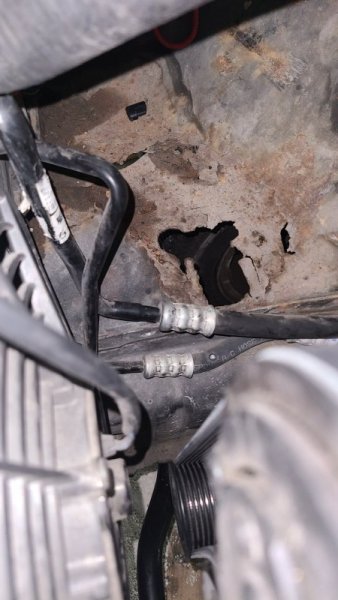
-
91' Eliminator Daily Build
CaptainPatchy replied to CaptainPatchy's topic in Member Projects: Your Comanches
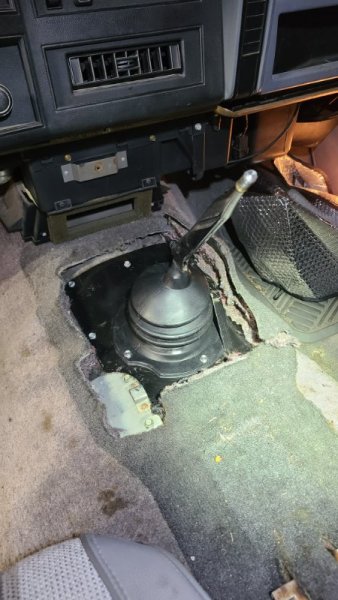
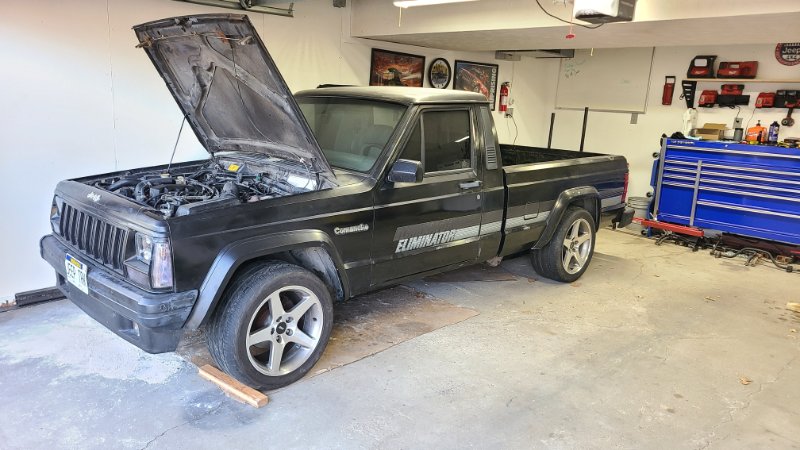
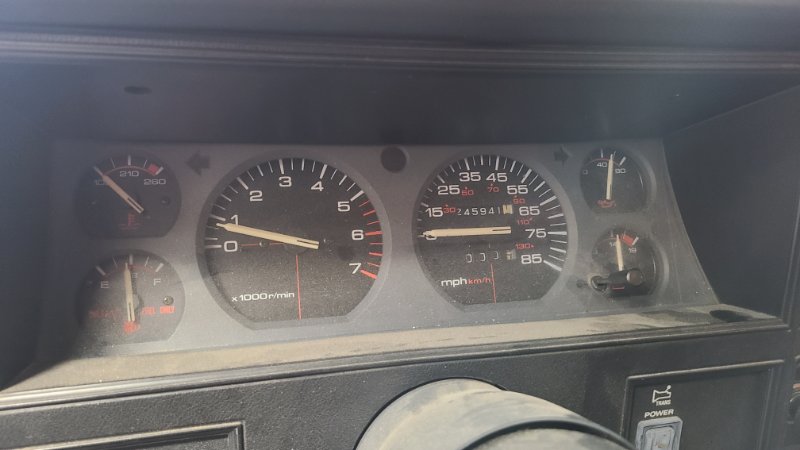
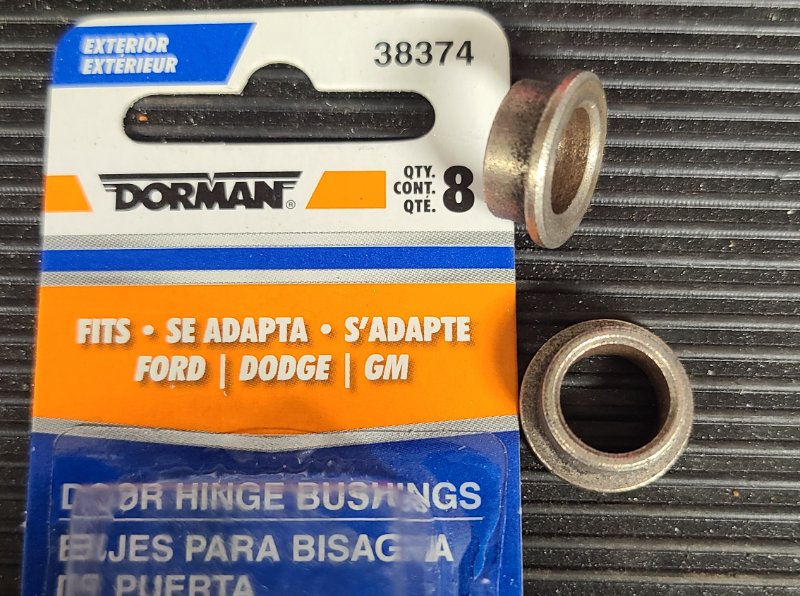
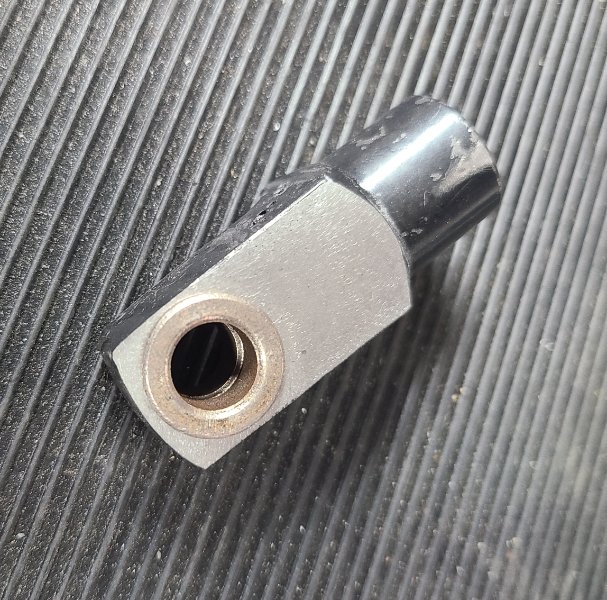
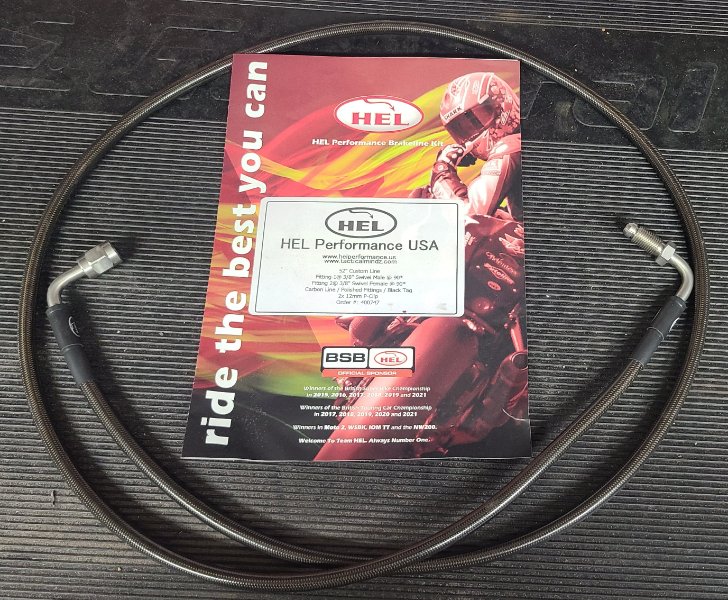
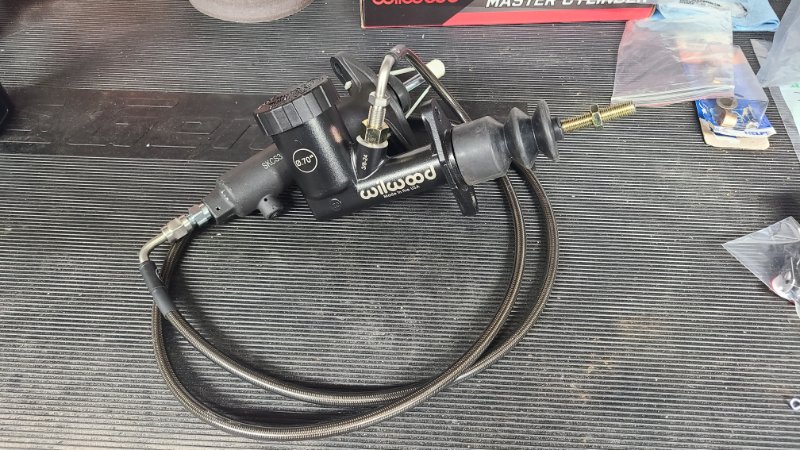
My Hydraulic line came in and it looks very nice for a custom piece at the price I paid! (~$60). before I did anything, I loosely mounted it to the master, and spent some time fishing the line down to make sure it was long enough. I had measure 52" beforehand and that might have even been a little long still. Probably could have got away with a straight end connection and 50". But after checking, I got the whole assembly put together. I also knew I needed to do something about my clutch pedal linkage. Metal-on-metal wouldve eventually caused an issue so I wanted to get some kind of bushing or wear part on there that would be easily replaced down the line. Was able to find this Dorman hinge pin pack that had 2 that would work. Just involved drilling out the center pin to 1/2" and then the bushings are 3/8" i.d. After reverse bleeding the clutch and seeing no more air bubbles I was ready to install! Went in super easy and the first press of the pedal easily broke the nylon straps free on the slave. Put the battery back in and disconnected the fuel pump resistor. My thought was I could crank it to build oil pressure since it'd been off for several months then reattach the resistor and try to start it, however the jeep had other ideas. I got about one ka-chunk of the starter and she fired right up! Promptly ran herself out of fuel, but she fired! I was stunned, I had read all about the nss issues, and ckps sensor problems, flywheel issues, computer issues and everything in between and I had all but convinced myself that I was gonna have to troubleshoot before it would run. Oh well, reattached the ballast resistor and primed it a few times and whadya know? good oil pressure, no leaks and purring away happily with no issues! Well, i said no issues but while it was up on the stands running I tried to cycle through the gears and it felt like for some reason the clutch wasn't disengaging all the way. I'd have to ride the synchros to get it to slot into gear and I knew that wasn't right. Tried adjusting the pedal out to give me more throw on the master cylinder but after measuring I was getting the full 1.25" throw on the master so that wasn't it. Brought the linkage back in a bit so I wouldn't destroy the master seals and pumped it several more times and didn't see any air bubbles so I was at a loss. Posted in the Facebook group asking for ideas and one guy said that his pilot bushing had been just a little bit too tight brand new and had caused the trans to slowly spin and keep it from engaging. Remembering how much of a bear mine was to get in, I took his advice to start it in gear, with the clutch and brake held down and to let it run for a few minutes to kind of "bed-in" the pilot and less than 30 seconds later we were good to go! Took it for its inaugural spin around the neighborhood as a manual and could not be happier! It's a blast! Got back and buttoned up the interior Can't believe it's done, need to find something else to do now!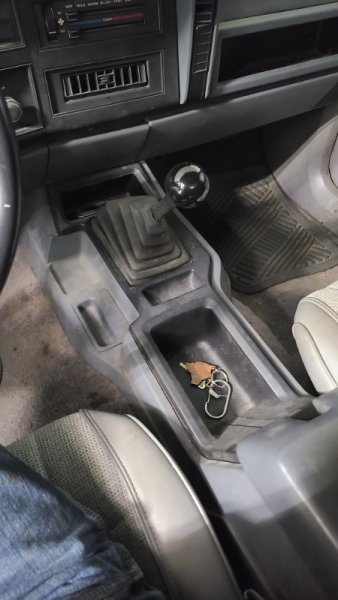
-
91' Eliminator Daily Build
CaptainPatchy replied to CaptainPatchy's topic in Member Projects: Your Comanches
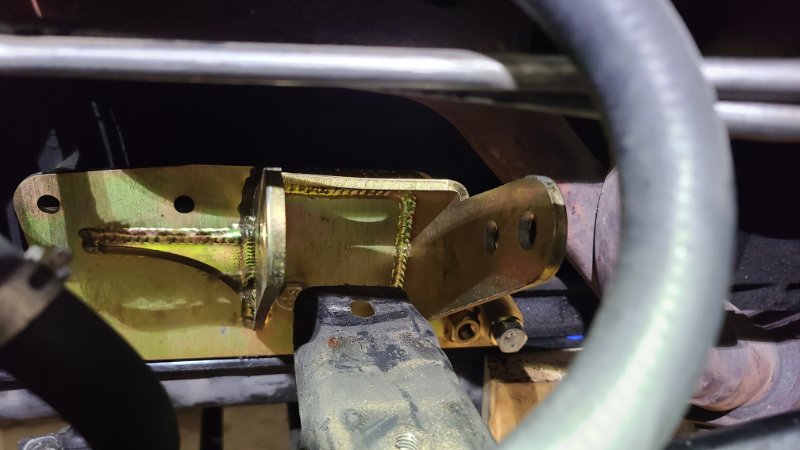
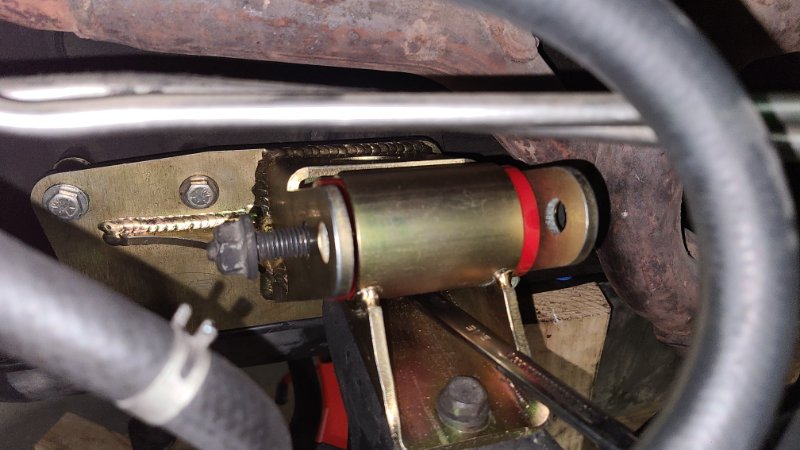
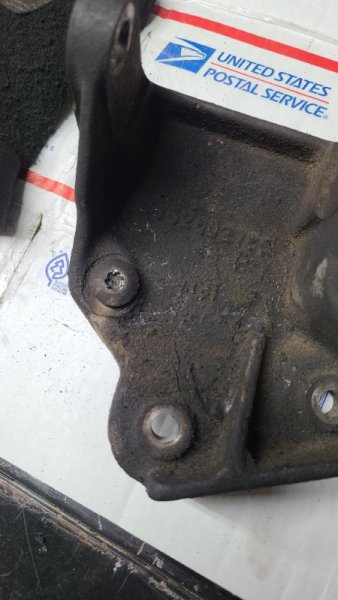
Struck out trying to source a Hydraulic hose locally. Apparently, the 3/8-24 inverted flare uses a size 3 line that is very uncommon for vehicles or equipment, so while they were able to tell me all about what I'd need, no one local had anything to help me make the line. So I found a shop about 3 hours south of me that makes custom length and style motorcycle lines(what the hydraulic guy said that size line would commonly be used in) so hopefully that'll be here soon. In the meantime, I had purchased motor mounts and block plates to go with my trans mount but was going to put it off until after I had the truck running, so I decided to tackle those this weekend rather than just do nothing! Started off with the drivers side. With the airbox out of the way, it looked significantly easier, and it went pretty quick. Before I started, I took the trans mount nuts completely off so it had as much flex as it wanted. I'd read that leaving them attached would destroy the mount. My existing mounts weren't as bad as some I've seen, but especially on the passenger side, looked like theyd seen better days. Plenty of room to work on the drivers side anyways And (mostly) done! Left the actualy mounting bolts loose until i got both of them in. The only photo I got of the passenger side was the godawful T45 torx bolt that was on the oem mount in one spot. Whatever engineer thought that was a good idea should be beaten. The passenger side was significantly more involved than the driver side was. Between the oil filter, ac lines and bracketry/condenser(?), alternator and all the electrical connections there was alot more going on to work around. I don't think it'd be possible to install the bracket without taking the alternator loose, so that of course meant getting the power steering pump loose to remove belt tension, and then getting the alternator bolt out involved removing my electric fan setup. Kind of a "one thing leads to another and another and etc." sort of day but I was finally able to get them all blue locktited onto the block, and get everything put back around them. Snugged both mounts down to *tight* Ft.-lbs. And reattached the trans mount nuts.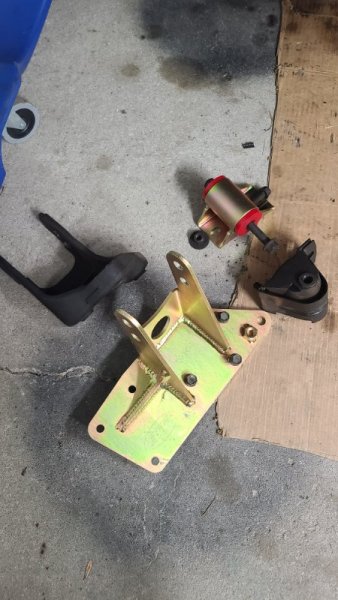
-
91' Eliminator Daily Build
CaptainPatchy replied to CaptainPatchy's topic in Member Projects: Your Comanches
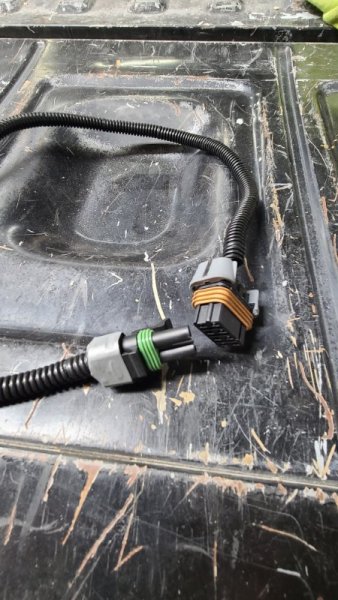
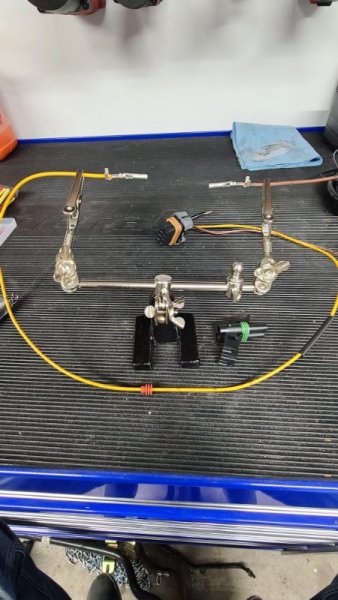
Tackled the wiring tonight, used this diagram to pair connections B & C so the starter will engage anytime. I like to think I'm smart enough not to start it in gear, as that's how my 88' was set up anyways. Also wired up a pigtail for A & E with a connector to have reverse lights. Spent some time soldering and getting the connections all set up Finished product. I used a cheap NSS connector that i cannibalized for the pigtail and factory plug so it would all just connect. Found the proper reverse connector as well and got it all put together. i nervously hooked up the battery, and success! Reverse lights work as intended and I briefly hit the starter and it all works! Just need to get that hose made tomorrow and bleed the clutch and it should hopefully fire off. Ive read mixed reports on differences between manual and automatic crankshaft position sensors but I hope that just a renix-era thing and mine will still work no problem.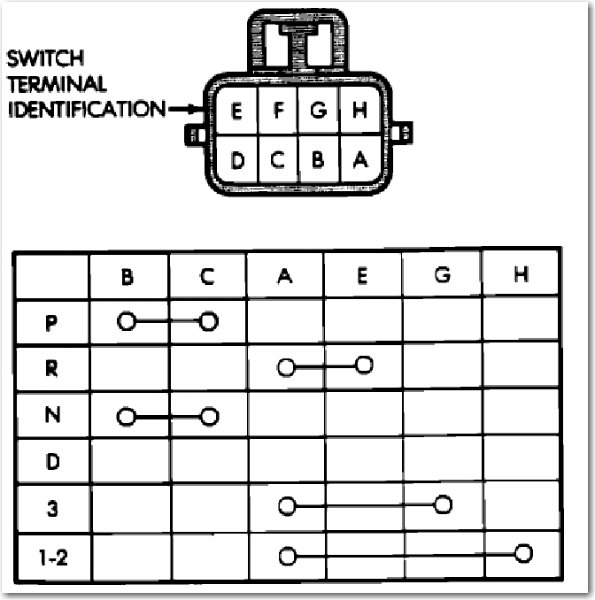
-
91' Eliminator Daily Build
CaptainPatchy replied to CaptainPatchy's topic in Member Projects: Your Comanches
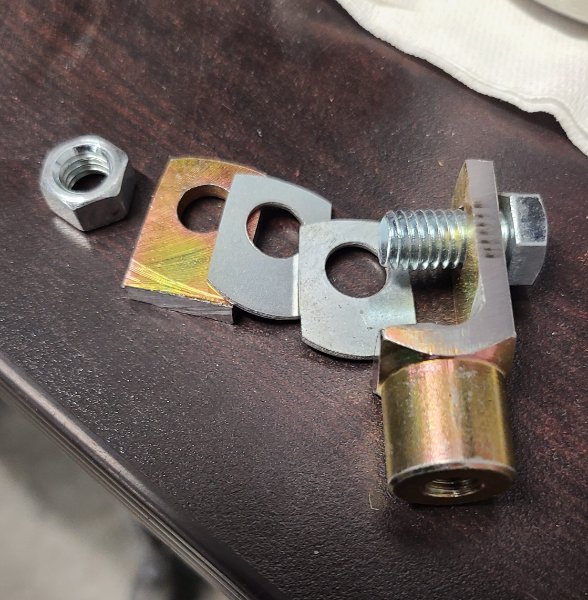
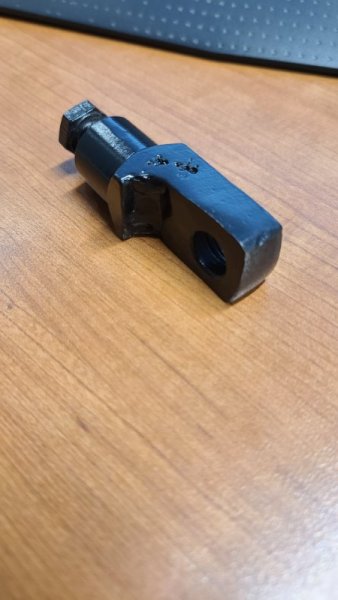
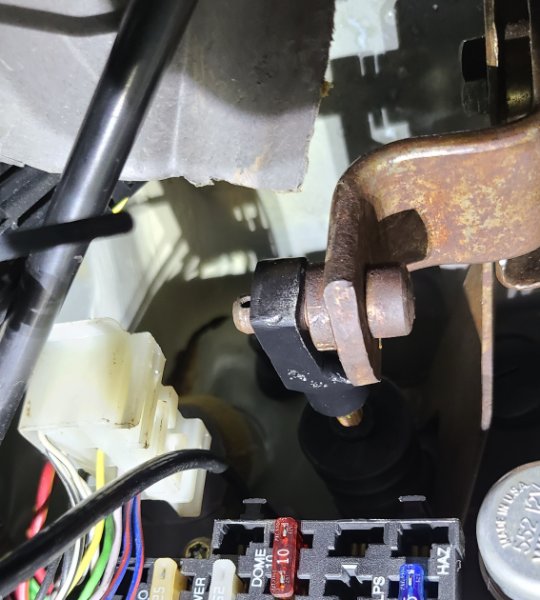
While I had a little downtime at work this week ie as able to get the clevis cut down. Then I used a nut and bolt and some stacked washers to space it out to the appropriate width. i asked one of our welders to see if he could Tig it together when he got a second, and after a quick grind and some paint it was done! I messed up and used galvanized washers by mistake which kept offgassing and causing void, but since this is way overkill vs. the stock solution I'm not worried. Was able to get it mocked up and it looks like it should give me enough room for a nylon(?) shim to avoid metal to metal contact but it functions perfectly. Taking my clutch combo to get the hose made hopefully tomorrow!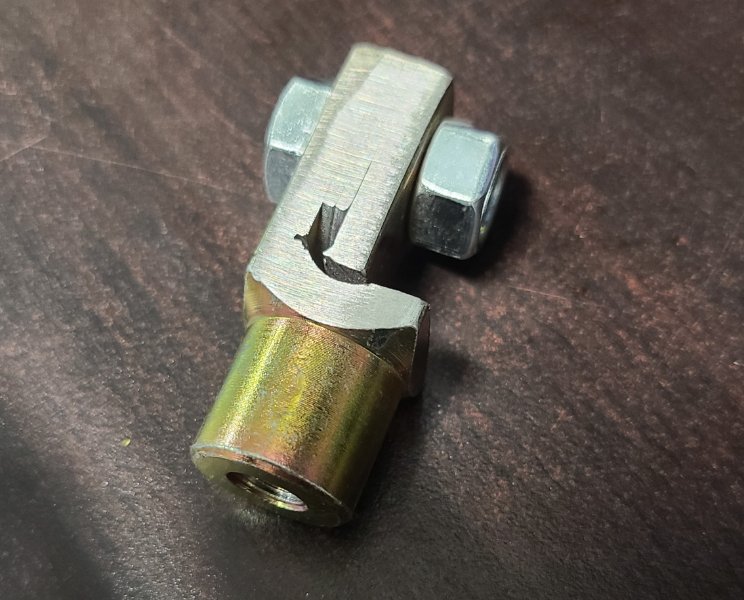
-
91' Eliminator Daily Build
CaptainPatchy replied to CaptainPatchy's topic in Member Projects: Your Comanches
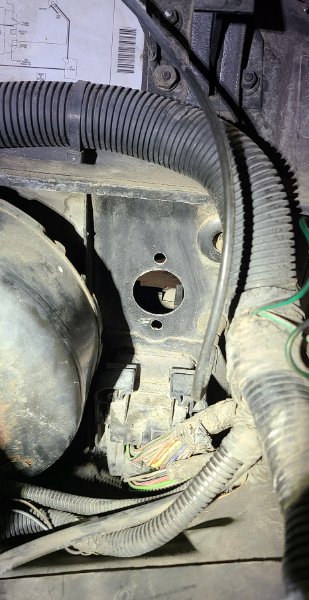
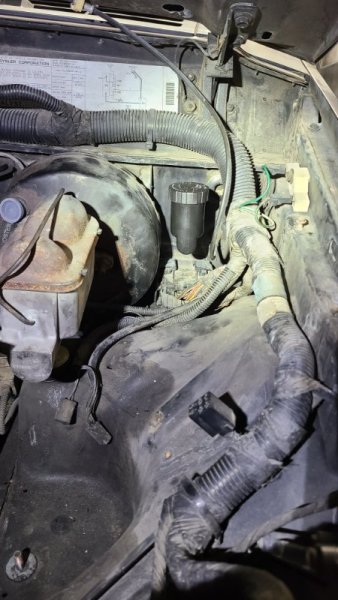
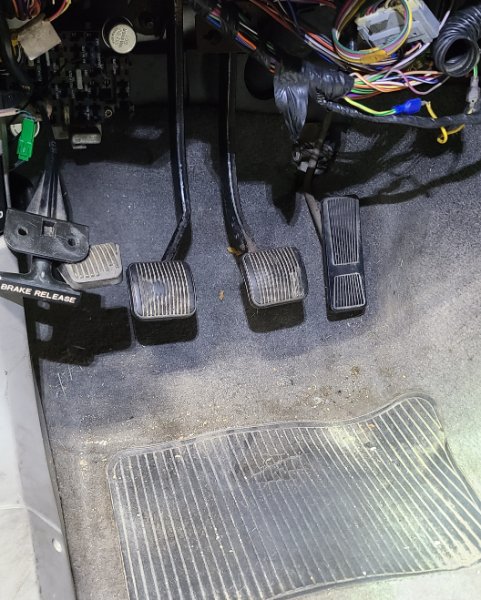
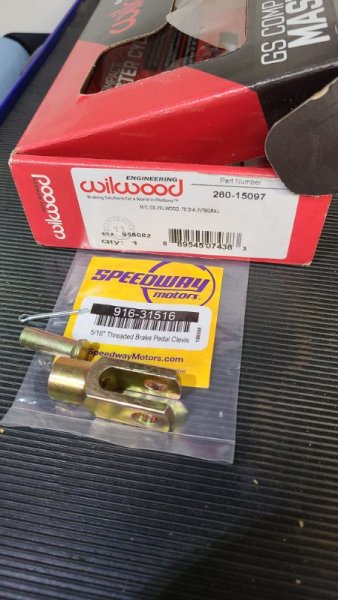
Would I just connect the positive and negative leads to some welding cable and run that to the back or would I need another distribution block somehow? Might be a project for down the line. Did the pedal swap this weekend. I'd been putting it off since I heard it can be a bear for tall guys. With the center console and drivers seat out I had enough room to contort myself up under there on my back. Got the old pedal box removed. Not pictured is the clutch master bracket, but it was installed! Then while I've got room under there, I was able to drill small pilot holes from the inside at the 3 divots the factory so graciously provided me and then go to the engine side of the firewall to drill them out to size. Made sure to cover the fuse box with tape and a paper towel first to peotect against metal shavings. Used an 11/32" for the bolts and 1&1/2" holesaw for my wilwood master cylinder. The factory stud on the bracket was a m10x1.25, 20mm long if memory serves, so I grabbed another cap screw that length along with two lock nuts and got the master mounted. Required me to get a socket on the inside bolt head with about 18" of extensions so I could reach the wrench from the fender to run the nut down. Looking good so far! Also got the pedal box mounted. Finally 3 pedals! So now to get the wilwood master connected to the actual pedal. I was able to find this 5/16" threaded clevis from speedway local-ish to me and while it fits the pin on the pedal, I'm gonna need to modify it slightly to work proper. Here's the part #s for the master and brake clevis. Basically the clevis portion, while it fits the pin nearly perfectly for bore diameter, it's as wide as the pin is long, so I'm going to chop one side off and move it to the center and then re-weld it to provide strength. I'll be pairing the wilwood master with a slave from a company called Quickdraw that sells an all metal slave with bleed screw and a -3an fitting for the ax15. The whole purpose of mounting it is I needed a distance from the master to slave cylinder so I could have a local hydraulic shop make me a custom hose to fit my application. I used a piece of tie wire to mock up a routing and give me a length and came up with ~52", which I believe is close to what Novak specs for their kit. I know I could have just used a pre-bled kit but I didn't want any plastic parts in the system so I'm building a (hopefully) robust system from parts. Not pictured, but I retorqued my harmonic balancer bolt, installed the driveshaft and exhaust, and finally did a quick oil change. Getting real close to a first fire! Need to tackle the NSS wiring and get my connector wired up for the reverse lights. Finally I've got motor mounts to do at some point, but we're getting there.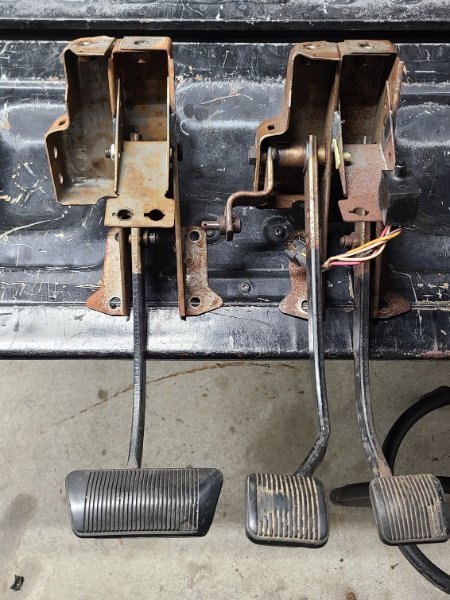
-
91' Eliminator Daily Build
CaptainPatchy replied to CaptainPatchy's topic in Member Projects: Your Comanches
I went to install the crossmember last weekend and thought to myself, it doesn't make sense to install old rusty/crusty used parts right alongside new stuff. Since I've got the means, I spent some quality time with a wire wheel and flap disc and cleaned all the rust off the crossmember and adapter. Then gave them several coats of self etching primer and some satin black. Took them home on Friday and got the trans installed and bolted in tonight. Starting to come together from that giant pile of parts it was! Partly for fun and to lock the trans in gear while I was installing it, I got the shifter all mounted up and gently ran it through the gears. It's been too long since I owned my 88' to be sure, but the short throw shifter feels great. I can't wait to get this moving under its own power! There's not much left to do at this point. I've saved the pedals for last since that's the part I'm least familiar with, but it's really motivating to see what was once a huge pile in the corner of the garage and bed of the truck, shrink into just a few parts left to install. I decided to do the Stinky Fabrication trans mount, motor mounts and block plates while I had everything out but we're getting close! Does anyone have any experience with battery relocation on these? I've got a huge AGM battery from my old BMW project that was barely used I thought would be nice to stick in the bed if that's simple enough to do.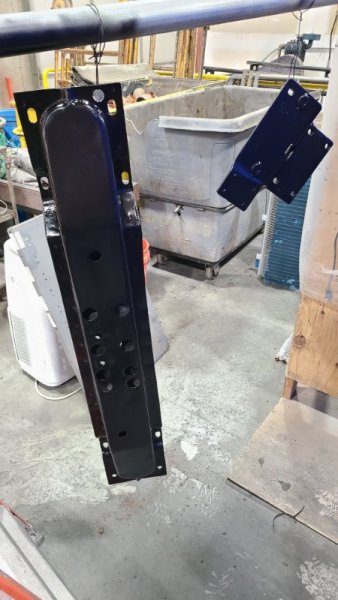
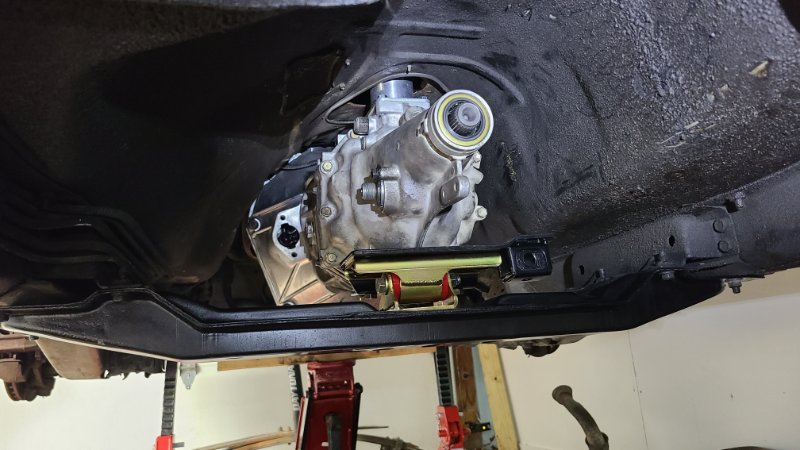
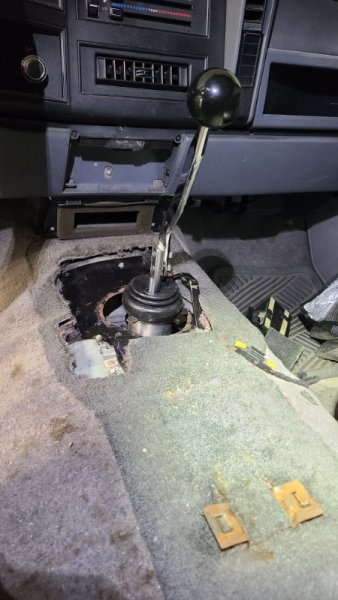
-
91' Eliminator Daily Build
CaptainPatchy replied to CaptainPatchy's topic in Member Projects: Your Comanches
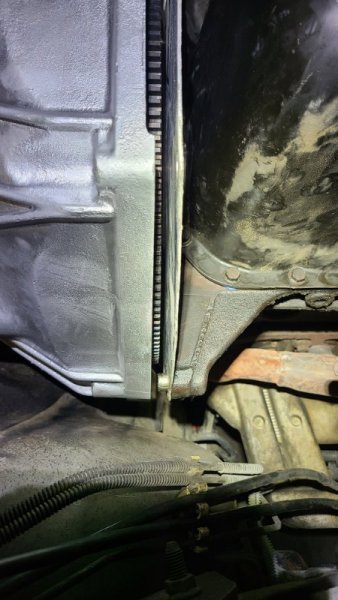
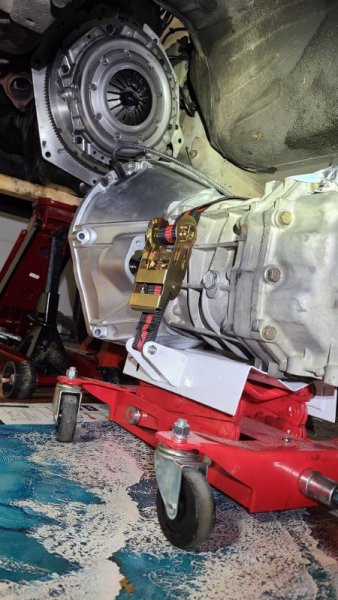
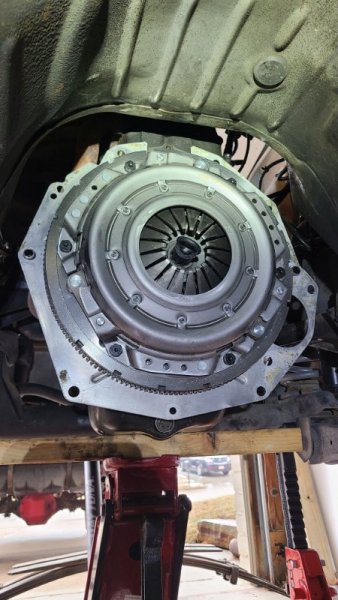
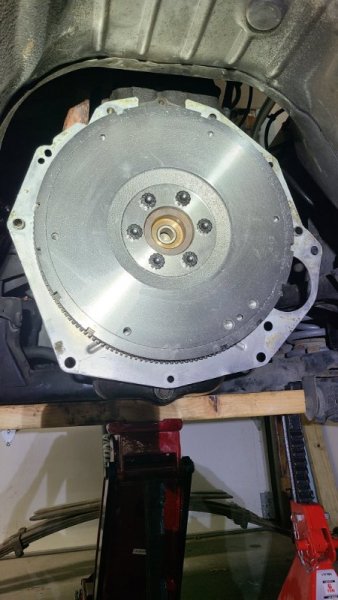
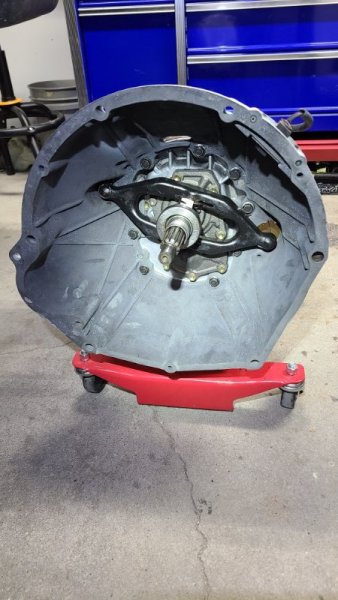
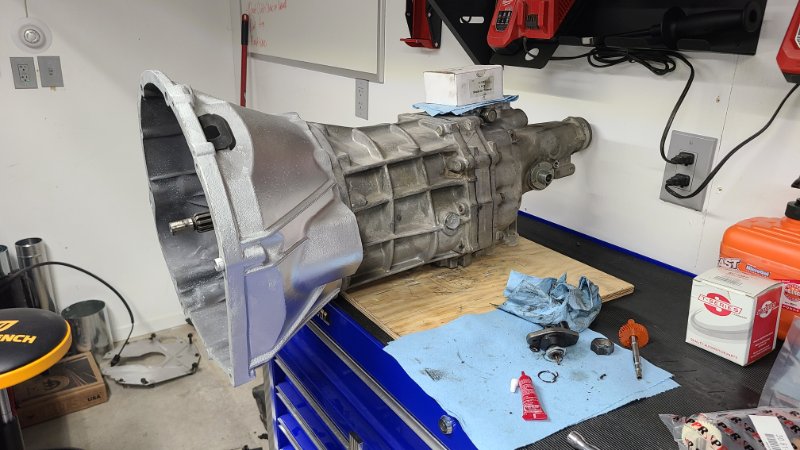
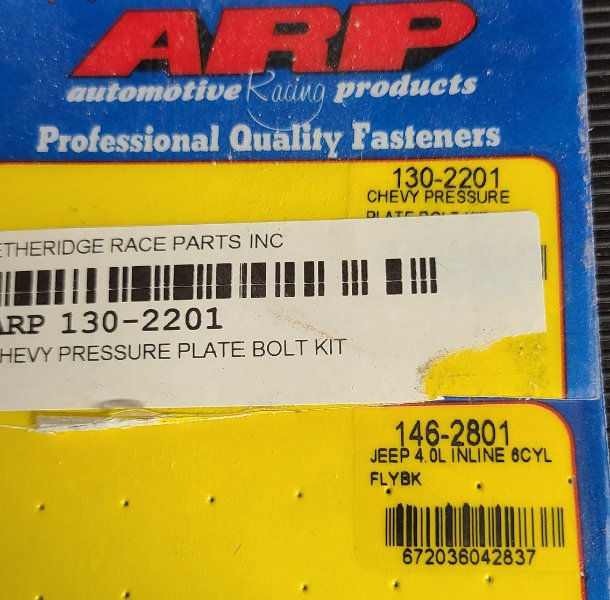
Well, I don't know about ANY opportunity Pete, but it needed to be done anyways! Got my bellhousing all cleaned up, a little too good actually, makes the clean trans look kind of dirty but oh well. Got the Shift fork, new Throw out bearing, new pivot stud and clip all installed on the trans and ready for install Next up was to clean an install the flywheel after the bronze pilot bushing in the crank. I used ARP bolts for both the flywheel and pressure plate. Flywheel torque at 105 ft.lbs. and pressure plate at 55 ft.lbs. per my FSM and internet research. These are the two kits I used for both, with blue locktite #242 to make sure they stay there! Then it was time to get the trans installed! I had a jack/wood under the oil pan and a jack under the trans to hopefully get the angle and height perfect for an easy install. However, an easy install it was not. After pushing, checking, adjusting, pulling, checking the clutch disc and bushing size, raising, lowering and every other possible combination, I just could NOT get the trans to seat. For hours, this was as close as i could get it, just barely too far out to grab a thread on the two bolts at 9 and 3 o'clock. Finally after a much deserved breakfast burrito for dinner, I was able to lay on my back behind the trans, straddling the case with a foot on each side pushing, and swinging a deadblow mallet between my legs onto the back of the trans to get it to slide that last little bit so I could start the bolts. And with that, I move a step closer to my goal of driving it come springtime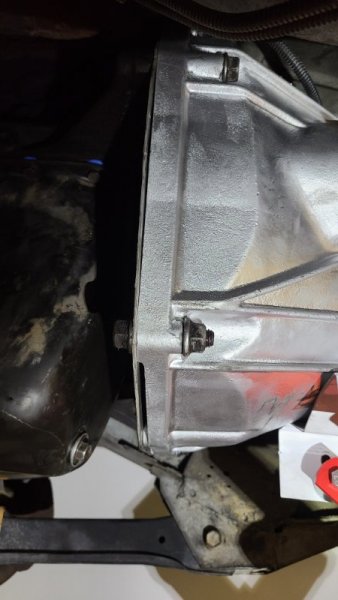
-
91' Eliminator Daily Build
CaptainPatchy replied to CaptainPatchy's topic in Member Projects: Your Comanches
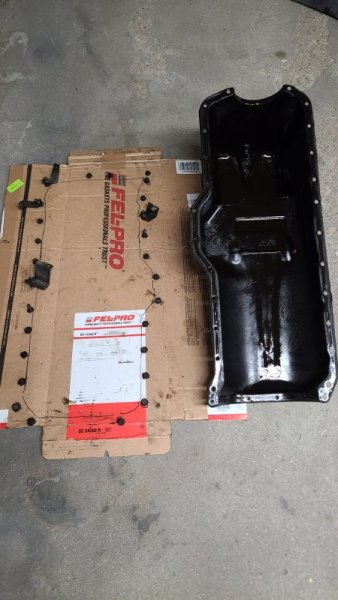
Today was a big day, I've never done a RMS on any Jeep I've owned so I figured I'd start early and be careful. Oil pan was easy enough, I've done a few of them before. Looking pretty dirty down there, but for ~245K miles what do you expect? Something back here has been leaking for a WHILE. The rear bearing cap was covered in grime and build up. Got the seal out and bearing cap cleaned out. I'm a little out of my depth here, but I think the bearing looks pretty good considering the mileage? No wierd wear mark or anything unusual so back in it went with a new seal! Both ears pulled off the lower seal trying to remove it from the cap, but the pocket the seal sits in was full of oil. Leads me to believe the seal was most definitely NOT sealing anymore. Fought with the upper seal, had to eventually loosen caps 4 & 5 to give the crank enough play that the seal would finally push through, but finally got it out and got the new upper installed. Put just a drop of Rtv on the cap where the two halves meet, then cleaned the pan up amd got it ready for install. All done! This was MUCH easier to do without the trans in the way, so I'm glad I decided to do it all seeing the condition of the seals now. Now to get cleaned up and get ready to install the manual sometime soon.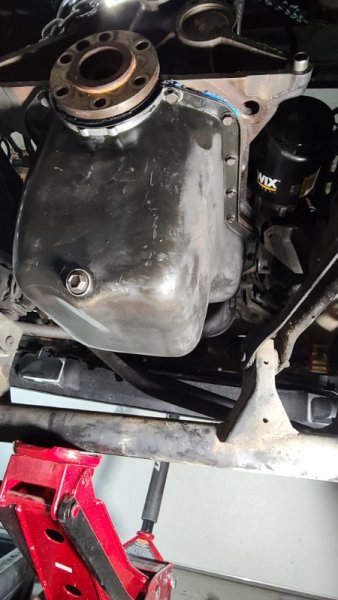
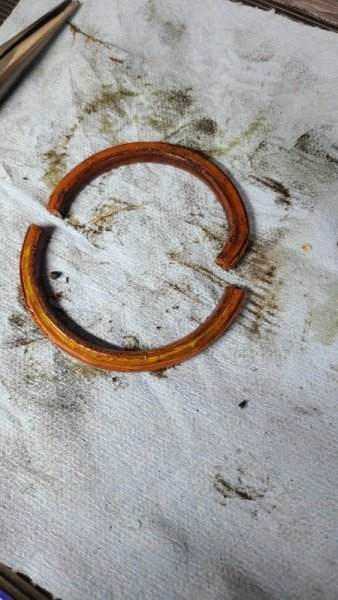
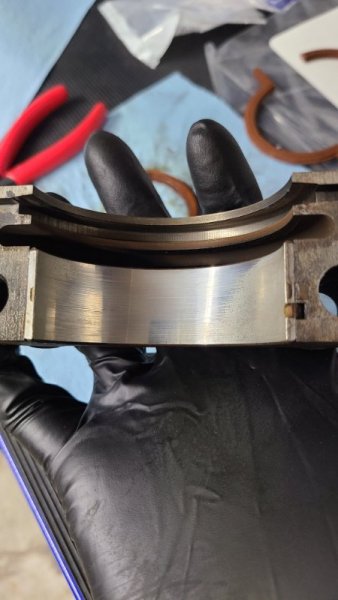
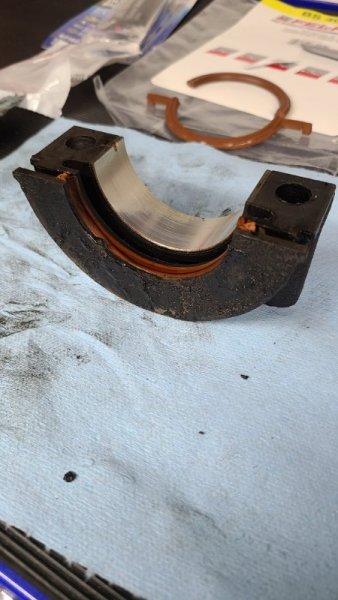
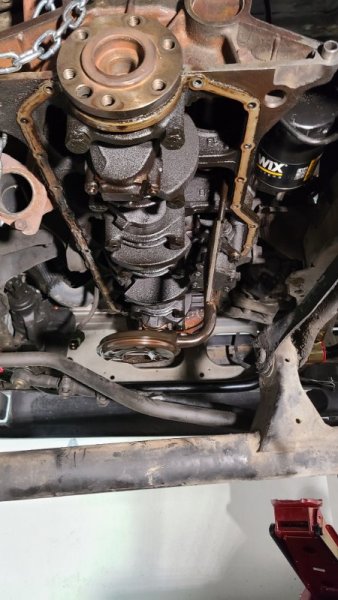
-
91' Eliminator Daily Build
CaptainPatchy replied to CaptainPatchy's topic in Member Projects: Your Comanches
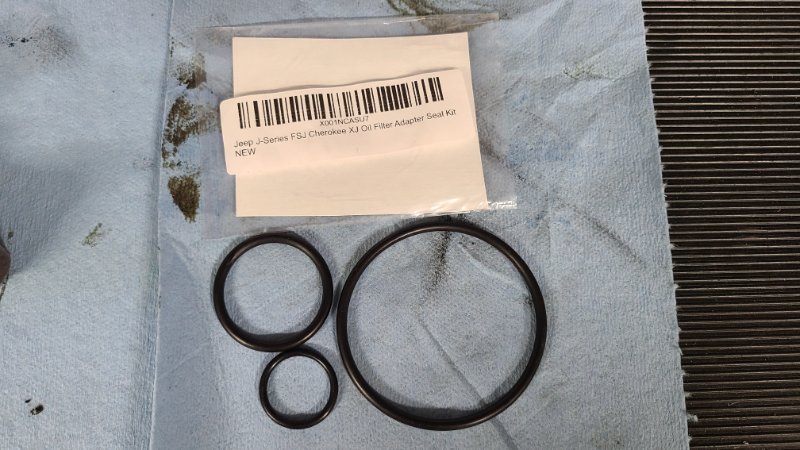
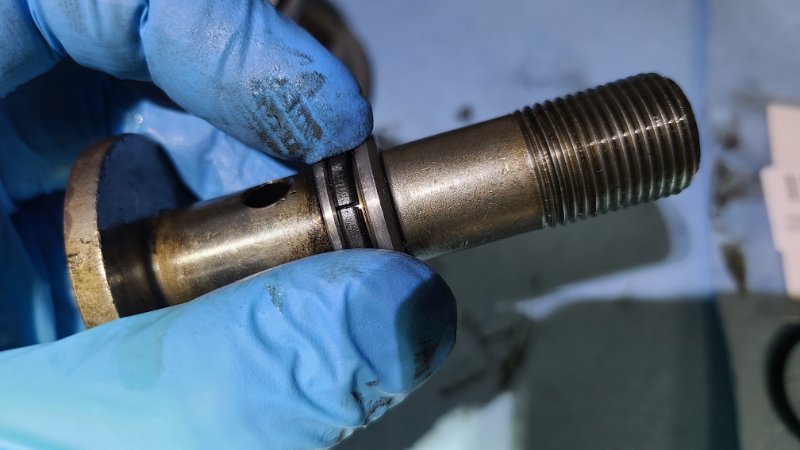
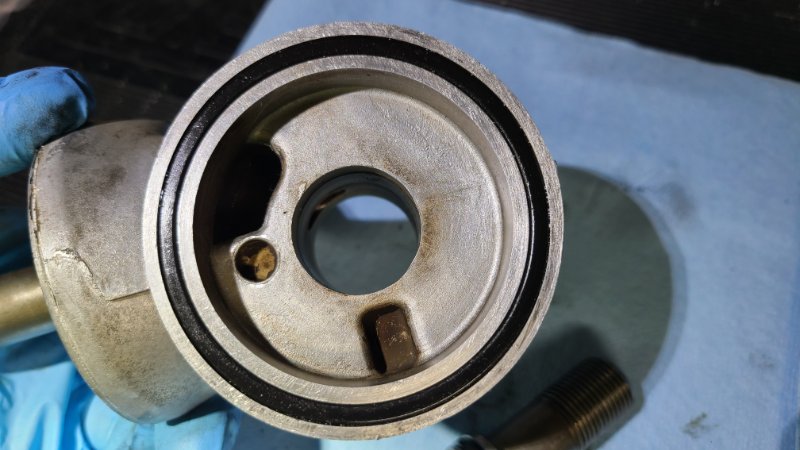
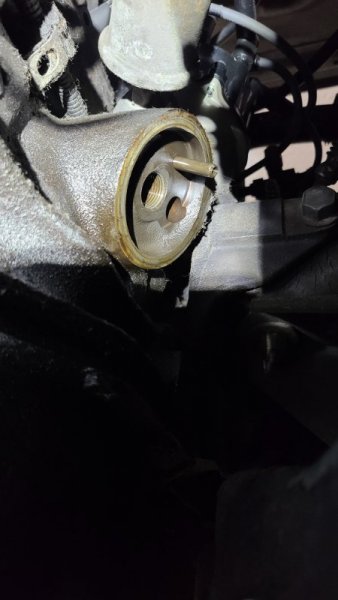
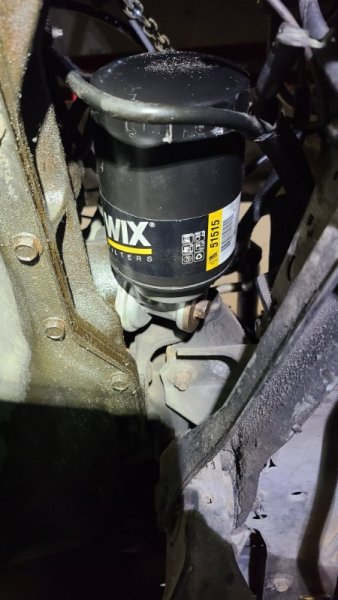
I had ordered O-rings for the oil filter adapter because I've got quite a leak at the back of the engine as I'm sure the pictures have shown. I had assumed (I know) that the change from renix to chrysler in 90' would mean I had the later model O-Rings like my 95' XJ had, but I was wrong as I quickly found out when I removed it the first time. I did some searching and found the early 90s used a different kit, so I got that coming, hoping it would be right this time. This is the kit I got: Thankfully, second time was the charm and they all looked to be the right size. When removing the old gaskets I think I might have found the source of at least one leak. The secondary reason for the change is I never liked how the filter pointed straight up vs. the horizontal mount of my XJ. Always seemed like this one took a second longer to build oil pressure vs. my 95' and I think the pump having to fill that filter back up every start might have something to do with that. I had trouble finding a definitive answer on whether or not you could rotate the adapter 90° to the horizontal position with the factory adapter or if I'd need to source a later version. After removing the adapter I can see the locating dowel clear as day so with any luck... I found that the adapter has both depressions in it for mounting! I was able to replace the gaskets and reinstall the adapter horizontal from factory. Will it clear the starter after I bolt up the manual? Only time will tell, but I'm pretty confident it should be fine seeing as my 95' XJ has that orientation from the factory. Next step is tackling the oil pan gasket and RMS, but that'll wait until tomorrow I think.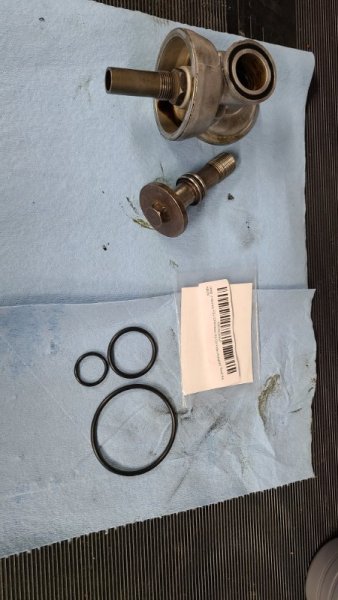
-
91' Eliminator Daily Build
CaptainPatchy replied to CaptainPatchy's topic in Member Projects: Your Comanches
It's a 1-1/8" bar from Addco. Not sure if it's even listed for the MJ or if it just comes up as an XJ bar but they fit the same.