
brucecooner
-
Posts
240 -
Joined
-
Last visited
Content Type
Profiles
Forums
Gallery
Everything posted by brucecooner
-
Ah. If I remember, I'll get some juice in reverse and hit the brakes next time I'm out. Okay, Okay, I think what I need to do is use Eagle's test and see if the LSD still works. If they do, I'll worry about some friction modifier. If they don't, I'll skip the modifier and worry about fixing things up there later. I don't plan on doing any extreme offroading, yet. With the heavy axle I'm a little more likely to though. I've already got the gaskets for both diffs, just got to start buying oil. I've heard good things about Red Line, thinking of looking into some.
-
True, someone could have just checked the box for a different axle. I assume friction modifier is for the lsd, I'm going to have to study that. We definitely won't see -40, rarely would see +40. But even without towing this thing will be running in high heat during Phoenix summers, sitting right over pavement that can get to the upper 100's, so maybe a heavier oil's not a bad idea regardless. I put maybe 4K on a vehicle in a year so mpg's aren't as big a concern for me. If the front one don't care, I would probably just buy enough of the heavy fluid to fill both axles. I wanna say the transfer case was originally Dexron II, which was discontinued, but Dexron III is backward compatible. Ah, so I should check the breather line. And I was not aware the load sensing valve requires a special bleed procedure, good to know. The brakes aren't spongy, they just don't stop the vehicle that quickly. It doesn't pull to either side under braking, which I've always thought indicated proper adjustment, but I could be wrong on that. The brake fluid reservoir is full but the fluid is dark and ready for a change. I'm already on the hunt for a booster replacement (current one is hissing when I press the brake, and the engine will race when pressed past a point), but I'm thinking a new master cylinder is a good idea too. I'm wondering if the old one is just not putting up sufficient pressure, boosted or not. Thanks for the pointers!
-
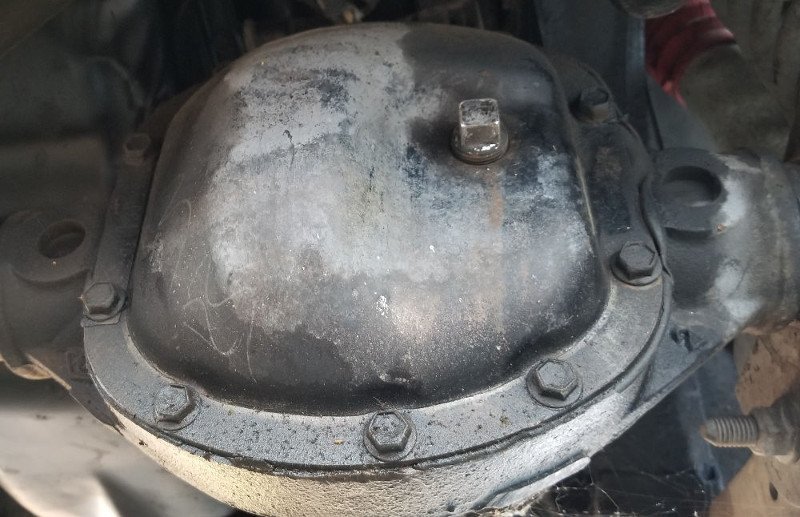
Buckle up! Another oil thread, but this time for axles. I noticed the other day that my rear differential MAY have a decent seep going. The truck appears to have been well maintained, so I doubt it has been run a long time without a change. But I figure I should probably change the oil in all the gear-containing things so I have a solid timeframe for the next change. So I started looking into what's involved. I don't know much about diffs to begin with so I pointed my camera phone at them and started comparing to pictures on the internet. The front one looks like the standard Dana 30. ...which may have a decent seep going, but the prevalence of moist fluid indicates it could be something above. In the back I was surprised to find what looks like a Dana 44, wearing an LSD tag. My understanding is that these were only added with the towing package. The Jeep has a receiver in the back, which would indicate it very well could have tugged some weight in its past. But I checked my VIN thread, and it does mention limited slip but does not mention the two package. I guess this could have been an aftermarket addition, but everything is long since too dusty and crusty to see any signs of a swapped axle. Practically everything else on the truck appears stock, whoever got this did not appear to be into making mods. At any rate, I'm not as worried about how it got there as I am about its proper care and feeding. I actually have the laminated card with fluid specs on it that came with the Jeep. For the Comanche front/rear axles, it lists API GL5 75W-90 BUT, there are subscripted notes below the fluid specs. These notes indicate the Cherokee with tow package should get Synthetic 75W-140, but with Trac-Lok and no tow package, you should add "one bottle" (no volume given) of P/N 8983 100 003. HOWEVER, a separate note says for the Comanche with towing package, use 80W-140 (does not say synthetic). It does not say anything about Trac-Lok for the Comanche. There are lots of variables at play here. I could see towing a small travel trailer with it, but I'm not sure the tired old BA10/5 would be too happy with that, especially if it thinks it's towing days are over. If I am (or aren't) towing, should I select a different oil weight? At over thirty years of age, the clutch packs have probably gripped their last time long ago, but do I still need to take the LSD into consideration and get an additive? Or do I just ignore them with a heavier duty oil? Or is there a modern, do-it-all synthetic that can handle both light and heavy duty work? And can I just fill both front and rear with the same, or does the front get lighter oil regardless? So many questions... I'm wanting to go with gaskets to seal them back up, they seem to have a good reputation. And at the end of the day, my seep theory may not even be correct. I took a picture of the rear pumpkin from a different angle and the widespread and vertical nature of the moist area says this might be something else I'm looking at, which would probably be brake fluid. And "make the brakes work better" is already on my todo list. But still, I feel I should re-oil the diffs and transfer case anyway. Any info/pointers is appreciated.
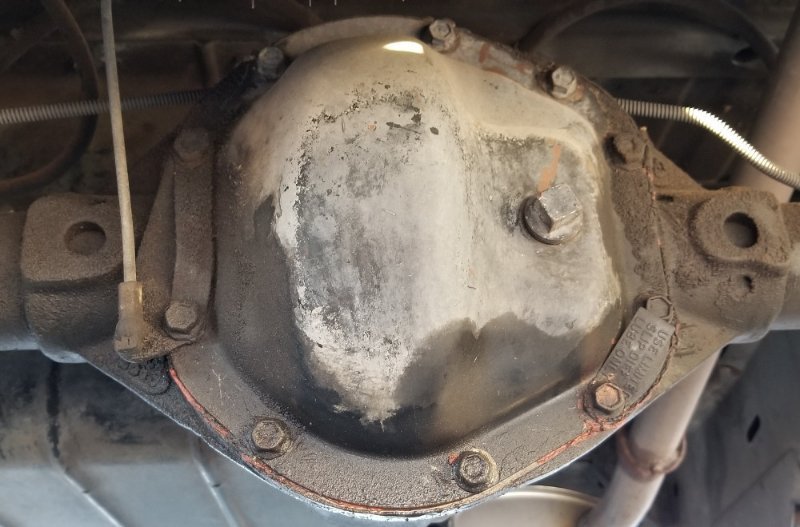
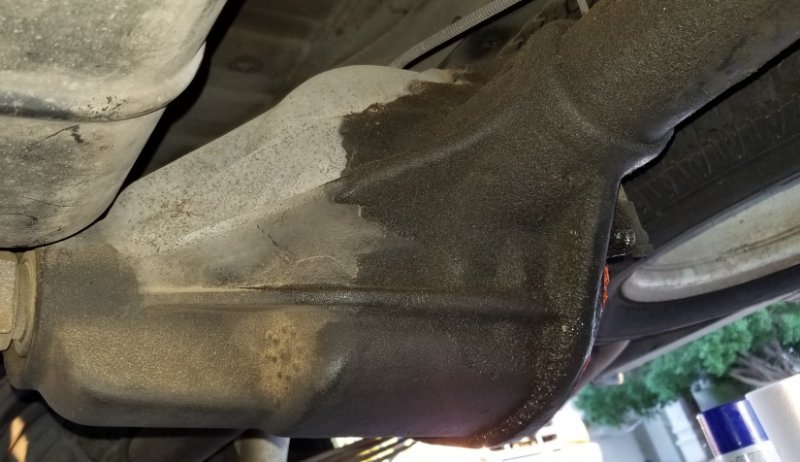
-
Injector recommendations
brucecooner replied to brucecooner's topic in MJ Tech: Modification and Repairs
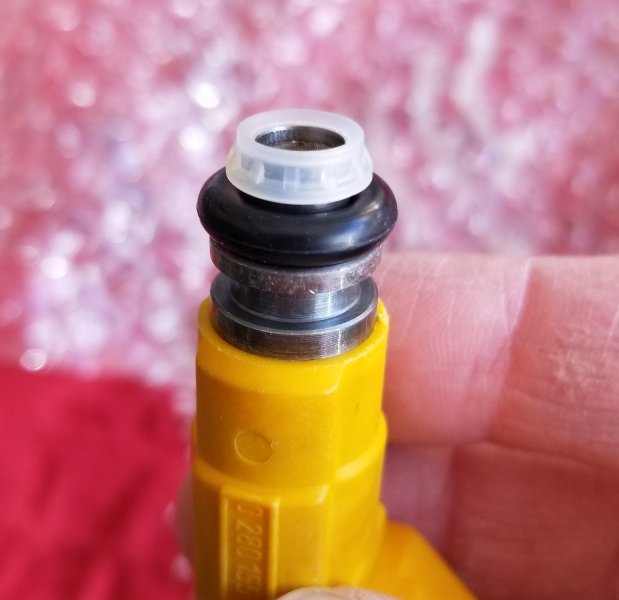
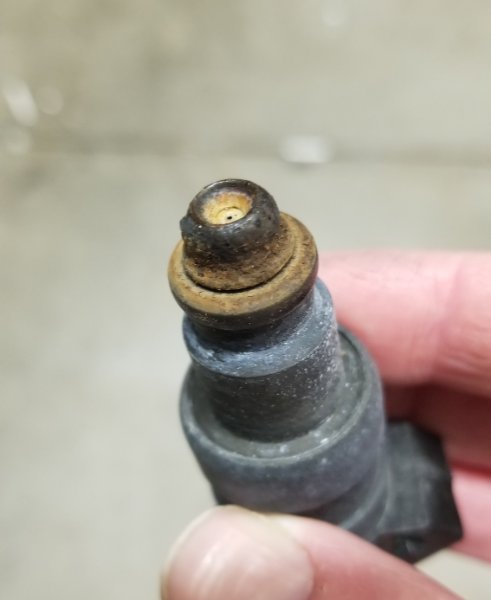
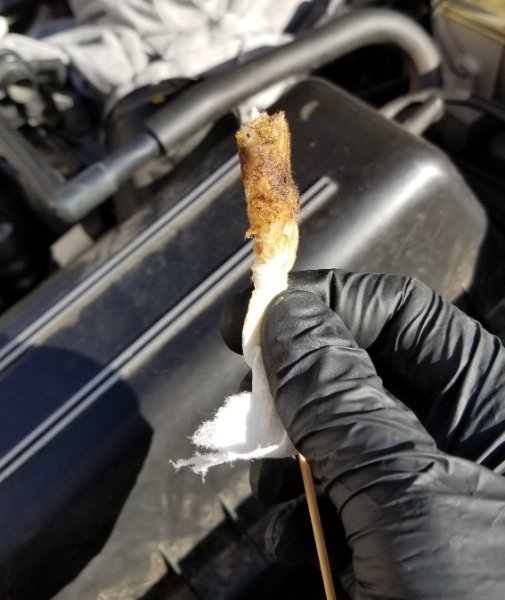
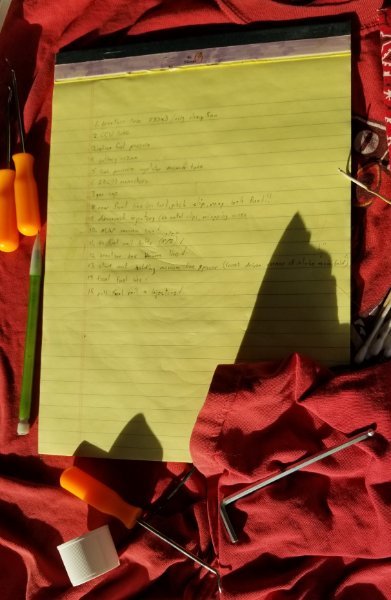
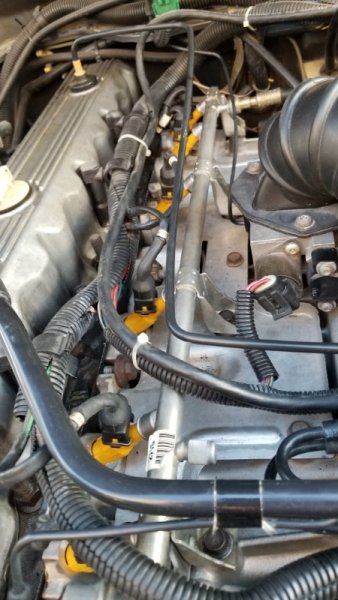
I FINALLY got to the injector replacement this weekend. At cruiser's advice, I contacted Trevor at skankfoot racing dot com. He replied to my request quickly and soon I had a new set of clean looking four holers. Trevor said these were Bosch 700's, direct replacements for the originals. I got thrown for a loop by the plastic bit on the end. I was like, "I'm supposed to jam a PIECE OF PLASTIC down into the port, where gas is burning? Won't it MELT? They were open ended so not there for protection during shipping, and they were tightly attached, which told me it's probably supposed to remain on there. So I did some research, apparently that is the "pintle cap" (the spritzy end of an injector is called the pintle), and it IS SUPPOSED TO BE THERE. What I read indicate they hold the o-ring in place. Will wonders never cease. In all, removing the old injectors was not a difficult job. I had to learn with only two trips to AutoZone that you don't need a removal tool for the older fuel lines, just pinch the plastic clip on the line and pull. Removing the little square wire clips that hold the pigtails in place is a bit of an arm form, good thing I have a pick set. The old fuel rail was hard to pull out after 30+ years in place, but did come free. And man, those original injectors were groded up good. I got the pick and picked away at the buildup in the ports, then got some carb/fuel system cleaner and went after the gunk with paper towel wrapped around a dowel and soaked with carb cleaner. Rub it around, rinse, repeat until the napkin came out mostly clean. Couldn't get it all of course, but at least the ports are clean-ish now. I shudder to think what those cylinder heads and valves must look like though. Trevor sent some "skin care petroleum jelly" with the injectors, and I knew from homework it was important to lube the rings before seating them. The new set snapped easily into place. I had taken notes on each step of the removal process, and even stuck labelled masking tape to connectors and hoses as they came off to make durn sure I got the right things back in the right places. So re-assembly was just reversing these steps. The new injectors didn't have grooves to accept the little metal clips that held the originals to the rail. But I've read you can leave them off since the rail bolts into place. Once the rail was bolted in place, I seated the injectors all the way down into the ports and said a little prayer that was their preferred placement. Got everything re-connected and turned the key to on. Couldn't hear the fuel pump but I put a cloth under the pressure valve and got a spritz out so it was looking good. I turned it over a few times, and at this point my son noted the return fuel line at the firewall was leaking. He got in close and found a small orange o-ring sitting on the manifold just below the line. We inspected it and figured it must have come from the fuel line when I pulled it. Praise the saints it hadn't disappeared into the depths. I knew I kept that boy around for something. So I went to pull the return line off again so we could reapply the o-ring, and I got just the briefest glimpse of ANOTHER little o-ring coming out of the end of the fitting and giving me the middle finger as it dived below the heat shield over the manifold. I did some creative swearing and shook my fists while my son looked around back there and lo and behold he found it, thankfully it hadn't gone far. We then noticed a little black ring still affixed to the fuel line. He carefully inspected witness marks on the male end of the line and deduced the rings probably go on either side of the little black ring. So we put them on in that configuration and agreed that it looked like a very proper seal. Plugged it back up, recharged the rail, hooray this time there were no leaks. Started it, let it warm and made sure fuel wasn't coming out anywhere. The bright new yellow ones look faster, at least. So we loaded up with a fire extinguisher in hand and set out for a test drive. It did seem just a smidge peppier, though if it is it's not by much. Got back home, raised the hood, and all gas seemed to still be contained within the engine. So I think I'm calling it good. Unfortunately I had to head out in a different vehicle, and didn't get to try a delayed warm start to see if that issue is fixed. I do have one more question though. I've never used loctite or any other sort of thread management chemicals. I noticed the fuel rail bolrts broke with a clank that sounded distinctly engineered in nature, and they had a silvery substance on them. It seems somebody had put something on there. Do I need to get a substance on the fuel rail bolt threads to keep them locked in place? I'm sure they have a torque rating, do I need to be sure and get them just so? I snugged them up pretty well, but not overly so, will that be sufficient? (I do plan to check them after a few more miles) Anyway, big thanks to cruiser and the CC crew for the help!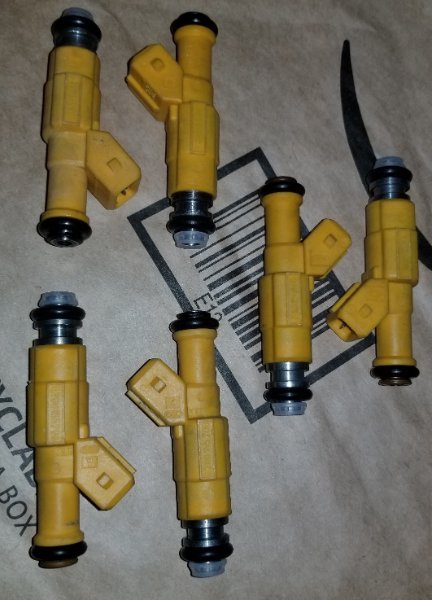
-
Injector recommendations
brucecooner replied to brucecooner's topic in MJ Tech: Modification and Repairs
I should have mentioned that I'm not interested in more power, it's got plenty as it is. Thanks cruiser (and everyone else), I'll contact Mr. Skankfoot about some. -
The weather's cooling off, and I can finally raise the hood without burning my hands then melting into a puddle of sweat. So I'm wanting to put new injectors in the old 4.0 (88 Renix). I've heard you can get four hole injectors that make more power. Does that come at the cost of fuel economy? Or are they engineered to produce better combustion so you're just using fuel more efficiently? Or is an original spec injector still the best? Also, is this a tricky operation given that you're messing with fuel delivery? I've watched it done in a video, and at the end he had to do something to reset one of the electronic systems, which sounds like playing with fire on a persnickety old Renix. Links to recommended products and tips videos are much appreciated!
-
Now knowing how they sound normally, I can't imagine how you'd be able to hear all that other stuff.
-
I've seen guys in a lot of threads around the internet comment that they ran a 4.0 for hundreds of thousands of miles making a steady slap without issue, but I was not aware the U.S. Judicial System had ruled it to be a normal sound.
-
There's a snake in my brakes! (hissing noise)
brucecooner replied to brucecooner's topic in MJ Tech: Modification and Repairs
All through high school I drove a '66 Mustang without power anything and the brakes were never an issue. Stopped when I needed it to. I would think that at the point that you lock the brakes you're at the upper limit of "braking performance", in regards to boost anyway. I see cheap-ish reman boosters at the usual culprits (Autozone, O'Reillys, etc.), is there a particular brand I could seek out for better durability? -
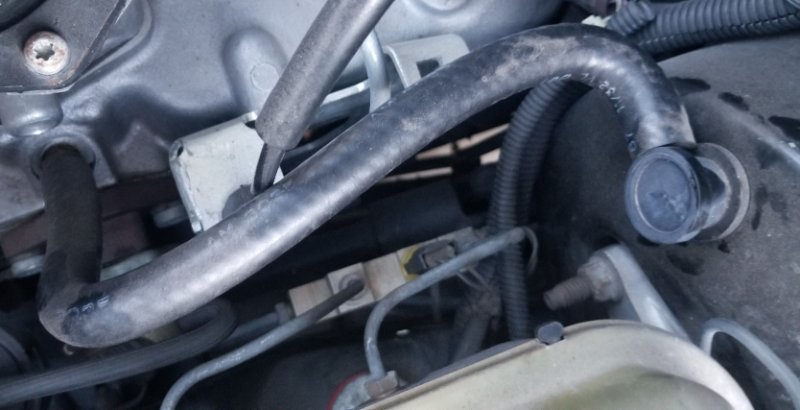
My brake pedal is hard to press, I'm not getting any help at all. I've heard the XJ's weren't known for the stopping prowess, but I have to think about a half mile ahead about upcoming stoplights. And don't even think of follow distances less than a quarter mile. If I press the brakes to or past a certain point, there's a hissing noise from under the dash that I suspect is air rushing in to fill the vacuum in the booster. There's been a couple of times when I pressed the brake very hard, and the engine revved. Now, those were panic braking situations (think a stale green light taking me by surprise) and since the gas and brake pedals are close together I might have had my foot partway on the gas. But, if that wasn't it I'd guess it means somehow the vacuum line was open to the atmosphere and it was basically like the throttle being opened. In which case, isn't the check valve supposed to prevent air going back out? So obviously I figured the first thing I would do is just check the check valve. But the dang thing doesn't want to come off the booster body. I pulled on it, to no avail. So I twisted it, thinking it had tabs to align, but apparently it don't. Is there a trick to pulling the vacuum line off the booster? You can see in the picture my fingerprints where I was fumbling with it. Any further tips for debugging the brakes are welcome. I've heard there are other flavors of more powerful booster one can upgrade to, are they worth the effort? Things are TIGHT in that engine bay. My tires are slightly oversized but the suspension setup is otherwise stock, so I don't know if I really need the extra oomph.
-
I think I can hear the exact same noise in your video that led me to record mine, particularly on the bottom side. So wow, they actually are supposed to make all those clattering noises. My dad a had an old Massey Ferguson that I think was quieter than that. I won't be catching any pedestrians by surprise but as long as it's healthy it can make whatever music it wants.
-
That actually sounds quieter than mine even. I think if you have the mechanic's ear then lifters are just like nails on a chalkboard, no matter the engine.
-
I just drive like an old man. Always have. Also being it's a thirty year old truck, and new to me, I'm afraid of it flying apart. I will say too, I've been going by the shift indicator light, and it lights off a little shy of 2000, at maybe 1750-1800. Which honestly sounds a little low to be shifting. My ears say it wants to go a bit higher before the upshift.
-
Rear window - One piece vs Slider
brucecooner replied to Airborne Janitor's topic in MJ Tech: Modification and Repairs
I like sliding rear windows in trucks on general principle. Particularly since I drove a 1986 Ranger that had no AC for years back in Texas. Fortunately my dad had put a sliding rear window in it before passing it down to me and I don't think I'd have survived without "360 air". And I'm glad my MJ came with a sliding rear because the AC recently quit working. Anyway, in your case I'd try to remedy the one already in the Jeep first, and hoard those spares just in case. -
Yep, has a tach. I never run it over 2 grand, but for now I just take it on pleasure cruises on area backroads. I might touch 50mph briefly down on Route 85 before I turn off. I didn't buy it to go fast. :) It did the high idle thing briefly a while back, and it was sitting just over 2 grand if I remember. But I didn't drive it far before I had a brief tussle with the brake, and the leaking booster (which is a whole other thing that probably warrants a thread) somehow corrected the high idle. I've seen a mechanic investigate a whiny power steering pump with a screwdriver once, had totally forgotten about that trick. And yeah sorry about the use of video here, I admit it's not a great tool. This vehicle definitely makes a bit more racket than the old Ranger, which given the provenance of the powertrain isn't surprising. I actually kind of like the various normal sounding rackets it makes when I drive it. Well, except for that clunk from the frontend when I take off with the wheels turned. I've jacked up the front and tugged on all the suspension bits I could reach. Despite the thirty plus year old crusty brackets everywhere, it's all surprisingly tight. Now that I think of it, the Ranger did the "clunk when turning thing" too, and it was the tie rod end link bushings, I hadn't even thought to check for those on the Jeep. But if nobody here is saying "OMG your X is going out", I'll just turn up the radio and think about my destination.
-
I'm one of those unfortunate guys who can apparently hear every mechanical piece in a car rubbing against all of its neighboring pieces. Sometimes this works in my favor, as when I had to almost physically shove an engine tech's head under the hood into just the right place so that he FINALLY heard an out of place ticking noise he had sworn he'd listened for (yeah, I'm sure you did) and couldn't hear, that turned out to be due to inaccurate head bolt torque. But most of the time having this sort of hearing without being a moderately experienced mechanic is MADDENING. I'll hear what I think is a new noise, at which point I wonder if the noise is really new, or if I've just failed to notice it before. My usual tactic is to turn up the radio (well, before the radio went kaput in the Ranger anyway) and try to think about my destination. So it doesn't help that in the Jeep I'm behind the wheel of a new-to-me-but-pretty-old vehicle, so I'm not sure if my Jeep is making Jeep noises, or is knocking, or the pistons are slapping around, or ??? These knockings seem to have gotten louder recently, but I haven't been driving it frequently so maybe I'd just forgotten them? Or was I inadvertently ignoring them? Anyway, recently I noticed what seems like a loud knock when I opened the driver's side door with it running. After the recent oil change, it was still audible, so I got down low and took a few seconds of video... down_low_symphony.mp4 This led me to listen up top. The valves sure are a-ticking, hopefully that's a normal amount of noise, but I do still kind of hear that knocking below the general cacophony. up_high_cacophony.mp4 Not that I really expect a super accurate diagnosis of anything, but my general question here is, are the 4.0's supposed to make that much noise? And I've got to say, it drives just fine. I can tell it has more power than the Ranger (3.0 Vulcan). I mean, it's not quick off the line, and I definitely don't push it, but it is pretty bullheaded and straightforward about the whole acceleration business.
-
4.0's favorite oil? (and change interval)
brucecooner replied to brucecooner's topic in MJ Tech: Modification and Repairs
Will do. It needs a new valve cover gasket, a project for a cool winter day here in Phoenix, so I'll be getting a good look at the arms then. Thanks for the help! -
4.0's favorite oil? (and change interval)
brucecooner replied to brucecooner's topic in MJ Tech: Modification and Repairs
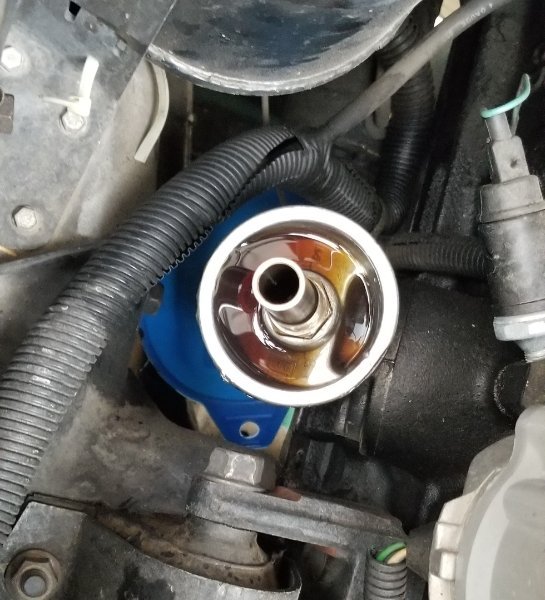
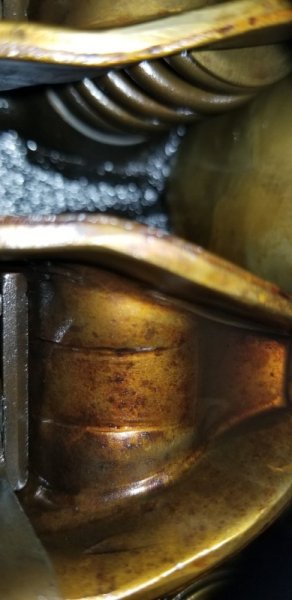
FINALLY made it to Napa. What I got wasn't the the cheapest option, but I don't care since this is my midlife crisis truck. (key word: crisis) I went for the syn blend because it's very very hot in Phoenix, and I will probably be doing around town driving, with frequent stops and starts. I had noticed what sounds like a knock (slap?) coming from beneath after they changed to 40 weight at the shop, was wondering if switching back to 30 would quiet it down. Nope, think it's even louder now. Oh well. To keep things in balance, I neglected to get a new oil drain plug washer, so it does drip a small bit of oil from the plug now. Cause if you ain't got a seep, you ain't got a Jeep. I expected the upright adapter-ed oil filter change to be a complete mess, and I actually managed to wedge a funnel beneath it to guide oil toward the catch pan. It was as messy as I expected. That day's interesting discovery what seeing that the adapter conveniently holds onto a big glob of old oil for you. Oh well, this oil wasn't that old anyway. I did jam the corner of my phone into the valve cover fill hole and snapped a picture. What little bit I can see looks, metallic? Anyway, this oil change adventure is done. I'm rolling T5 Rotella heavy duty diesel oil in it now. Hopefully it'll be happy. Thanks to everyone who participated in another pointless oil thread!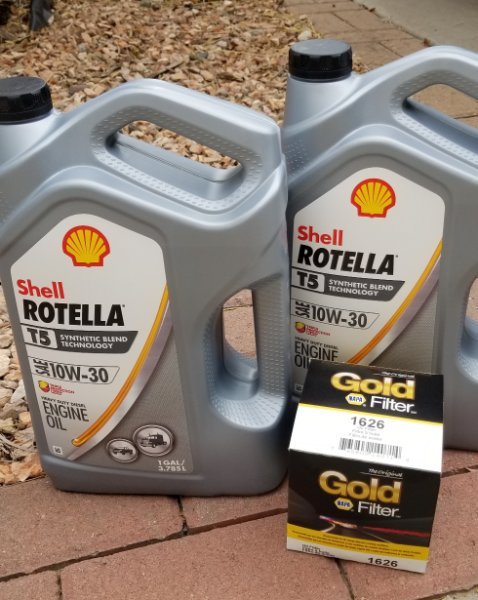
-
4.0's favorite oil? (and change interval)
brucecooner replied to brucecooner's topic in MJ Tech: Modification and Repairs
The counterpoints I've read to using diesel oil is that diesel oil additives are geared toward mitigating the different combustion byproducts that diesels produce (soot I think), versus gasoline combustion. But I've never found a solid read on how, exactly, the additive packages differ between diesel and gas oils. My impression is that the additives they use come from a small common set, but the ratios differ based on the needs of the engine. I think I remember reading that calcium (I think it was Ca), one of the commonly used detergent (cleaning) additives, breaks down ZDDP, so the two additives are somewhat at odds (wear protection versus cleaning). I've heard the same thing from some sources. My suspicion is that any of the oil manufacturers are careful to make sure their formulations mix with existing oils, or else they'd all be sued into oblivion if their oils started eating engines when mixed with some other oil. That said, I'm a guy who likes consistency, and I've only put Mobil 1 in my Ranger for well over a decade now. I hope to settle on a single oil for the Jeep as well. Add to all of this that a lot of these threads are a decade old, and technology marches on. There's apparently been some recent changes to the exemptions for diesel oil additives when rating them, but only if you want to also rate your oil SP. https://www.fuelsandlubes.com/fli-article/exemption-phosphorus-limits-longer-apply-2020/ Shell apparently limits their multi-vehicle blend to 800ppm of zinc. I don't know if this applies to the SN rated (an older standard) multi-vehicle blend as well though. But I'm guessing the Rotella that's always been high in ZDDP will remain so, knowing that so many operators have come to rely on it. And then there's rat540, who has done a lot of testing and says all sorts of contrary-to-conventional-thought things in his blog. https://540ratblog.wordpress.com/2013/06/20/motor-oil-wear-test-ranking/ He says zinc isn't needed for wear protection, that the physical properties of the base oil are mostly what matters for keeping metal parts separated. I'm wondering if there aren't just modern replacements for ZDDP in oil, that lets it protect from wear while not killing catalytic converters. I believe molybdenum and boron serve this purpose, but I haven't seen anything on whether or not they're suitable replacements for ZDDP. I can get Rotella T6, but full synthetic is overkill for my application, light duty, and I don't even put 4K on a vehicle in a year. I change the Ranger twice a year and an oil change rarely gets past 2K (but I'm okay with it). Synthetic blend might even be overkill, but I'm thinking I'll look up some T4 or T5. -
I've been busy with work, and with temps topping 110 down here in the desert I haven't been under the hood in a bit. BUT I've done the first tip, the wires that ground to the block near the dipstick. I also pulled those relays on the passenger side of the engine bay and cleaned up their contacts as well. I just drive take short trips on the weekend now to keep it from sitting up. On my last weekend drive it was still idling around 1000, which seems a little high. Once it's not so painful hot outside (hopefully within months) I want to get to the fuel pump contacts.
-
4.0's favorite oil? (and change interval)
brucecooner replied to brucecooner's topic in MJ Tech: Modification and Repairs
Back to this ancient topic. Things have been busy, I'm still on the hunt for an oil. All the T4 I see is diesel rated, and this is a point I haven't seen explicitly clarified. People are putting "diesel oil" in their 4.0's? Like, oil for diesels... https://rotella.shell.com/en_us/products/triple-protection-motor-oil/rotella-triple-protection.html#iframe=L3NvcHVzL3JvdGVsbGEvbmV3c2xldHRlci9lbl91cw It says on the bottle, "for diesels". I see threads out there where random poster says he's running diesel oil, another guy says that bad, the mystery goes on. I can imagine there's no difference between the base stock of oil in gas and diesel lubricants, and the differences are probably all in the additives. Still, this seems odd to use a product not labelled for my intended use. -
Lots of good advice here... 1. SMELL it. Gather some of the leaking fluid, smell it, then put your snout on the master cylinder, then the dipstick, and see if you can bloodhound your way to an answer. 2. WHERE is it? Dry dust cover and oil pan? Probably the transmission. (my dust cover was dry as a bone) 3. WHEN is it? Leaking when the engine is off? Probably the transmission. (mine would drip when parked) I'm guessing you could clean the fluid up, then pump the clutch a few dozen times and see if the fluid returns. 4. Does it mix with water? You could probably spray a water bottle at it. If it rinses off, probably the clutch. Thanks all for the advice and congratulations. I took it out for a pleasure cruise this evening, and I was a bigger problem than the clutch. I've been shifting stick in my Ranger for decades, but haven't yet gotten the hang of this one. Aaaand I discovered the AC has quit working. Aaaand it's idling higher now. It had a brief stint a couple of weeks ago where it idled at 2500, but it spontaneously returned to normal out of the blue. Today when I started it it wanted to idle around 1250. Then after working the brakes at a few intersections, the idle settled down to 1000. Then at stoplights it would do the surging idle (500-700-back), or it would idle at 1000. So my next area of study I guess. Always an adventure!
-
That was the Champions breaking on you? I think I put NGK in my Ranger last time, they seem to be doing well though I only put about 4K a year on that guy.
-
Well it weren't the rear main seal. When the clutch started going I suspected that rear main leak might be clutch fluid. Let me rephrase that, I WANTED the leak to be from the clutch. But I couldn't see any indication of a leak in the clutch system. Anyway, took it in, told them the rear main might be the source of that leak, but it wasn't. They called me up to come in and look at it after the transmission was out and the rear main was dry as a bone. The last clutch service was not well done however, and the mechanic pointed out some issues with it. So that was good to find, and she shifts nice and smooth again. And cruiser was right, of course. Misdiagnosed rear main leaks apparently are a common thing. The question for me then is, how could I have correctly diagnosed this? How does someone figure out that it's their clutch that is leaking? The fluid coming from the bell housing was thick, like oil. Drops of it clung to the housing, and it did not flow like brake fluid. I think this might have been because it was flowing through the bell housing and picking up enough grime to thicken it, so maybe you can't use the quality of the fluid to determine this. I should have sat a cup under there and caught some more of it, that might have helped. The master cylinder remained nice and full, and the level didn't change when I pumped the clutch. The clutch pedal did not feel limp, not even when it was failing to disengage. It might have gotten a little limper and I didn't notice though. But yeah, apart from total disassembly and inspection, is there a reliable way to debug this issue? Was removing the dust cover on the bell housing an option that might have lead to any insights?
-
May need a new clutch. Recommendations?
brucecooner replied to brucecooner's topic in MJ Tech: Modification and Repairs
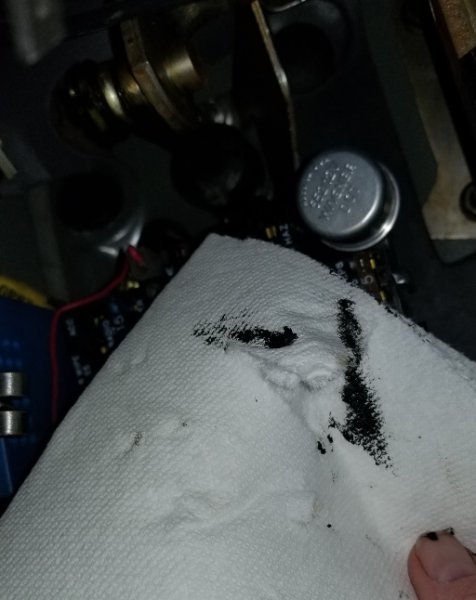
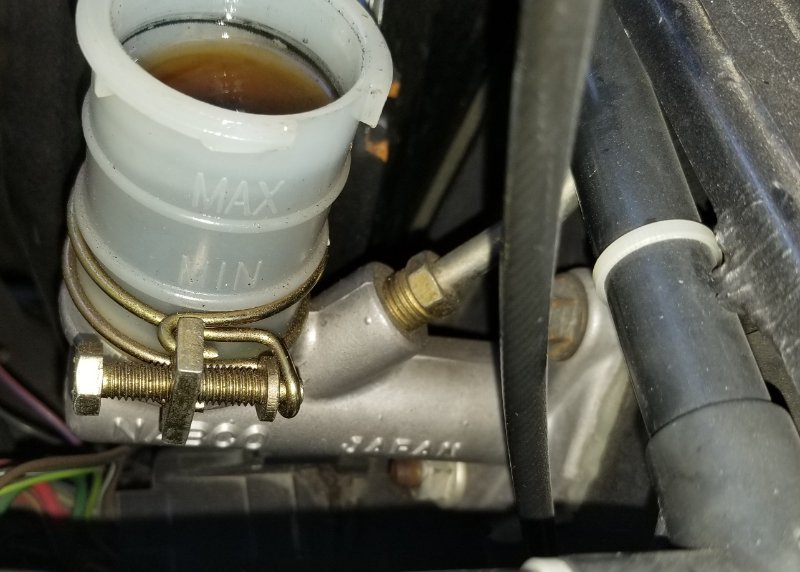
Even when the clutch is failing to disengage the pedal maintains about the same stiffness. I raised the hood and watched the reservoir as I worked the pedal, and the level changed, but barely. Set my phone up and got a video of it too. 20220601_185430.mp4 Looking for fluid on the pump rod, I wiped a paper towel on the rod and, rather than being covered with clear slick fluid it has this black...gunk on it. I might be looking at the remains of a seal I guess. Or maybe it's just supposed to be greasy. The fluid coming out of the bell housing is too viscous to be brake fluid, unfortunately. The cylinder says "NABCO Japan" on the side and looks fairly new. It doesn't look original to me. That said, on a truck this age it could be a replacement but still be a couple of decades old. I'm suspicious of that black ring in the reservoir at the fluid max level. Might be a sign of dead seals, but could just be rub off from the lid. The fluid is a kind of orangey yellow too, nowhere near clear. The clutch has never been super firm, but isn't spongey either. Only getting in this a couple of months ago, I don't know what the baseline firmness is supposed to be though. Automobiles are an endless source of mystery.