jakesmog
-
Posts
23 -
Joined
-
Last visited
Content Type
Profiles
Forums
Gallery
Everything posted by jakesmog
-
Another Battery thread, oh boy!
jakesmog replied to NC Tom's topic in MJ Tech: Modification and Repairs
TL;DR Good: $80-$120 Walmart 34 Better: $220-$250 Deka Intimidator AGM 34 Best: $350-$450 X2Power/Odyssey Extreme AGM 34 There’s really two main manufacturers for regular flooded batteries— Clarios (Johnson Control) or East Penn/Deka. Clarios is definitely more cost effective and works just fine. These are the vast majority of batteries on the shelf at stores. East Penn definitely has better QC and design, but it won't magically solve parasitic drains or charging issues. For AGM, the best battery nowadays is an Odyssey EXTREME. Odyssey/EnerSys acquired NorthStar and their tech in 2019. NorthStar AGMs were making the best TPPL (thin plate pure lead) and have insane CCA and reserve capacity. Instead of asking a parts store to special order an Odyssey Extreme 34, the exact same battery is sold under the name of X2Power from Batteries Plus, ~$50 less, a longer warranty, and generally easier to find in stock. They used to bear the NorthStar label but now they are branded EnerSys and have the exact same spec sheet as the Odyssey Extreme. Optima moved manufacturing to Mexico in 2007, and while that’s not directly a reflection of their quality, their spiral plate “6-pack” design simply doesn’t have enough lead for the space it takes up (compared to flat-plate). Its only saving grace is marginally better vibration/shock resistance, but definitely not CCA/RC or longevity. Interstate is *typically* made by the inferior Clarios. Also much harder to find a place to warranty them. Personally, I’d either go with a cheap $80-$120 Walmart battery to save money (and I wouldn’t be scared of battery problems), or if budget allows to get a Deka Intimidator AGM $220-$250. AGMs recover considerably quicker and safer after sustained winching. If building out the dream rig I’d go with the X2Power for every last drop of longevity/reliability. Lastly, as far as warranties go, I think every single 12v lead auto/marine/RV battery in America voids the warranty if you present with less than 10 volts. This is because it overwhelmingly >99% of the time is due to a drain/draw. In the rare event of a battery with a manufacturer defect internal short, your battery would be dead on arrival. You can actually develop an internal short with poor maintenance and overcharging. 34 fit in my 89 battery tray fits fine. A 34 is only about 1/4” longer and 1/2” wider than a 58. -
Keep 89 Renix, or swap to 94 HO engine?
jakesmog replied to jakesmog's topic in MJ Tech: Modification and Repairs
Well my MJ is going to be almost completely apart, all the axles transmission and suspension out. I'll be going over everything, it needs new hard brake lines and a floor pan, I'll be rust treating and painting everything inside and out, so to swap the wiring is not really much more on my plate. And I do plan on trimming the hell out of the fenders, also staying SUA. I was originally thinking 4.88 or 5.13 gears but I'd rather have the stronger pinion of the 4.56. -
Keep 89 Renix, or swap to 94 HO engine?
jakesmog posted a topic in MJ Tech: Modification and Repairs
I have a 89 Eliminator I’ve been preparing to swap to 4x4 for a while. I got my hands on a 94 4x4 XJ, with AX15/231 and a D35. I’ve been wheeling that for a while cause it came with super swampers and winch bumpers and stuff. Once I find a good C8.25, I’ll be swapping the drivetrain over to the Comanche, gears and lockers etc. Long down the road after everything’s dialed, I wanted to go 4.6/4.7 stroker, but still run stock heads and cam and run 87, cause really all I want is the low end torque and don’t care about top end power. Does it make sense to try to keep the Renix, or should I just carry the HO over? Does it make sense to use the Renix intake to keep the low rpm torque, or is the difference too small to sweat? Afaik tuning the HO is gonna make that a lot simpler. Also I think there’s more adapter type stuff necessary to plug my Renix into the AX15 that came on the HO. Both motors seem equally healthy. Just trying to form my long term build vision before I start spending money and time on things I might regret. Additionally I plan on running 33x10.5ish tires, 4.56 gears, 3.5” lift, and I’ve got Core 4x4 Long Arms. Trying to strike the balance between, tolerable on the highway, repairable in a Autozone parking lot, but plenty of capability off road. -
Buying General Springs Leaves to lift my 2wd MJ
jakesmog replied to jakesmog's topic in MJ Tech: Modification and Repairs
Looks like I’m just at 8” or perhaps a hair shorter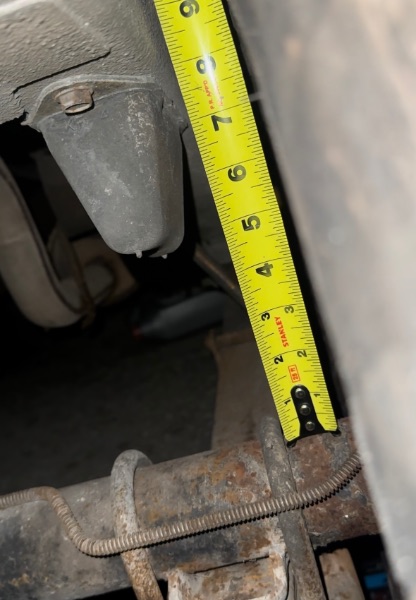
-
Buying General Springs Leaves to lift my 2wd MJ
jakesmog replied to jakesmog's topic in MJ Tech: Modification and Repairs
@Eagle_SX4 I am going to check once I get home from work. I looked up my build sheet and it doesn’t actually list my GVWR or payload, but it says Rear Spring Group 1. Idk if that means anything. I also did a lot more digging and found posts from General Spring themselves on here. This is nothing more than speculation but, if I have Spring Group 1 and it’s also the Eliminator which is supposed to be more sporty and less hauly, I assume this might put me towards the lower end of the free arch springs. Then I should expect to get more lift rather than less lift from even the 1280lb springs. The 1700lb springs are not even supposed to be any more lift than the 1280lb. So I’m still tempted to order them and try them out after measuring my current sag. -
Buying General Springs Leaves to lift my 2wd MJ
jakesmog replied to jakesmog's topic in MJ Tech: Modification and Repairs
Perhaps that’s why I can’t really find anything on the 1280lb springs. I’d prefer not to bastardize a fresh pack of springs just to get a little more lift out of them. Maybe I need to put the lift on hold until the MTs come back in stock. -
Buying General Springs Leaves to lift my 2wd MJ
jakesmog replied to jakesmog's topic in MJ Tech: Modification and Repairs
Well in that case that’s perfect. I’ll order the springs first and later see if I need a shackle to fine tune it. Hopefully the regular GS springs give me the same lift as the GS MT. -
Buying General Springs Leaves to lift my 2wd MJ
jakesmog replied to jakesmog's topic in MJ Tech: Modification and Repairs
Thank you very much for the photo, and sweet rig! It gives me a lot more confidence for the GS. I was just kind of confused how it’s supposed to lift it so much if it just returns it to factory ride height. I suppose I would also get pretty tired after holding up a truck for 30-40yrs straight. -
89 Eliminator I’ve been researching trying to figure out how to bring my rear up to about a 3” lift equivalent to match some 3” front springs. I’m looking for at least a level but some rake would be nice too. I’m not sure how sagged my stock rear 2wd leaves are, I still have about a ~2” rake compared to the stock front springs. No one seems to make a MJ specific AAL, which would already be suboptimal. General springs is out of the Metric Ton version, and I’m not necessarily searching for a higher load capacity anyways, so I was looking at the 1280lb 4(3/1) springs for ~$400 shipped. The Hell’s Creek 3” lift springs are ~$1000 and I don’t know what their lead time is. The GS should definitely lift the rear some, but I’m looking to at least level it with the front. To get a little extra height, can I add some of my old 2wd leaves if they’re not compromised? Also, what’s the most amount of shackle lift I can reasonably achieve without significant issues?
-
Budget front recovery points?
jakesmog replied to jakesmog's topic in MJ Tech: Modification and Repairs
Okay! Just trying to be prepared for the worst. I’m all the more excited to get the right setup done right now. In the meantime, is there a glaring issue getting pulled from the back by one of these?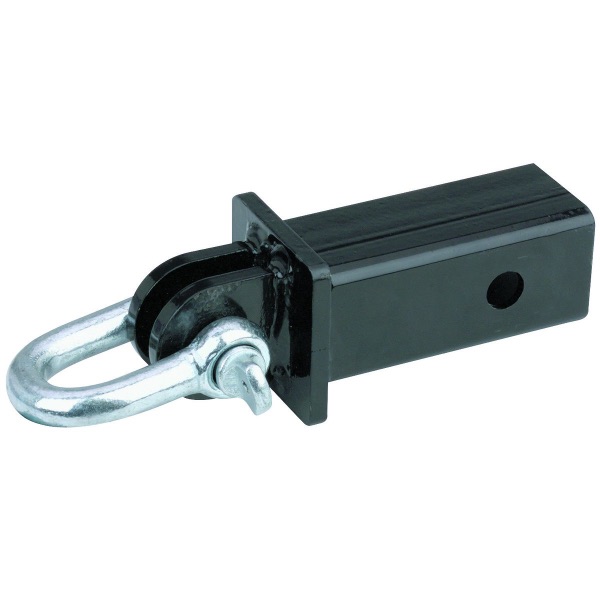
-
Budget front recovery points?
jakesmog replied to jakesmog's topic in MJ Tech: Modification and Repairs
So in that case, I may be better off just getting pulled from my front axle, as opposed to getting pulled from a hook bolted to some sheet metal then? What do I risk happening getting pulled too hard by the axle? -
Budget front recovery points?
jakesmog replied to jakesmog's topic in MJ Tech: Modification and Repairs
I’m willing to spend the money to do it right, but I don’t want to spend it on something that won’t help me with the final bumper build I end up doing. If the Harbor Freight hooks can get me out of shallow mud or a ditch a few times without tweaking my frame, it seems like the most cost effective solution until I can make the proper version. Or if there’s some kind of front bumper tie in bracket I can use to attach hooks for now, but still use the bracket when it’s time for the build, that seems ideal to me. -
I’m planning a little mild wheeling trip with my friends in a few weeks, and I’ll be taking my 2wd Eliminator out with a friend that has a 4x4 Pathfinder. I will inevitably get stuck in some shallow mud holes or a ditch. I have a D-Ring hitch in the back, but I’m not sure how to get good recovery from the front without a whole bumper. I’d like to eventually build a bumper or weld one of those DIY kits together, but my garage workshop area is likely not going to be situated in time to fabricate everything. Basically, I’m looking for a way to get a non-lethal recovery point for my front that doesn’t require welding. I can cut up some steel and get bolts but my welder is not operational right now.
-
Getting ready to pull AX15/231 and D30
jakesmog replied to jakesmog's topic in MJ Tech: Modification and Repairs
Opposite side of the continent in Florida unfortunately. Thanks though -
Getting ready to pull AX15/231 and D30
jakesmog replied to jakesmog's topic in MJ Tech: Modification and Repairs
Thanks for all the tips guys, but the guy with the Jeeps I was gonna pull from didn’t actually have the AX-15. I started asking him more questions about what rear axle the donor had, and he told me I need to verify myself that he had the right parts. I then doubted he knew what an AX-15 was and he finally revealed that all his XJs were automatic. So I returned my transmission jack to Harbor Freight and will be waiting for another day to do the swap. I’ve been combing my local junkyards once every other week or so and have yet to find a manual 4x4. -
Finally ditching my 2wd BA/10 and I found someone parting out a 4x4 ‘98 manual XJ and I’m going this Sunday to pull the AX-15/231 and crossmember, bell housing, t-case shifting linkage, fork, throw out bearing and retainer, clutch, clutch lines, slave and master cylinder. I know I will need to get a 70s CJ pilot bushing as well, and there’s other wear items likely to be replaced like the clutch and throw out bearing. I’m also grabbing the front axle and driveshaft while I’m there, unfortunately the donor rear is a D35. I know I need to get a driveshaft shortened once I find a rear. Is there anything I’m missing or forgetting, or specific tips that could help get everything out smoothly? I’ve never pulled a transmission before so I really want to be prepared before I get there. I feel like I’m back in school cramming for a test, watching every video I can find on it and studying like crazy. I’m bringing a friend, transmission jack, regular jack, stands, impact, long extensions, drill bits, tons of rust penetrant, propane torch, sawzall, and obviously wrenches sockets pry bars hammers and whatnot. A drain pan for the tranny fluid too. The donor XJ is at some guys house a couple hours from mine, so I can’t exactly go back if I forgot something.
-
Thanks, those perches look like they will accomplish what I want and I wouldn’t have to completely redesign the entire frame just to go SOA. Now I have to resist the urge of thinking I can make those myself
-
I was actually planning on running 35 or 33s on as minimal lift as possible. I wanted to explore the options of doing SOA to help with ground clearance on minimal lift, I was even thinking something like 2”. I’ve just read that SUA is not fun on rocks.
-
I was intrigued by a thread about an XJ that runs 2-3” of lift with long arms and 37s in the name of low COG and it interested me, but obviously our trucks are not already SOA like XJs. That being said, I was hoping to acquire some wisdom on the best approach for keeping good ground clearance and low COG on the MJ. I’ve seen threads where people go SOA and use Dakota leaves or other bastardized packs, but I’m asking if anyone has any experience with this or could explain the options to me. I’m not the most experienced wheeler so I don’t really know how much SUA will really get caught on things. It’s come to the point to ask because I’m about ready to swap to 4wd, and I need to pick a rear axle. A D44 seems ideal but too expensive, a 8.8 would be nice except being thicker and making it harder to stay low with SOA, so maybe the 8.25 is what I should look for? What else should I be considering? I prefer performance over convenience. I’m cutting a lot of work out for myself but I’m also just brainstorming the build right now.
-
Howdy, I've got an '89 MJ with 4.0L @244k mi, 2wd BA-10, D30/D35, and short bed. My goals aren't set in stone yet, but realistically, my most likely use case will be as follows. - Daily driver, in rotation with my other cars - Yearly road trips lasting thousands of miles, and going to all types of trails (maybe camping out of my rig) - "Drag racing" my friends and random people at red lights - Using my pickup bed to carry things, maybe pulling a light trailer occasionally - Occasionally getting stuck in mud With that in mind, it seems I may be more than happy with 33s, AW4, NP241, and front/rear E-lockers. I've also considered 35s. I've also entertained the idea of eventually stroking to 4.6/4.7. However, I currently have a bad brake master cylinder and I don't want to invest too much into my brake system now if I'm going to be getting different axles with different knuckles and calipers and wheels. I just picked up a junkyard WJ brake booster/master cylinder in seemingly good condition, and I'm hoping that can get me by while I shop for a donor vehicle or axles/tranny separately. I'm just trying to pick and decide on the right axles so that my money will be going into more permanent upgrades. Essentially, I'm just asking for input from the more experienced and knowledgeable, I think it's obvious I don't have much experience and just read forums all day. I'm aware that I will have to do custom steering, suspension, lift, and make room for tires. Someone has told me that my stock D35 will be enough to handle my needs with occasional abuse. I also don't want to invest in huge axles just to end up slow/inefficient and getting stuck on my pumpkin. So feel free to shoot me down and bring me back down to reality. I don't make a lot of money but I have a lot of tools and time.
-
How much should I pay for Rubicon JK axles?
jakesmog replied to jakesmog's topic in MJ Tech: Modification and Repairs
I thought all JK Rubicons had front and rear 44s, and also both had lockers. I had also read somewhere that Rubicon axles are one of the only ways to get a LSD/locker combo, not that that’s a priority for me. The front looks much beefier than my D30. I don’t know how to distinguish if they have lockers or not. -
How much should I pay for Rubicon JK axles?
jakesmog replied to jakesmog's topic in MJ Tech: Modification and Repairs
Thanks for the reply, I’ve already been doing cruisers tips and my next big job is replacing most of the brake system. I’ve got a spongy brake pedal that sinks at red lights and locks up my rears before my fronts even start. I replaced the serpentine belt and idler pulley but am still chasing down a squeak. I also appreciate input on getting my priorities straight, but I still wouldn’t want to pass up a set of JK Rubicon axles at the right price even if they sat in my garage for months. -
Hey, first post ever. I finally got my ‘89 MJ about a couple months ago for $2,700 at 244k miles. 4.0, 2wd, BA-10, shortbed, rear slider, bucket seats, and almost bone stock. Not much rust at all besides the passenger floor pan. I’ve started going to junkyards looking for replacement parts and upgrades from XJs, ZJs, and WJs, and I recently found a 2008 JK Rubicon with both axles, transfer case, and even fox shocks. No idea how many miles were on it, and it looked like it had ~37” tires. I’ve been planning a 4x4 swap and have been looking for the right donor. I don’t have much wrenching or fab experience, but I’ve inherited a whole garage workshop of tools. I have a plasma cutter, 220 amp TIG and AC welder, metal lathes, bandsaws, bench grinders, and even more stuff I haven’t dug up yet. For now, I’ve been enjoying how low to the ground my bed is and have been using my Comanche for light duty pickup tasks. But my vision is to have a reliable enough rig to take on long road trips to wheel on all types of terrain that I can’t get in Florida. My potential plans still vary from mild to wild, but I love the idea of having something overbuilt and heavy duty. To address my original question, what price point makes it worth it to grab these JK Rubicon axles and/or tcase? There is some surface rust, but I’m not sure how many miles were on the axle or how else to inspect its condition. Would this be any cheaper or better than putting lockers in a different axle and/or building it? Realistically, I don’t know exactly what I’m getting into but I have a lot more time and ambition than I have money.